
Japanese grammar · ≈ JLPT N4 · Beginner 3
〜じゃなくて、〜~janakute, ~
rejecting one option; offering another
Use 「〜じゃなくて」 after a noun or 「〜んじゃなくて」 after a dictionary-form verb to reject one option and give an alternative.
How it works
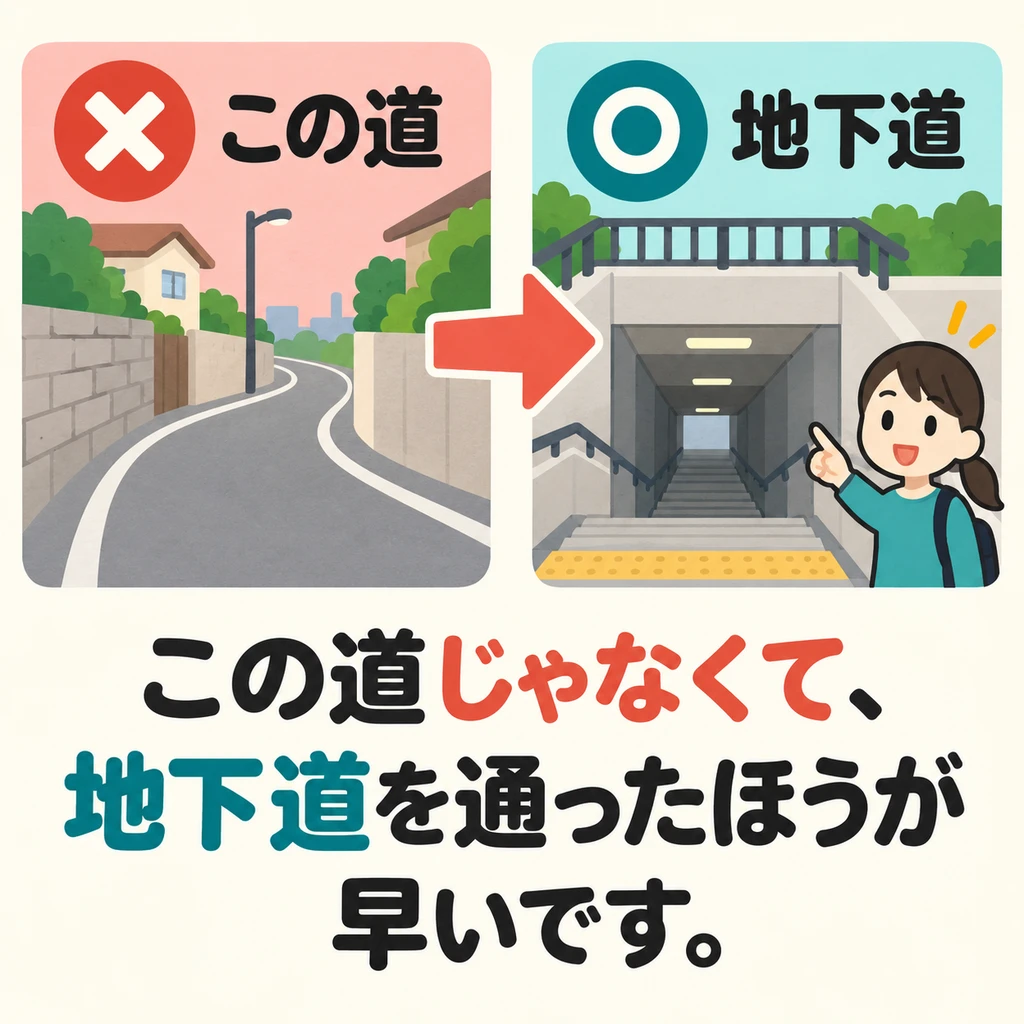
When giving directions, rule out this road first, then recommend the faster underground passage.
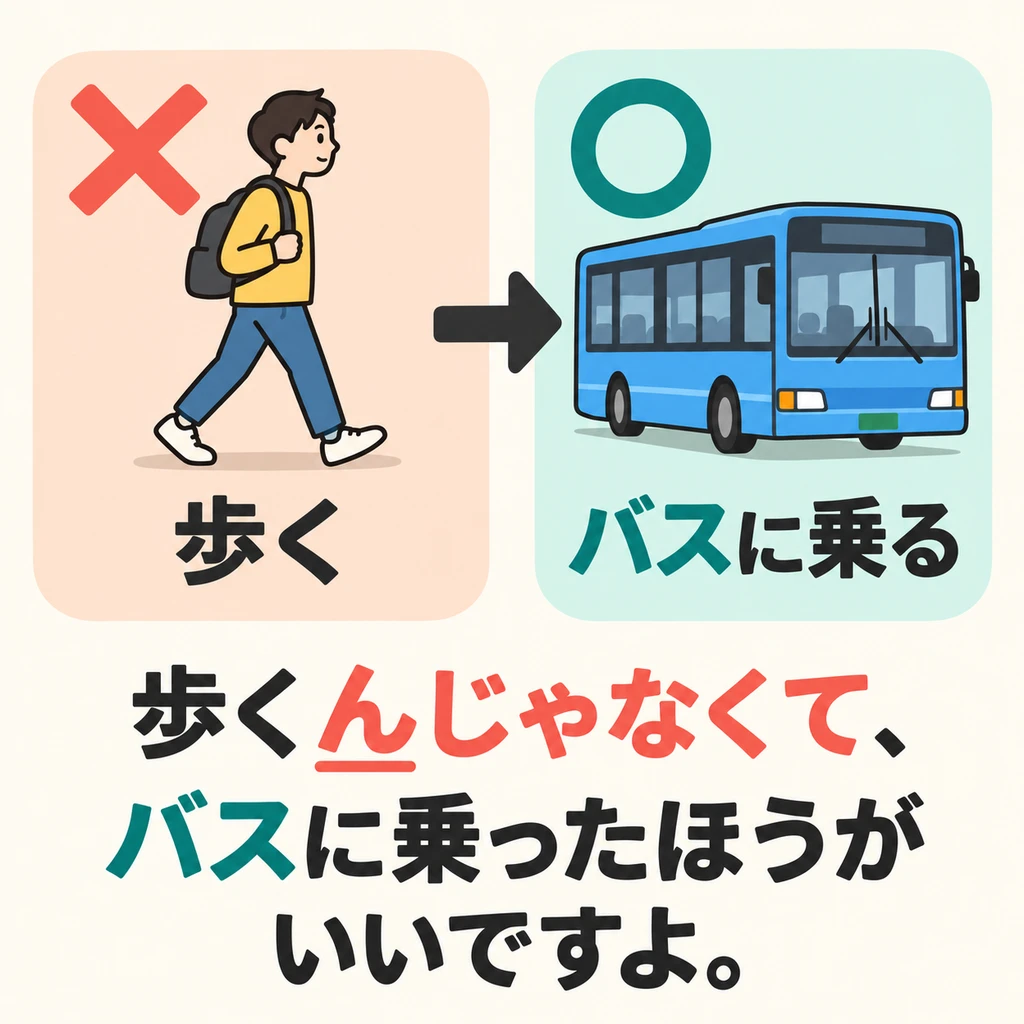
To get to the station, rule out walking first, then suggest taking the bus. Which option does the picture recommend?
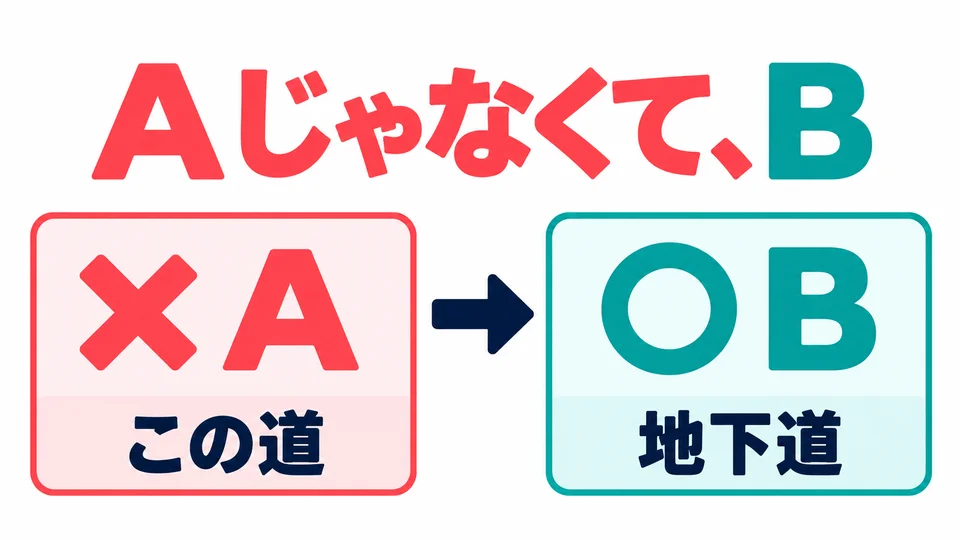
“Not A, but B”: the first part rejects the original choice; the second gives an alternative.
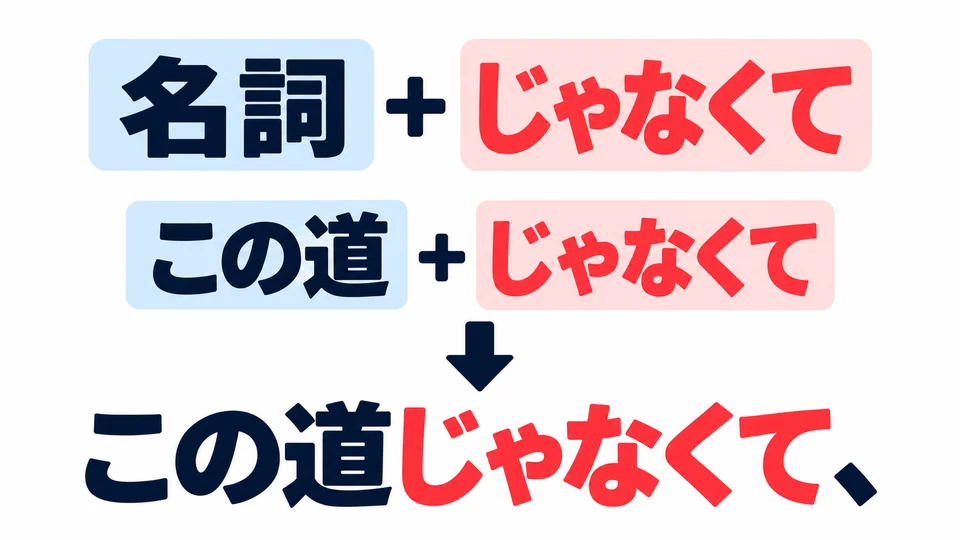
When rejecting a noun, add 「じゃなくて」 directly: この道じゃなくて.
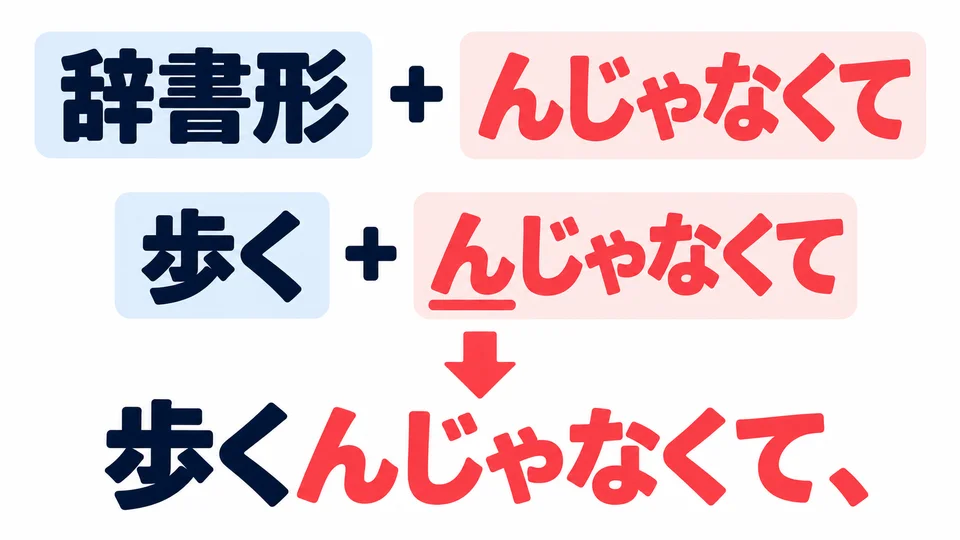
When rejecting an action, add 「んじゃなくて」 after the dictionary form: 歩くんじゃなくて.
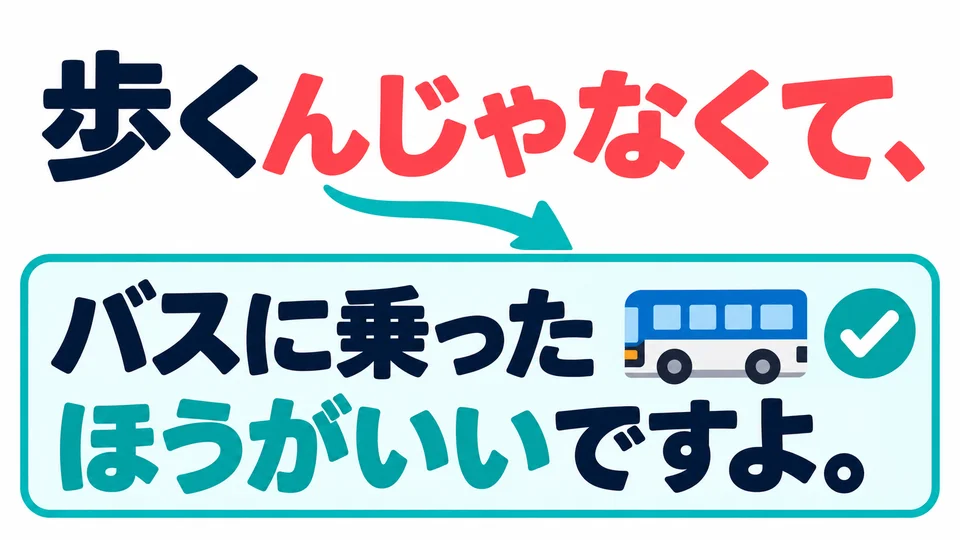
The second part can correct a fact or give advice. Here, 「たほうがいい」 recommends taking the bus.
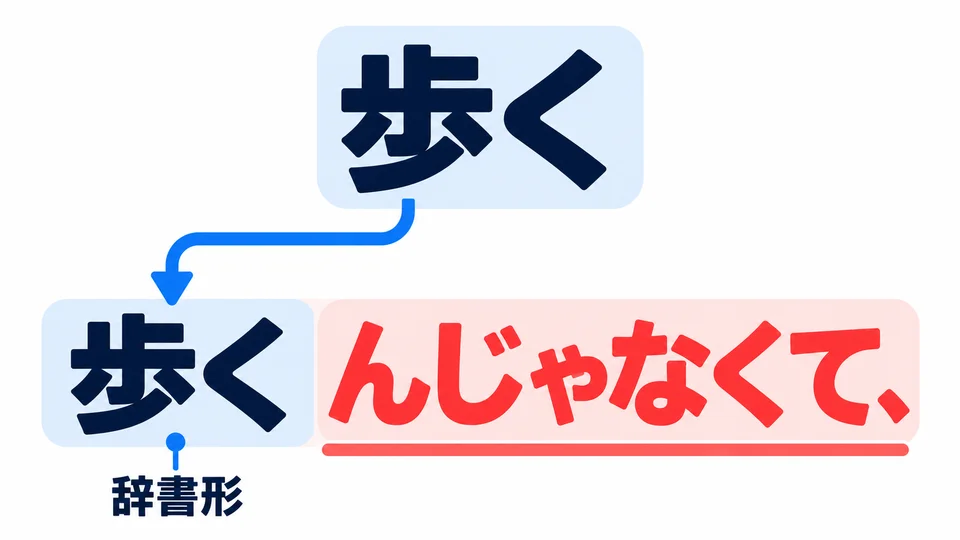
Keep 「歩く」 in the dictionary form. 「んじゃなくて」 already expresses the rejection, so do not change the verb to its negative form.
Example sentences
- このkono道michiじゃなくjanakuて、te地下chika道douをo通ったtoottaほうhouがga早いです。hayaidesu
In a conversation

Check yourself
Level 1 · Recognise
Which sentence is correct?
Level 1 · Recognise
Listen and choose the meaning
Level 2 · Build
Put the words in order
Instead of this road, it's faster to go through the underpass.
Level 3 · Use
What goes in the blank?
コーヒー 紅茶をください。
Not coffee; please give me tea.
More grammar in this theme
- 〜じゃなくて、〜rejecting one option; offering another