Japanese grammar · ≈ JLPT N4 · Beginner 3
〜てきます~te kimasu
gradual approach or appearance
Use 「〜てきます」 for something approaching the speaker or gradually coming into view as distance changes.
How it works
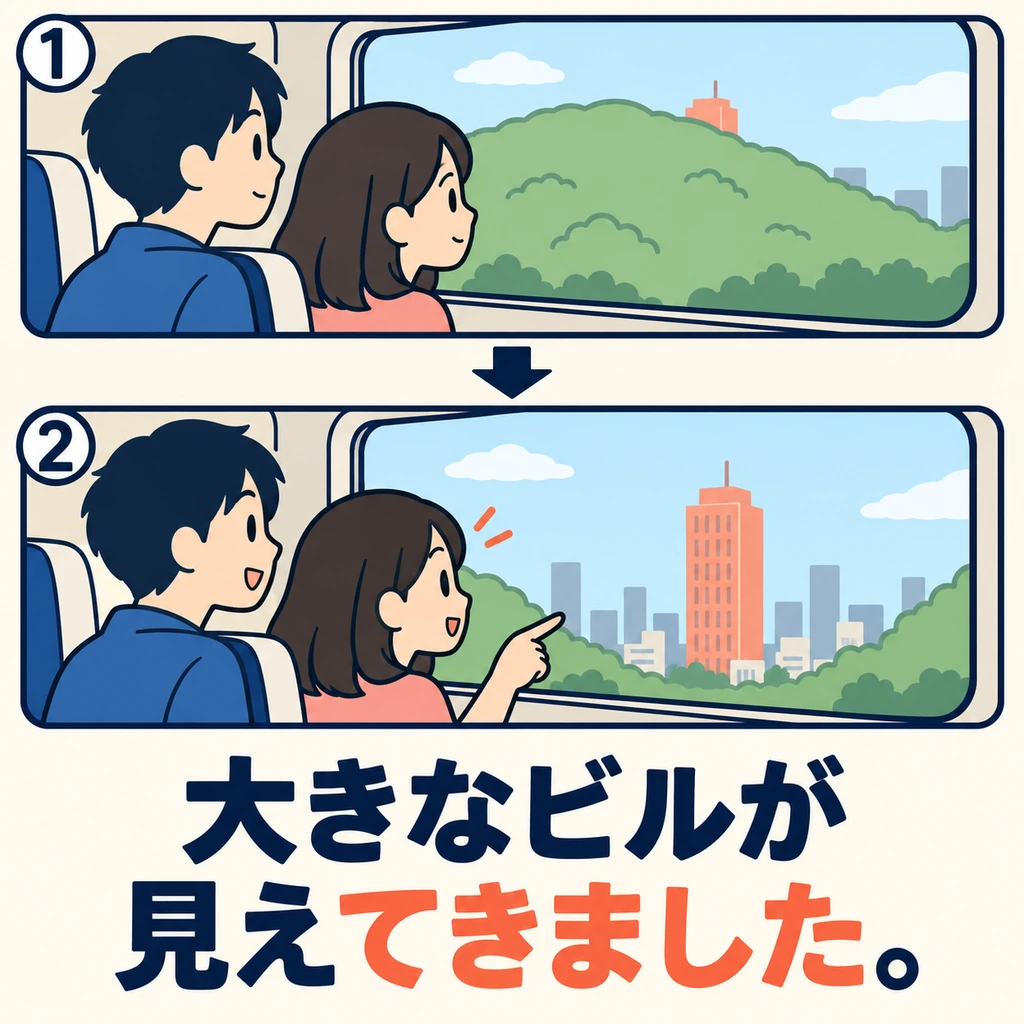
Look at the two pictures. As the train gets closer, what changes about the tall building outside the window?
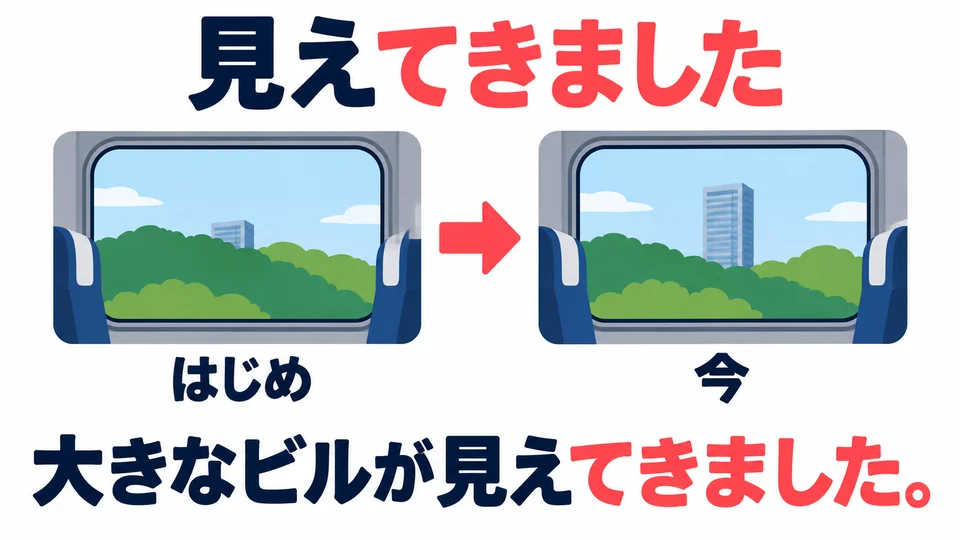
The tall building gradually comes into view. Use 「見えてきました」 to describe this change.

When an object moves toward the speaker, you can also use 「~てきます」 to describe its movement.
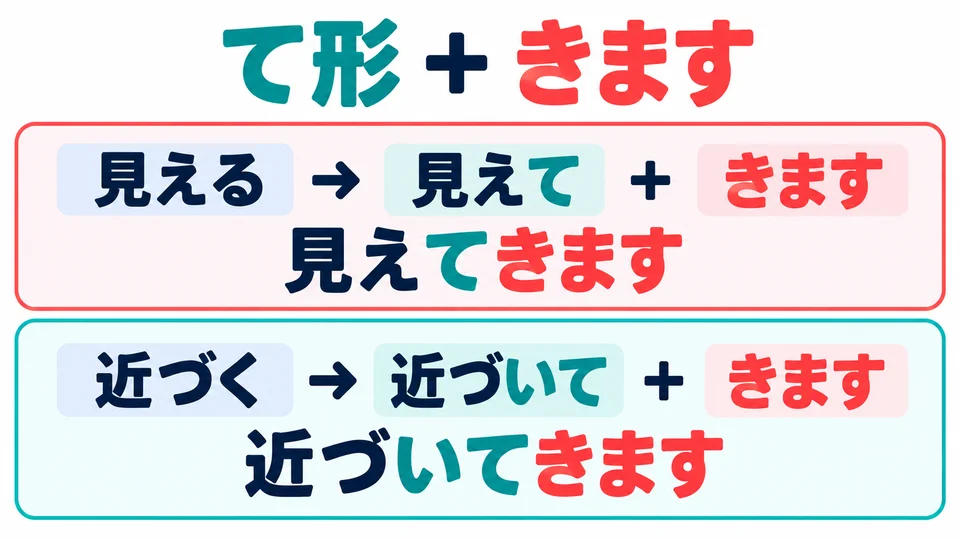
Add it to a verb’s て-form: 見える→見えてきます; 近づく→近づいてきます.

The building in the example isn’t moving. It can gradually come into view as the observer gets closer.

「近づいてきました」 means the distance has been getting shorter. It doesn’t mean you’ve already arrived.
Example sentences
- 大きなookinaビルbiruがga見えmieてteきました。kimashita
A tall building has come into view.
- 目的mokuteki地
In a conversation

- A何か見えますか。
A: Can you see anything?
- Bはい、だんだん大きな建物が見えてきました。
B: Yes, a big building has gradually come into view.
Check yourself
Level 1 · Recognise
Which sentence is correct?
Level 1 · Recognise
Listen and choose the meaning
Level 2 · Build
Put the words in order
People have gradually become fewer.
Level 3 · Use
What goes in the blank?
大きなビルが見え 。
A tall building has come into view.
More grammar in this theme
- 〜てきますgradual approach or appearance