JPEDLAB iconJPEDLAB
Save history

Create an account and play

Explore first, then save your progress whenever you are ready. No email address is required.

Start free
Read as articleCards
1/10

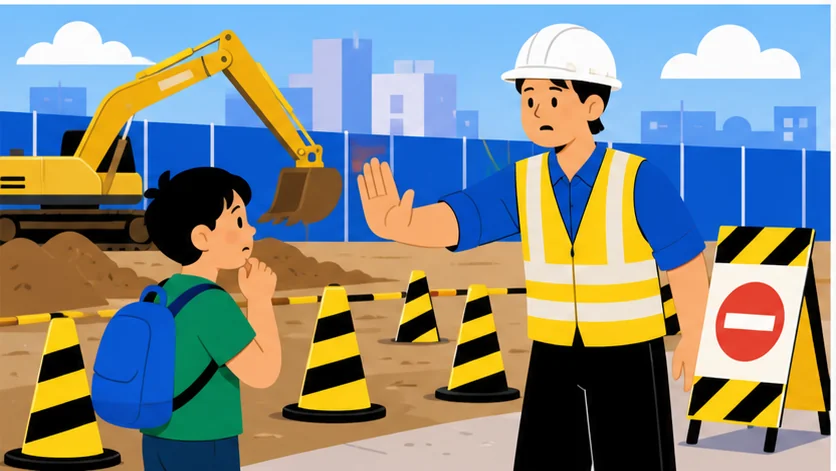
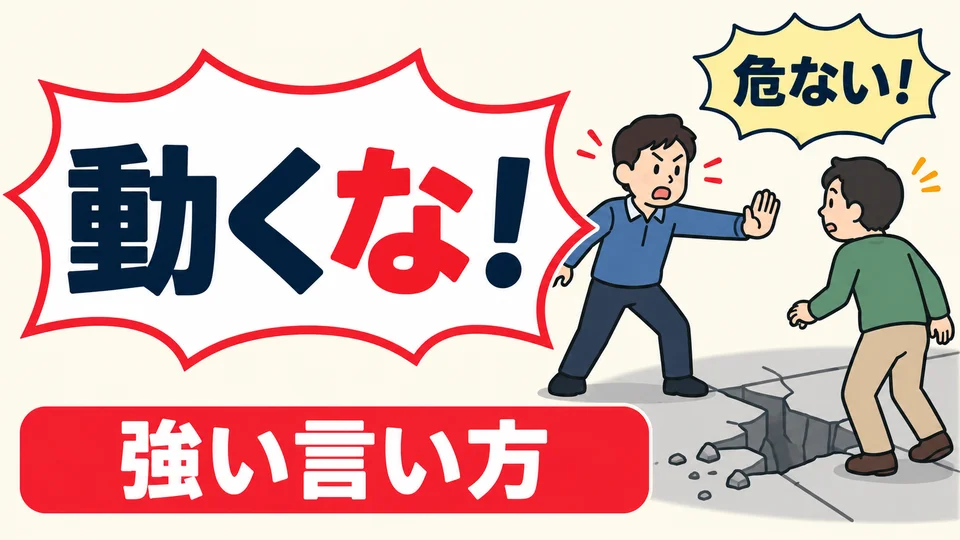
Why is he stopping the other person? The prohibitive form means “don’t do it” and stops someone immediately in a dangerous situation.

››

Lesson notes · ≈ JLPT N4 · Intermediate 1

〜な~na

strongly tell someone not to

Add 「な」 to the dictionary form in 「〜るな」 to urgently stop someone or give a stern warning.

How it works
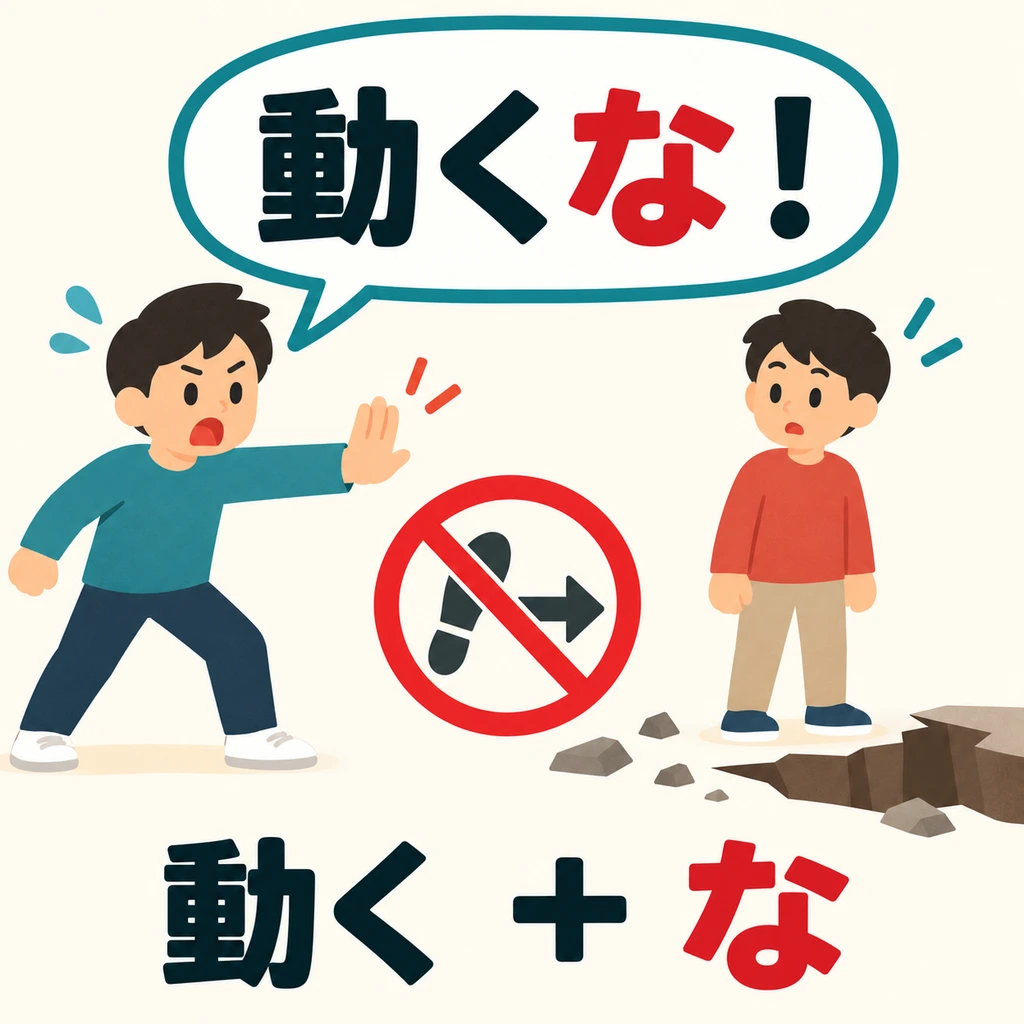
  1. Why is he stopping the other person? The prohibitive form means “don’t do it” and stops someone immediately in a dangerous situation.
    Why is he stopping the other person? The prohibitive form means “don’t do it” and stops someone immediately in a dangerous situation.

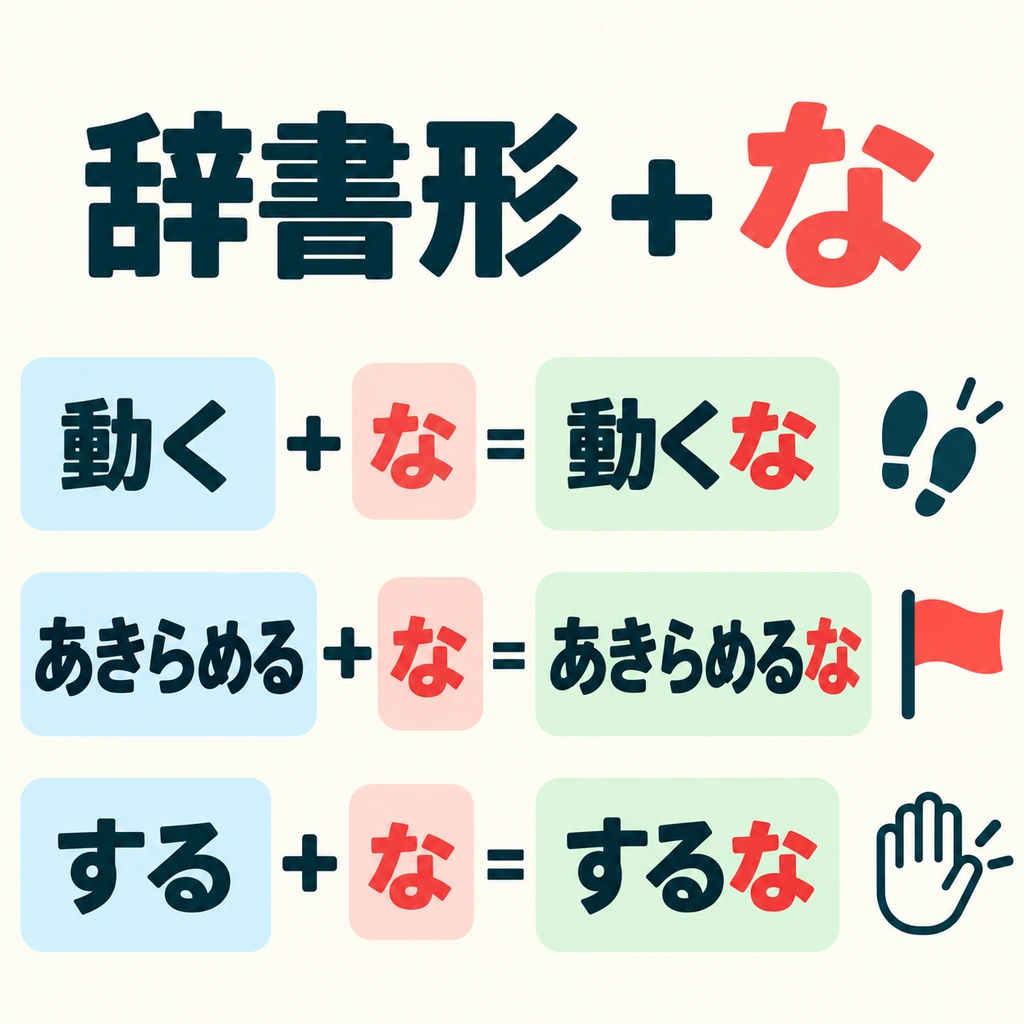
  2. For every verb group, add 「な」 to the dictionary form. The verb stays unchanged, so there are no new endings to memorize.
    For every verb group, add 「な」 to the dictionary form. The verb stays unchanged, so there are no new endings to memorize.

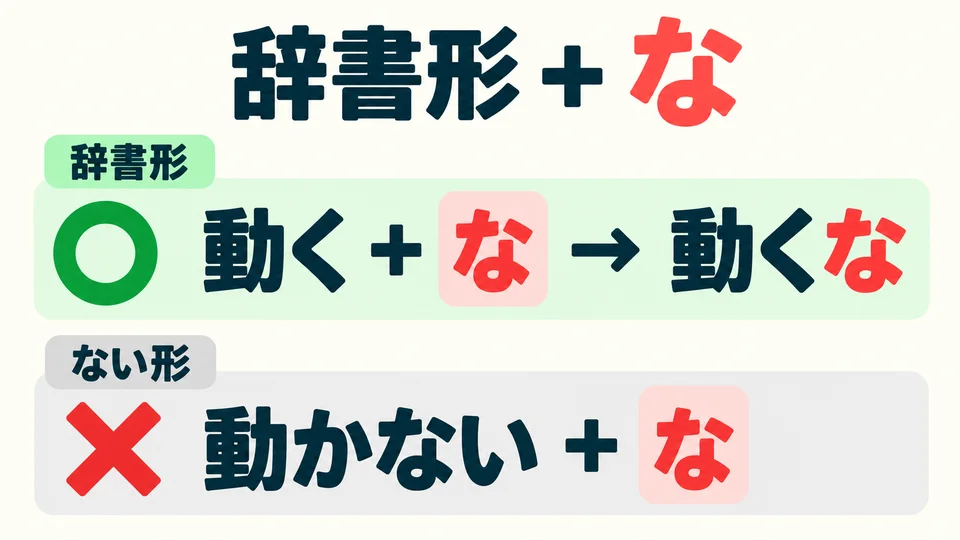
  3. 「な」 follows the dictionary form, not the ない form. To forbid movement, say 「動くな」, not 「動かないな」.
    「な」 follows the dictionary form, not the ない form. To forbid movement, say 「動くな」, not 「動かないな」.

  4. The prohibitive form sounds very strong. It is often used to stop someone urgently or give a stern warning, so use it carefully for everyday requests.
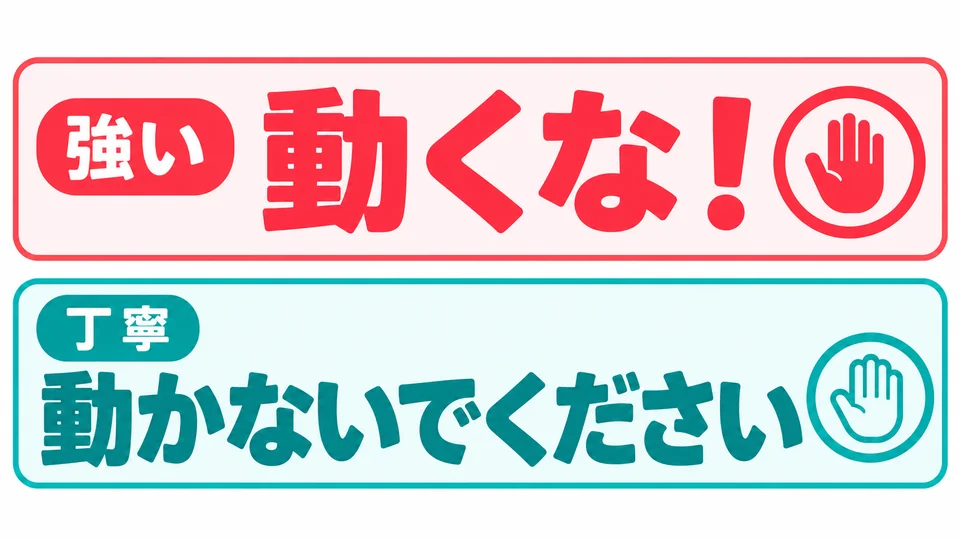
    The prohibitive form sounds very strong. It is often used to stop someone urgently or give a stern warning, so use it carefully for everyday requests.

  5. For an everyday request not to move, say 「動かないでください」. It is more polite than 「動くな」.

    For an everyday request not to move, say 「動かないでください」. It is more polite than 「動くな」.

  • 「あきらめるな!」 is encouragement, not a scolding. It urges someone to keep trying: “Don’t give up!”

    「あきらめるな!」 is encouragement, not a scolding. It urges someone to keep trying: “Don’t give up!”

  • 「無理をするな!」 shows concern: “Don’t push yourself too hard.” A strong tone can also express care.

    「無理をするな!」 shows concern: “Don’t push yourself too hard.” A strong tone can also express care.

  • Example sentences

    • あきらめるakirameruな!なna

      Don't give up!

    • 無理むりmuriをoするsuruな!なna

      Don't overdo it!

    In a conversation

    • A
      危ないあぶないから、そこを動くうごくな!な

      A: It's dangerous, so don't move from there!

    • B
      わかりました。足元あしもとに気きをつけます。

      B: I understand. I'll watch my step.

    • A
      よし、立入たちいり禁止きんしの場所ばしょにはわ絶対ぜったいに入るはいるなよ。

      A: Good. Never enter no-entry zones.

    Check yourself

    1. Level 1 · Recognise

      Which sentence is correct?

    2. Level 1 · Recognise

      Listen and choose the meaning

    3. Level 2 · Build

      Put the words in order

      Don't run inside the venue!

    4. Level 3 · Use

      What goes in the blank?

      会場の中で____。

      Do not run inside the venue.

    More grammar in this theme

    • 〜ようになりますbegin doing something habitually
    • 〜なくなりますstop doing or feeling
    • 〜たばかりですrecently completed action
    • 〜ながら〜while doing another action
    • 〜と言っていましたreport what someone said
    • 命令形forceful direct command
    • 〜なstrongly tell someone not to
    • 〜ながらtwo actions happening together
    Previous命令形Next〜ながら

    Keep practising

    Test your Japanese vocabulary12 adaptive questions, freeCheck your pronunciationRead aloud and get a scorePractise verb forms10-question conjugation quizSee the whole courseGrammar, vocabulary and quizzes by theme
    See the whole course
    Intermediate 1
    Joining Activities and Local Life