
Japanese grammar · ≈ JLPT N3 · Intermediate 1
〜させてもらいます~sasete moraimasu
gratefully be allowed to
Use 「〜させてもらいます」 to show appreciation for being allowed or given a chance to act.
How it works
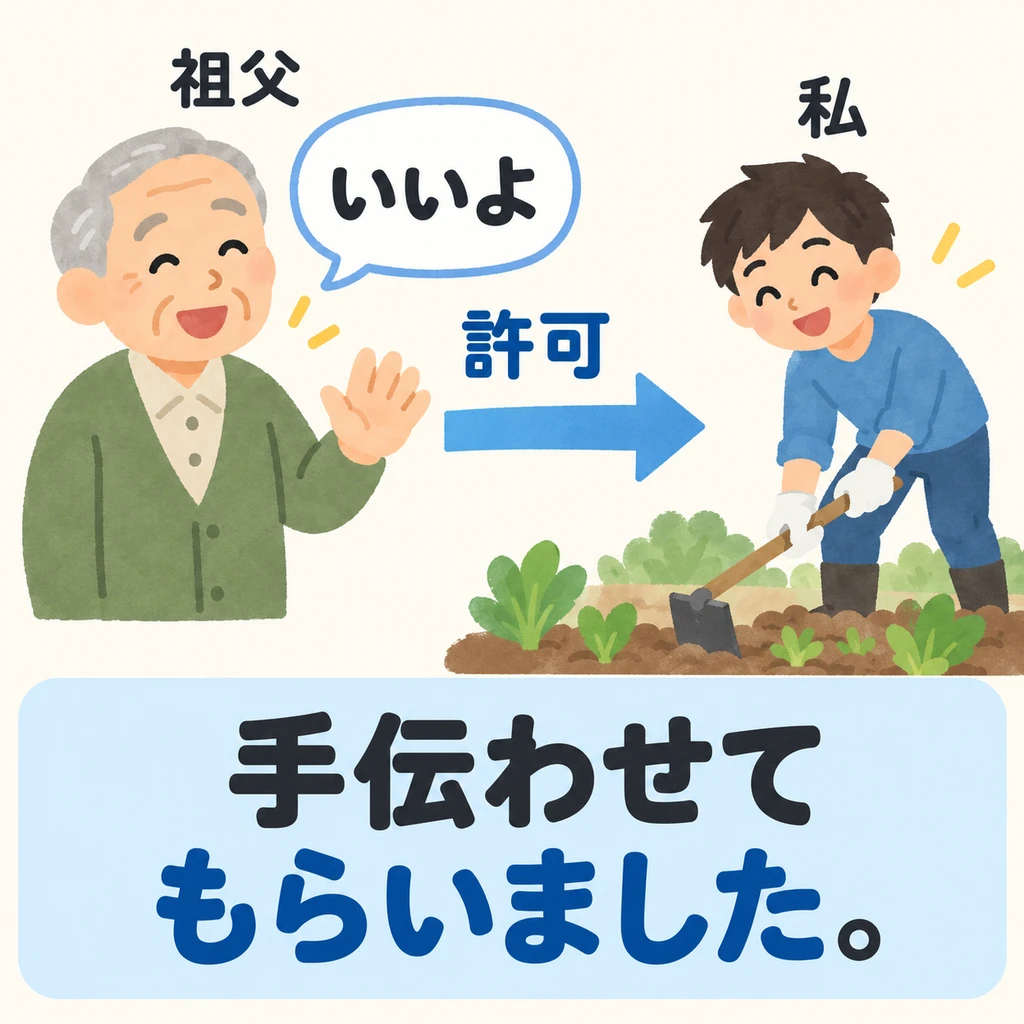
Who is doing the work? Grandfather lets me help; I am the one actually doing the farm work.
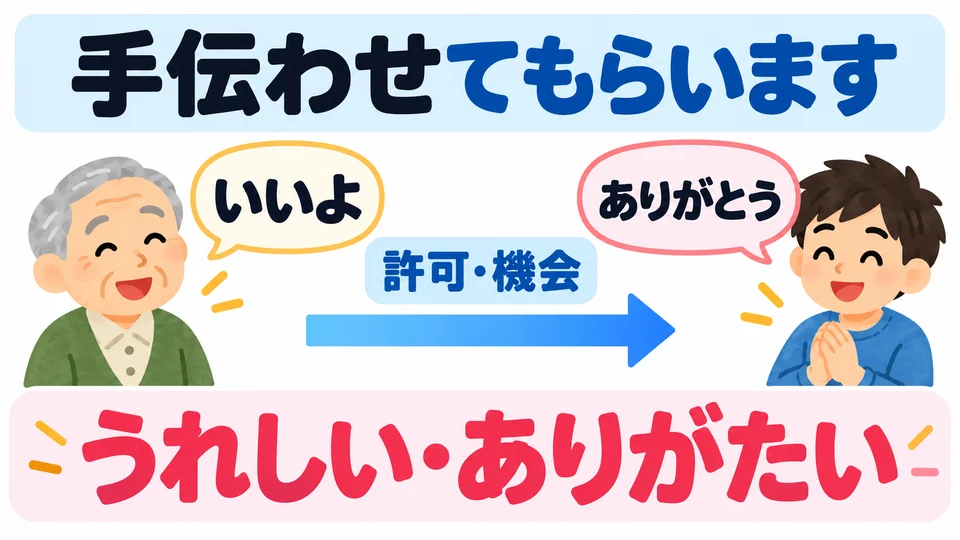
You see the other person’s permission or the opportunity they give you as a kindness, and express appreciation and gratitude.
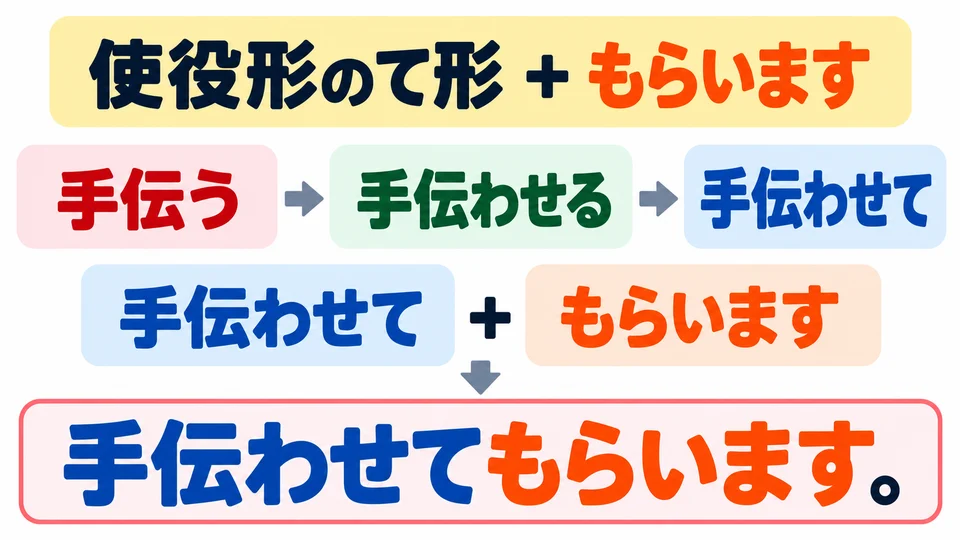
Use the て-form of the causative + もらいます: 手伝う → 手伝わせて + もらいます.
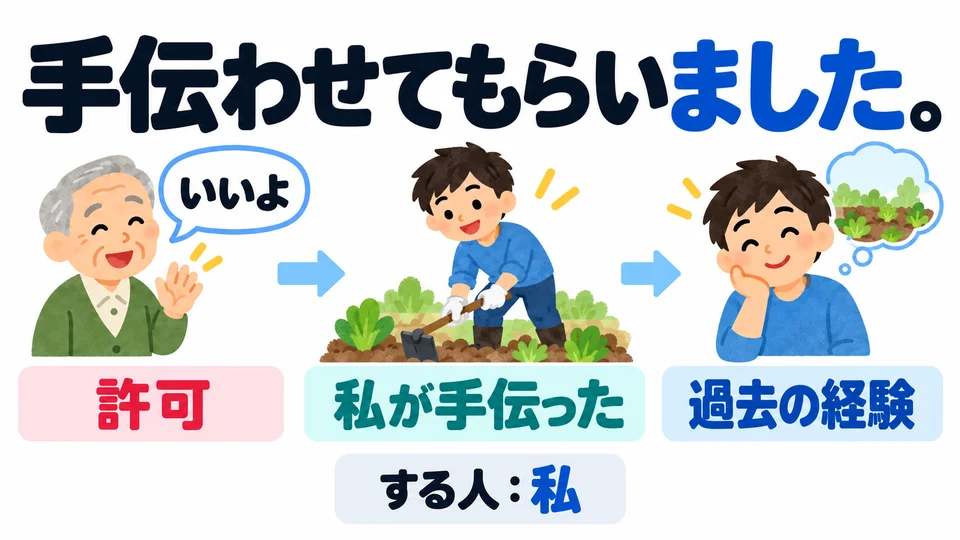
もらいました describes a past experience of being allowed to do something; the speaker is still the person who does it.
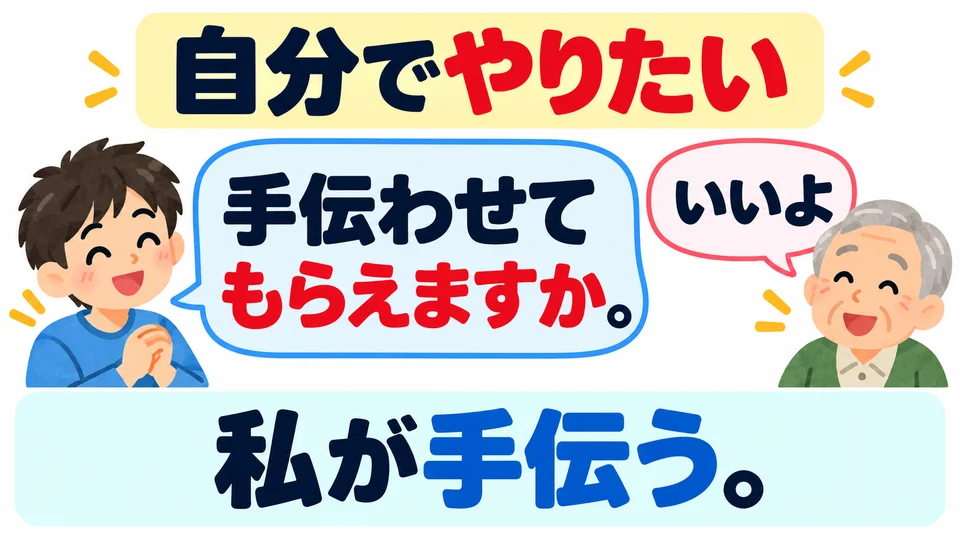
When you want to do something yourself, you can also use this expression to ask for permission, with a tone of appreciation.
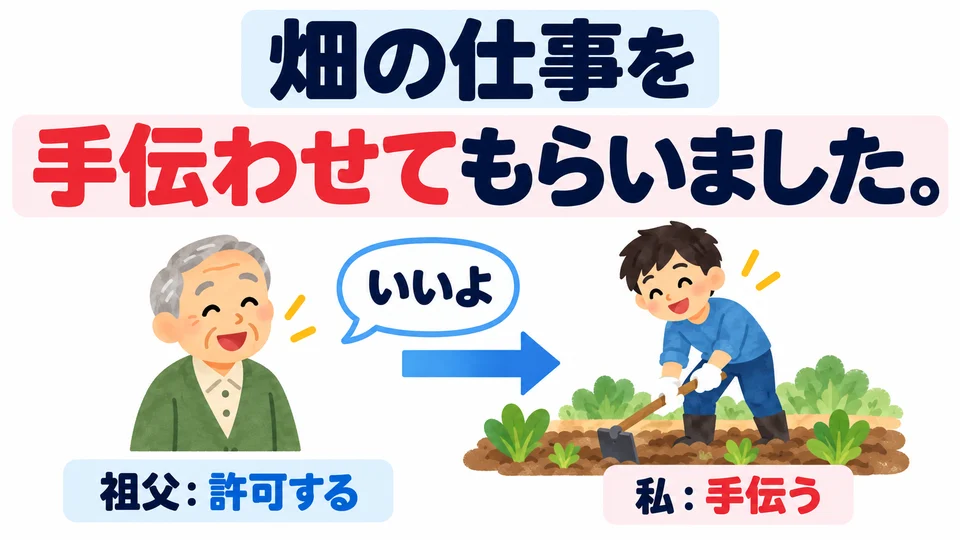
In the farm-work example, I help my grandfather with the work; he allows me to take part.
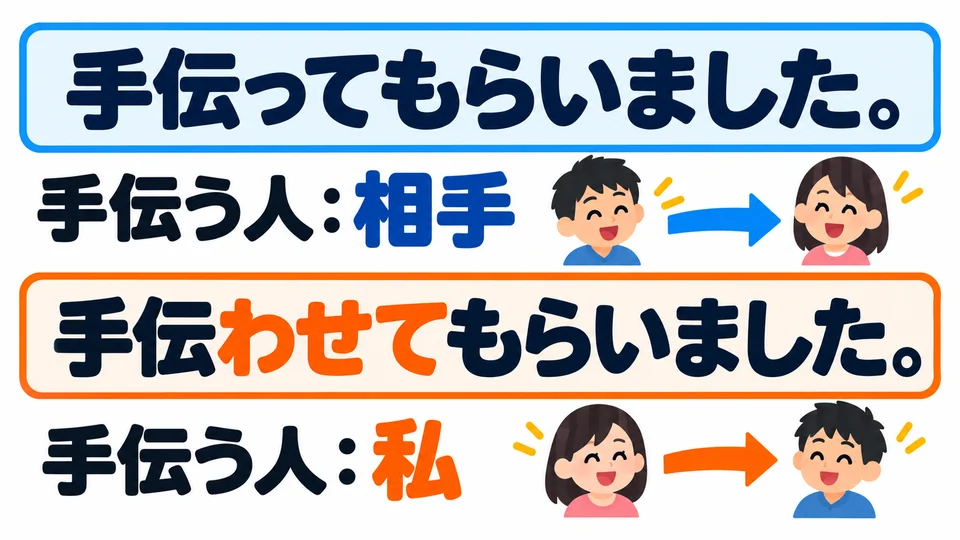
手伝ってもらいました means the other person helped me; with the causative form added, I am the one doing the helping.
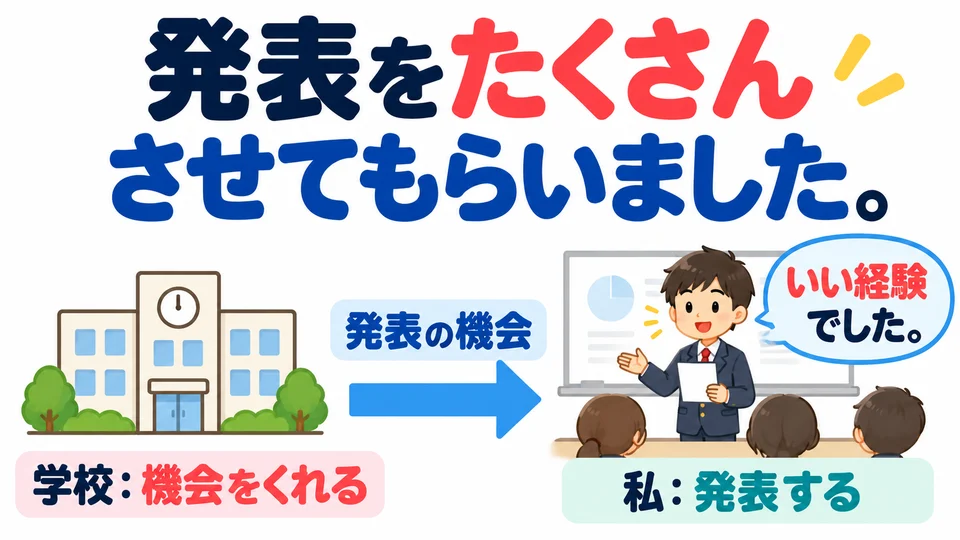
In the presentation example, the school gives me many chances to speak; the speaker sees this as a valuable experience.
Example sentences
- 夏休みnatsuyasumiに、ni、祖父sofuのno家ieでde畑hatakeのno仕事shigotoをo手伝わせtetsudawase
In a conversation

Check yourself
Level 1 · Recognise
Which sentence is correct?
Level 1 · Recognise
Listen and choose the meaning
Level 2 · Build
Put the words in order
During summer vacation, I was allowed to help with farm work at my grandfather's house.
Level 3 · Use
What goes in the blank?
夏休みに、祖父の家で畑の仕事を____。
During summer vacation, I was allowed to help with the farm work at my grandfather's house.
More grammar in this theme
- 〜させてもらいますgratefully be allowed to