
Japanese grammar · ≈ JLPT N5 · Beginner 1
〜時から〜時まで〜ます~ ji kara ~ ji made ~masu
daily routine and time span
Use 「〜ます」 for a routine and 「〜時から〜時まで」 to say when it takes place.
How it works
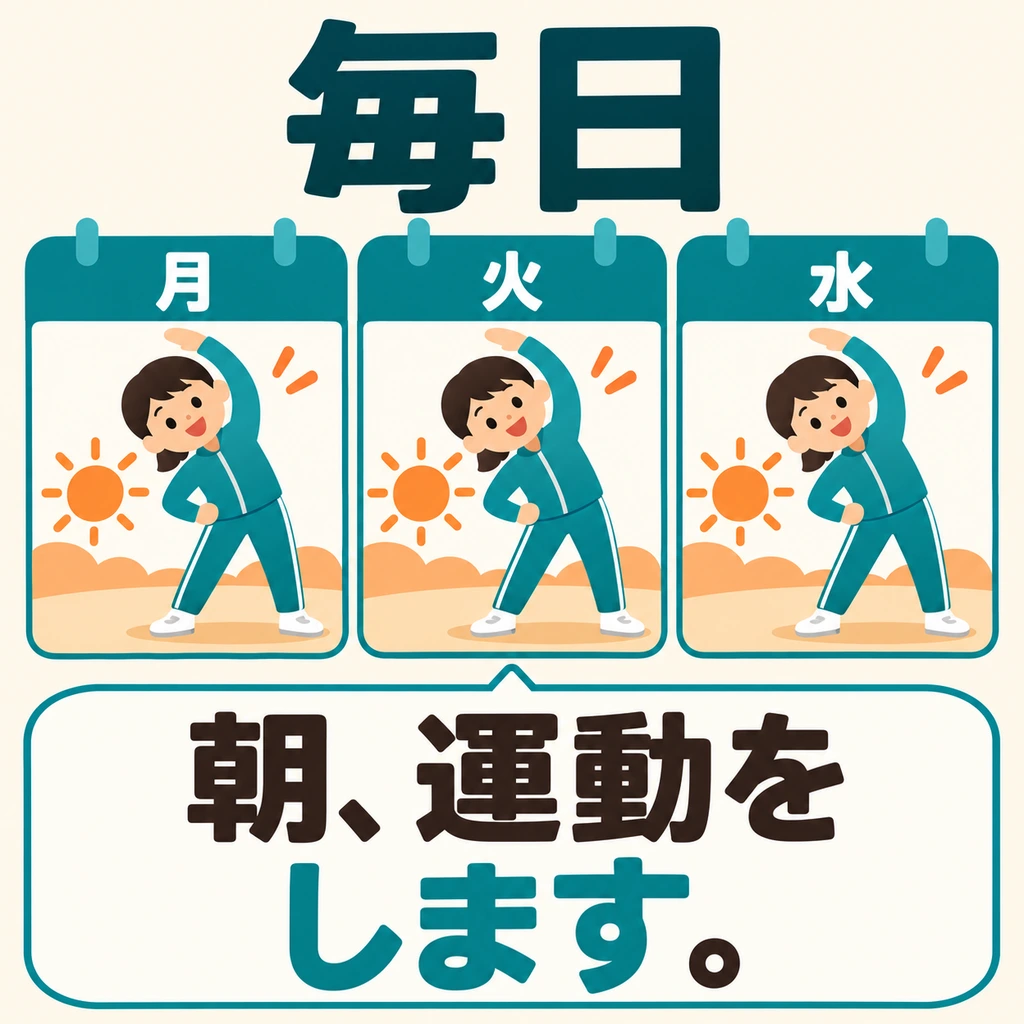
The same action on three mornings: 「朝、運動をします」 can describe a daily habit.
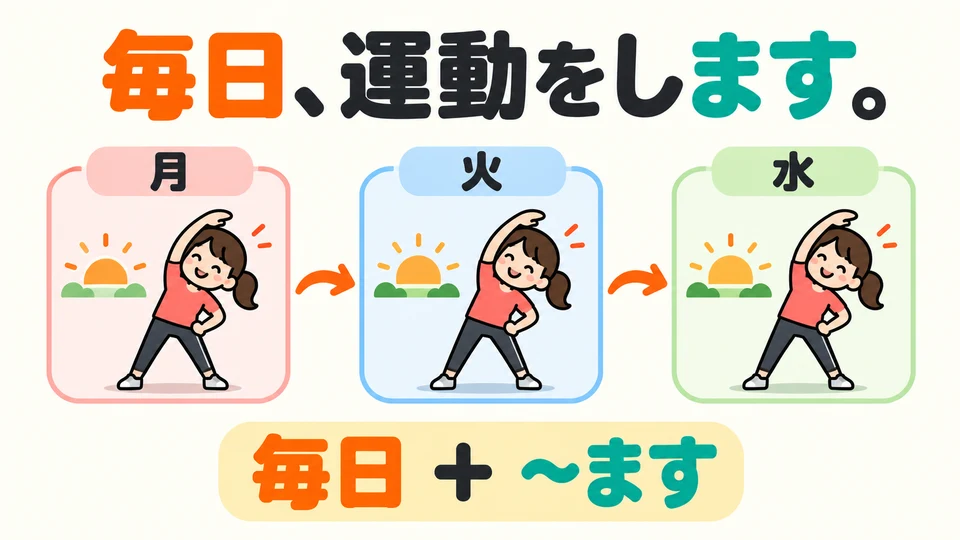
Use 「ます」 to describe your daily routine. Adding 「毎日」 makes the habit clearer.
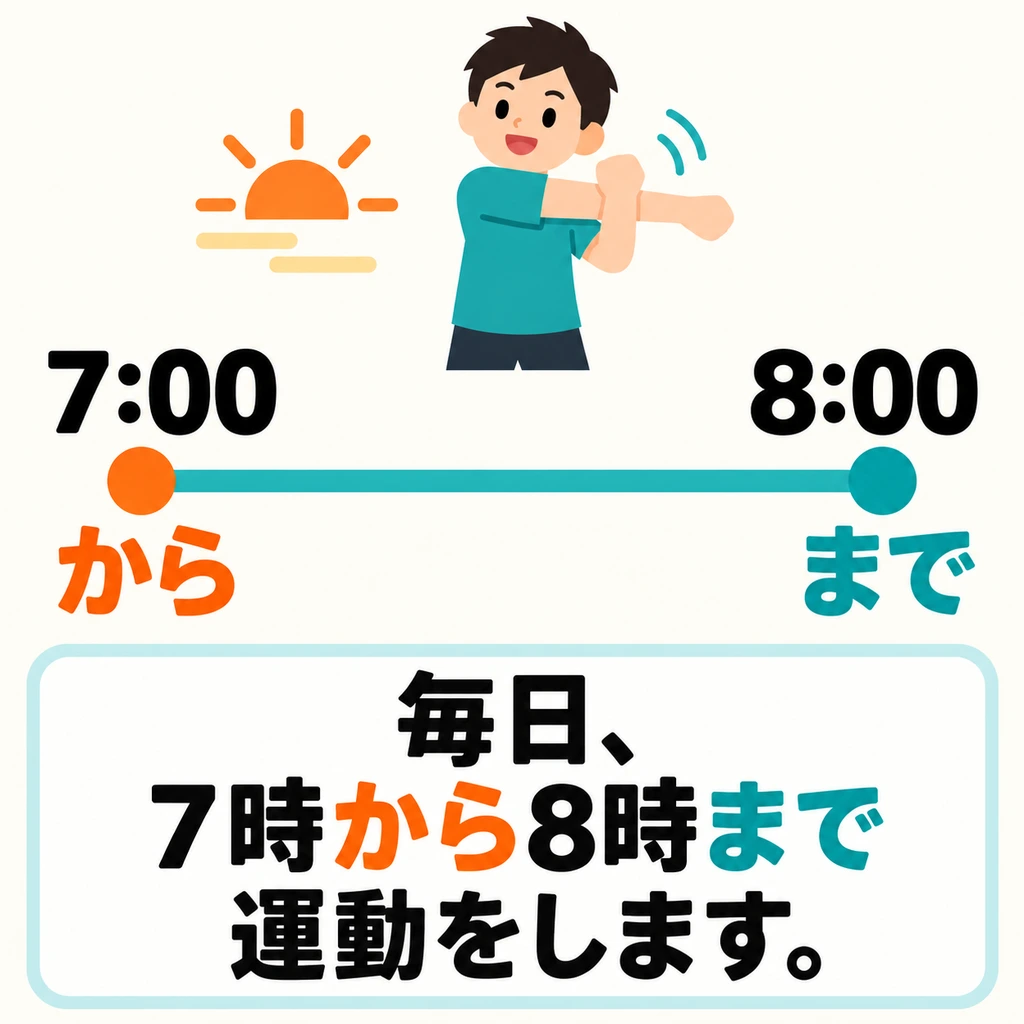
Look at the exercise timeline: from seven to eight. Put the start and end times before the action to show when it takes place.
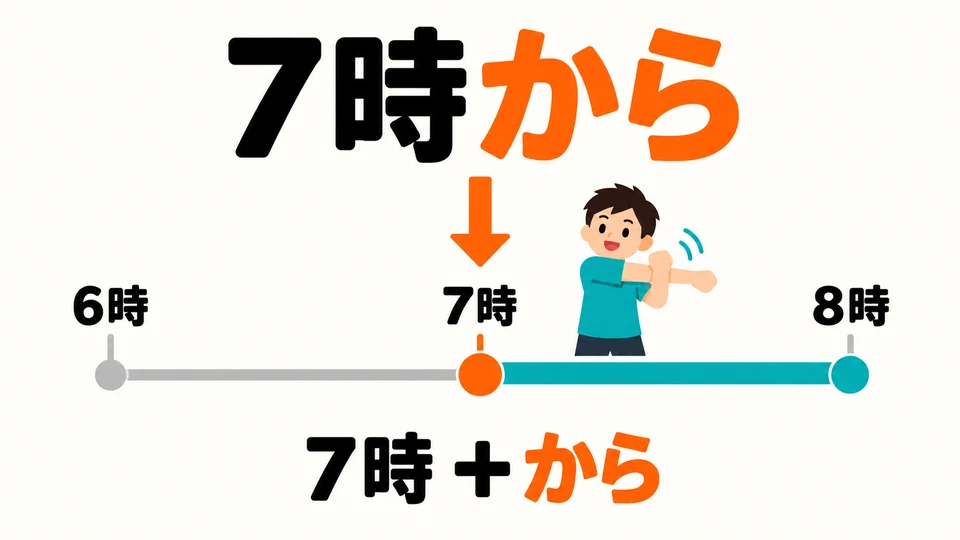
「7時から」 means starting at seven. 「から」 comes right after the start time and marks the beginning of the interval.
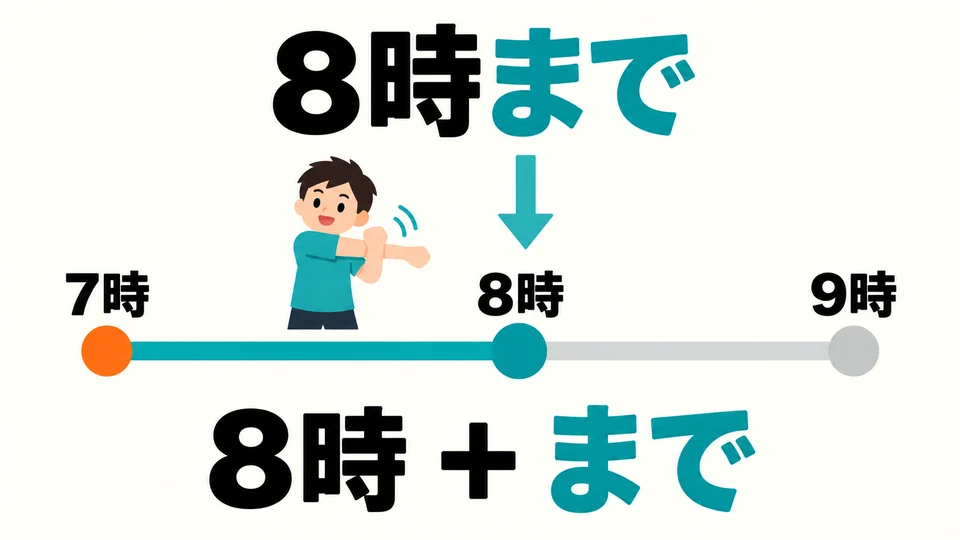
「8時まで」 means ending at eight. 「まで」 comes right after the end time and marks the end of the interval.
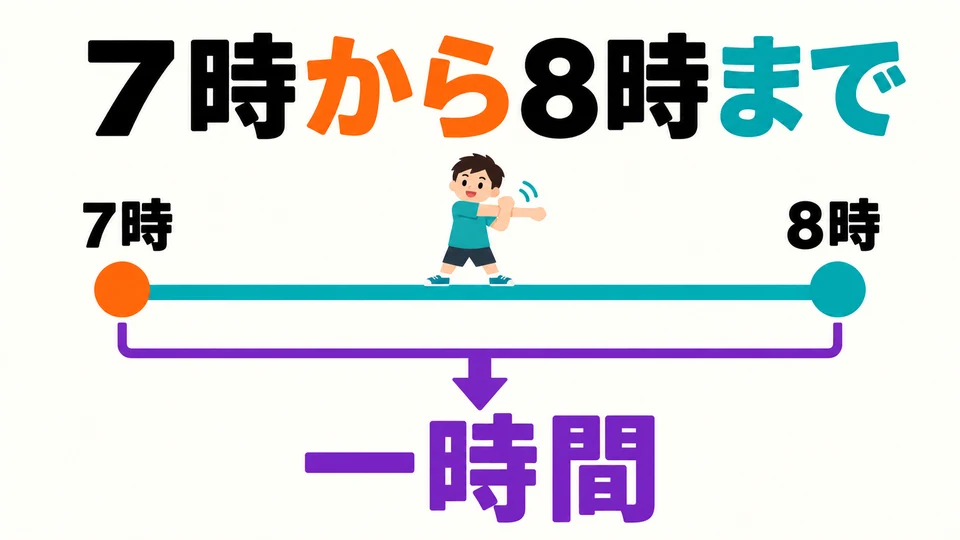
「一時間」 answers “How long?”; 「7時から8時まで」 answers “From what time to what time?”
Example sentences
- 朝、asa運動undouをoしますshimasu
I exercise in the morning.
In a conversation

- A毎日何をしますか。
A: What do you do every day?
- B朝、一時間運動をします。それ
Check yourself
Level 1 · Recognise
Which sentence is correct?
Level 1 · Recognise
Listen and choose the meaning
Level 2 · Build
Put the words in order
I exercise from 6 to 7 every morning.
Level 3 · Use
What goes in the blank?
たまに、午前中、9 時 11 時まで部屋で休みます。
Occasionally, I rest in my room from 9 AM to 11 AM.
More grammar in this theme
- 〜時から〜時まで〜ますdaily routine and time span