JPEDLAB iconJPEDLAB
Save history

Create an account and play

Explore first, then save your progress whenever you are ready. No email address is required.

Start free
Read as articleCards
1/9

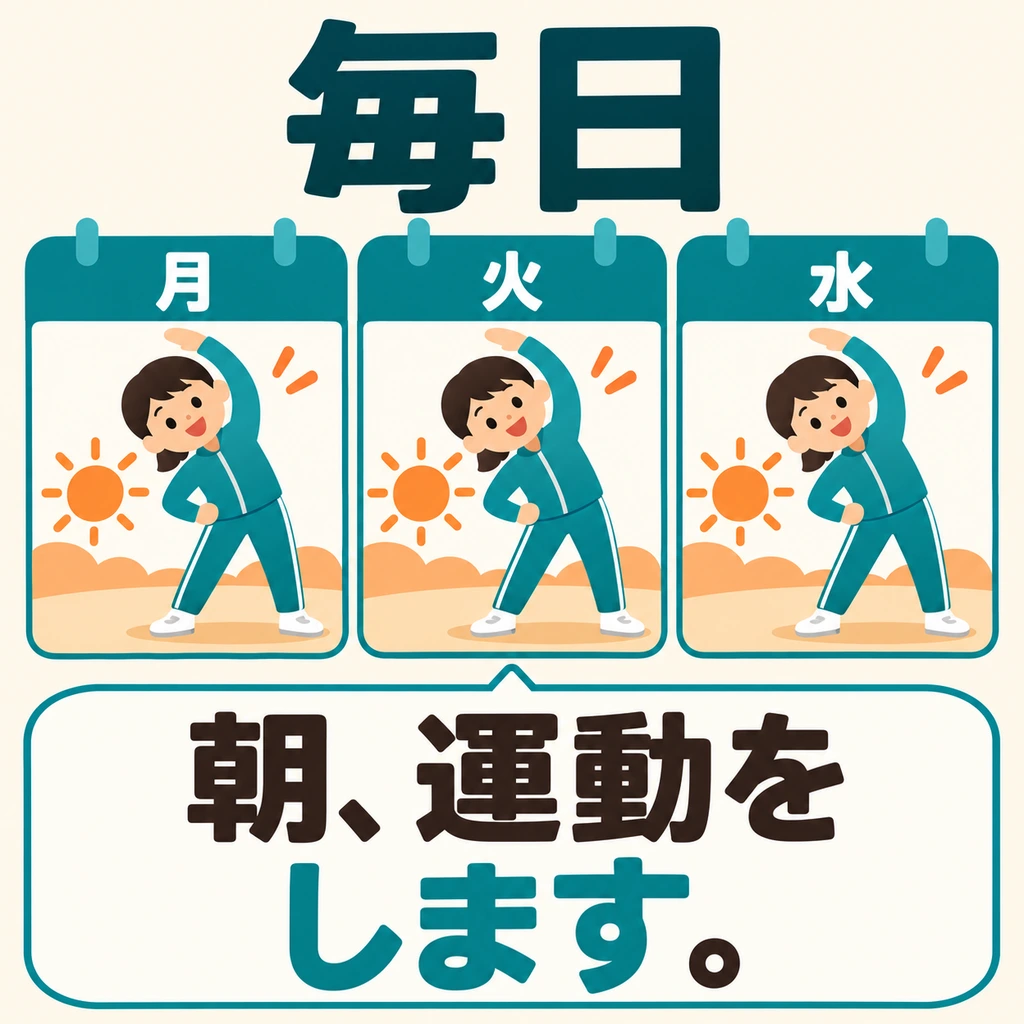
The same action on three mornings: 「朝、運動をします」 can describe a daily habit.
››

Lesson notes · ≈ JLPT N5 · Beginner 1

〜時から〜時まで〜ます~ ji kara ~ ji made ~masu

daily routine and time span

Use 「〜ます」 for a routine and 「〜時から〜時まで」 to say when it takes place.

Pattern
〜時から〜時まで〜ます
Romaji
~ ji kara ~ ji made ~masu
JLPT (approx.)
≈ N5
Course level
Beginner 1
Theme
Daily Life

How it works

  1. The same action on three mornings: 「朝、運動をします」 can describe a daily habit.

    The same action on three mornings: 「朝、運動をします」 can describe a daily habit.

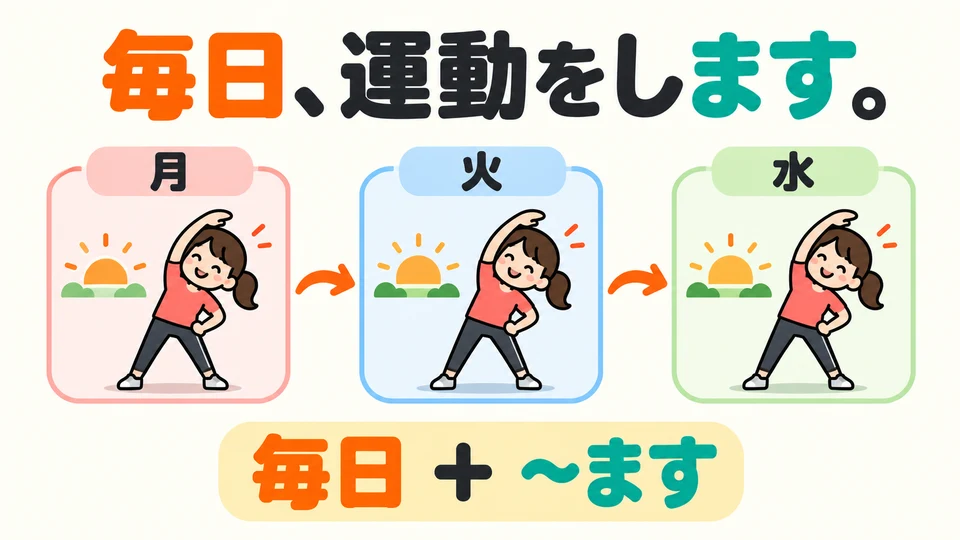
  2. Use 「ます」 to describe your daily routine. Adding 「毎日」 makes the habit clearer.
    Use 「ます」 to describe your daily routine. Adding 「毎日」 makes the habit clearer.

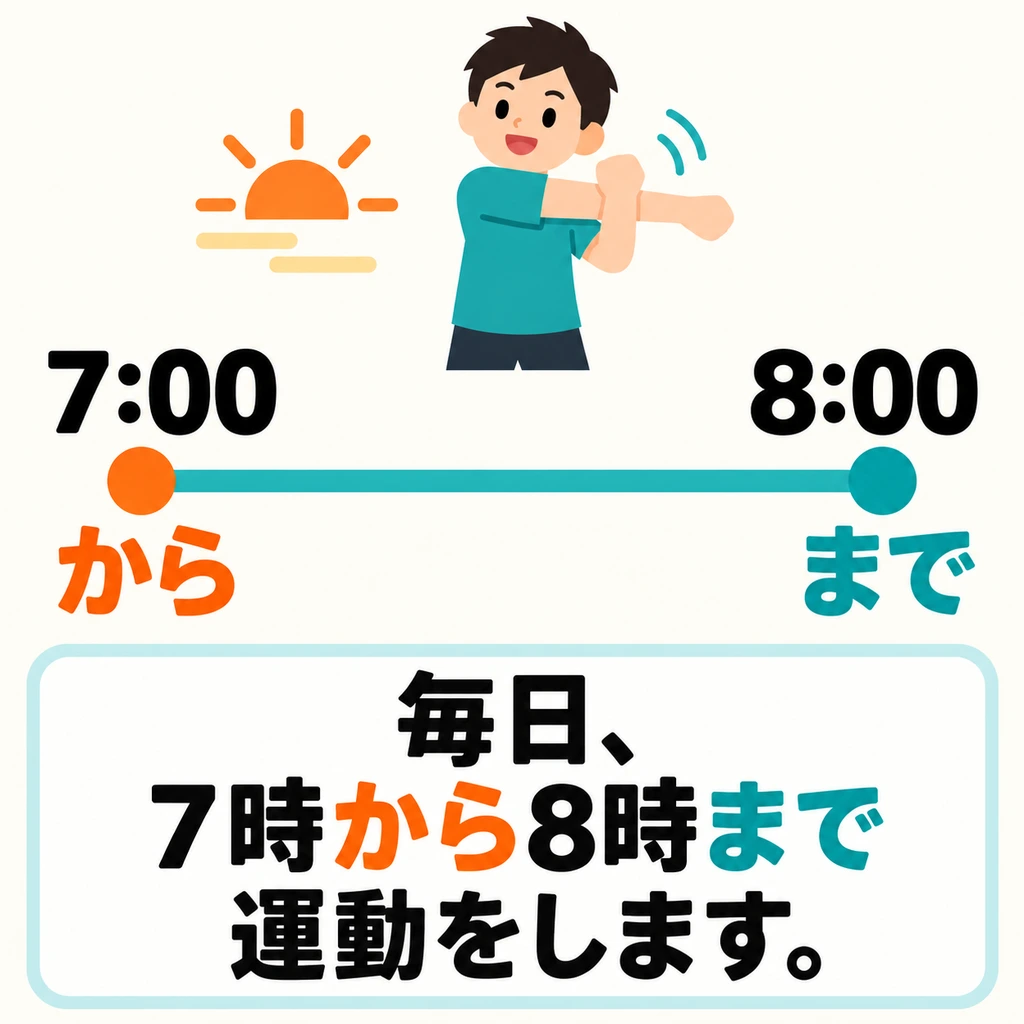
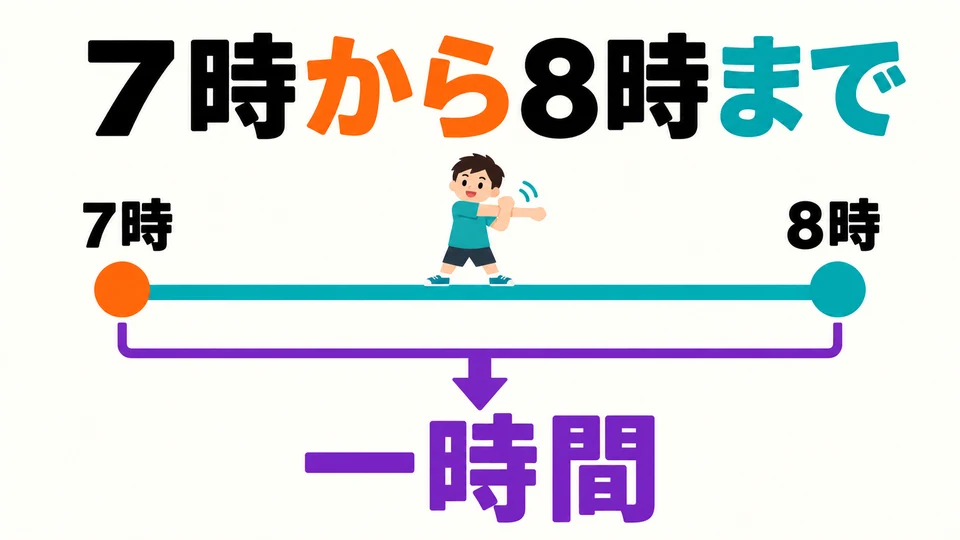
  3. Look at the exercise timeline: from seven to eight. Put the start and end times before the action to show when it takes place.
    Look at the exercise timeline: from seven to eight. Put the start and end times before the action to show when it takes place.

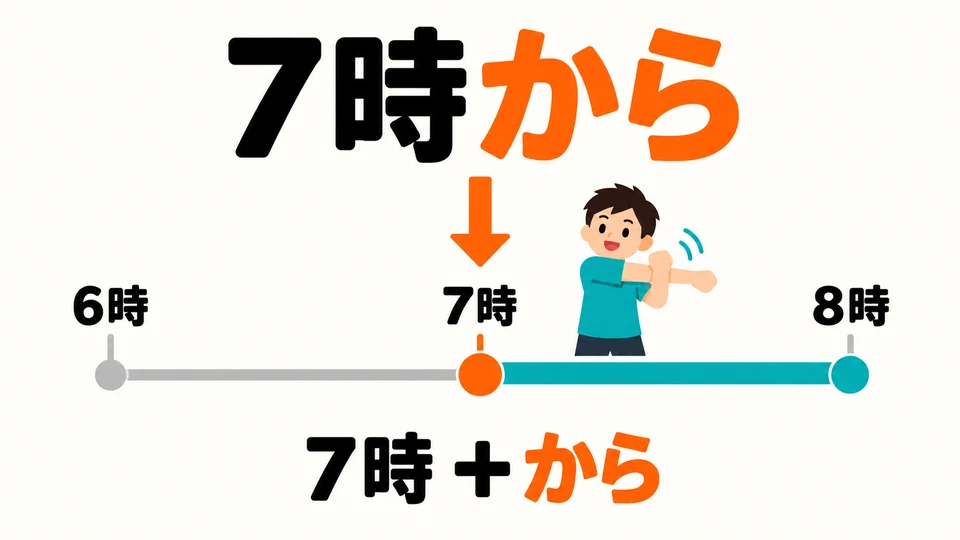
  4. 「7時から」 means starting at seven. 「から」 comes right after the start time and marks the beginning of the interval.
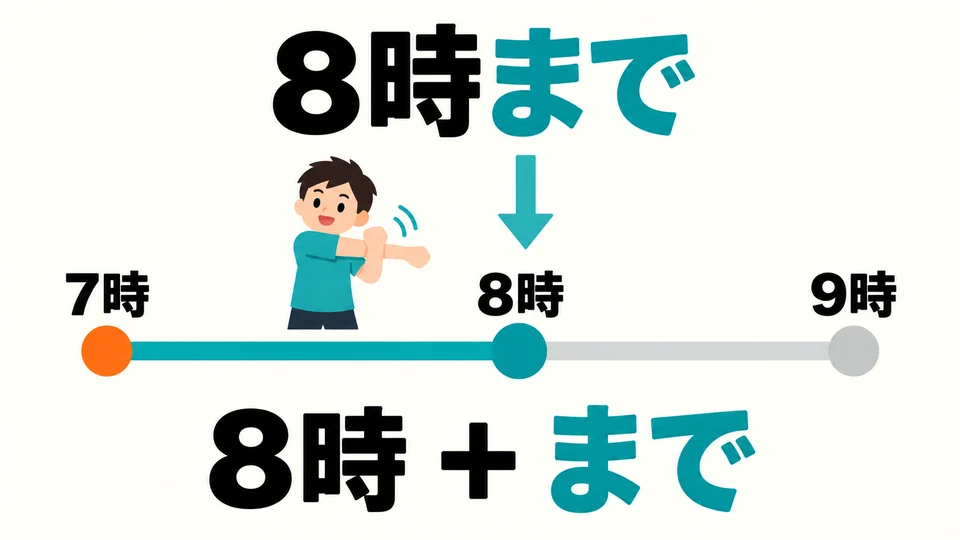
    「7時から」 means starting at seven. 「から」 comes right after the start time and marks the beginning of the interval.

「8時まで」 means ending at eight. 「まで」 comes right after the end time and marks the end of the interval.

「8時まで」 means ending at eight. 「まで」 comes right after the end time and marks the end of the interval.

  • 「一時間」 answers “How long?”; 「7時から8時まで」 answers “From what time to what time?”

    「一時間」 answers “How long?”; 「7時から8時まで」 answers “From what time to what time?”

  • Example sentences

    • 朝、あさasa運動うんどうundouをoしますshimasu

      I exercise in the morning.

    In a conversation

    • A
      毎日まいにち何なにをしますか。か

      A: What do you do every day?

    • B
      朝、あさ一いち時間じかん運動うんどうをします。しますそれから夜よる三さん十分じゅっぷん本ほんを読みます。よみます

      B: I exercise for an hour in the morning. Then I read for thirty minutes at night.

    • A
      いいですね。ね

      A: That's nice.

    Check yourself

    1. Which sentence is correct?

      1. 毎日、朝6時から7時まで運動をします。
      2. 朝6時を7時まで運動をします
      3. 朝6時から7時まで運動をしな
      4. 6時まで7時から運動をします
      Show answer

      Answer: A 毎日、朝6時から7時まで運動をします。

    2. Which sentence is correct?

      1. 夜、8時から9時まで本を読みます。
      2. 8時で9時まで本を読みます
      3. 8時を9時まで本を読みます
      4. 8時から9時まで本読みますする
      Show answer

      Answer: A 夜、8時から9時まで本を読みます。

    3. Which sentence is correct?

      1. 土曜日の午後、2時から4時まで買い物をします。
      2. 2時で4時まで買い物をします
      3. 2時を4時まで買い物をします
      4. 2時から4時まで買い物をしますだ
      Show answer

      Answer: A 土曜日の午後、2時から4時まで買い物をします。

    Take the quiz

    More grammar in this theme

    • 〜時〜分tell the clock time
    • 〜から〜までですtime range: from ... to ...
    • 何曜日ですかask the day of the week
    • 〜ますpolite future plan
    • 〜へ行きますdirection or destination
    • 〜で〜ますplace where action happens
    • 〜時から〜時まで〜ますdaily routine and time span
    • 〜や〜などexamples among several items
    • 〜時にtime when action happens
    • 何も〜ません/どこへも〜ませんtotal negation: nothing, nowhere
    Previous〜で〜ますNext〜や〜など

    Keep practising

    Test your Japanese vocabulary12 adaptive questions, freeCheck your pronunciationRead aloud and get a scorePractise verb forms10-question conjugation quizSee the whole courseGrammar, vocabulary and quizzes by theme
    See the whole course
    Beginner 1
    Daily Life