
Japanese grammar · ≈ JLPT N5 · Beginner 1
〜かったです/〜くなかったです~katta desu / ~ku nakatta desu
past adjective impression
Use 「〜かったです/〜くなかったです」 to describe a polite past impression with an い-adjective.
How it works
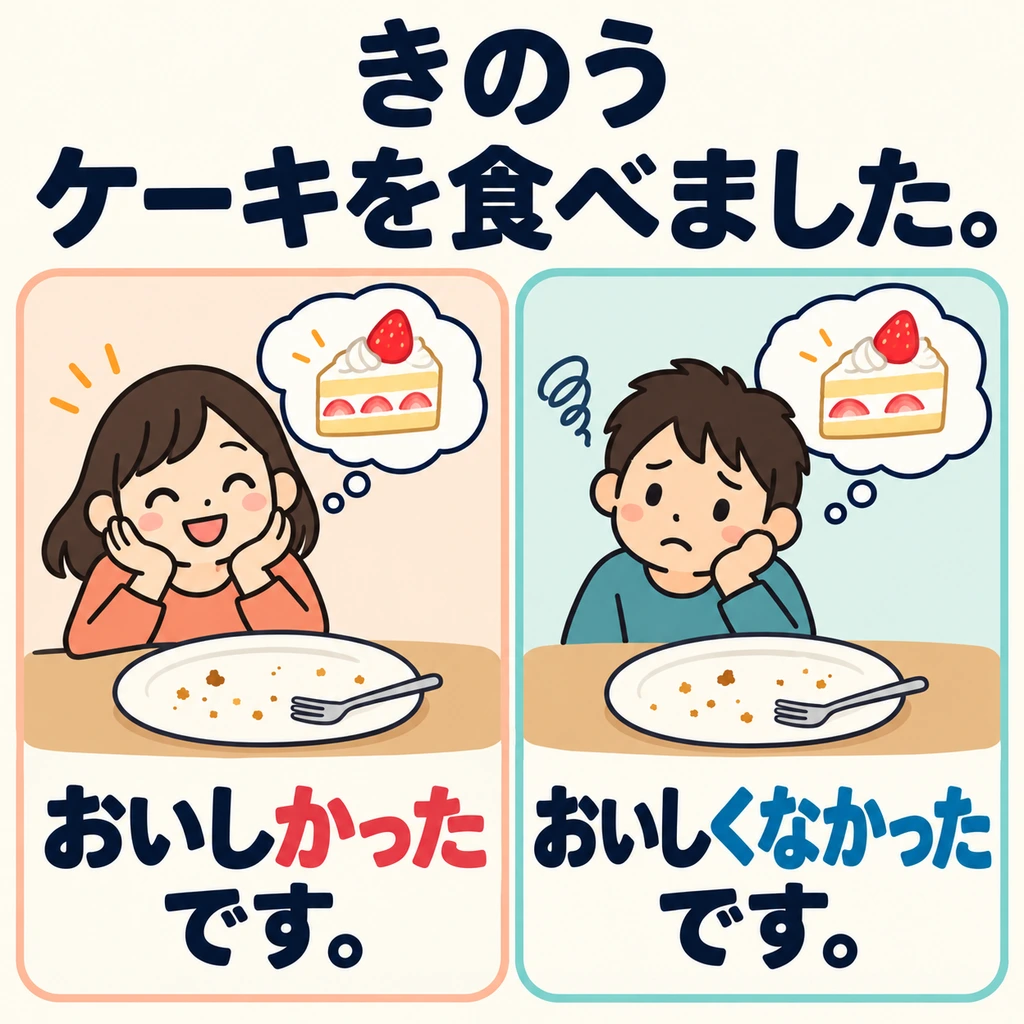
The cake was eaten yesterday. Look at the empty plates: they are remembering how it tasted then.

If you remember the cake tasting good, say 「おいしかったです」. This expresses how you felt in the past.
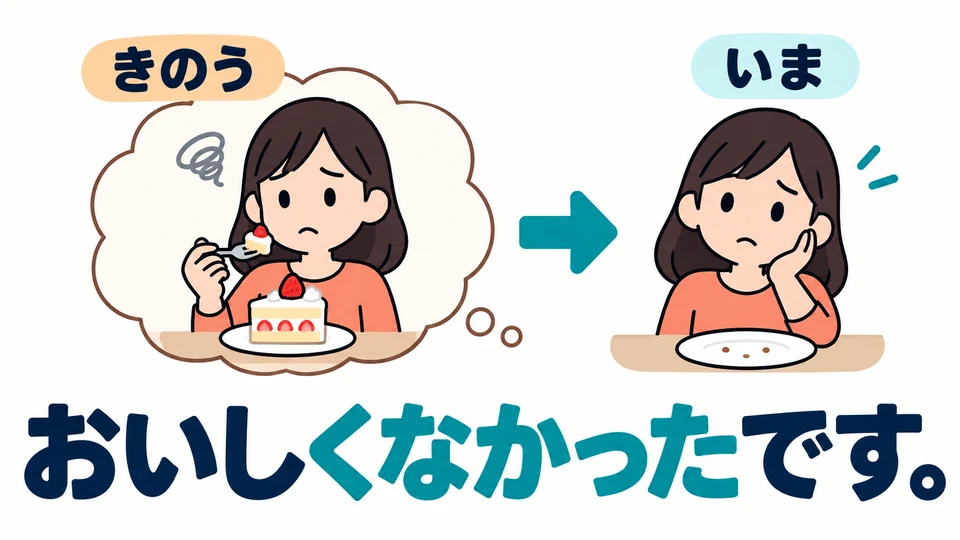
If it did not taste good then, say 「おいしくなかったです」. The negative form also describes a past impression.
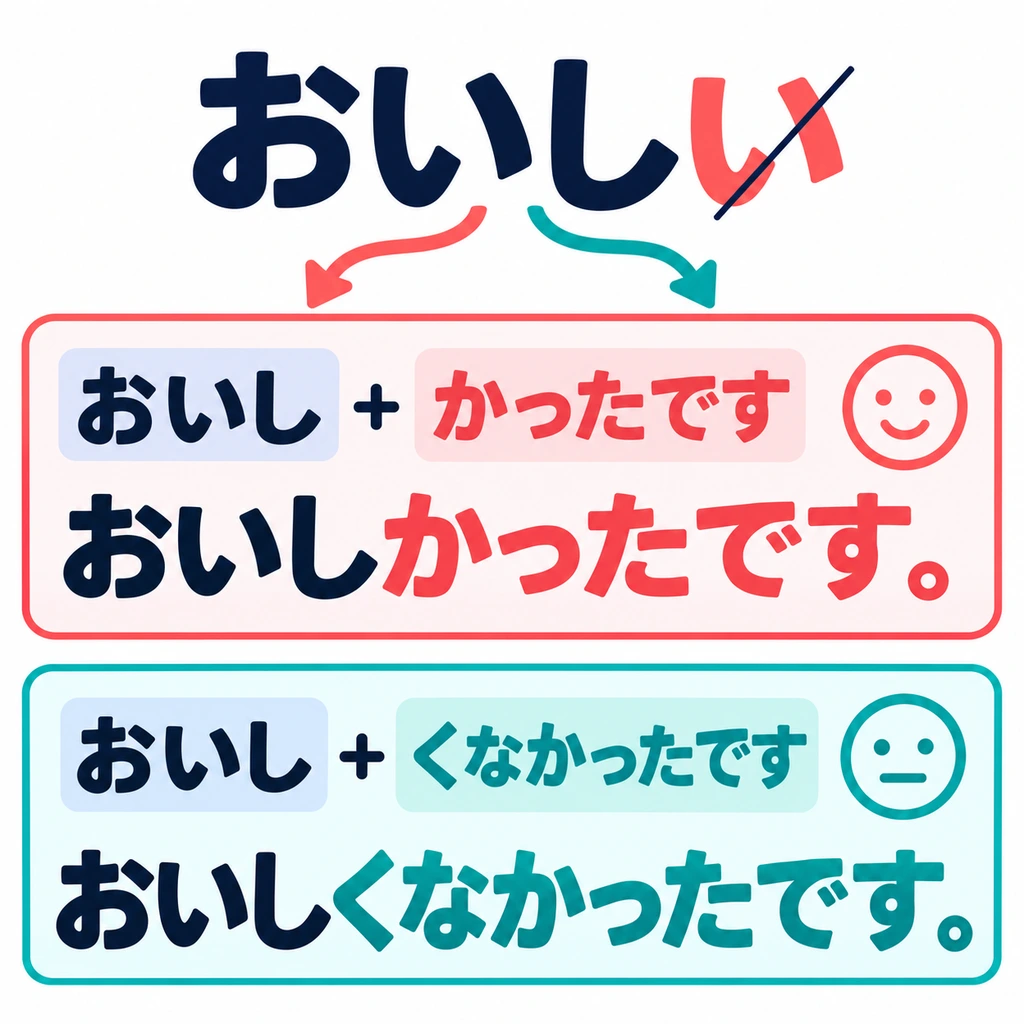
Look at the crossed-out character: first remove the adjective’s final 「い」, leaving 「おいし」.
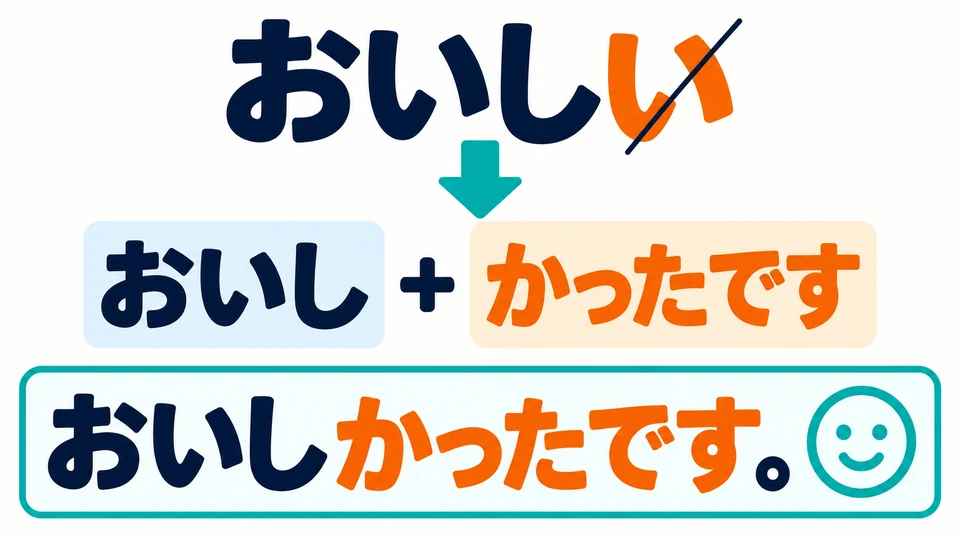
Past affirmative: remove 「い」 and add 「かったです」. 「おいしい」 becomes 「おいしかったです」.
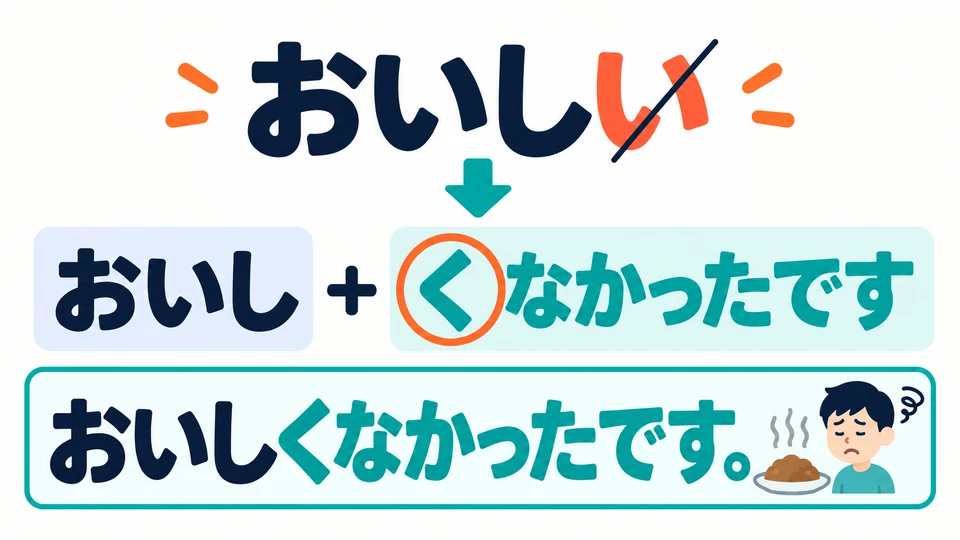
Past negative: remove 「い」 and add 「くなかったです」. Remember to include 「く」 too.
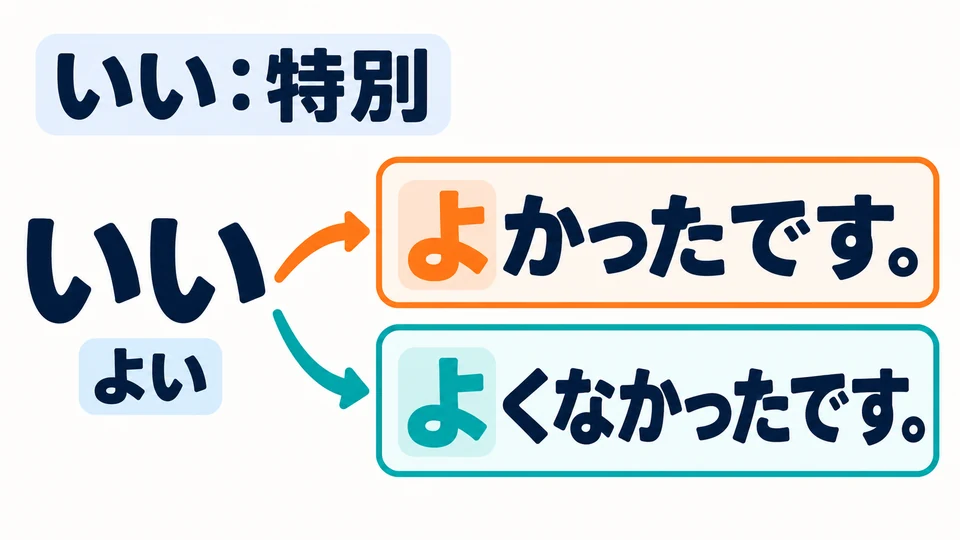
「いい」 is an exception. Its past forms are based on 「よい」: 「よかったです」 and 「よくなかったです」. You cannot say 「いいかったです」.

When remembering Sunday’s concert, you can also say 「楽しかったです」 to express that you had fun then.
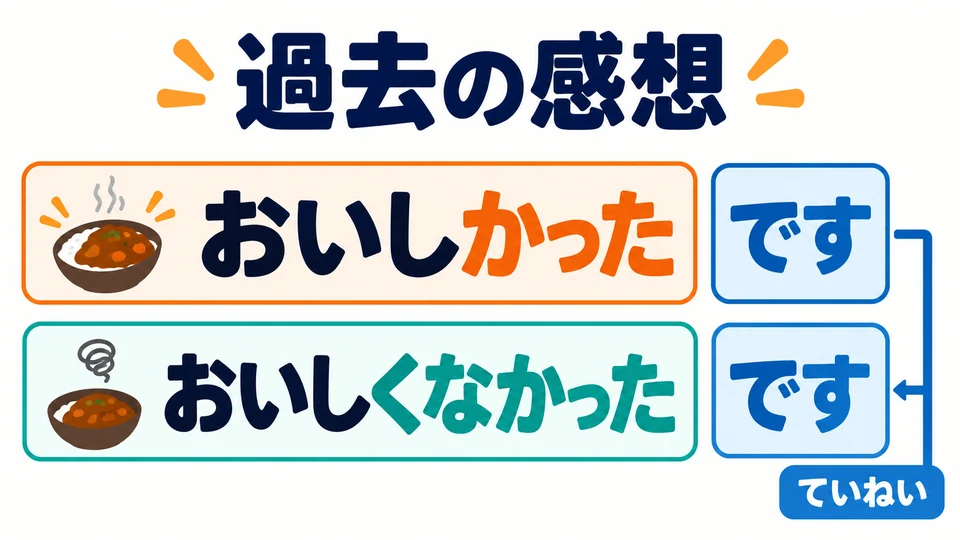
The past form changes the adjective ending. Keep 「です」 to share your impression politely.
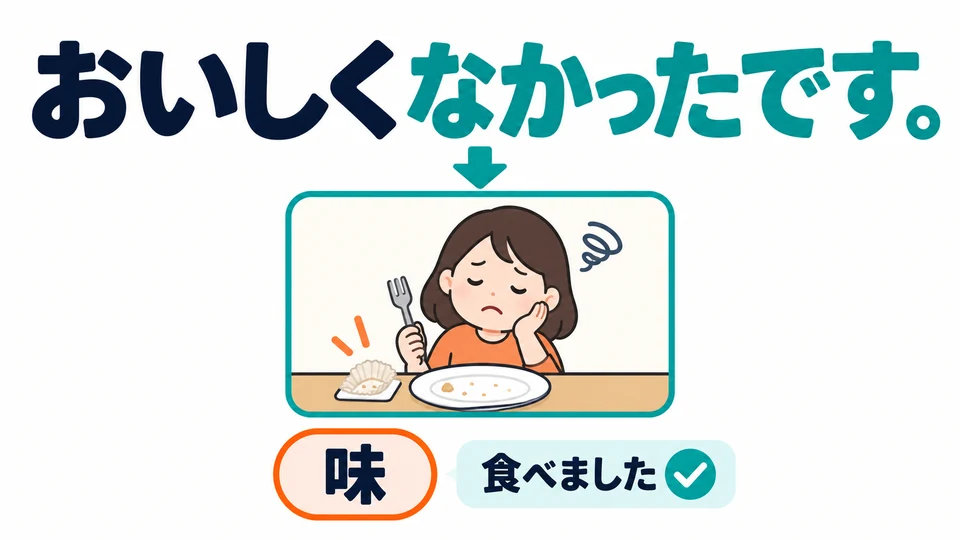
The negative example means “it did not taste good then,” not “I did not eat the cake.” Notice what is being negated.
Example sentences
- おいしかったです。oishikattadesu
It was delicious.
- おいしくoishikuなかったです。nakattadesu
It wasn't delicious.
In a conversation

- A山登りはどうでしたか。
A: How was the mountain climb?
- B疲れました。でも面白かったです。
B: It was tiring. But it was interesting.

- A
Check yourself
Level 1 · Recognise
Which sentence is correct?
Level 1 · Recognise
Listen and choose the meaning
Level 2 · Build
Put the words in order
The cake was delicious.
Level 3 · Use
What goes in the blank?
旅は です。
The trip was fun.
More grammar in this theme
- 〜かったです/〜くなかったですpast adjective impression