JPEDLAB iconJPEDLAB
Save history

Create an account and play

Explore first, then save your progress whenever you are ready. No email address is required.

Start free
Read as articleCards
1/15

The cake was eaten yesterday. Look at the empty plates: they are remembering how it tasted then.

››

Lesson notes · ≈ JLPT N5 · Beginner 1

〜かったです/〜くなかったです~katta desu / ~ku nakatta desu

past adjective impression

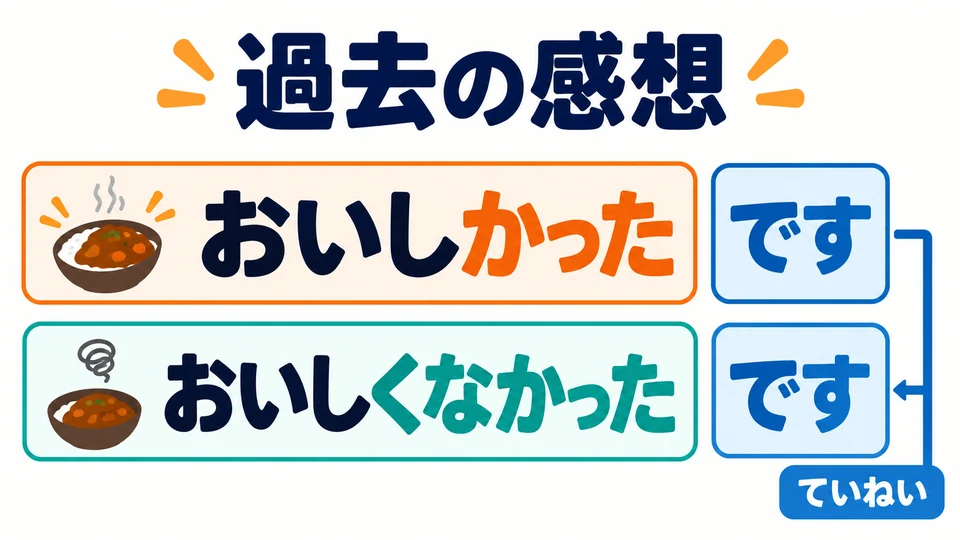
Use 「〜かったです/〜くなかったです」 to describe a polite past impression with an い-adjective.

How it works
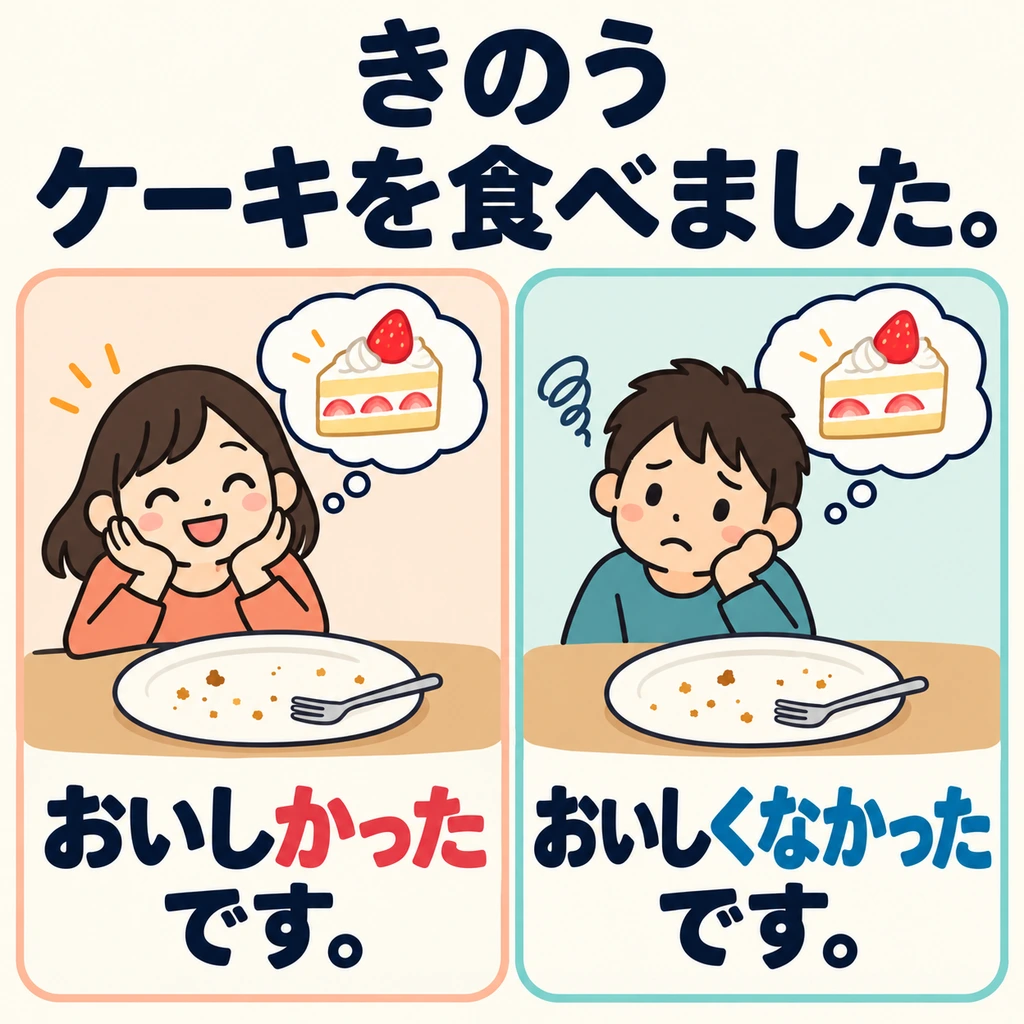
  1. The cake was eaten yesterday. Look at the empty plates: they are remembering how it tasted then.
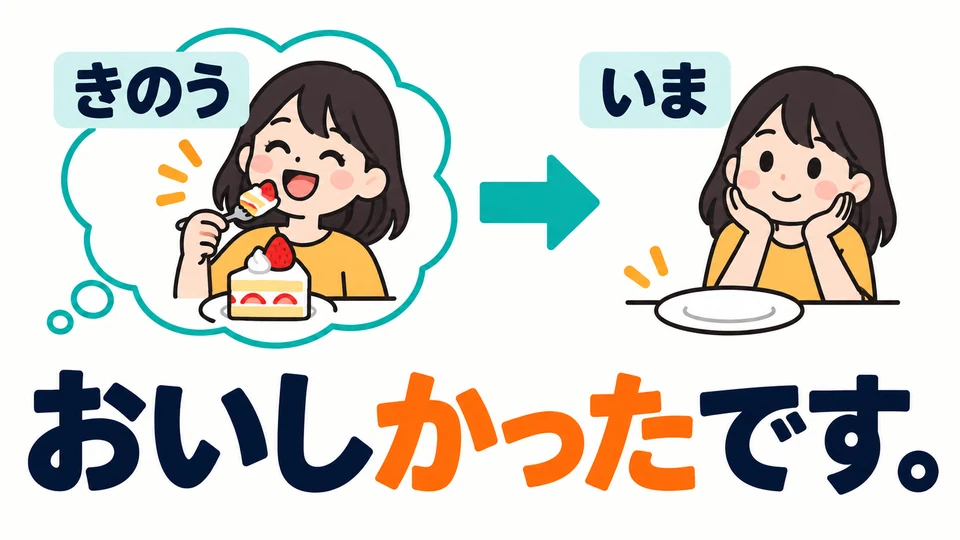
    The cake was eaten yesterday. Look at the empty plates: they are remembering how it tasted then.

  2. If you remember the cake tasting good, say 「おいしかったです」. This expresses how you felt in the past.
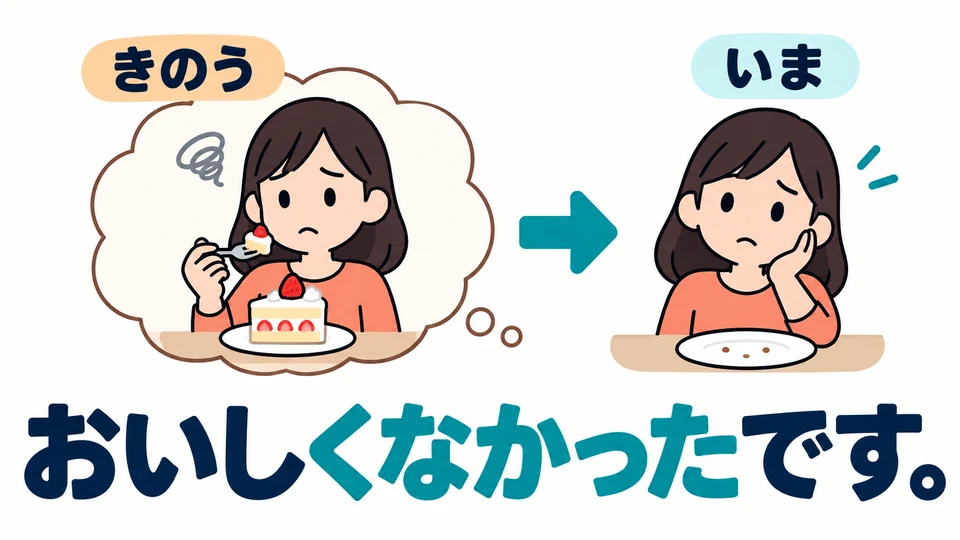
    If you remember the cake tasting good, say 「おいしかったです」. This expresses how you felt in the past.

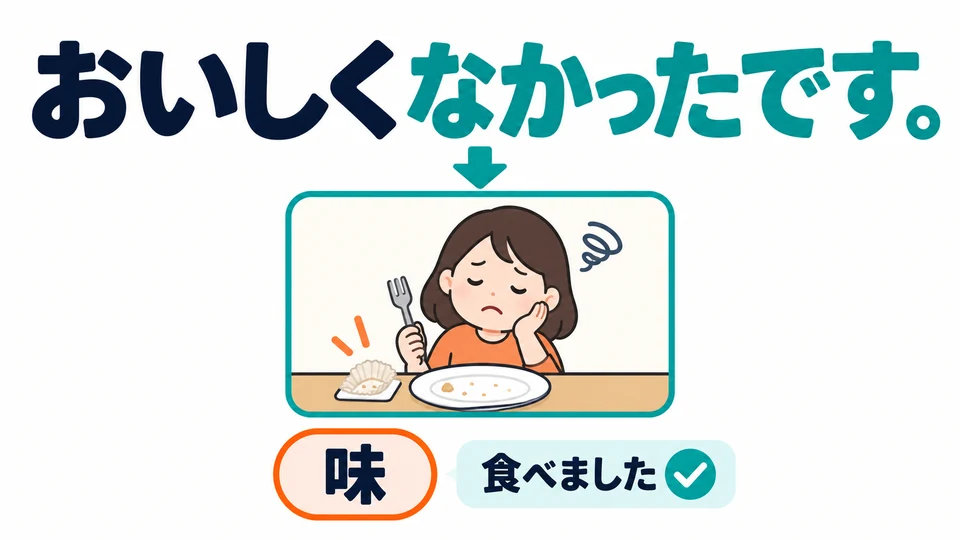
  3. If it did not taste good then, say 「おいしくなかったです」. The negative form also describes a past impression.
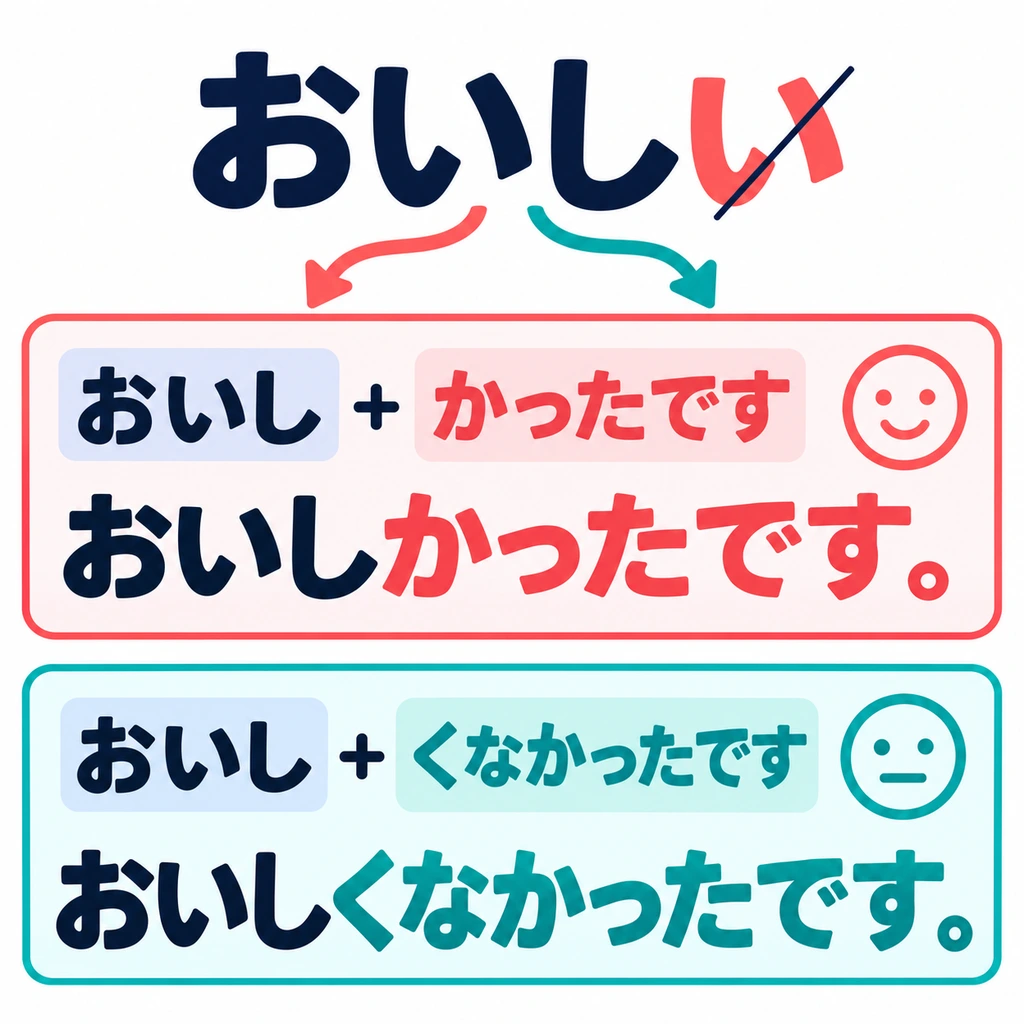
    If it did not taste good then, say 「おいしくなかったです」. The negative form also describes a past impression.

  4. Look at the crossed-out character: first remove the adjective’s final 「い」, leaving 「おいし」.
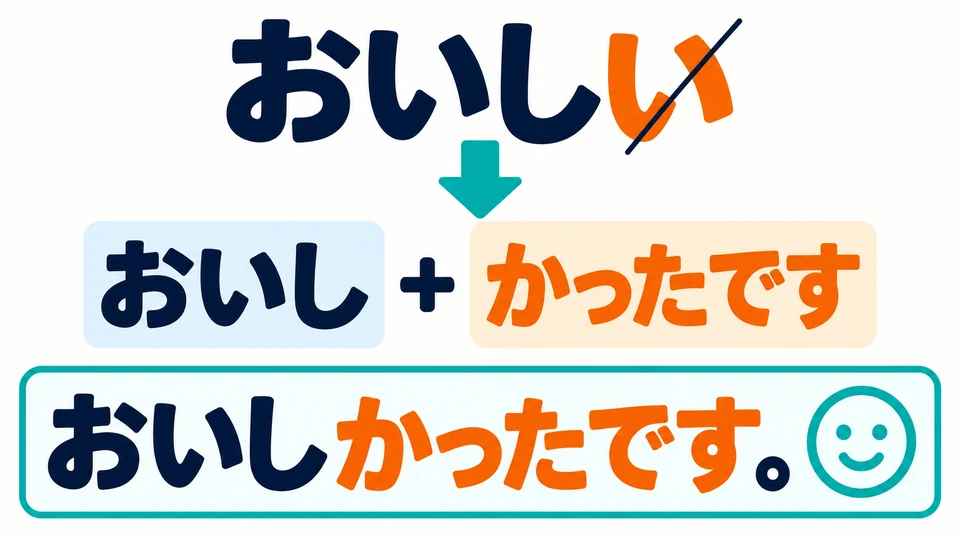
    Look at the crossed-out character: first remove the adjective’s final 「い」, leaving 「おいし」.

  5. Past affirmative: remove 「い」 and add 「かったです」. 「おいしい」 becomes 「おいしかったです」.
    Past affirmative: remove 「い」 and add 「かったです」. 「おいしい」 becomes 「おいしかったです」.
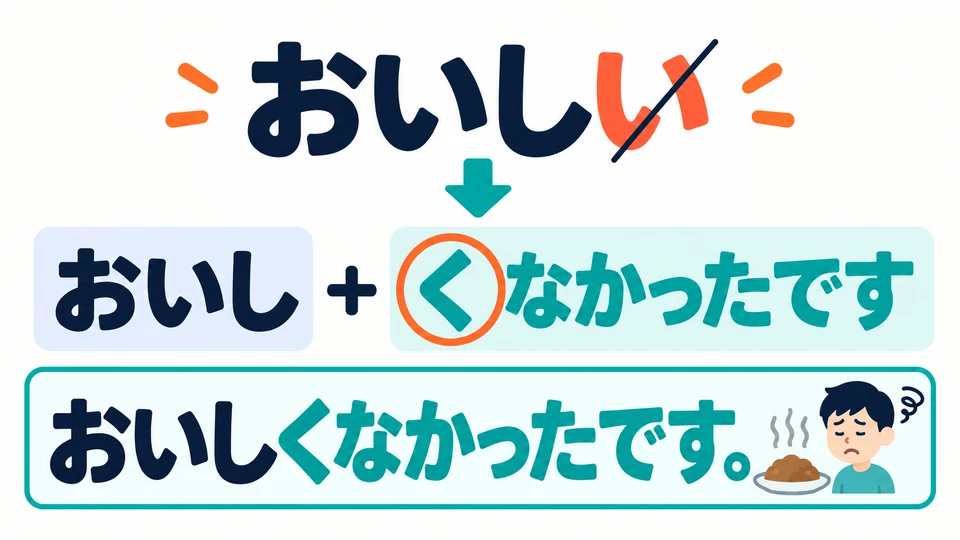
  6. Past negative: remove 「い」 and add 「くなかったです」. Remember to include 「く」 too.

Past negative: remove 「い」 and add 「くなかったです」. Remember to include 「く」 too.

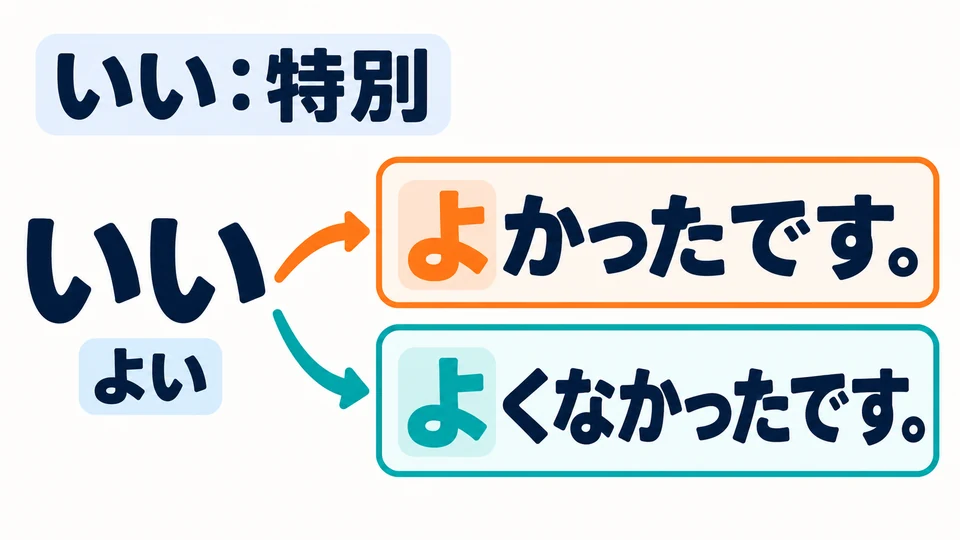
  • 「いい」 is an exception. Its past forms are based on 「よい」: 「よかったです」 and 「よくなかったです」. You cannot say 「いいかったです」.

    「いい」 is an exception. Its past forms are based on 「よい」: 「よかったです」 and 「よくなかったです」. You cannot say 「いいかったです」.

  • When remembering Sunday’s concert, you can also say 「楽しかったです」 to express that you had fun then.

    When remembering Sunday’s concert, you can also say 「楽しかったです」 to express that you had fun then.

  • The past form changes the adjective ending. Keep 「です」 to share your impression politely.

    The past form changes the adjective ending. Keep 「です」 to share your impression politely.

  • The negative example means “it did not taste good then,” not “I did not eat the cake.” Notice what is being negated.

    The negative example means “it did not taste good then,” not “I did not eat the cake.” Notice what is being negated.

  • Example sentences

    • おいしかったです。おいしかったですoishikattadesu

      It was delicious.

    • おいしくoishikuなかったです。なかったですnakattadesu

      It wasn't delicious.

    In a conversation

    • A
      山登りやまのぼりはわどうでしたか。か

      A: How was the mountain climb?

    • B
      疲れました。つかれましたでも面白かったです。おもしろかったです

      B: It was tiring. But it was interesting.

    • A
      ケーキけーきはわどうでしたか。か

      A: How was the cake?

    • B
      おいしかったです。おいしかったです

      B: It was delicious.

    • A
      日曜にちよう日びのコンサートこんさーとはわどうでしたか。か

      A: How was the concert on Sunday?

    • B
      楽しかったです。たのしかったですでも、も会場かいじょうが少し

    Check yourself

    1. Level 1 · Recognise

      Which sentence is correct?

    2. Level 1 · Recognise

      Listen and choose the meaning

    3. Level 2 · Build

      Put the words in order

      The cake was delicious.

    4. Level 3 · Use

      What goes in the blank?

      旅は です。

      The trip was fun.

    More grammar in this theme

    • 〜ました/〜ませんでしたpast affirmative and negative
    • どこかへ行きましたかask if someone went somewhere
    • それからthen; next action
    • 〜かったです/〜くなかったですpast adjective impression
    • 〜でした/〜じゃありませんでしたpast state, affirmative or negative
    • どうでしたか/どうして〜/〜からですask past impression and reason
    • 〜がほしいですwant to have something
    • 〜が好きです/嫌いですlikes and dislikes
    • 〜たいです/〜たくないですwant or not want to do
    • 〜へ〜に行きますgo somewhere to do something
    PreviousそれからNext〜でした/〜じゃありませんでした

    Keep practising

    Test your Japanese vocabulary12 adaptive questions, freeCheck your pronunciationRead aloud and get a scorePractise verb forms10-question conjugation quizSee the whole courseGrammar, vocabulary and quizzes by theme
    See the whole course
    Beginner 1
    Days Off
    すこし
    うるさかったです。うるさかったです

    B: It was fun. But the venue was a little noisy.