
Japanese grammar · ≈ JLPT N5 · Beginner 1
〜で〜がいちばん〜です~ de ~ ga ichiban ~ desu
the most within a range
Use 「〜で〜がいちばん〜です」 to identify the most or best item within a stated comparison range.
How it works
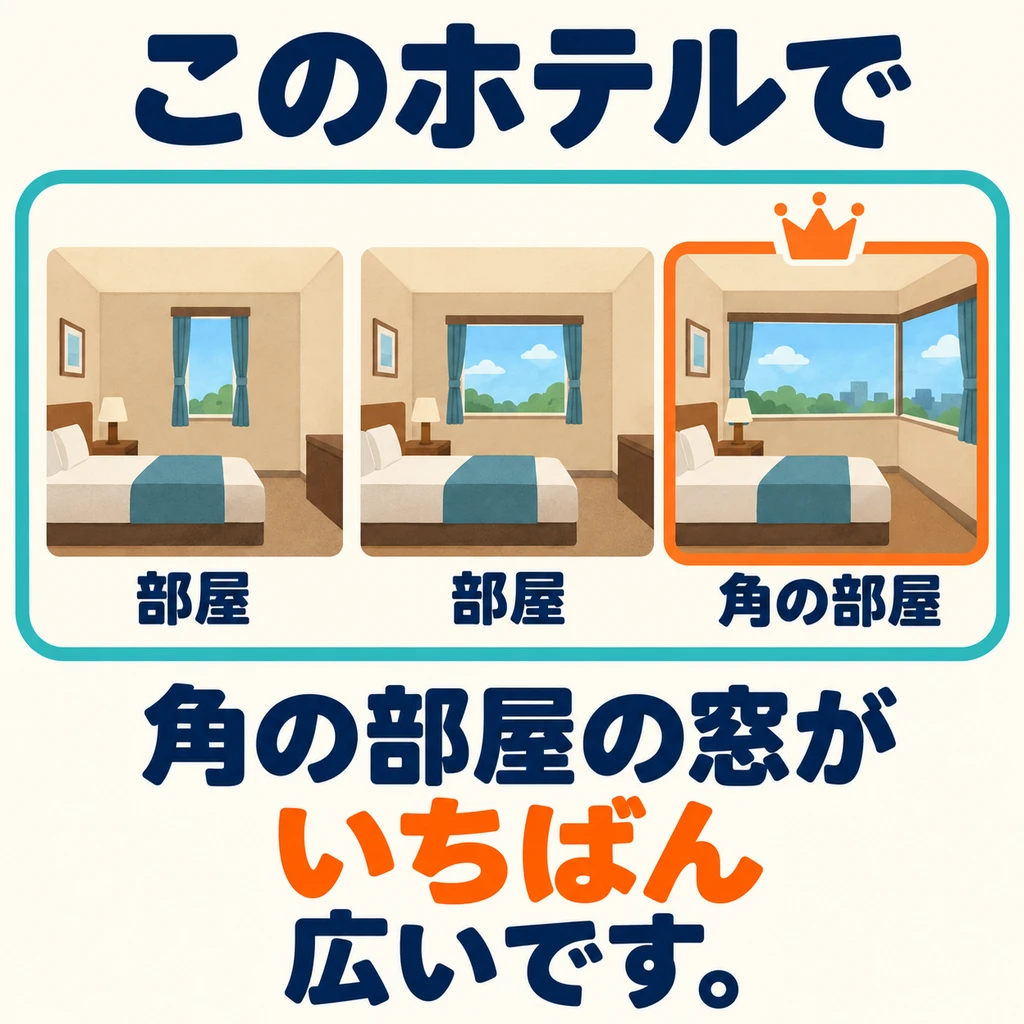
Want a room with the widest window? Compare the windows in the picture and pick the widest one.
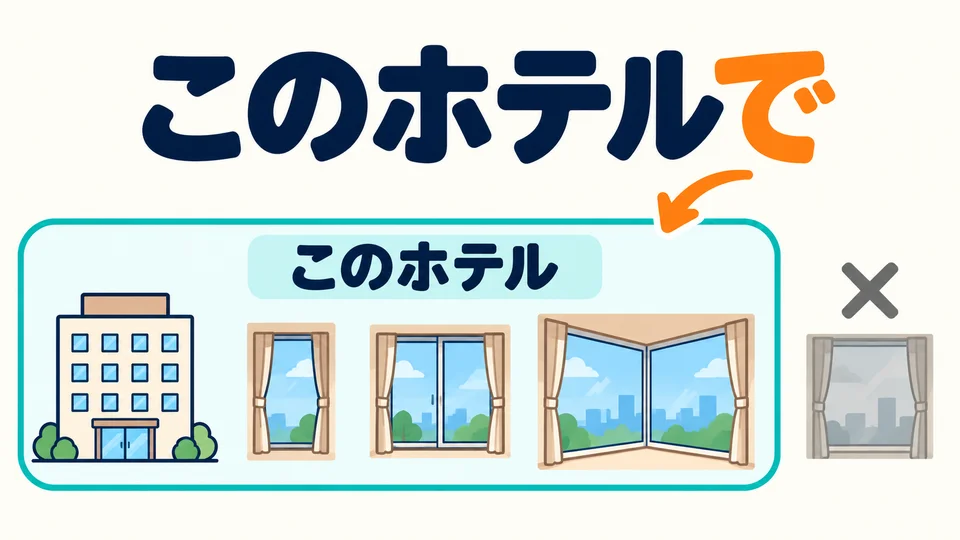
「このホテルで」 sets the comparison range: we compare only the windows in this hotel.
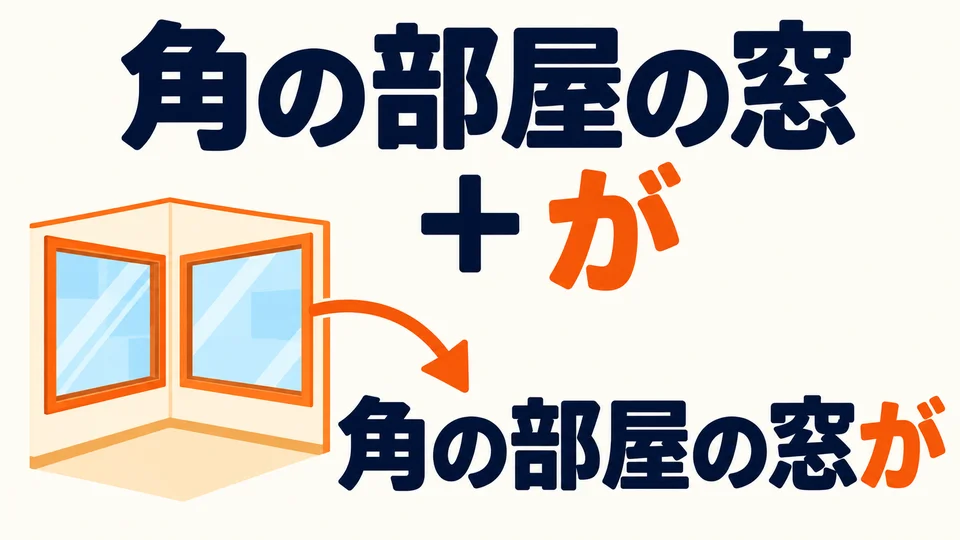
「角の部屋の窓が」 identifies the selected item. 「が」 comes after that item.
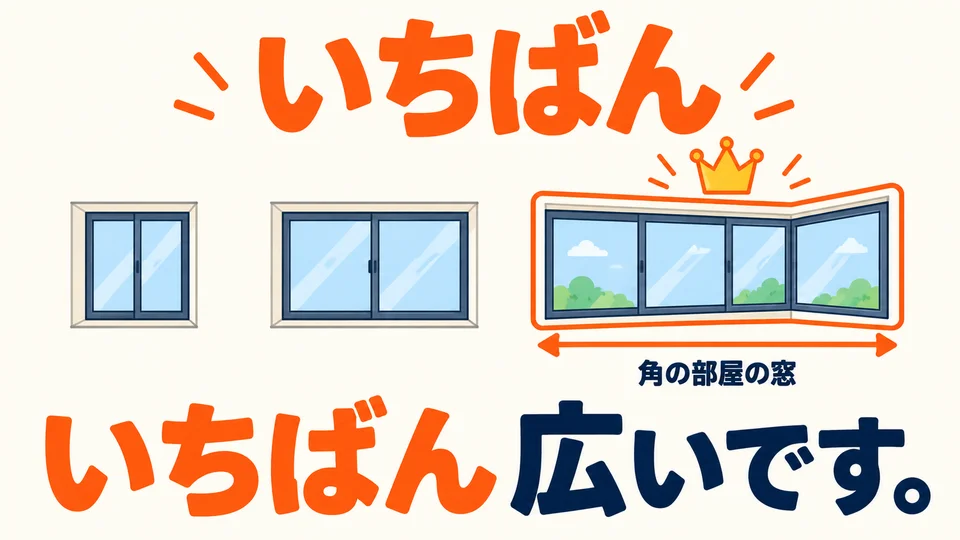
「いちばん」 means “the most …” within the comparison range. The corner room’s window is the widest in the picture.
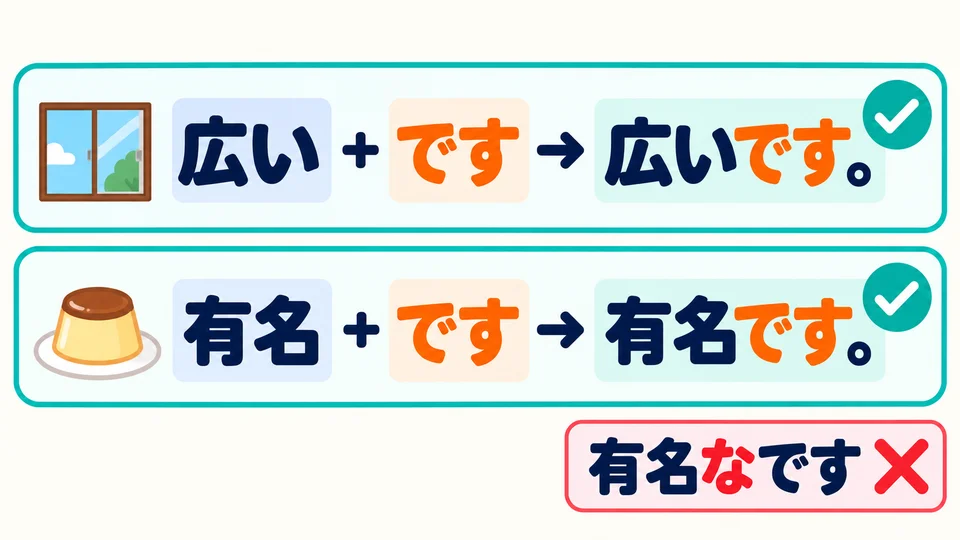
Use an adjective at the end: 広いです/有名です. Do not add 「な」 after 「有名」.
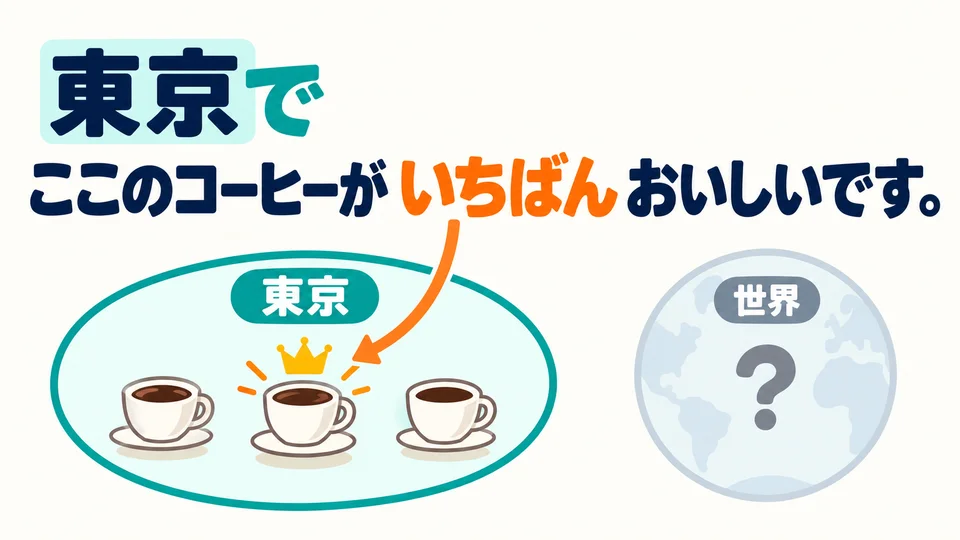
In the example, 「東京で」 limits the comparison to Tokyo. This place’s coffee tastes the best in Tokyo, which does not mean it tastes the best in the world.
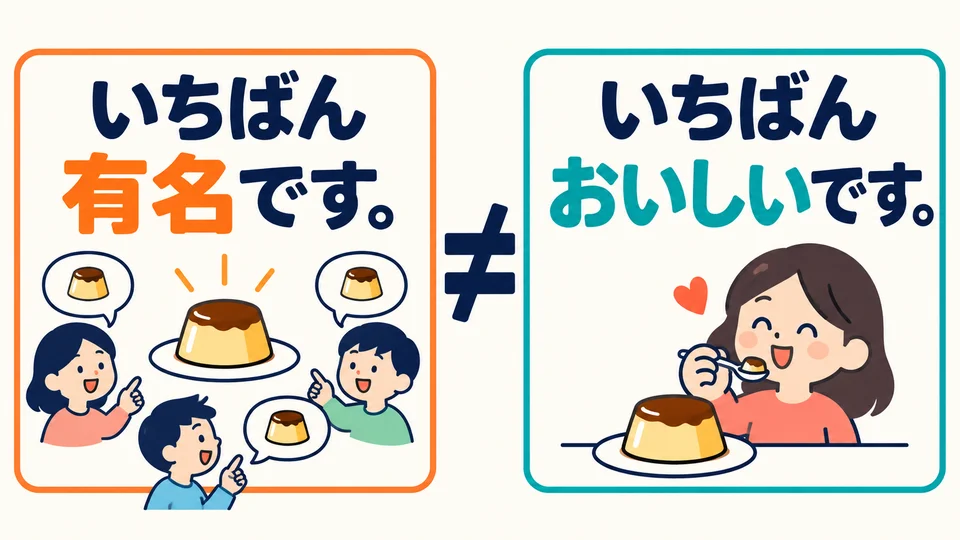
In the restaurant example, 「有名」 means “widely known.” “The most famous” does not mean “the tastiest.”
Example sentences
- 東京toukyouでdeここkokoのnoコーヒーkoohiiがgaいちばんichibanおいしいです。oishiidesu
This place's coffee is the best in Tokyo.
In a conversation

- A東京でどこがいちばんにぎやかですか。
A: Where is the most lively in Tokyo?
- B難しいですね。多分新宿がいちばん
Check yourself
Level 1 · Recognise
Which sentence is correct?
Level 1 · Recognise
Listen and choose the meaning
Level 2 · Build
Put the words in order
Shinjuku is the most lively in Tokyo.
Level 3 · Use
What goes in the blank?
このデパート いちばんやすいです。
This bag is the cheapest in this department store.
More grammar in this theme
- 〜で〜がいちばん〜ですthe most within a range