Japanese grammar · ≈ JLPT N5 · Beginner 1
〜は〜より〜です~ wa ~ yori ~ desu
comparison: more than
Use 〜は〜より〜です to describe one thing as having a quality more strongly than the comparison point.
How it works
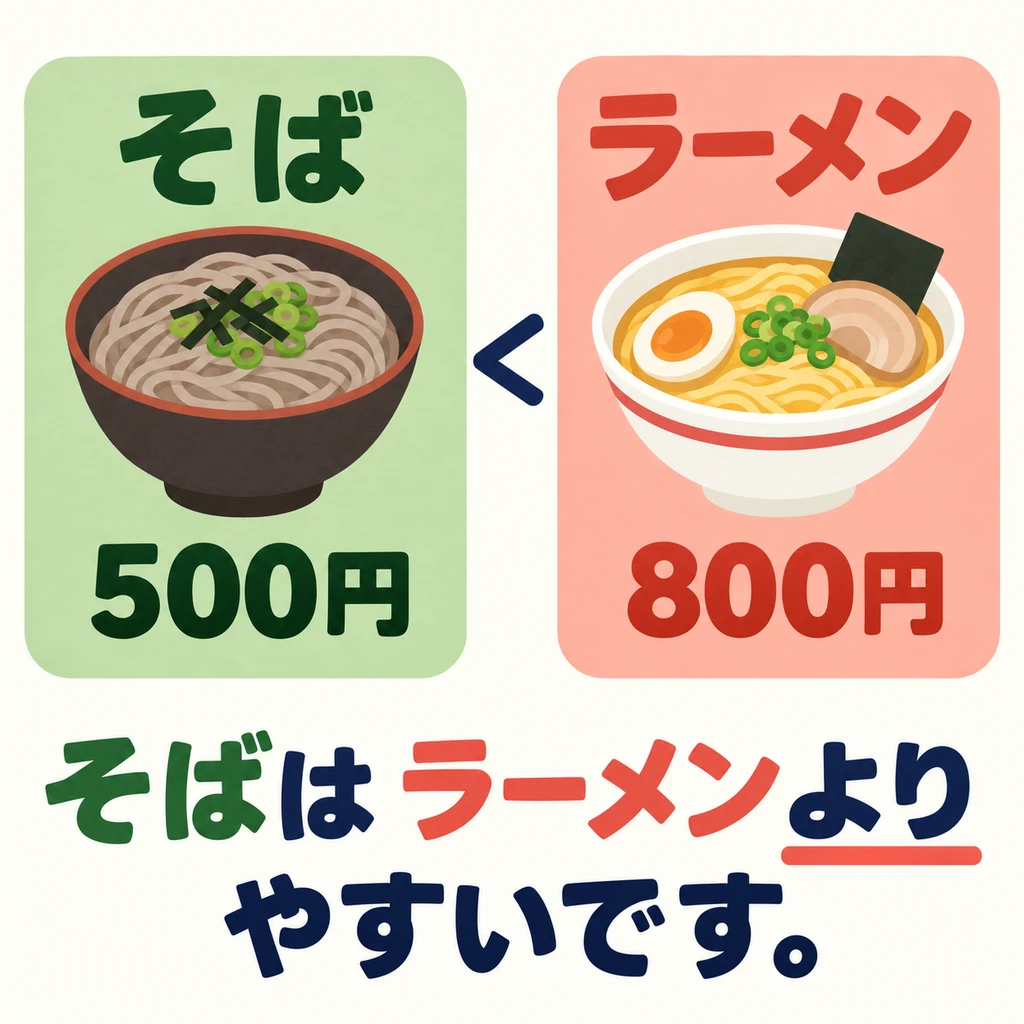
Look at the menu. Which is cheaper? To compare two things, use 「AはBより〜です」。
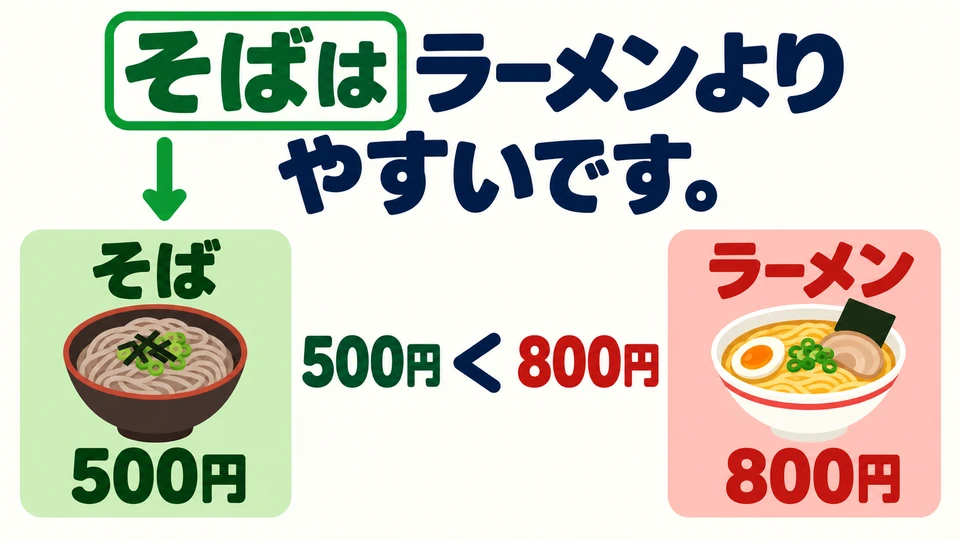
The thing before 「は」 is what we are describing. In the picture, we are talking about soba: it is cheaper than ramen.
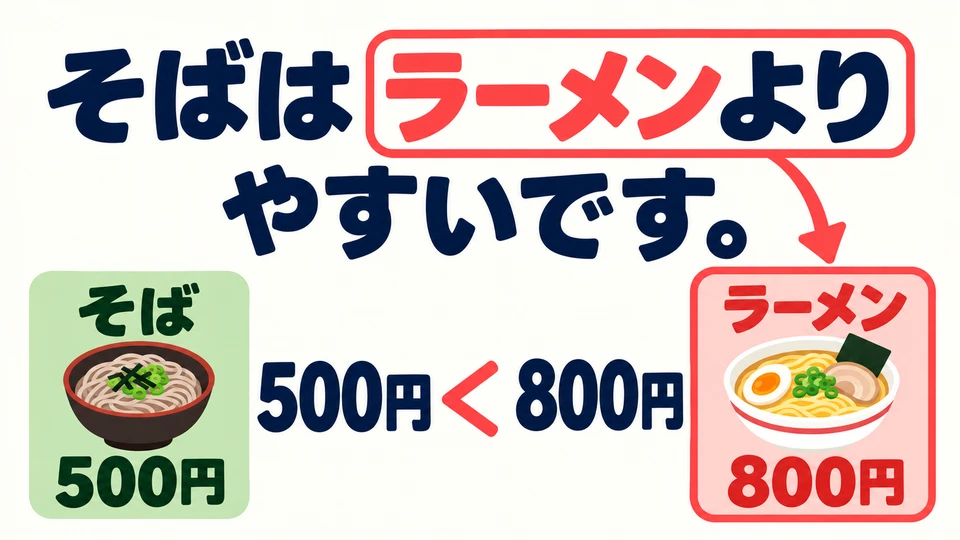
The thing before 「より」 is the reference for the comparison. In the picture, we compare against the price of ramen.
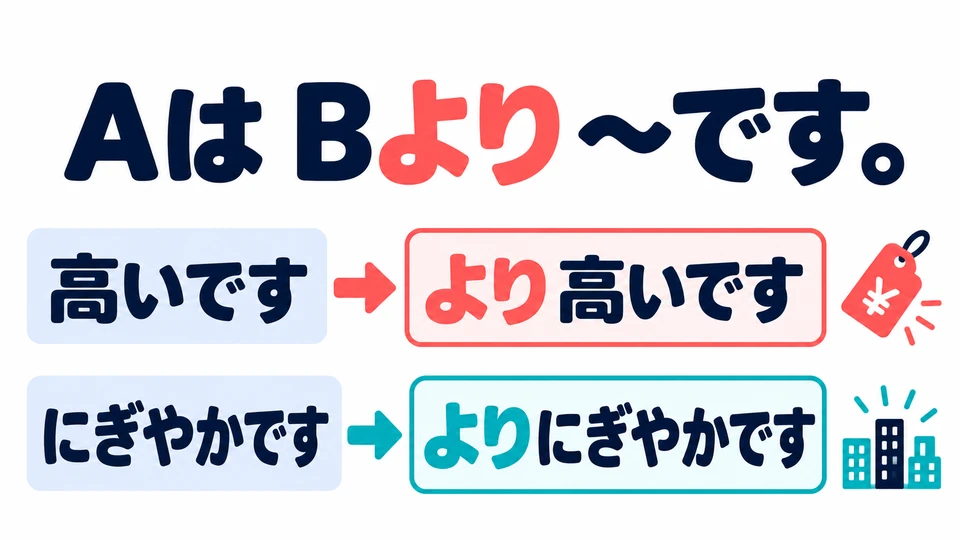
After 「より」, use an adjective without changing its form: 「高いです」「にぎやかです」。
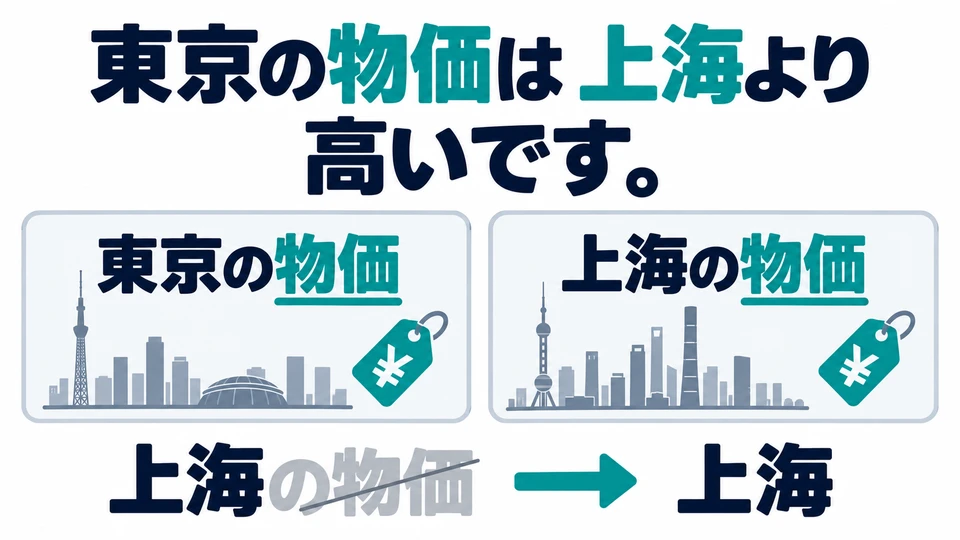
The example compares prices in two cities. After 「上海」, the understood 「の物価」 is omitted.
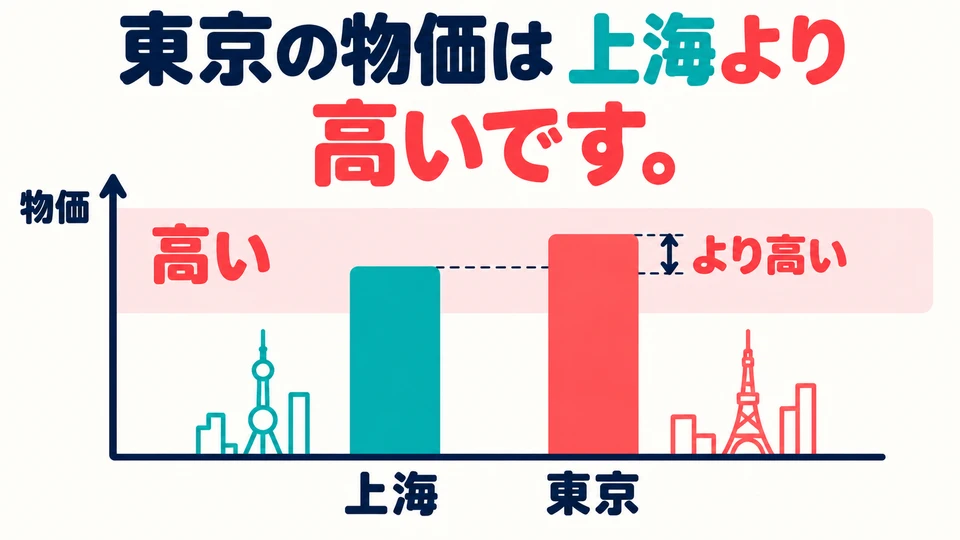
「より高い」 only means that prices are higher in comparison. It does not mean that prices in the other city are necessarily low.
Example sentences
- 北京pekinはwa東京toukyouよりyoriにぎやかです。nigiyakadesu
Beijing is more lively than Tokyo.
- 東京toukyouのno物価
In a conversation

- A北京と東京とどちらがにぎやかですか。
A: Which is more lively, Beijing or Tokyo?
- B北京は東京よりにぎやかですよ。
Check yourself
Level 1 · Recognise
Which sentence is correct?
Level 1 · Recognise
Listen and choose the meaning
Level 2 · Build
Put the words in order
Soba is cheaper than ramen.
Level 3 · Use
What goes in the blank?
北京は 大きいです。
Beijing is bigger than Tokyo.
More grammar in this theme
- 〜は〜より〜ですcomparison: more than