JPEDLAB iconJPEDLAB
Save history

Create an account and play

Explore first, then save your progress whenever you are ready. No email address is required.

Start free
Read as articleCards
1/11

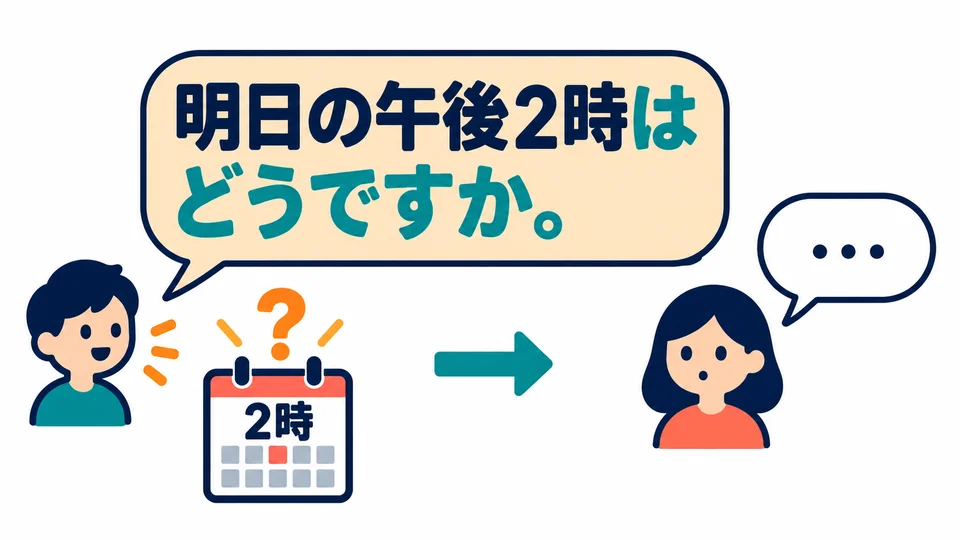
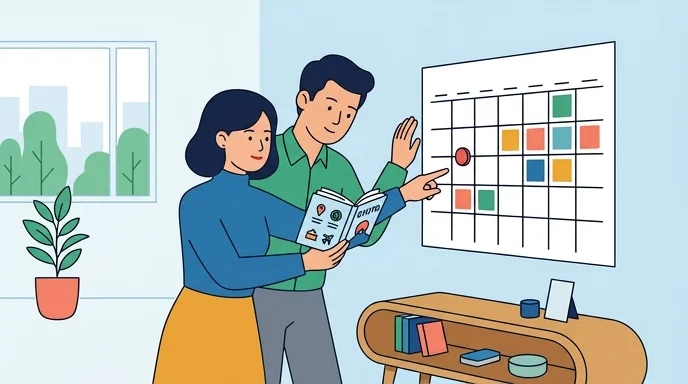
Look: he suggests meeting tomorrow at 2 p.m. and uses this pattern to ask if that works for the other person.

››

Lesson notes · ≈ JLPT N5 · Beginner 1

〜はどうですか~ wa dou desu ka

how about this option

Use 〜はどうですか to suggest a date, time, or option for the other person to consider, or to ask their opinion.

How it works
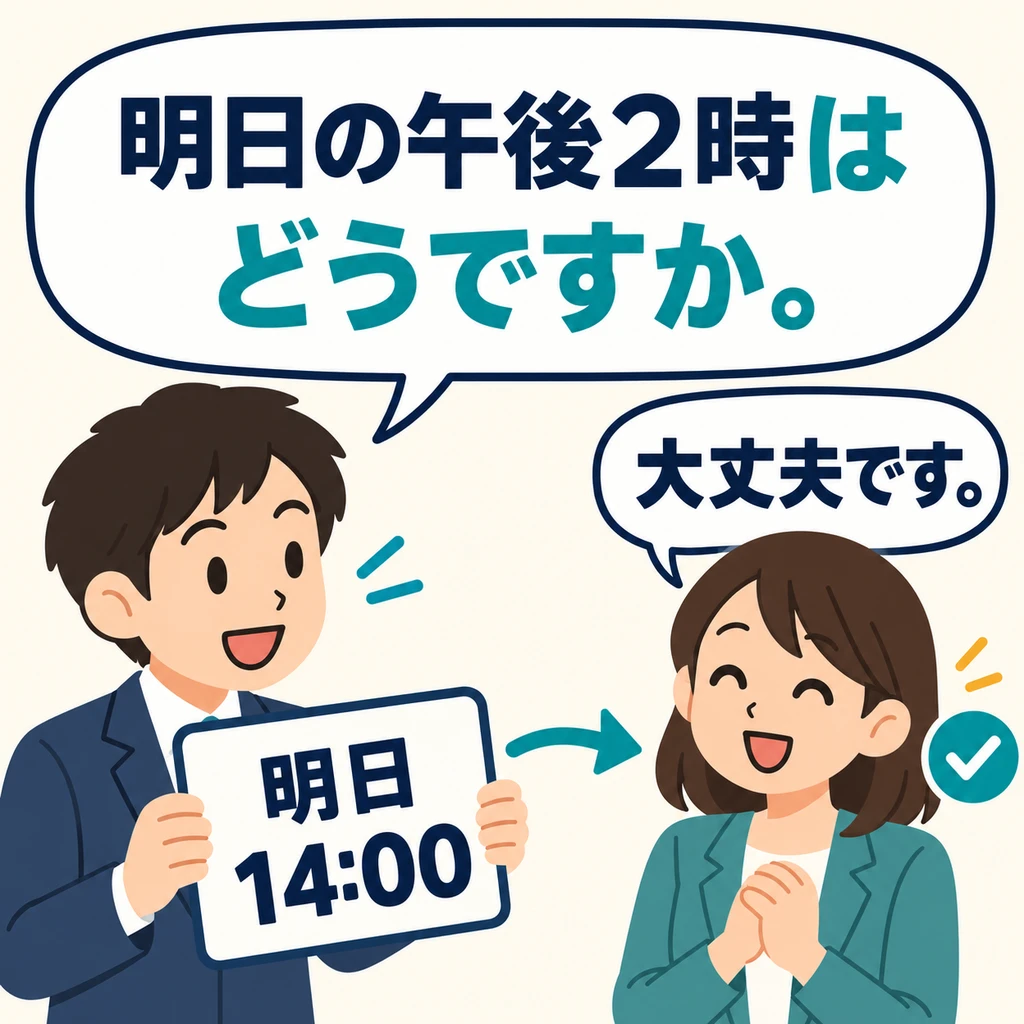
  1. Look: he suggests meeting tomorrow at 2 p.m. and uses this pattern to ask if that works for the other person.
    Look: he suggests meeting tomorrow at 2 p.m. and uses this pattern to ask if that works for the other person.

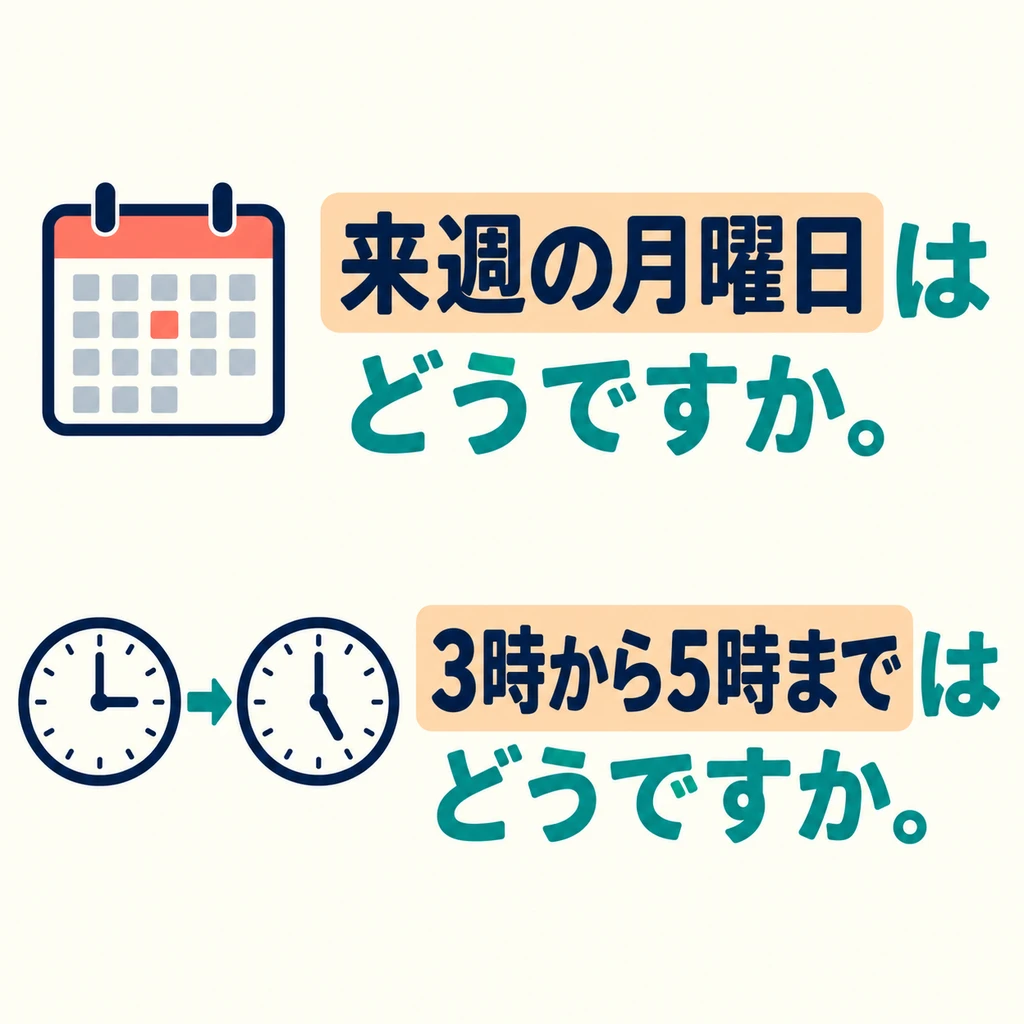
  2. Put a date or time range first to suggest a specific plan for the other person to consider.
    Put a date or time range first to suggest a specific plan for the other person to consider.
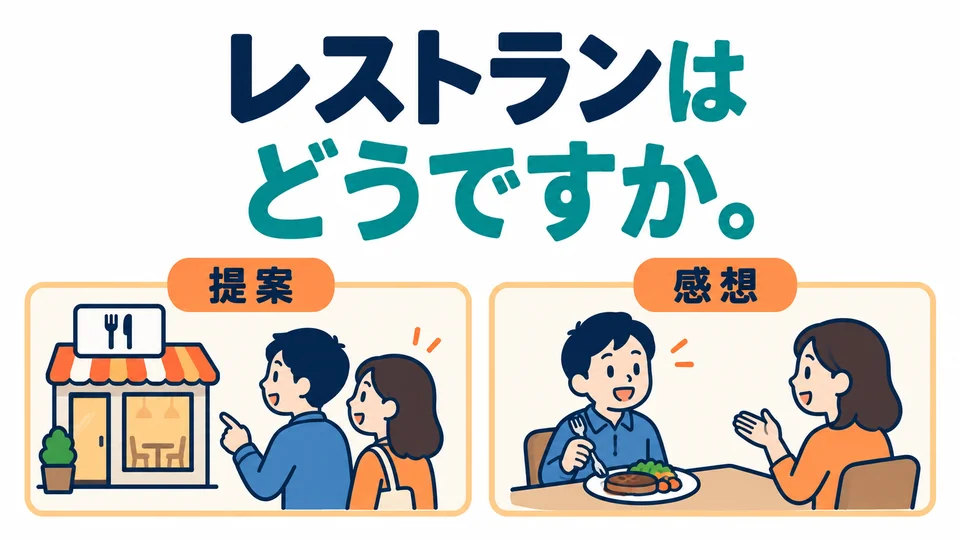
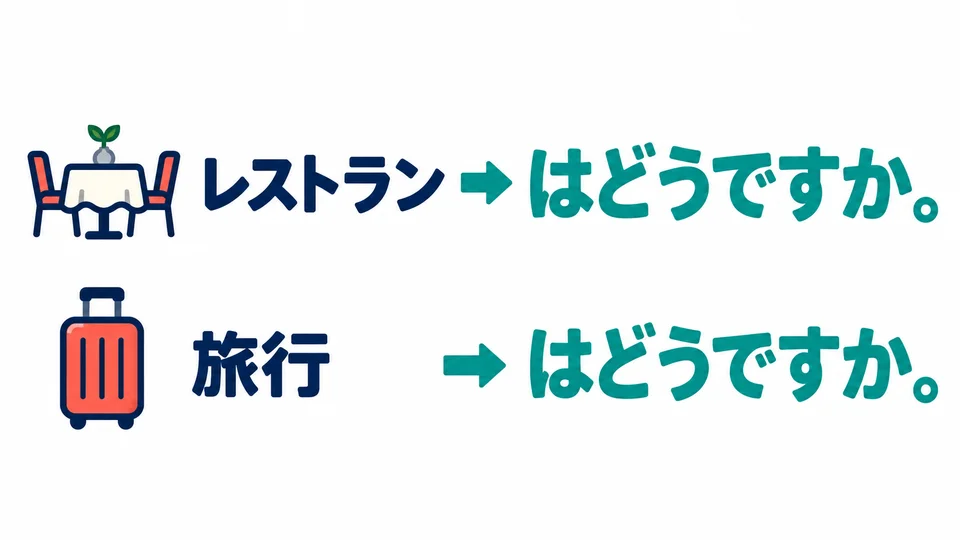
  • When planning a meal or trip, you can also suggest an option and gently invite the other person to join you.

    When planning a meal or trip, you can also suggest an option and gently invite the other person to join you.

  • It can also ask for someone’s opinion. The situation tells you whether it is a suggestion or a question about their impressions.

    It can also ask for someone’s opinion. The situation tells you whether it is a suggestion or a question about their impressions.

  • After suggesting a time, wait for a reply. When you ask “How about…?”, the plan is not final yet.

    After suggesting a time, wait for a reply. When you ask “How about…?”, the plan is not final yet.

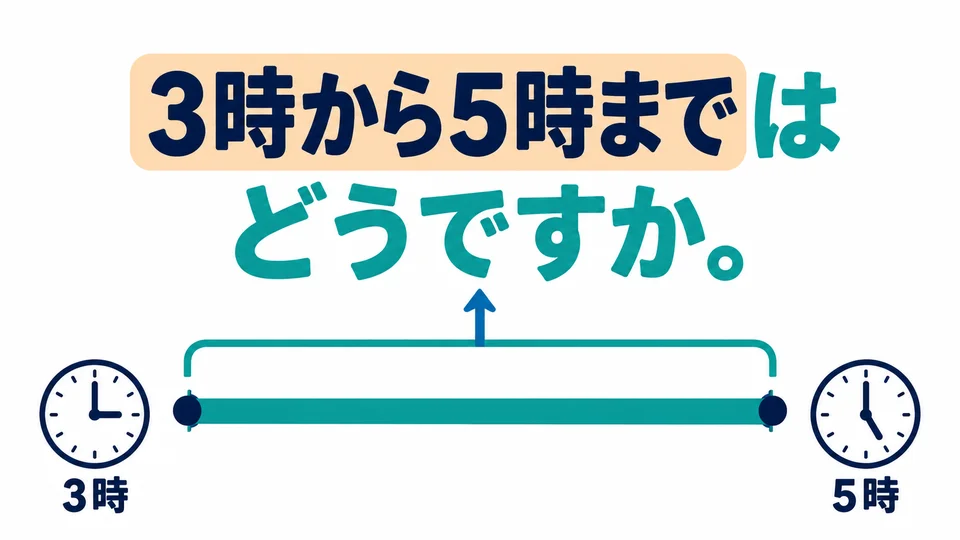
  • The example suggests the whole period from three to five, rather than just asking whether five o’clock works.

    The example suggests the whole period from three to five, rather than just asking whether five o’clock works.

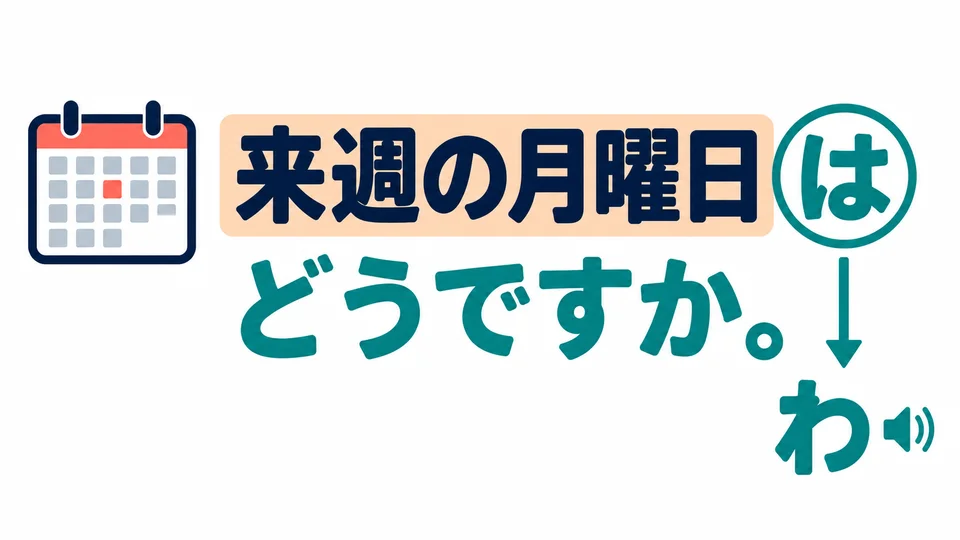
  • In the example, 「は」 is pronounced 「わ」. The date or time before it is the option being discussed.

    In the example, 「は」 is pronounced 「わ」. The date or time before it is the option being discussed.

  • Example sentences

    • 来週らいしゅうraishuuのno月曜げつようgetsuyou日びbiはわwaどうdouですdesuか。かka

      How about next Monday?

    • 3さんsan時じjiからkara5ごgo時じjiまでmadeはわwaどうdouですdesuか。かka

      How about from 3 to 5?

    In a conversation

    • A
      明日あすの午後ごご2に時じはわどうですか。か

      A: How about tomorrow at 2 PM?

    • B
      大丈夫です。だいじょうぶですじゃ、じゃその時間じかんにしましょう。しましょう

      B: That's fine. Well, let's make it that time.

    • A
      映画館えいがかんはわ2に時じはわどうですか。か2に時じからAえーの映画えいがです。です

      A: How about 2 o'clock at the movie theater? Movie A starts at 2.

    • B
      いいですね。ねじゃあ、じゃあ2に時じにしましょう。しましょう

      B: Sounds good. Well, let's make it 2 o'clock.

    • A
      11じゅういち時じ半はんのレストランれすとらんはわどうですか。かステーキすてーきがおいしいです。おいしいです

      A: How about the restaurant at 11:30? Their steak is delicious.

    • B
      大丈夫です。だいじょうぶです

    Check yourself

    1. Level 1 · Recognise

      Which sentence is correct?

    2. Level 1 · Recognise

      Listen and choose the meaning

    3. Level 2 · Build

      Put the words in order

      How about 2 PM tomorrow?

    4. Level 3 · Use

      What goes in the blank?

      4月20日 。

      How about April 20th?

    More grammar in this theme

    • 〜ませんか/〜ましょうinvite, suggest, or agree
    • 〜はちょっと…soft, indirect refusal
    • 〜で〜がありますevent at a place; something exists
    • 〜で〜がいちばん〜ですthe most within a range
    • 〜と〜とどちらが〜ですかwhich of two is more
    • 〜は〜より〜ですcomparison: more than
    • もう〜ましたかask if already done
    • 〜はどうですかhow about this option
    • 〜よ/〜ねshare or confirm information
    Previousもう〜ましたかNext〜よ/〜ね

    Keep practising

    Test your Japanese vocabulary12 adaptive questions, freeCheck your pronunciationRead aloud and get a scorePractise verb forms10-question conjugation quizSee the whole courseGrammar, vocabulary and quizzes by theme
    See the whole course
    Beginner 1
    Appointments

    B: That's fine.

  • A
    旅行りょこうはわ4し月がつ20はつ日かはわどうですか。かカレンダーかれんだーを見ました。みました

    A: How about April 20th for the trip? I checked the calendar.

  • B
    いいですね。ね京都きょうとに行きましょう。いきましょう

    B: Sounds good. Let's go to Kyoto.