
Japanese grammar · ≈ JLPT N5 · Beginner 2
〜が上手です/下手です~ga jouzu desu / heta desu
skill at an activity
Name an activity before 「が」 to say someone is good or not good at that skill.
How it works
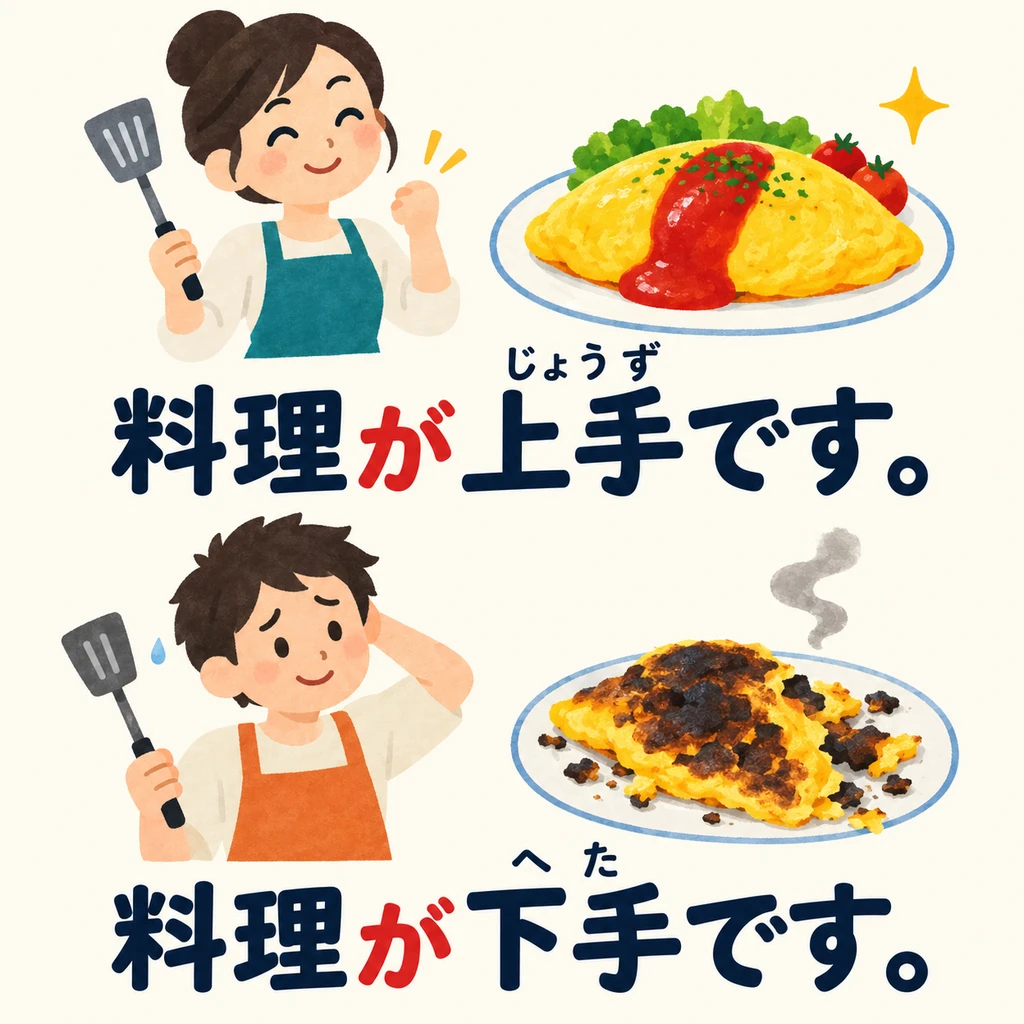
Look at the two dishes: 「上手」 means doing something well; 「下手」 means not being good at it.
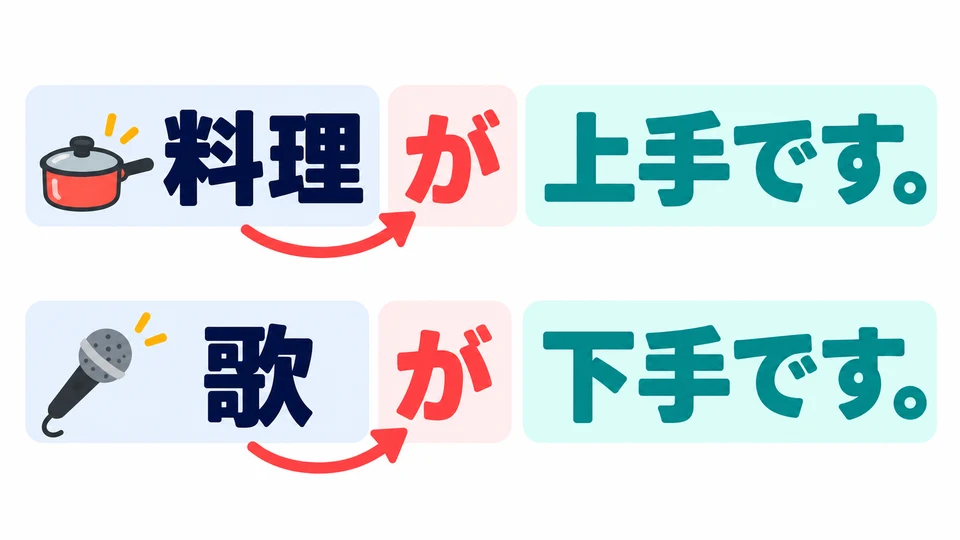
Name the activity with a noun, then add 「が」: 料理が上手です。歌が下手です。
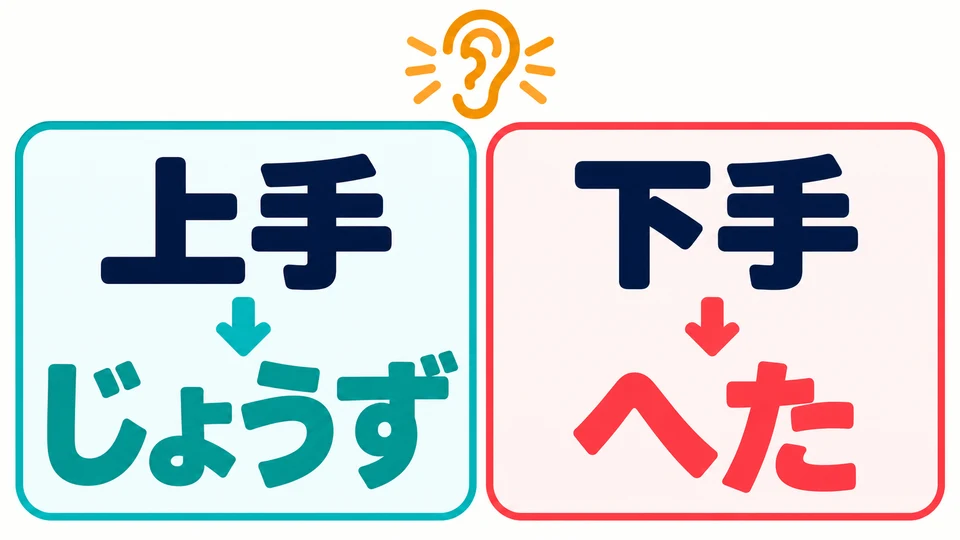
Watch the readings: 「上手」 is read じょうず and 「下手」 is read へた. Do not read them character by character.
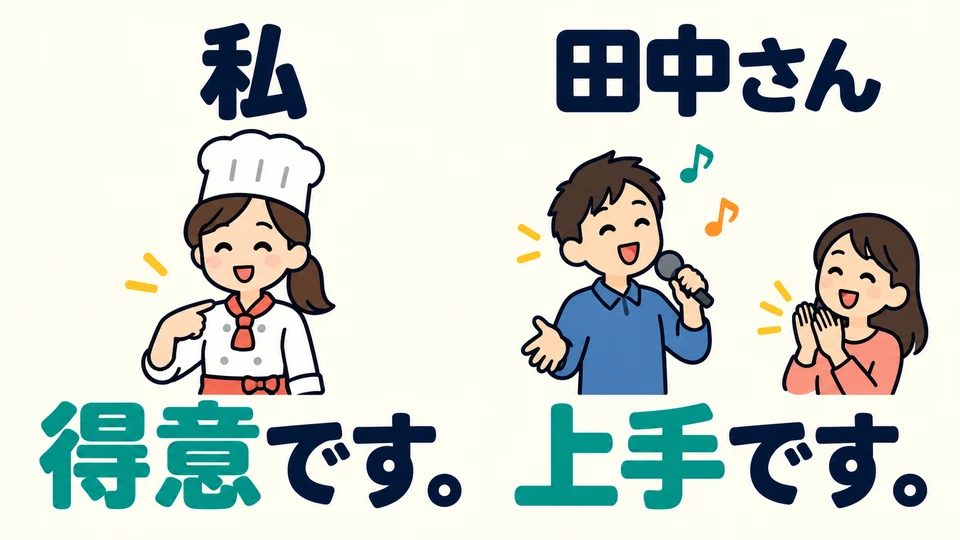
「得意」 is also often used for your own strengths; 「上手」 is often used to praise someone else’s skills.
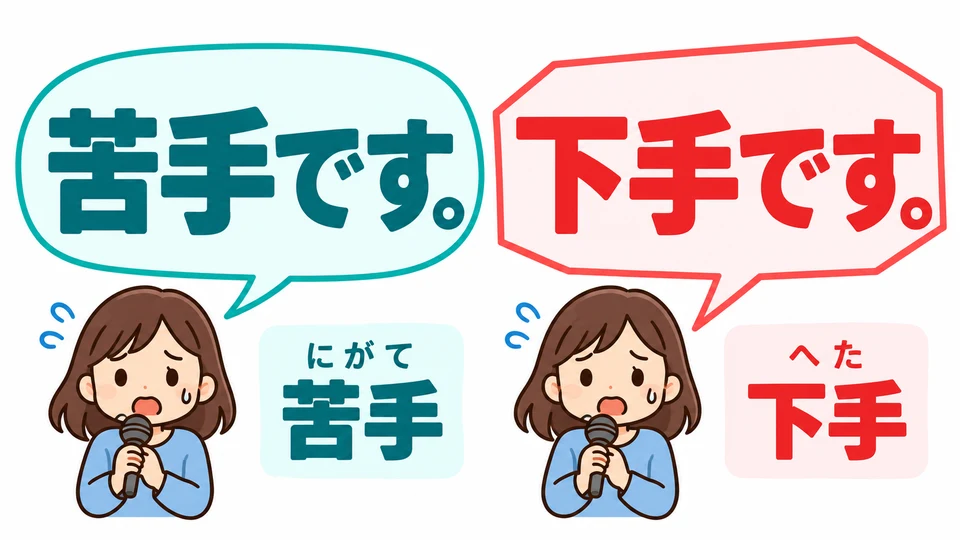
「苦手」 is a gentler way to say you are not good at something; 「下手」 judges poor skill more directly.
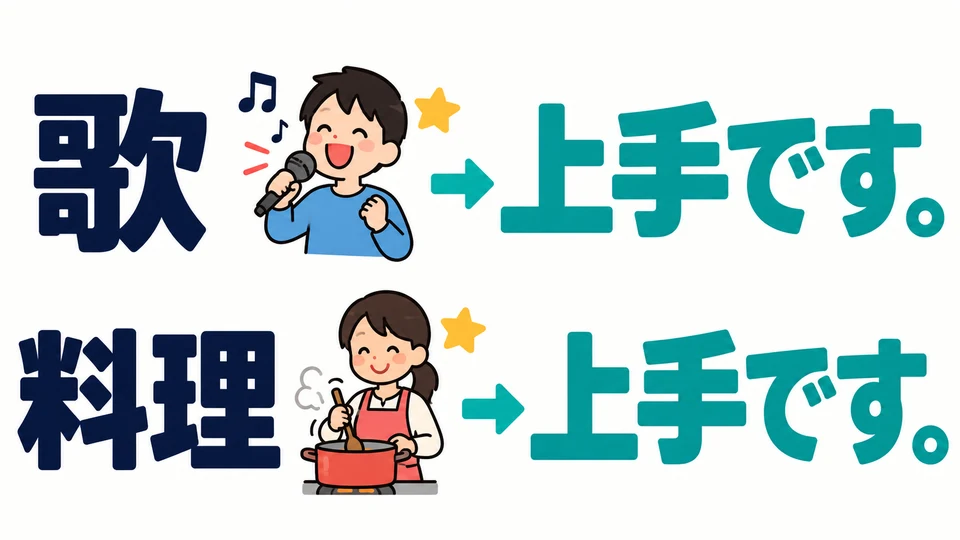
In the examples, 「歌」 and 「料理」 refer to the activities of singing and cooking. What is being judged is skill.
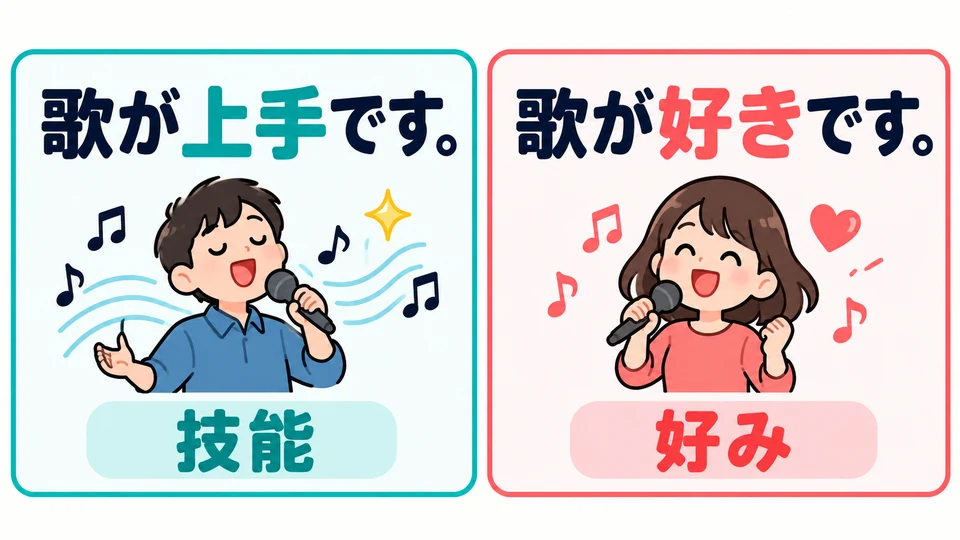
「歌が上手です」 describes singing ability. 「歌が好きです」 only describes what someone likes.
Example sentences
- 歌utaがga上手です。jouzudesu
I'm good at singing.
- 料理ryouriがga上手です。jouzudesu
I'm good at cooking.
In a conversation

- A田中さんは何が好きですか。
What does Tanaka like?
- B田中さんは歌が好きです。歌
Check yourself
Level 1 · Recognise
Which sentence is correct?
Level 1 · Recognise
Listen and choose the meaning
Level 2 · Build
Put the words in order
Tanaka is good at singing.
Level 3 · Use
What goes in the blank?
田中さんは歌 です。
Ms. Tanaka is good at singing.
More grammar in this theme
- 〜が上手です/下手ですskill at an activity