
Japanese grammar · ≈ JLPT N4 · Beginner 2
〜て~te
casual request or invitation
End a sentence with 「〜て」 to casually ask someone close to do something, invite them, or give a gentle instruction.
How it works
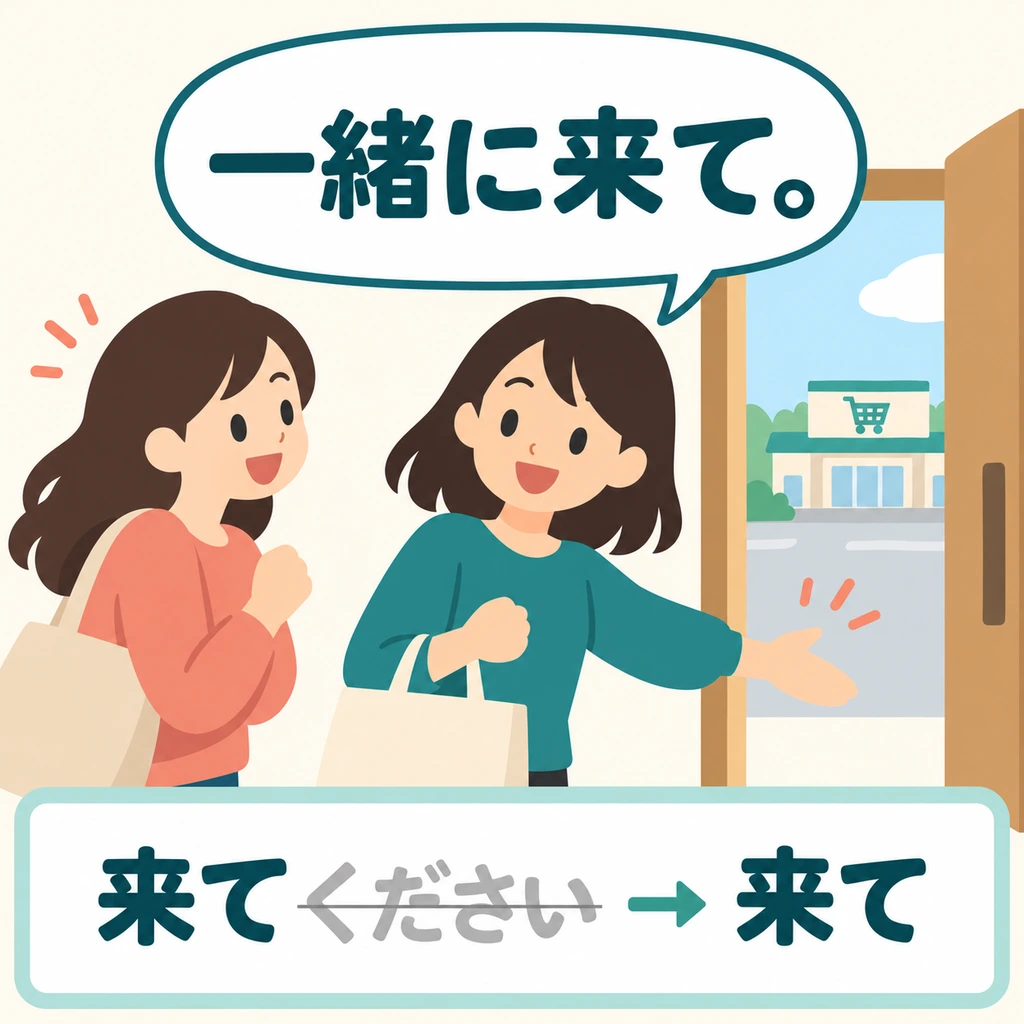
A friend beckons and says 「一緒に来て」. What do they want the other person to do? Look at where the two are standing.
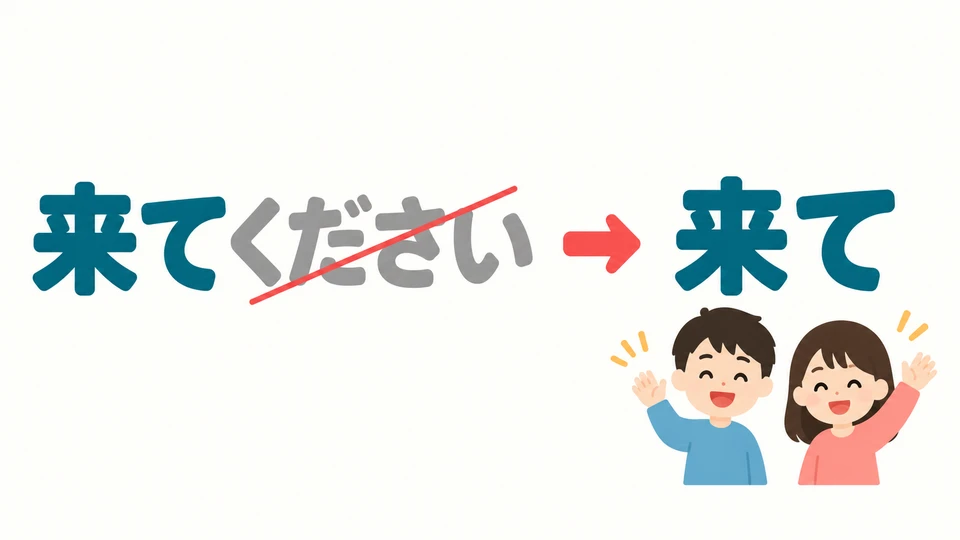
Leave out 「ください」 from 「来てください」, and it becomes a casual request.
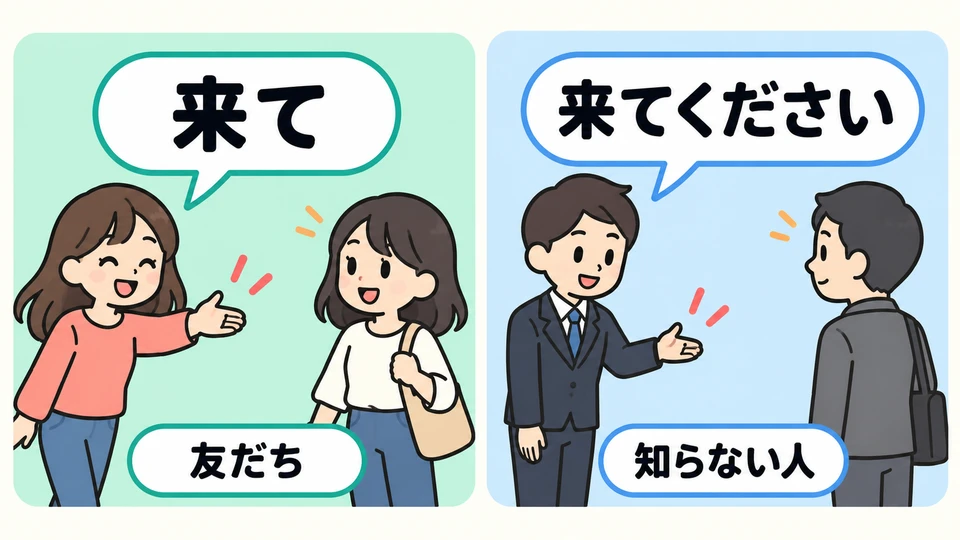
This wording is common with friends, family, and others you are close to. Use a polite expression with people you do not know well.
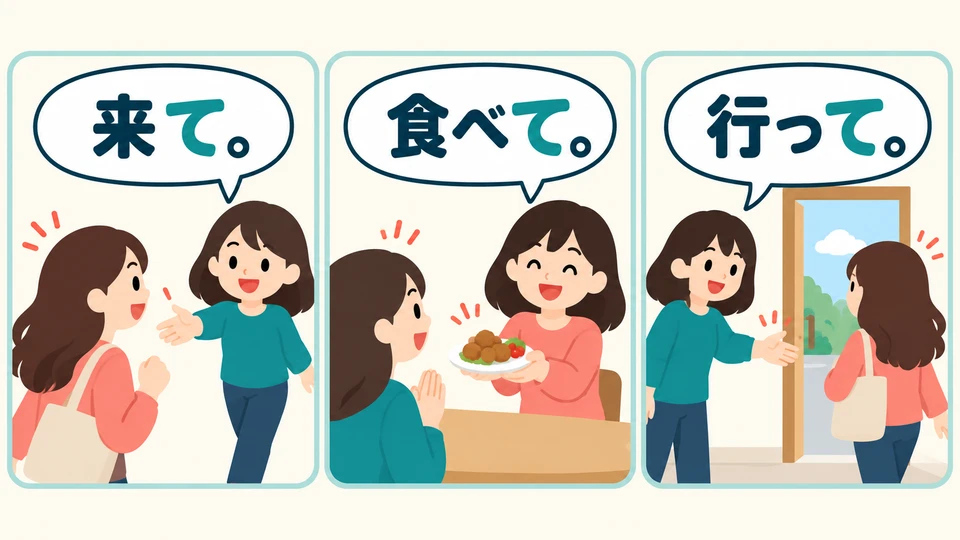
Use the て-form at the end of a sentence to ask someone to do something. It can call someone over, invite them, or give a gentle instruction.
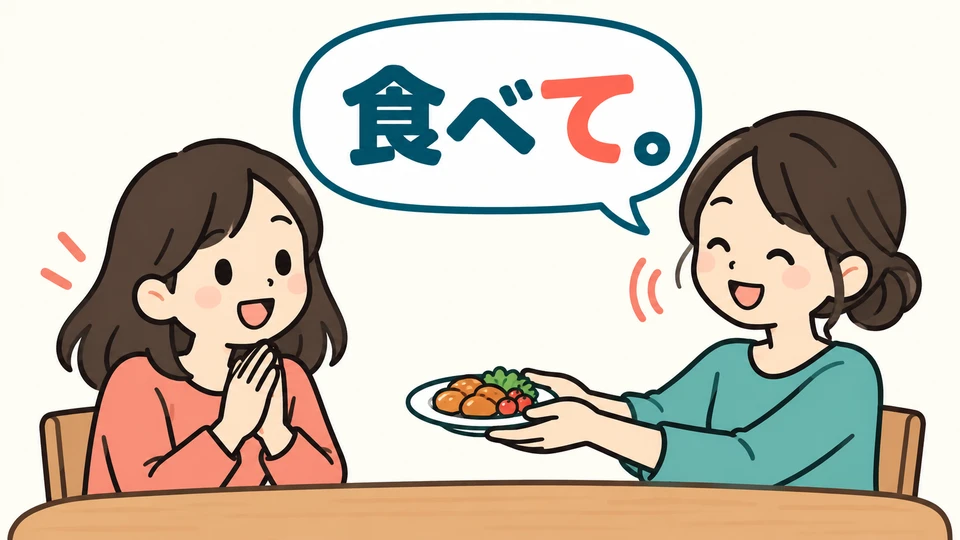
You can say 「食べて」 when offering food. Said softly with a smile, it means “Go ahead and eat.”
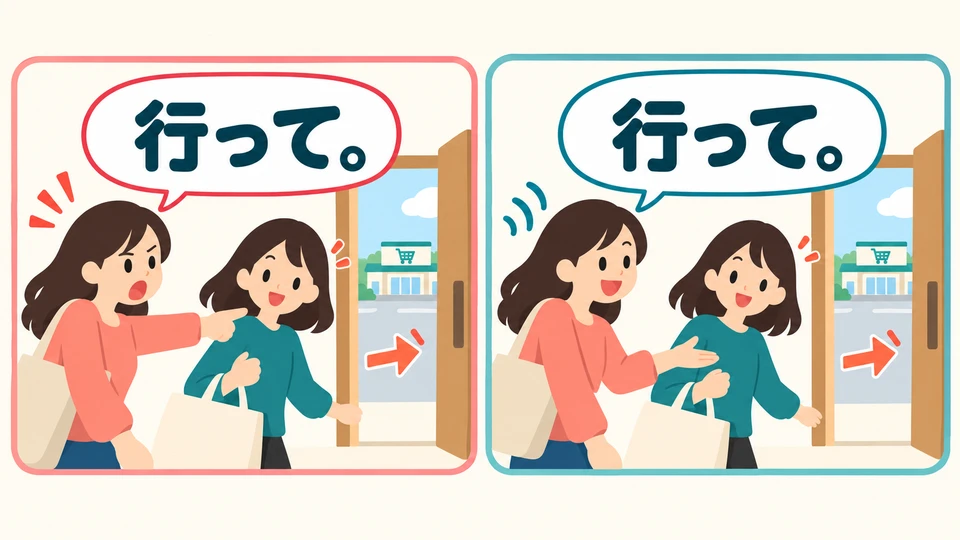
「行って」 asks the other person to go. A hurried, firm tone makes it sound like an instruction; a gentle tone softens it.
Example sentences
- 食べtabeて。te
Eat. (Please eat.)
- 行っiて。te
Go. (Please go.)
In a conversation
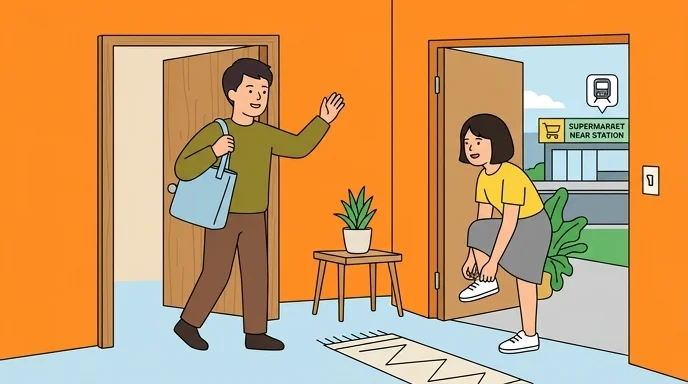
- Aねえ、今暇?
A: Hey, are you free now?
- Bうん、何?
B: Yeah, what's up?
- A買い物に行こう。一緒
Check yourself
Level 1 · Recognise
Which sentence is correct?
Level 1 · Recognise
Listen and choose the meaning
Level 2 · Build
Put the words in order
Hey, watch a movie.
Level 3 · Use
What goes in the blank?
散歩 。
Go for a walk.
More grammar in this theme
- 〜てcasual request or invitation