
Japanese grammar · ≈ JLPT N5 · Beginner 2
〜は〜です~ wa ~ desu
describing a noun
Use「〜は〜です」with a plain-form modifier before a noun to describe a place or identify a person.
How it works
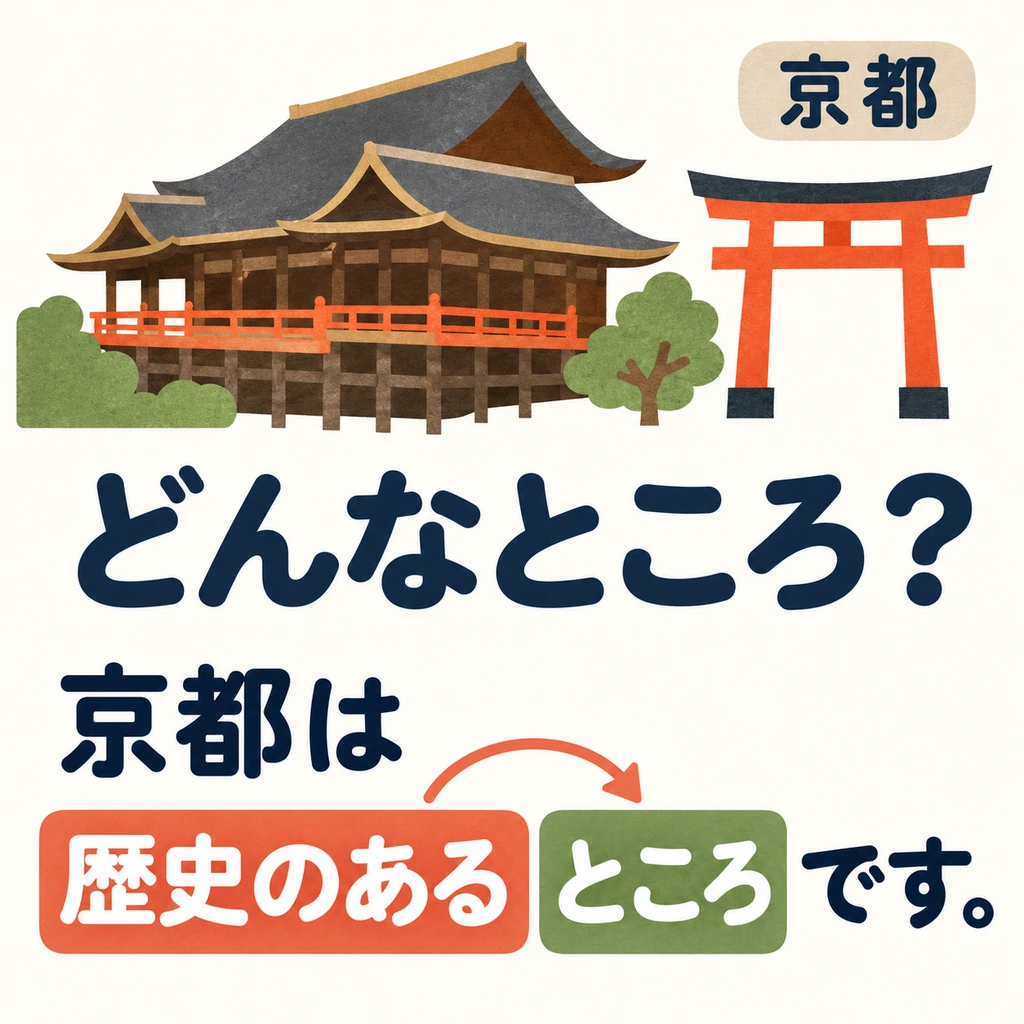
When introducing Kyoto, one sentence can describe what kind of place it is. Look at the colors in the picture.
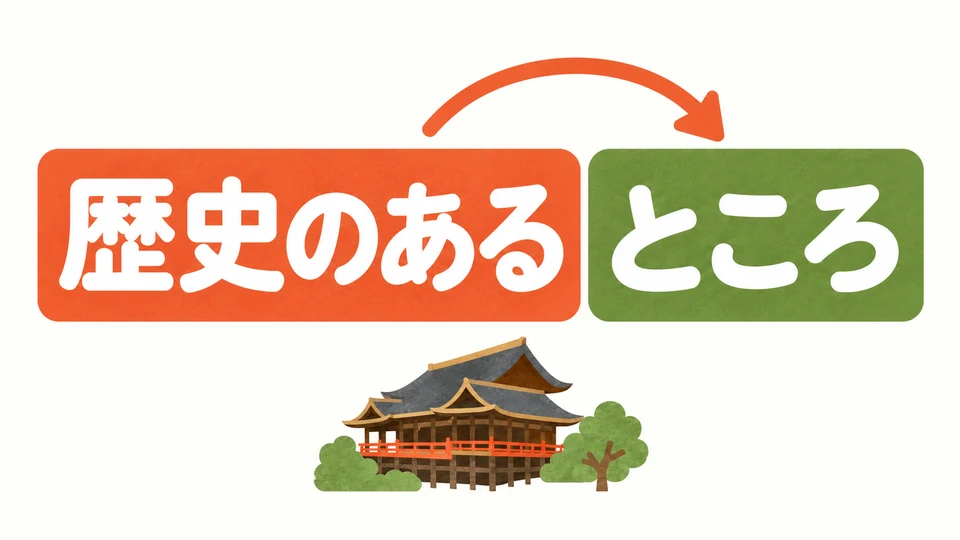
The orange 「歴史のある」 describes the green 「ところ」. The modifier comes before the noun.
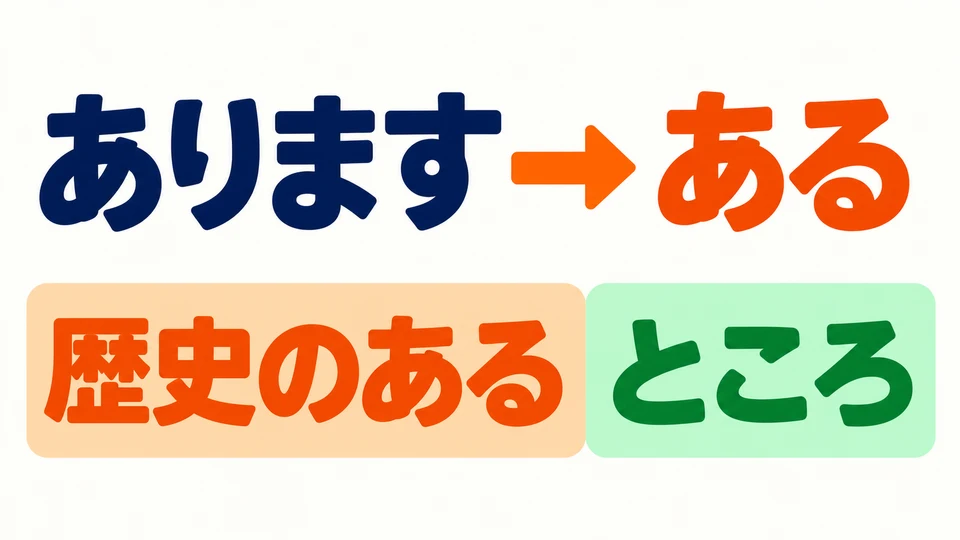
A verb before a noun uses the plain form: 「あります」 becomes 「ある」 and connects directly to the noun.
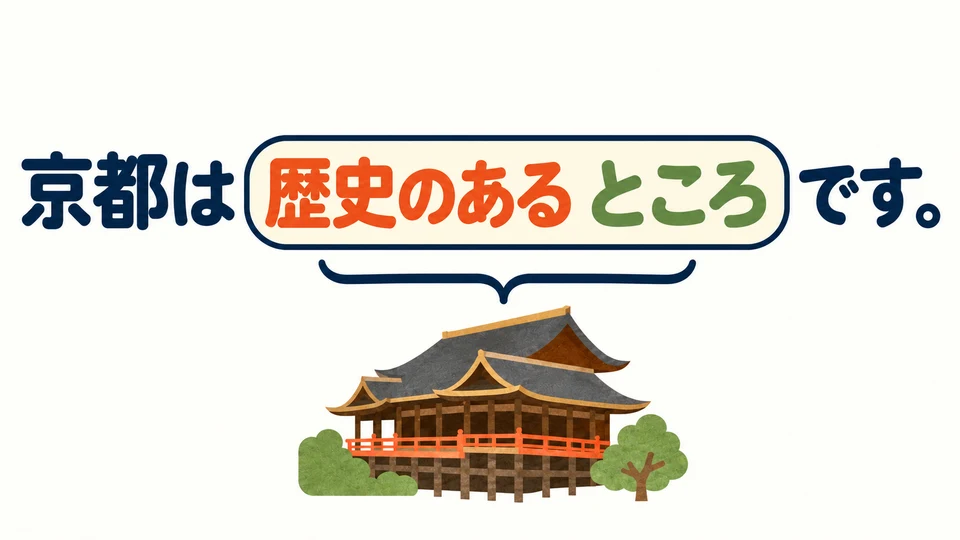
「京都は+歴史のあるところ+です」. The modifier and noun form one unit.
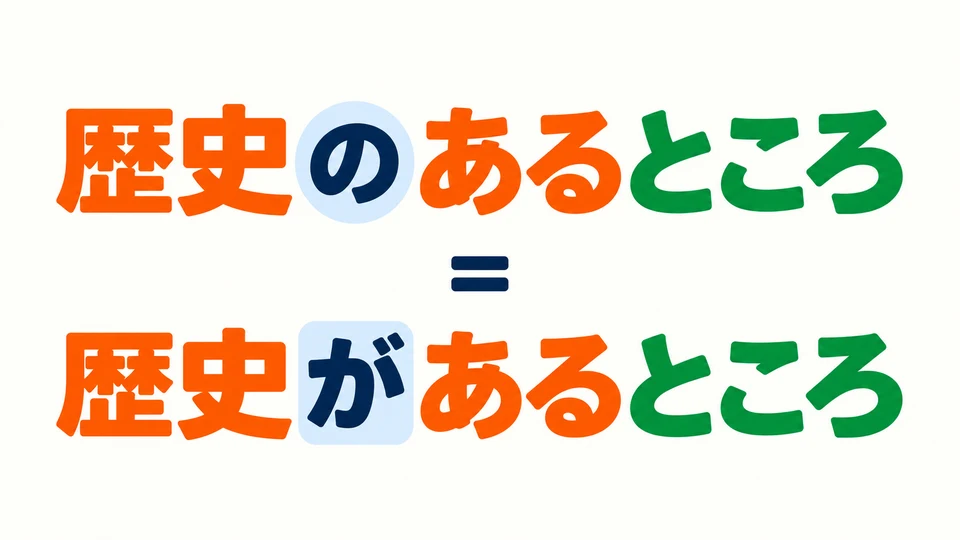
In the example, 「の」 in 「歴史のある」 marks the subject. Here, it has the same meaning as 「歴史がある」.
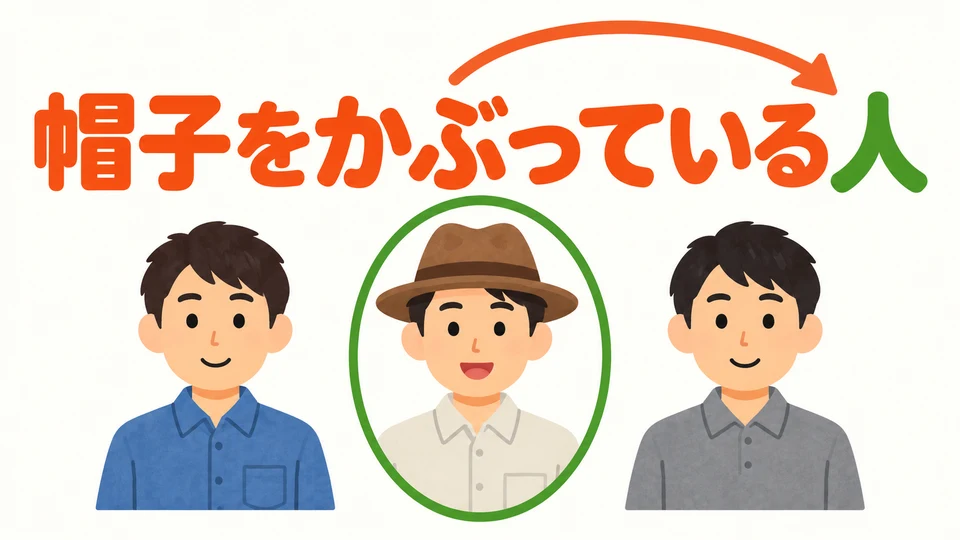
The example about the older brother uses 「帽子をかぶっている」 to describe 「人」, helping us identify which person he is.
Example sentences
- 京都kyoutoはwa歴史rekishiのnoあるaruところtokoroです。desu
Kyoto is a place with history.
- 私watashi
In a conversation

- Aおすすめの観光地はどこですか。
A: Where is a recommended sightseeing spot?
- B京都は歴史のあるところ
Check yourself
Level 1 · Recognise
Which sentence is correct?
Level 1 · Recognise
Listen and choose the meaning
Level 2 · Build
Put the words in order
Kyoto is a place with history.
Level 3 · Use
What goes in the blank?
金沢は工芸品の 都市です。
Kanazawa is a city with traditions of crafts.
More grammar in this theme
- 〜は〜ですdescribing a noun