JPEDLAB iconJPEDLAB
Save history

Create an account and play

Explore first, then save your progress whenever you are ready. No email address is required.

Start free
Read as articleCards
1/10

Look at the picture: is the comment about the person or the photo? First identify the photo, then say it is beautiful.

››

Lesson notes · ≈ JLPT N4 · Beginner 2

〜た〜は~ta ~wa

noun modifier as topic

Use a plain-form verb before a noun to say which one you mean, then make the whole phrase the topic with は.

How it works
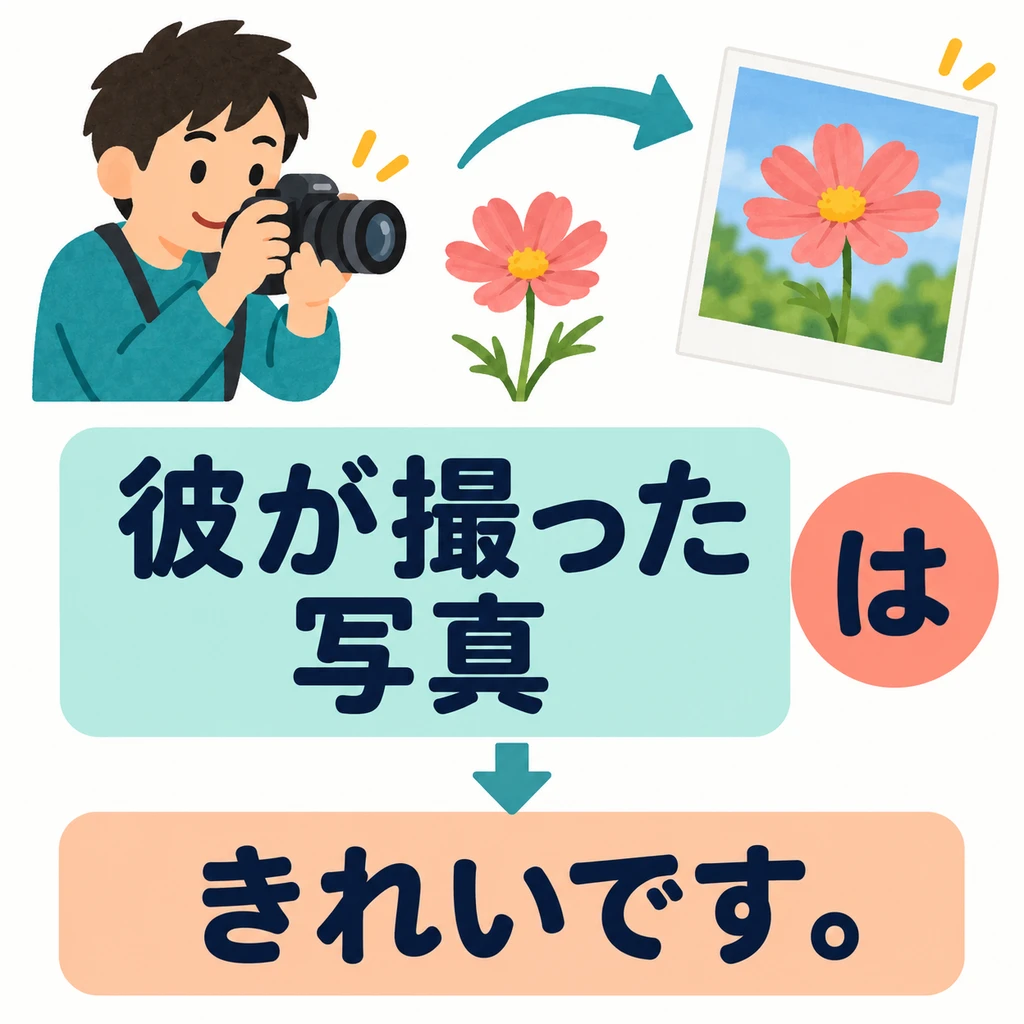
  1. Look at the picture: is the comment about the person or the photo? First identify the photo, then say it is beautiful.
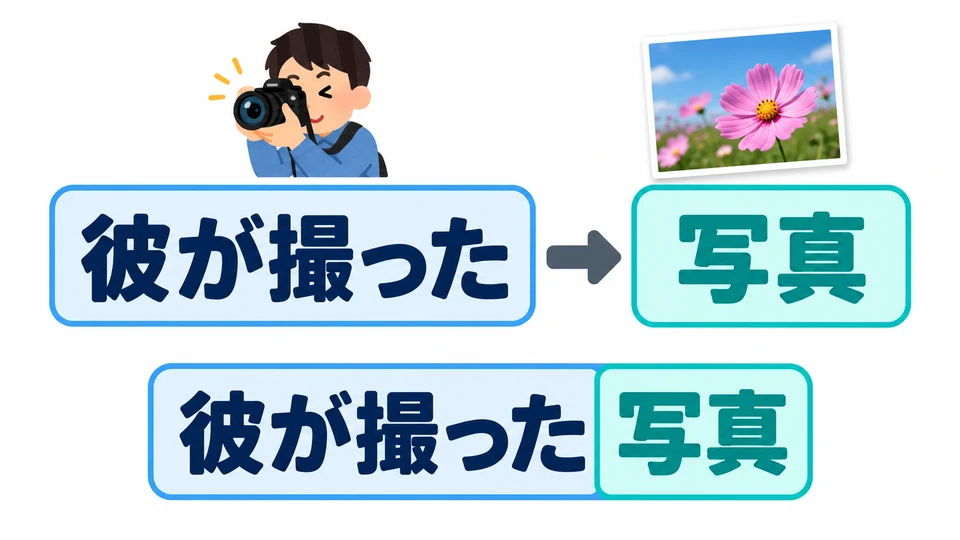
    Look at the picture: is the comment about the person or the photo? First identify the photo, then say it is beautiful.

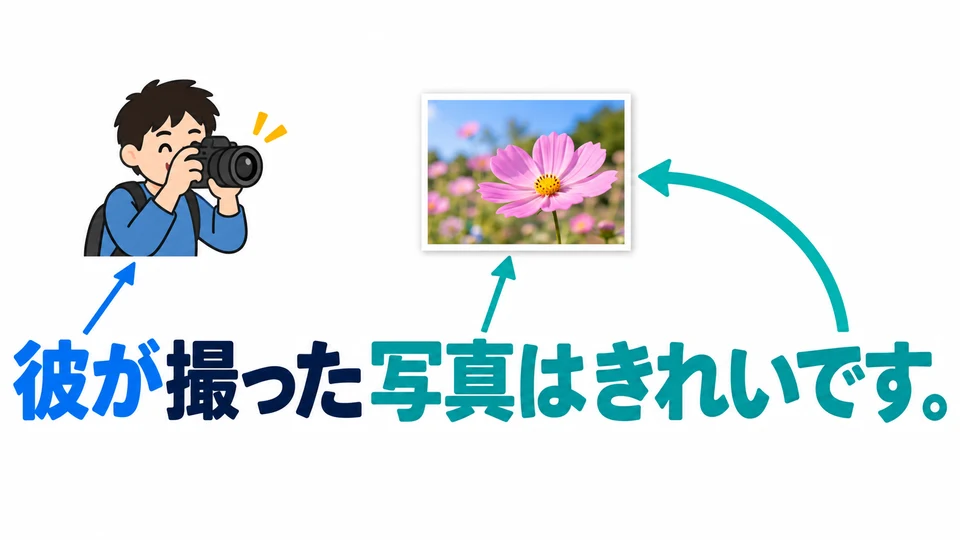
  2. 「彼が撮った」 tells us which photo it is. Put this modifier before 「写真」.
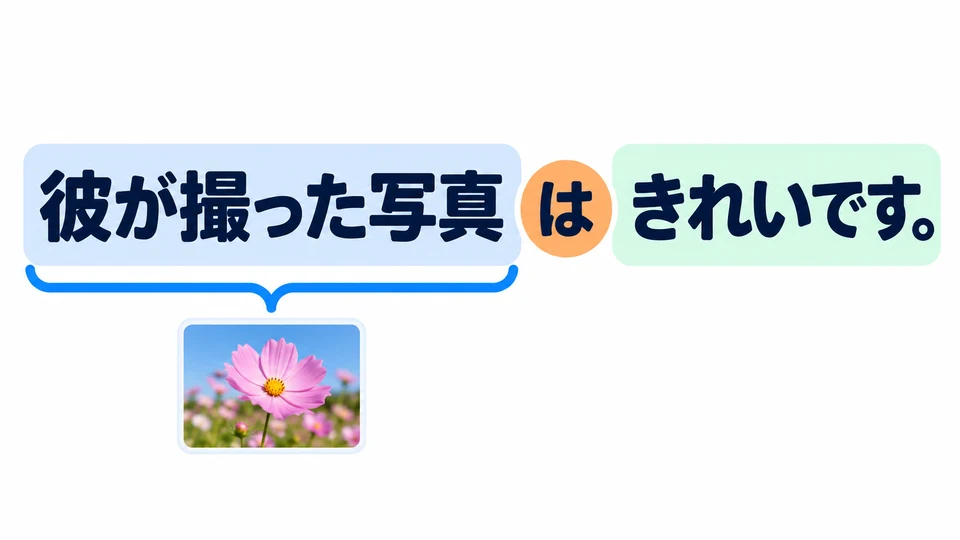
    「彼が撮った」 tells us which photo it is. Put this modifier before 「写真」.

  3. Treat the modifier and noun as one unit. Add 「は」 after the whole phrase, then say something about it.
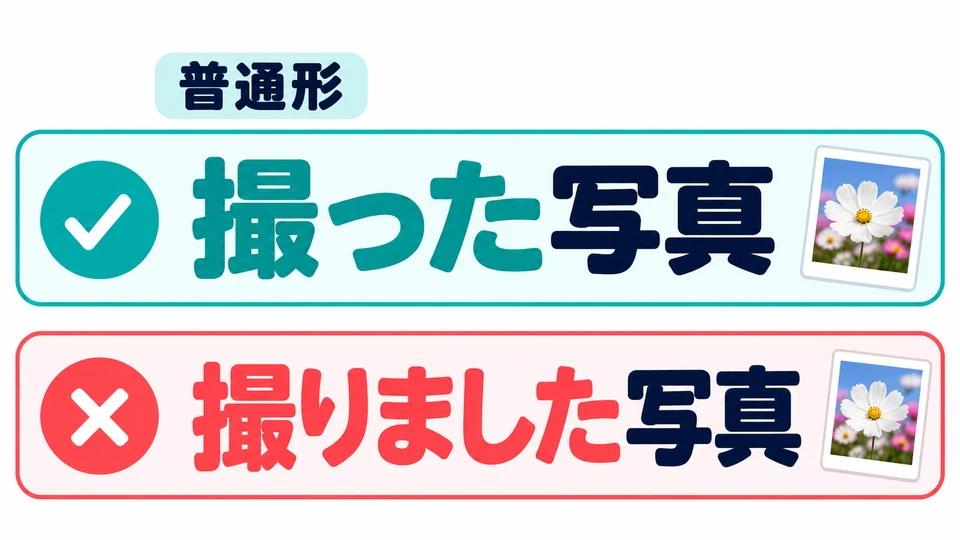
    Treat the modifier and noun as one unit. Add 「は」 after the whole phrase, then say something about it.

  4. Use the plain form of the verb before a noun: 「撮った写真」. Do not say 「撮りました写真」.
    Use the plain form of the verb before a noun: 「撮った写真」. Do not say 「撮りました写真」.

  5. 「彼が」 identifies who took the photo. 「写真は」 introduces the photo as the topic; the comment that follows is about the photo.
    「彼が」 identifies who took the photo. 「写真は」 introduces the photo as the topic; the comment that follows is about the photo.
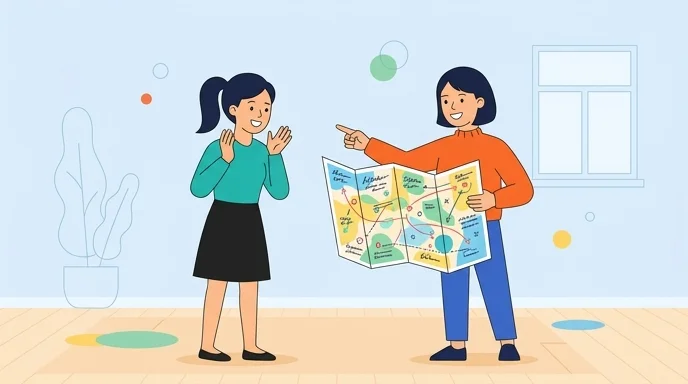
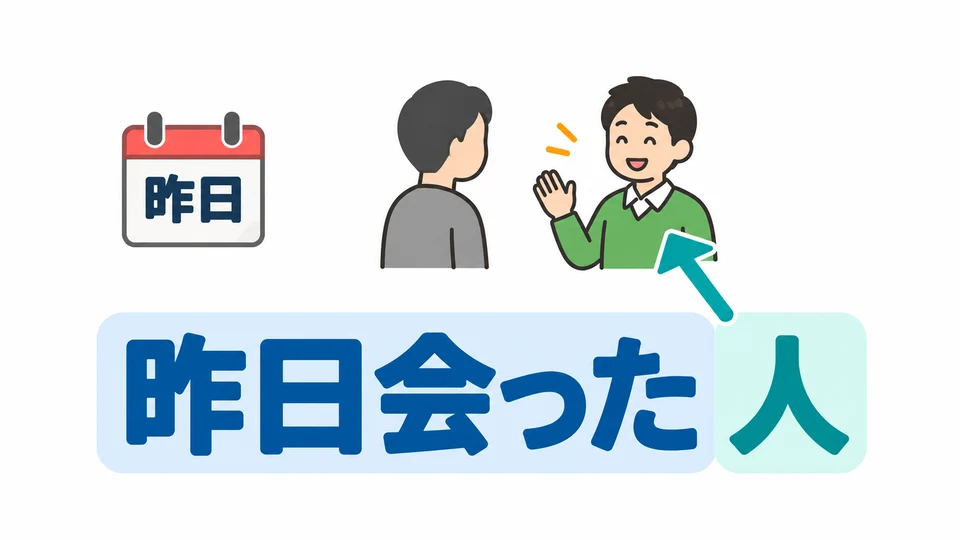
  6. 「昨日会った人」 means the person someone met yesterday. The context tells us who met that person.

「昨日会った人」 means the person someone met yesterday. The context tells us who met that person.

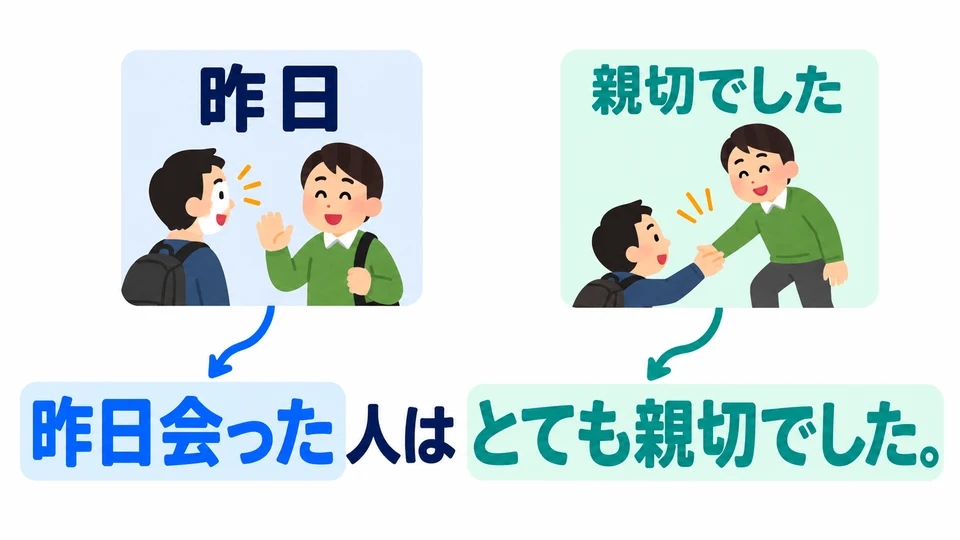
  • 「会った」 tells us when the meeting happened. 「親切でした」 gives the impression of that person at the time.

    「会った」 tells us when the meeting happened. 「親切でした」 gives the impression of that person at the time.

  • Example sentences

    • 彼かれkareがga撮ったとったtotta写真しゃしんshashinはわwaきれいです。きれいですkireidesu

      The photo he took is beautiful.

    • 昨日きのうkinou会ったあったatta人ひとhitoはわwaとてもtotemo親切しんせつshinsetsuでした。でしたdeshita

      The person I met yesterday was very kind.

    In a conversation

    • A
      その地図ちずはわどこで買いましたかいましたか。か

      A: Where did you buy that map?

    • B
      友達ともだちが選んだえらんだ地図ちずです。です

      B: It's the map a friend chose.

    • A
      正確せいかくな地図なちずですか。か

      A: Is it an accurate map?

    • B
      ええ、ええとても正確せいかくですよ。よ

      B: Yes, it's very accurate.

    Check yourself

    1. Level 1 · Recognise

      Which sentence is correct?

    2. Level 1 · Recognise

      Listen and choose the meaning

    3. Level 2 · Build

      Put the words in order

      The map I selected is accurate.

    4. Level 3 · Use

      What goes in the blank?

      私が 本は面白いです。

      The book I bought is interesting.

    More grammar in this theme

    • 〜たことがありますpast experience
    • 知っていますかasking if someone knows
    • 〜という〜named or called something
    • 〜は〜ですdescribing a noun
    • 〜ていますwearing state
    • 〜た〜を/へnoun modifier + particle
    • 〜た〜はnoun modifier as topic
    Previous〜た〜を/へ

    Keep practising

    Test your Japanese vocabulary12 adaptive questions, freeCheck your pronunciationRead aloud and get a scorePractise verb forms10-question conjugation quizSee the whole courseGrammar, vocabulary and quizzes by theme
    See the whole course
    Beginner 2
    Recommendations