
Japanese grammar · Beginner 3
〜てあります~te arimasu
has been prepared
Use 「〜てあります」 for a present state that remains after someone intentionally did something, often as preparation.
- Pattern
- 〜てあります
- Romaji
- ~te arimasu
- Course level
- Beginner 3
- Theme
- At Shops and Restaurants
How it works
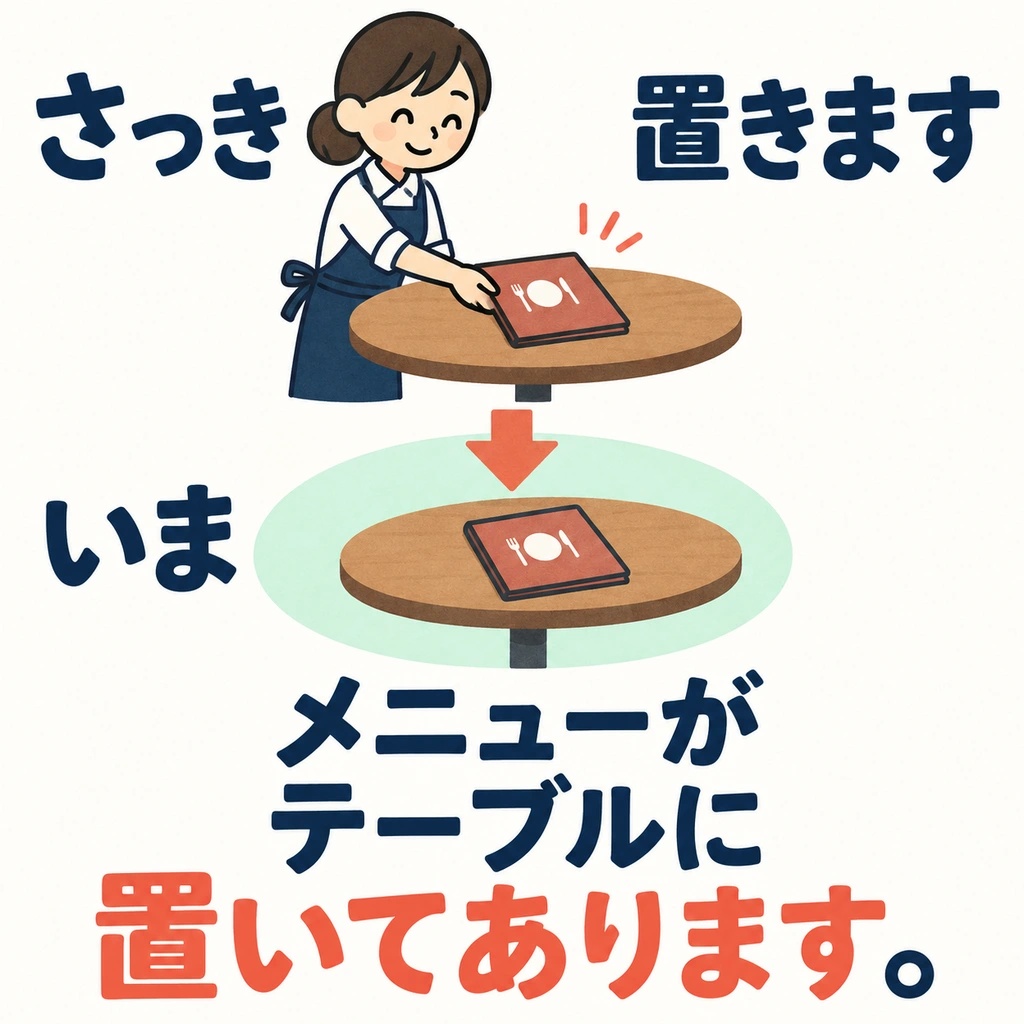
Look at the picture: the menu placed on the table a moment ago is still there. The focus is on the state that remains after the action.
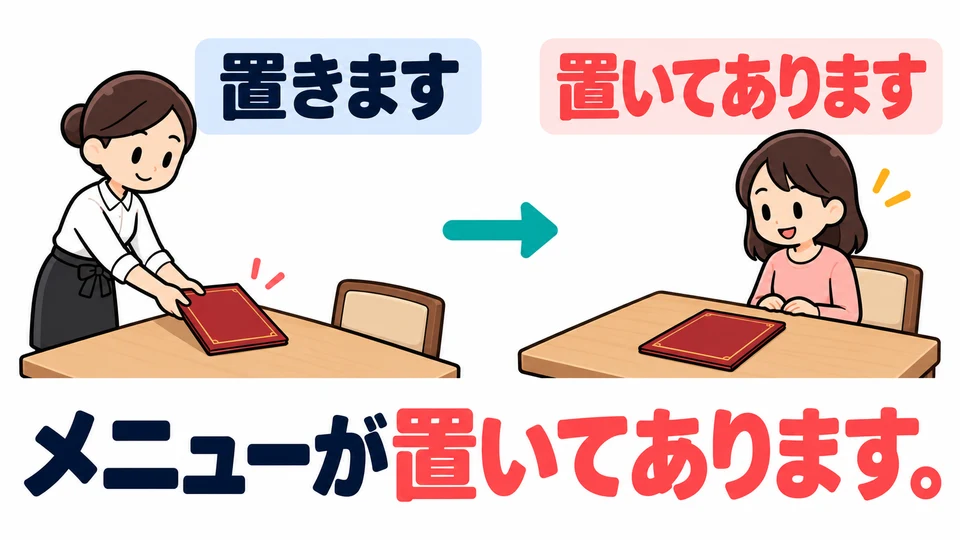
Someone put the menu there intentionally, usually for a purpose. Here, it was placed to prepare for the guests’ meal.
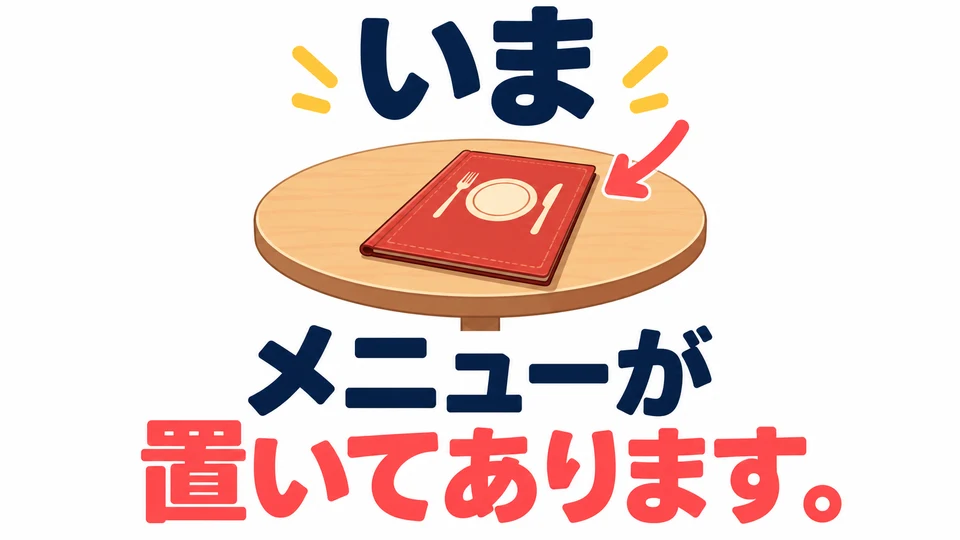
With 「置いてあります」, the focus is on the object’s current state. You do not need to say who put it there.
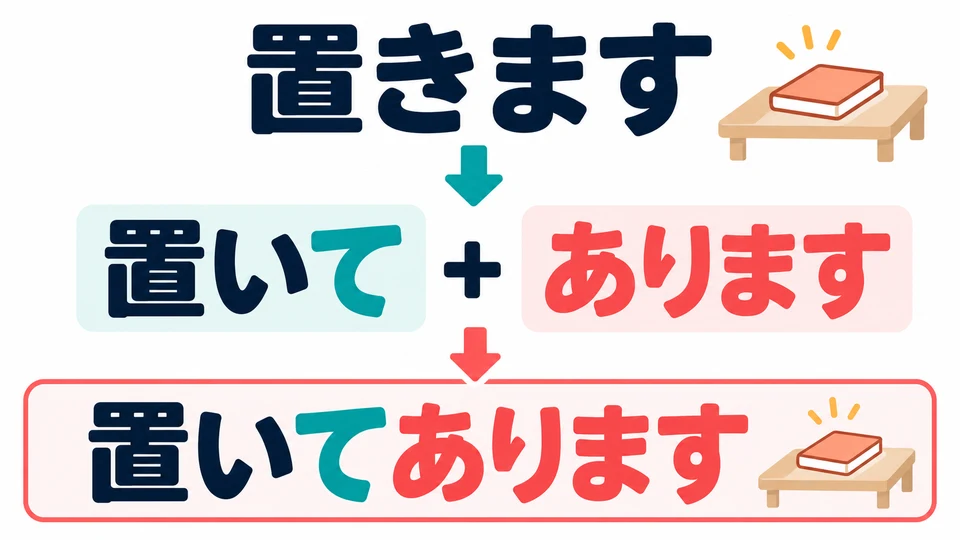
Add 「あります」 to the て-form of a transitive verb. 「置きます」 becomes 「置いてあります」.
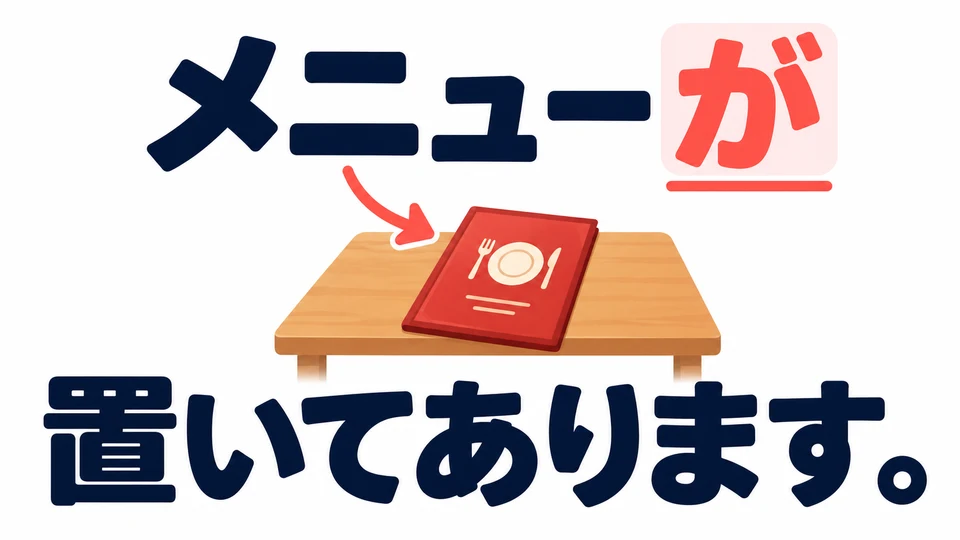
When describing the state that remains, the object is usually marked with 「が」, as in 「メニューが」.
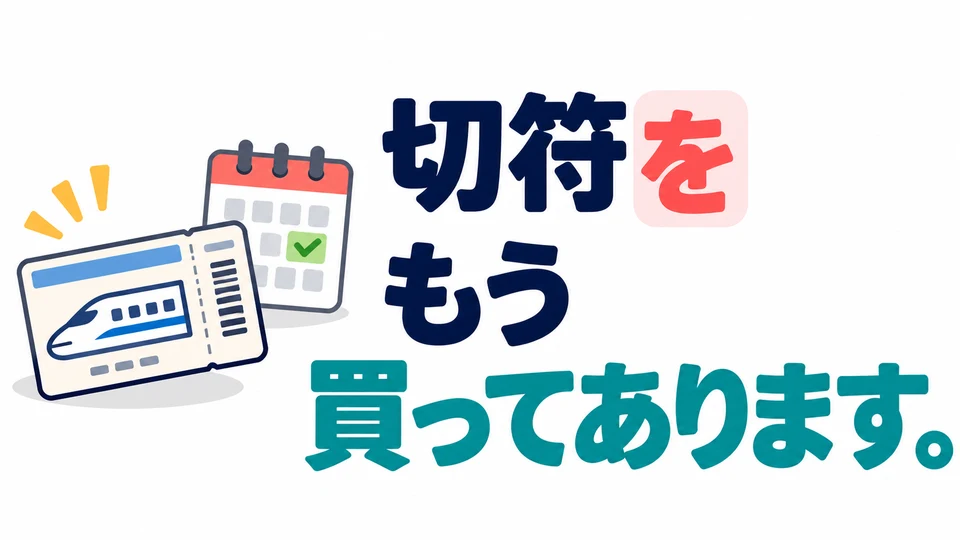
When emphasizing that something is ready for later, the object can also be marked with 「を」. You do not always need to change it to 「が」.
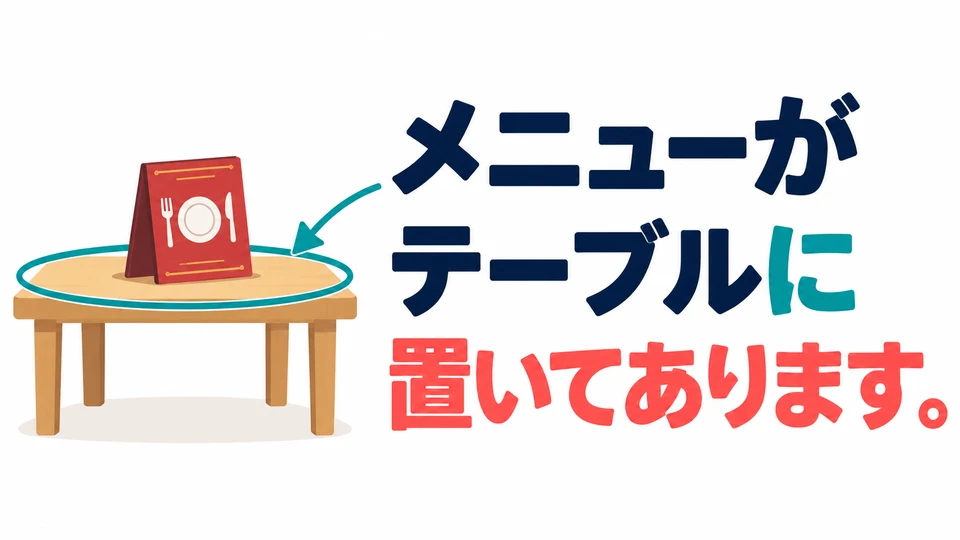
Use 「に」 to show where the object has been placed. 「テーブルに」 means it has been placed on the table.
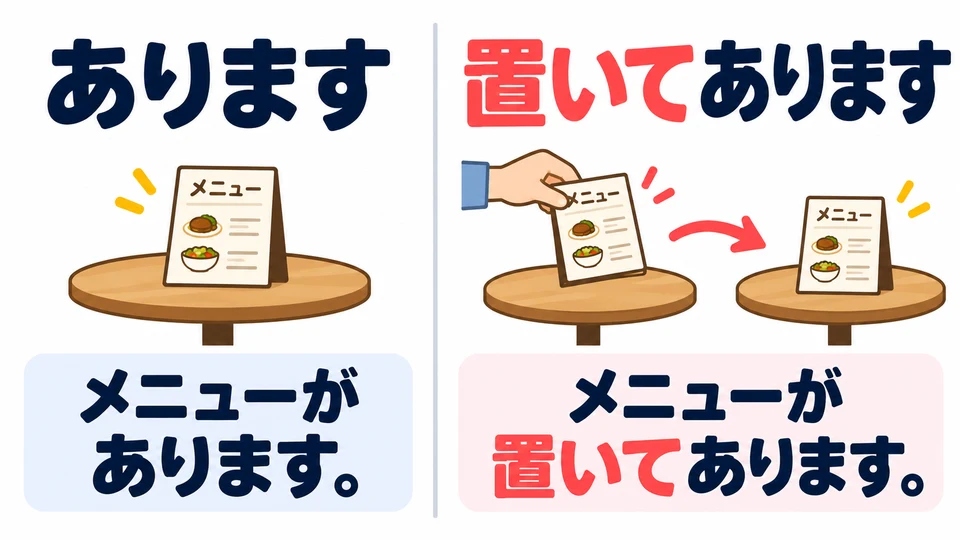
「あります」 simply says the object is there. 「置いてあります」 also tells us that someone placed it there.
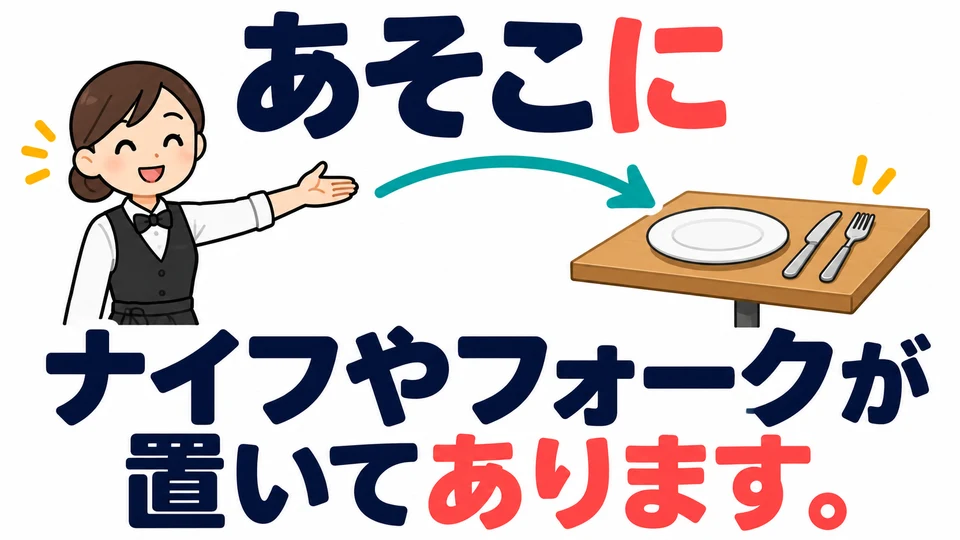
If a guest is looking for cutlery, you can say 「ナイフやフォークが置いてあります」 to tell them the knives and forks are already laid out.
Example sentences
- メニューmenyuuがgaテーブルteeburuにni置いoiてteあります。arimasu
The menu is placed on the table.
- あそこasokoにni
In a conversation

- Aナイフはありますか。
A: Is there a knife?
- Bあそこにナイフやフォークが置いてありますよ。
Check yourself
Which sentence is correct?
- メニューがテーブルに置いてあります。
- メニューがテーブルに置いてありますます。
- メニューがテーブルに置きるてあります。
- メニューがテーブルに置いてりあります。
Show answer
Answer: A メニューがテーブルに置いてあります。
Which sentence is correct?
- お箸がきれいに並べてあります。
- お箸がきれいに並べてありますます。
- お箸はきれいに並べますあります。
- お箸がきれい並べてあります。
Show answer
Answer: A お箸がきれいに並べてあります。
Which sentence is correct?
- 飲み物が冷やしてあります。
- 飲み物が冷やしてですあります。
- 飲み物は冷やしてをあります。
- 飲み物が冷やすてあります。
Show answer
Answer: A 飲み物が冷やしてあります。
More grammar in this theme
- 〜てありますhas been prepared