Lesson notes · Beginner 3
〜てあります~te arimasu
has been prepared
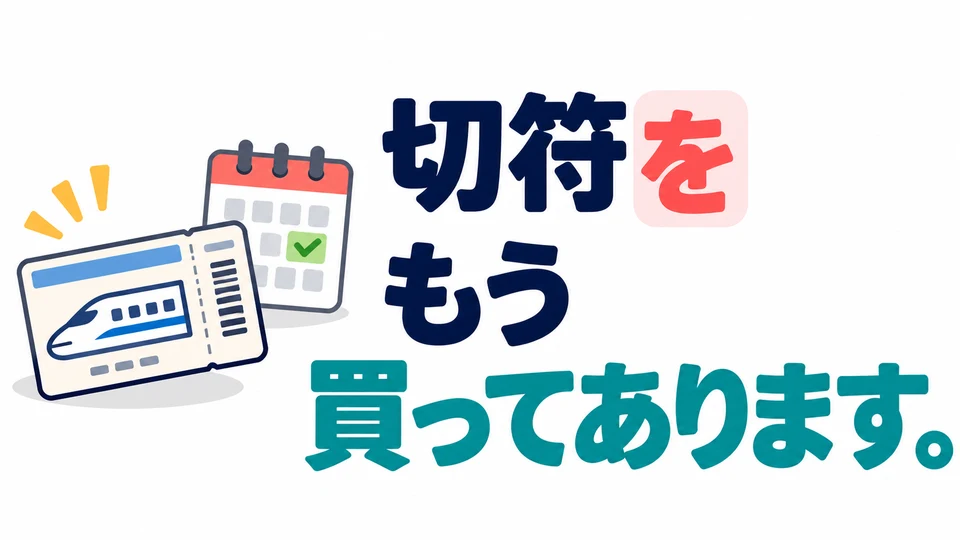
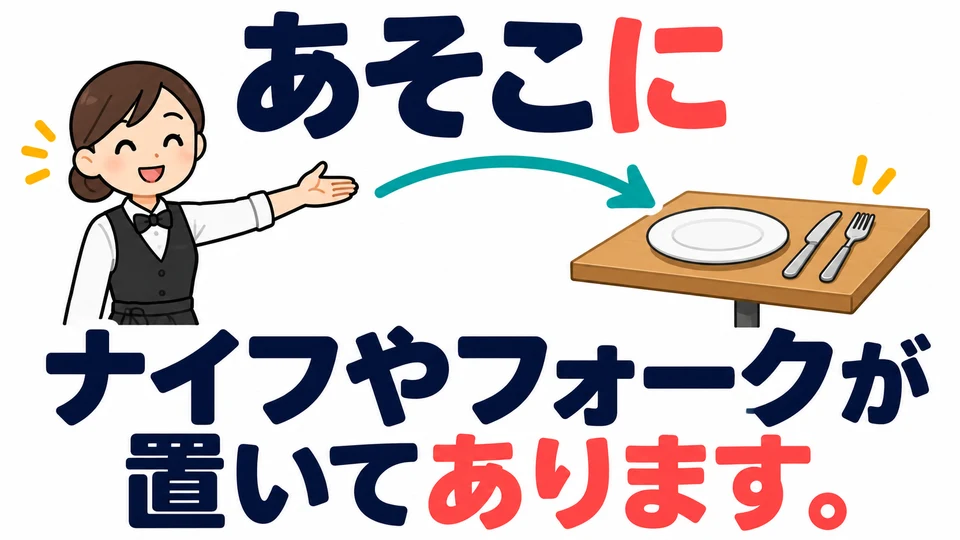
Use 「〜てあります」 for a present state that remains after someone intentionally did something, often as preparation.
How it works
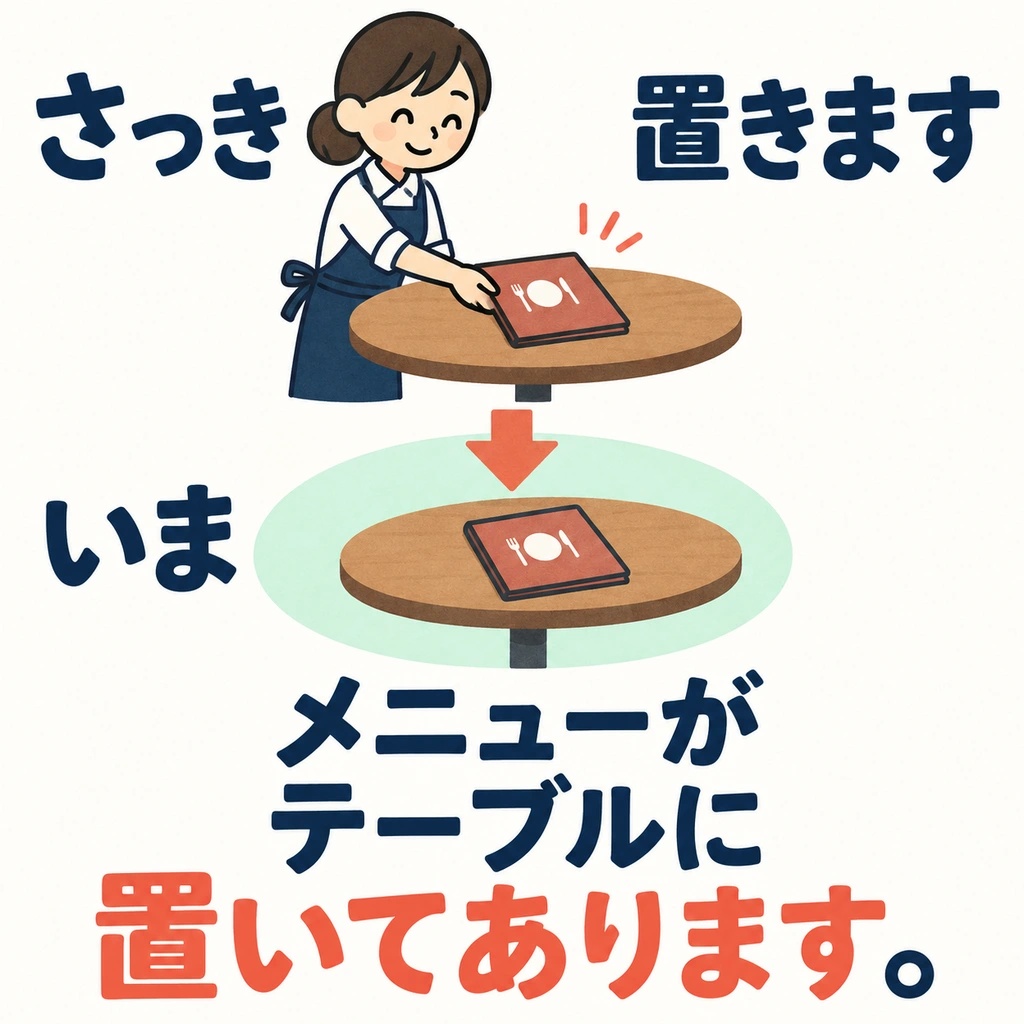
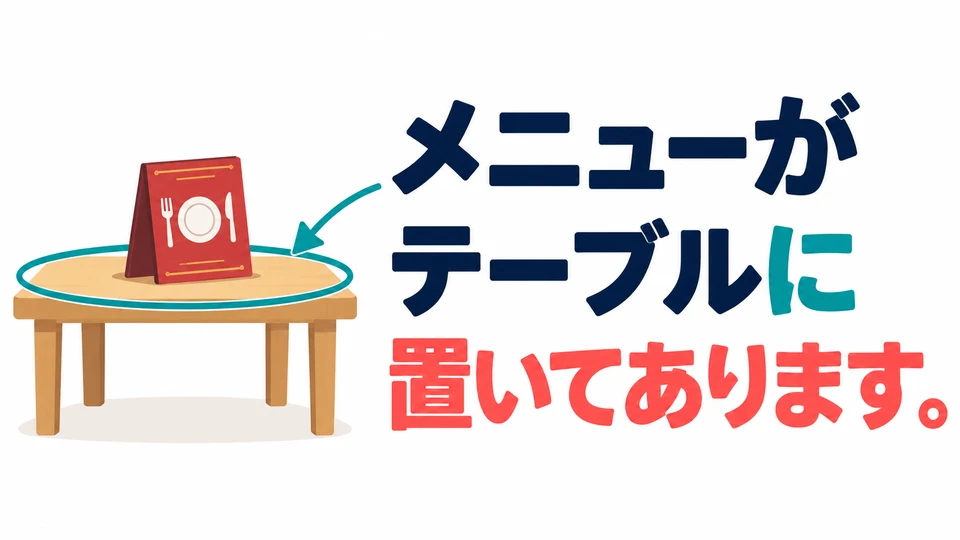
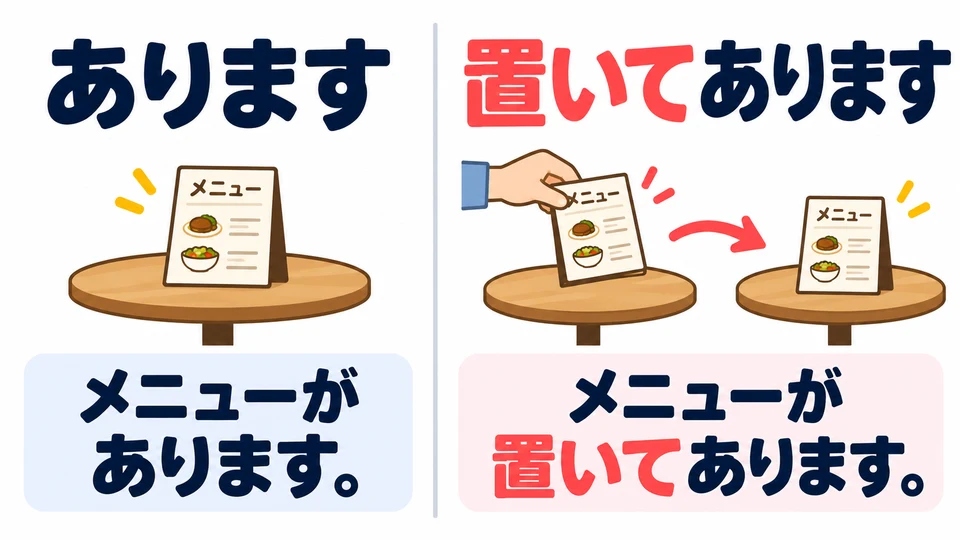
Look at the picture: the menu placed on the table a moment ago is still there. The focus is on the state that remains after the action.
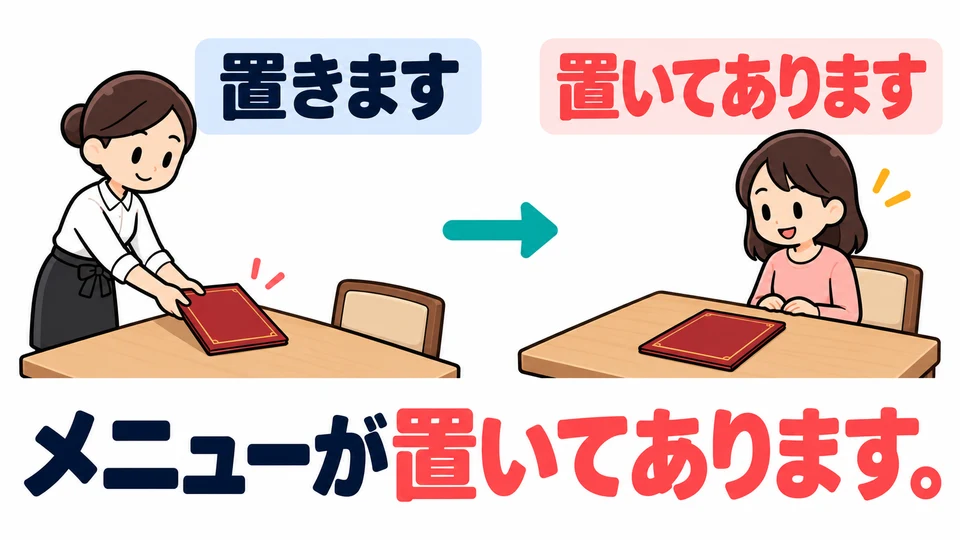
Someone put the menu there intentionally, usually for a purpose. Here, it was placed to prepare for the guests’ meal.
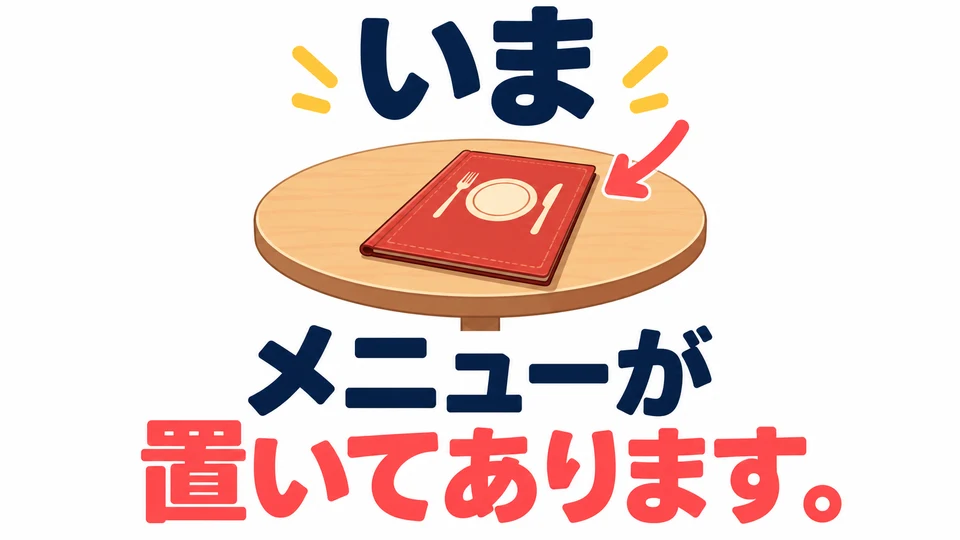
With 「置いてあります」, the focus is on the object’s current state. You do not need to say who put it there.
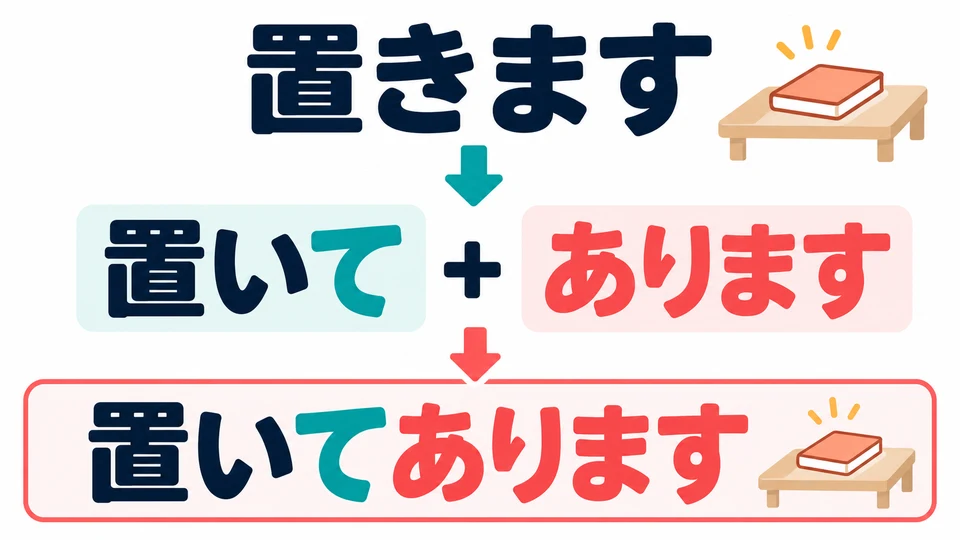
Add 「あります」 to the て-form of a transitive verb. 「置きます」 becomes 「置いてあります」.
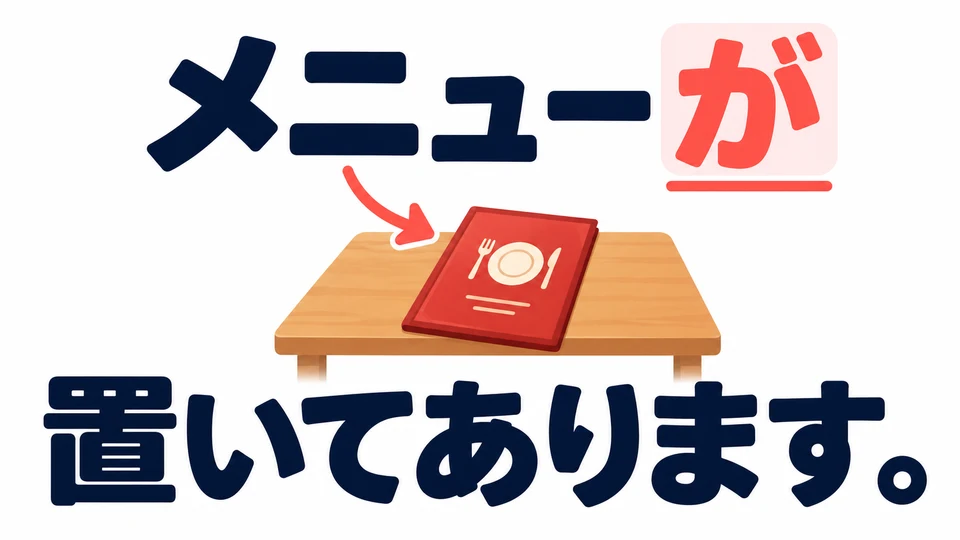
When describing the state that remains, the object is usually marked with 「が」, as in 「メニューが」.