JPEDLAB iconJPEDLAB
Save history

Create an account and play

Explore first, then save your progress whenever you are ready. No email address is required.

Start free
Read as articleCards
1/10

Look at the same exit: what stage is the person at now? ところ divides the action into three stages.

››

Lesson notes · ≈ JLPT N4 · Beginner 3

〜ところです~tokoro desu

action stage right now

Use 「〜ところです」 to report whether an action is about to start, in progress, or just finished.

How it works
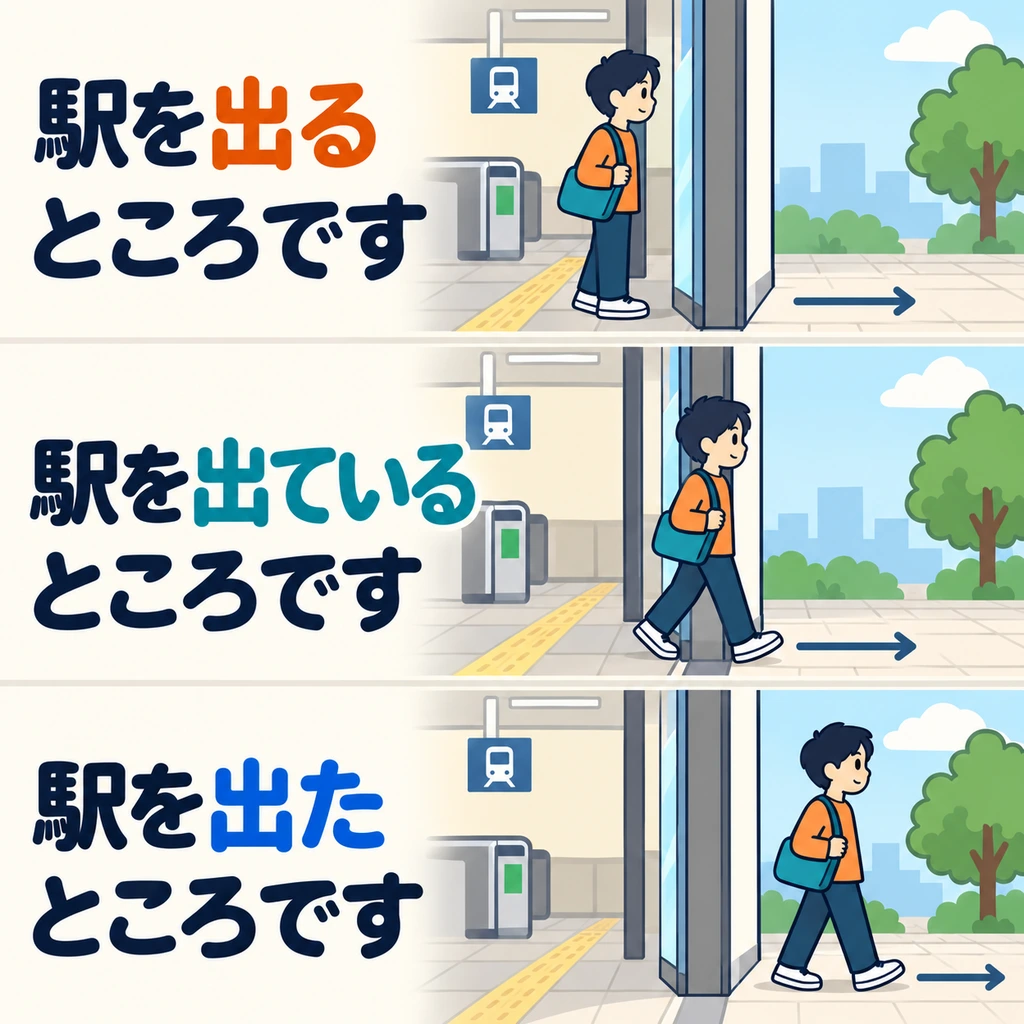
  1. Look at the same exit: what stage is the person at now? ところ divides the action into three stages.
    Look at the same exit: what stage is the person at now? ところ divides the action into three stages.

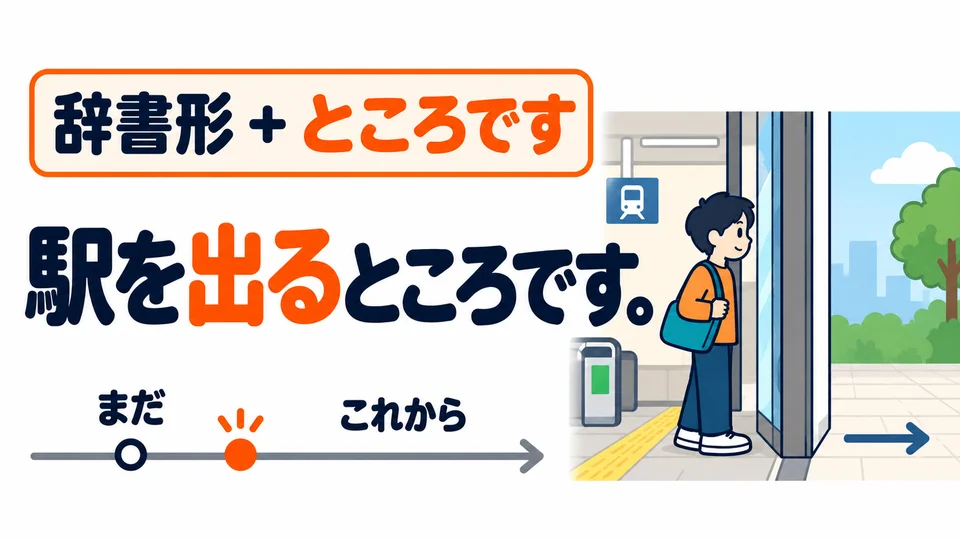
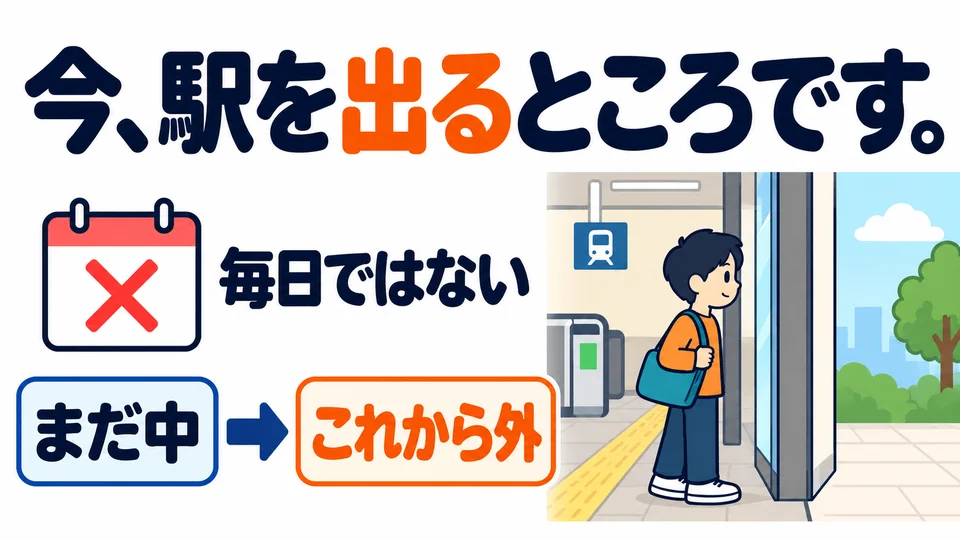
  2. 辞書形+ところです: the action has not started yet; it is just about to begin.
    辞書形+ところです: the action has not started yet; it is just about to begin.

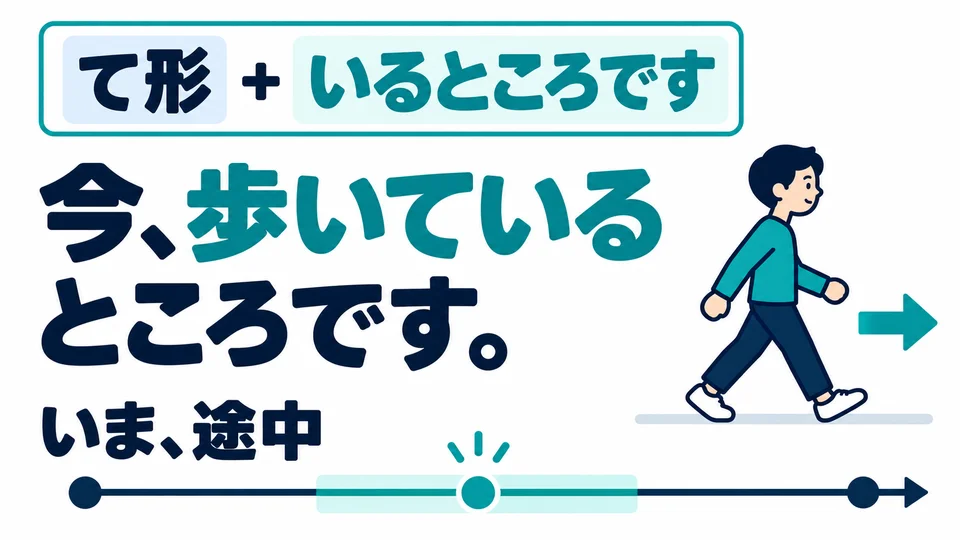
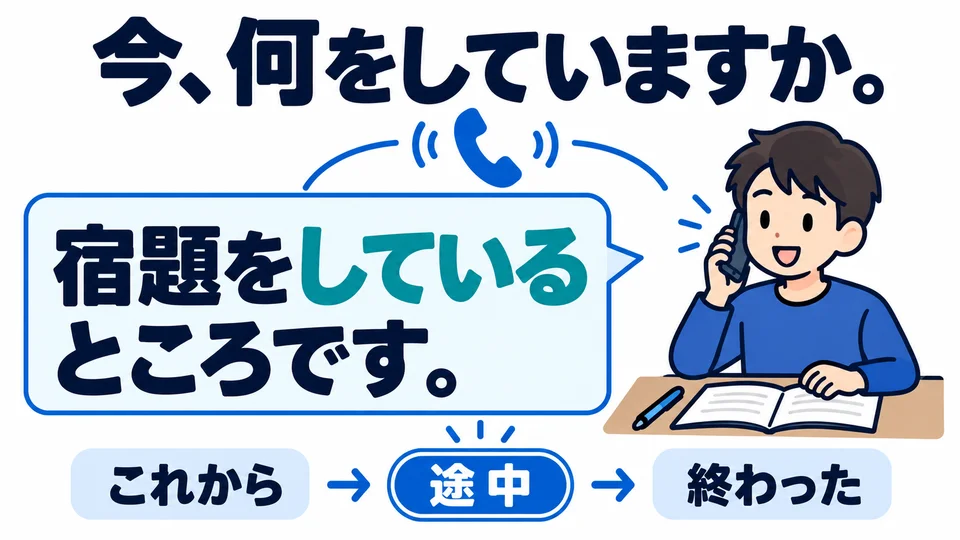
  3. て形+いるところです: the action is in progress. Look at the moment in the middle.
    て形+いるところです: the action is in progress. Look at the moment in the middle.

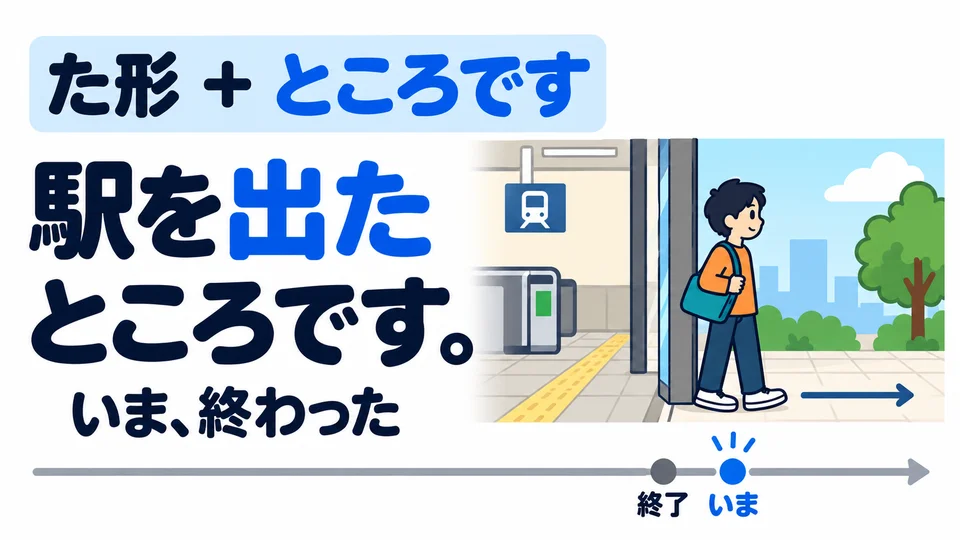
  4. た形+ところです: the action has just ended. Look at the moment right after completion.
    た形+ところです: the action has just ended. Look at the moment right after completion.

  5. When giving an update on the phone, use this pattern to say what stage the action is at now.
    When giving an update on the phone, use this pattern to say what stage the action is at now.
  6. In the example, 「出る」 means the person has not left yet and is about to leave the station now, rather than leaving every day.

In the example, 「出る」 means the person has not left yet and is about to leave the station now, rather than leaving every day.

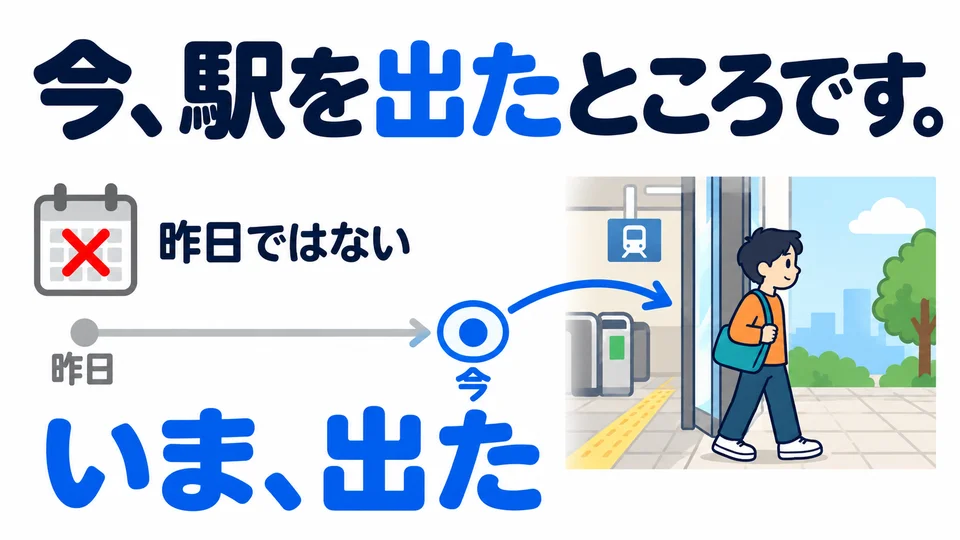
  • In the example, 「出た」 refers to having just left the station and crossed the exit now, rather than recalling yesterday.

    In the example, 「出た」 refers to having just left the station and crossed the exit now, rather than recalling yesterday.

  • Example sentences

    • 今駅いまえきimaekiをo出るでるderuところtokoroです(まだですまだdesumadaでdeてteいない)・いないinai出たでたdetaところtokoroです。(いまですいまdesuima出たでたdetaばかり)ばかりbakari

      I'm just about to leave the station (haven't left yet)・I just left the station (just left).

    • 今いまima明治めいじmeiji通りどおりdooriをo北きたkitaにni歩いあるいaruiてteいるiruところtokoroです。ですdesu

      I'm currently walking north on Meiji Street.

    In a conversation

    • A
      今いまどこですか。か

      A: Where are you now?

    • B
      今いまバス停ばすていを出たでたところです。もうですもうすぐそちらに到着とうちゃくします。します

      B: I just left the bus stop. I'll arrive there soon.

    • A
      そうですか。か周りまわりの様子ようすはわどうですか。か

      A: I see. How is it around you?

    • B
      大きなおおきなビルびるが見えます。みえますすぐそこです。です

      B: I can see a tall building. It's right around there.

    Check yourself

    1. Level 1 · Recognise

      Which sentence is correct?

    2. Level 1 · Recognise

      Listen and choose the meaning

    3. Level 2 · Build

      Put the words in order

      I'm just about to leave the bus stop.

    4. Level 3 · Use

      What goes in the blank?

      今駅を出る 。

      I'm just about to leave the station now.

    More grammar in this theme

    • 受身形passive voice, receiver in focus
    • 〜のにunexpected contrast, despite
    • 〜みたいですseems, based on clues
    • 〜ようですinference from clues
    • 〜ところですaction stage right now
    • 〜てきますgradual approach or appearance
    • 〜そうに〜appearance while doing something
    • 〜みたいですsimilarity-based comparison
    Previous〜ようですNext〜てきます

    Keep practising

    Test your Japanese vocabulary12 adaptive questions, freeCheck your pronunciationRead aloud and get a scorePractise verb forms10-question conjugation quizSee the whole courseGrammar, vocabulary and quizzes by theme
    See the whole course
    Beginner 3
    Travel Mishaps