JPEDLAB iconJPEDLAB
Save history

Create an account and play

Explore first, then save your progress whenever you are ready. No email address is required.

Start free
Read as articleCards
See the whole course›Intermediate 1›Observations and Childhood Experiences

Japanese grammar · ≈ JLPT N3 · Intermediate 1

〜させられます~saseraremasu

be made to do

Use 「〜させられます」 to describe being made to do something, often unwillingly.

Start the interactive lessonIllustrated cards, audio and speaking practice

How it works

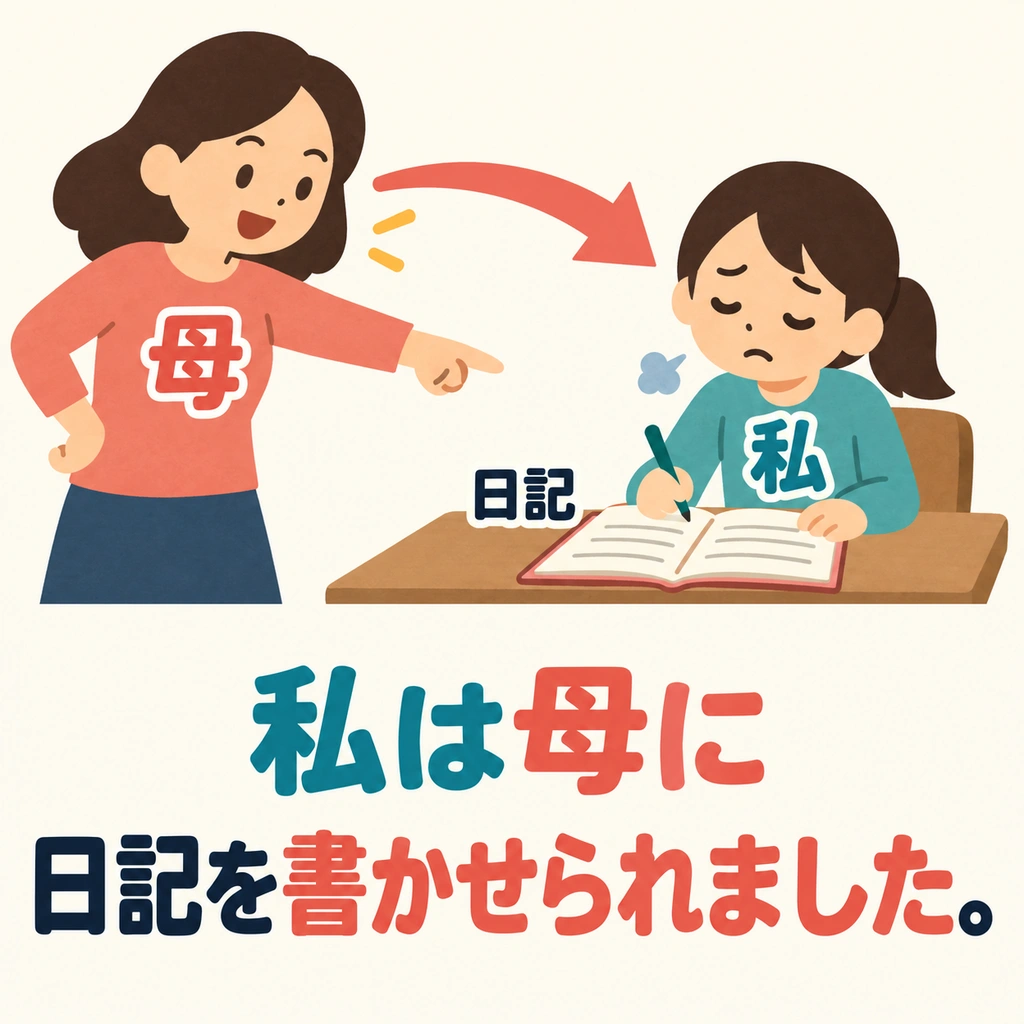
  1. Mom tells me to write a diary, and I have to, even though I do not want to. 使役受身 expresses this kind of experience.
    Mom tells me to write a diary, and I have to, even though I do not want to. 使役受身 expresses this kind of experience.

  2. First, look at the full forms. 使役受身 changes “make someone do something” into “be made to do something.”
    First, look at the full forms. 使役受身 changes “make someone do something” into “be made to do something.”

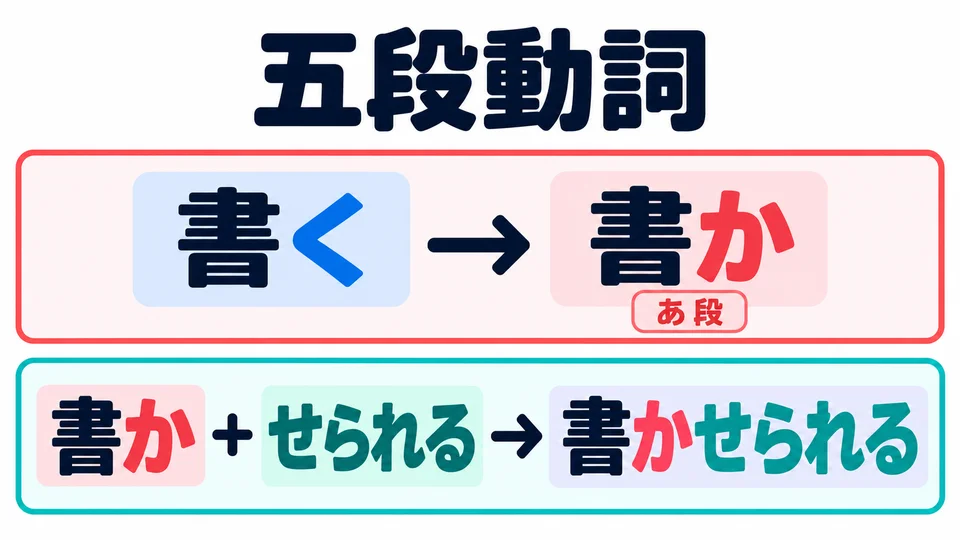
  3. Godan verbs: change the final kana to the あ row and add 「せられる」. For example, 「書く→書かせられる」.
    Godan verbs: change the final kana to the あ row and add 「せられる」. For example, 「書く→書かせられる」.

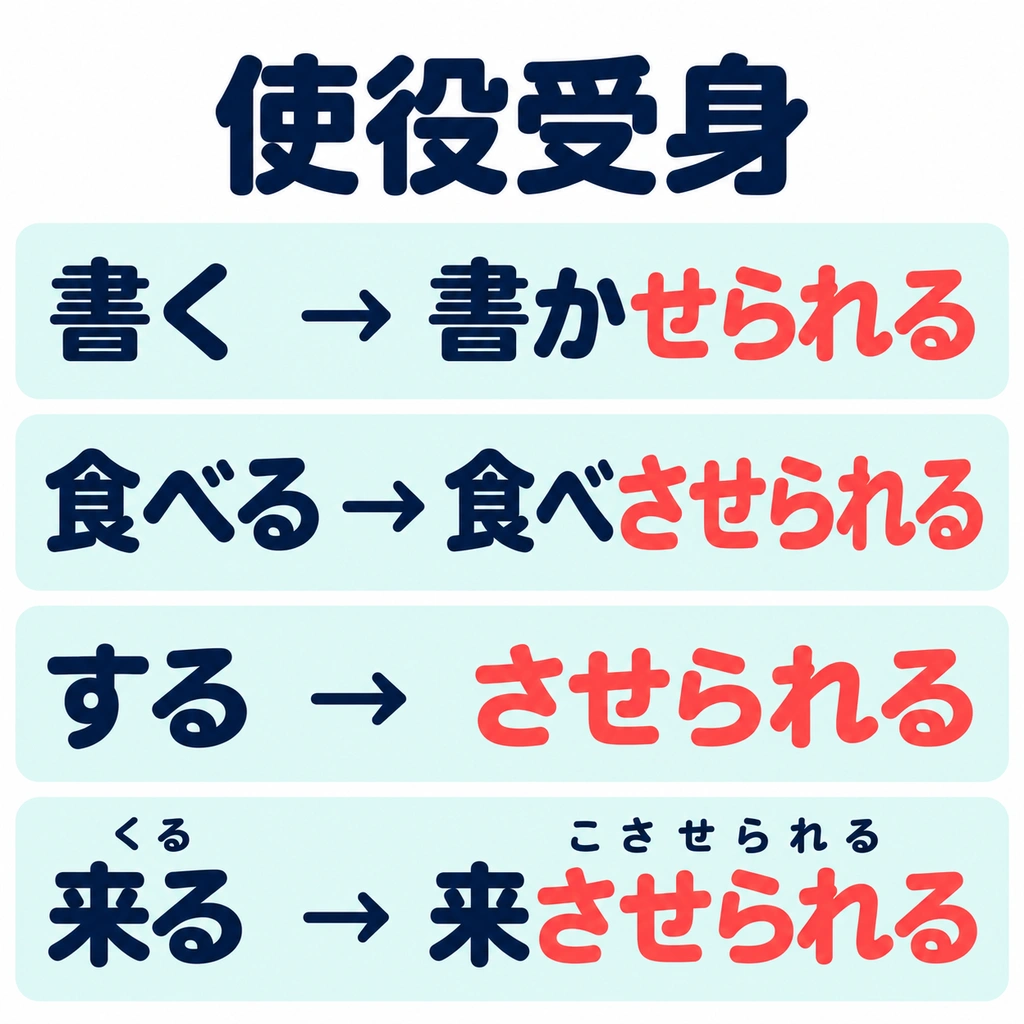
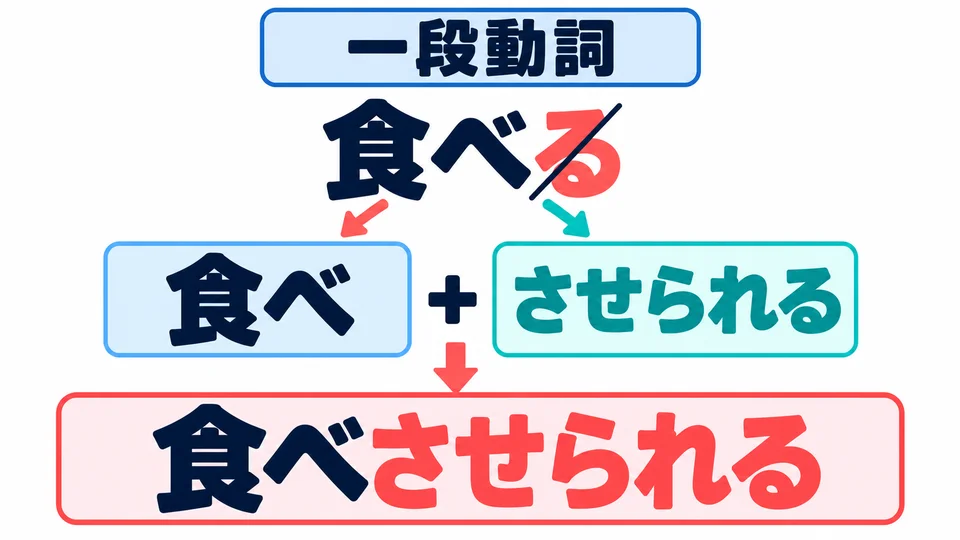
  4. Ichidan verbs: remove 「る」 and add 「させられる」. For example, 「食べる→食べさせられる」.
    Ichidan verbs: remove 「る」 and add 「させられる」. For example, 「食べる→食べさせられる」.

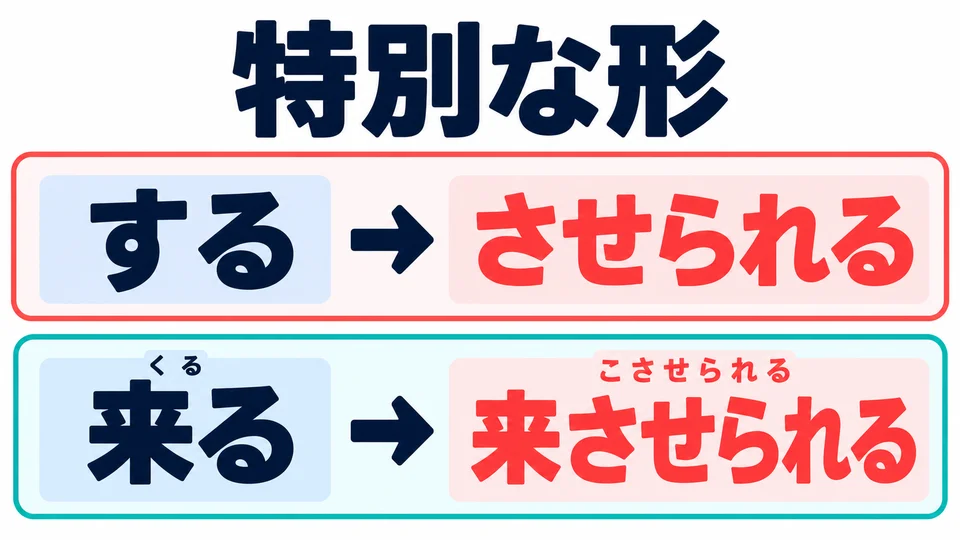
  5. Memorize these irregular forms separately: 「する→させられる」 and 「来る→来させられる」.
    Memorize these irregular forms separately: 「する→させられる」 and 「来る→来させられる」.

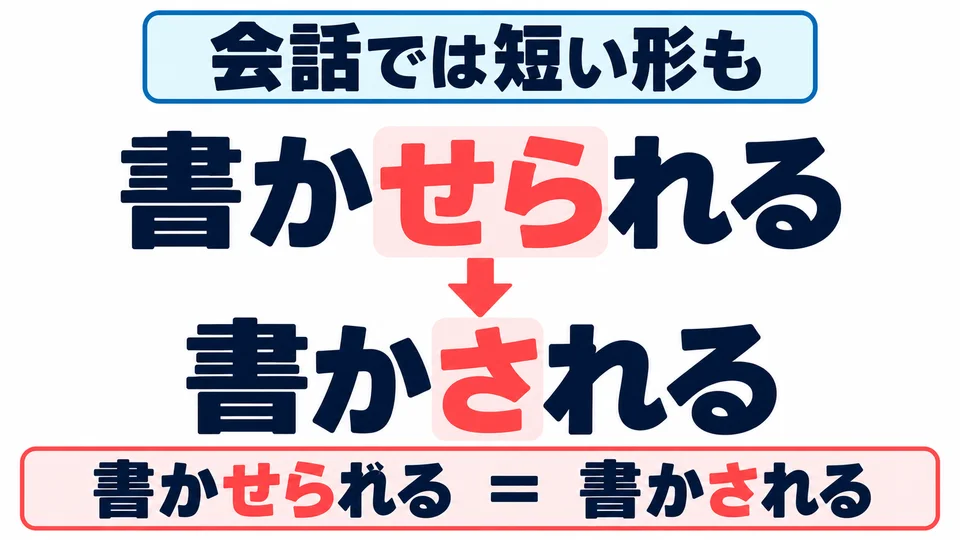
  6. In conversation, godan verbs often use a shorter form: 「書かせられる→書かされる」.
    In conversation, godan verbs often use a shorter form: 「書かせられる→書かされる」.

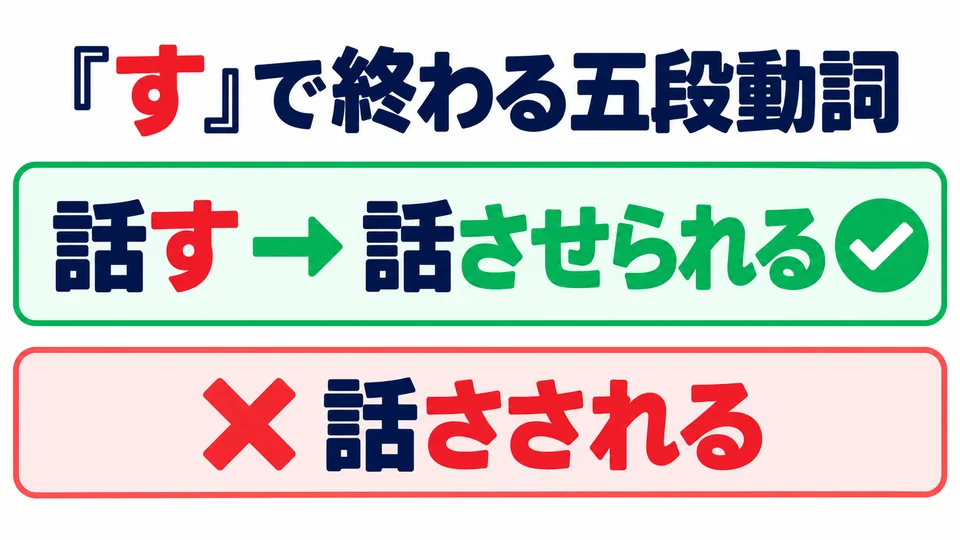
  7. Godan verbs ending in 「す」 do not shorten this way: 「話す→話させられる」.
    Godan verbs ending in 「す」 do not shorten this way: 「話す→話させられる」.

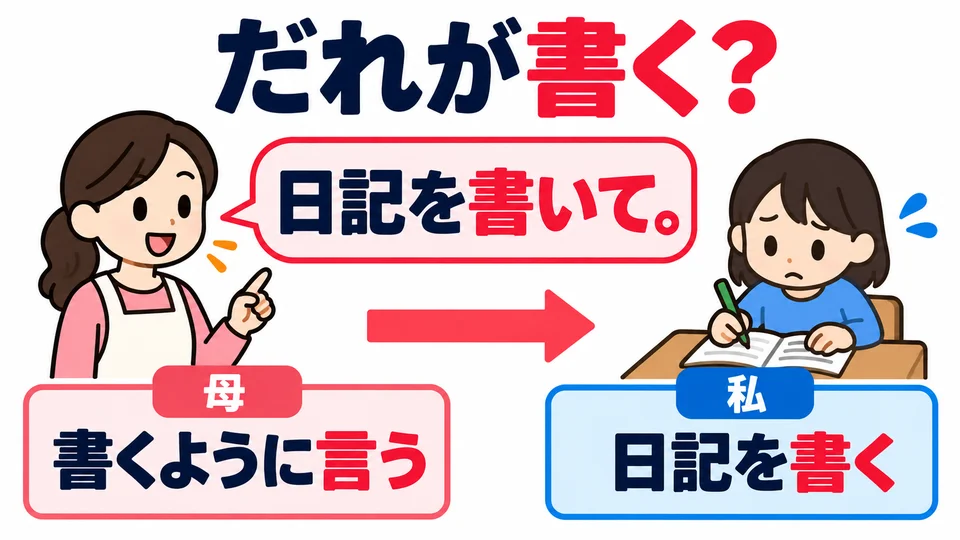
  8. In the diary example, “I” write the diary, and “Mom” makes me do it.
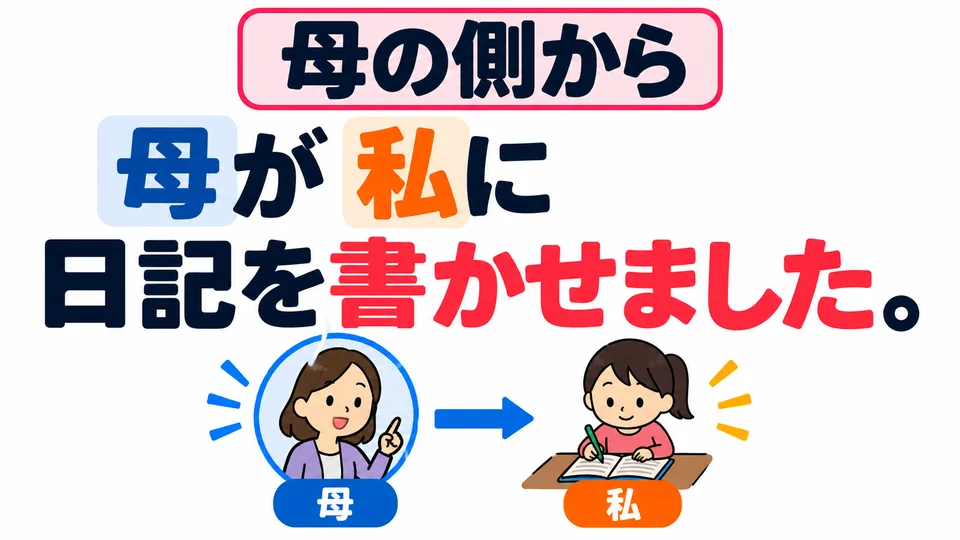
    In the diary example, “I” write the diary, and “Mom” makes me do it.

  9. 「母が私に日記を書かせました」: Mom makes it happen, and “I” carry out the action.
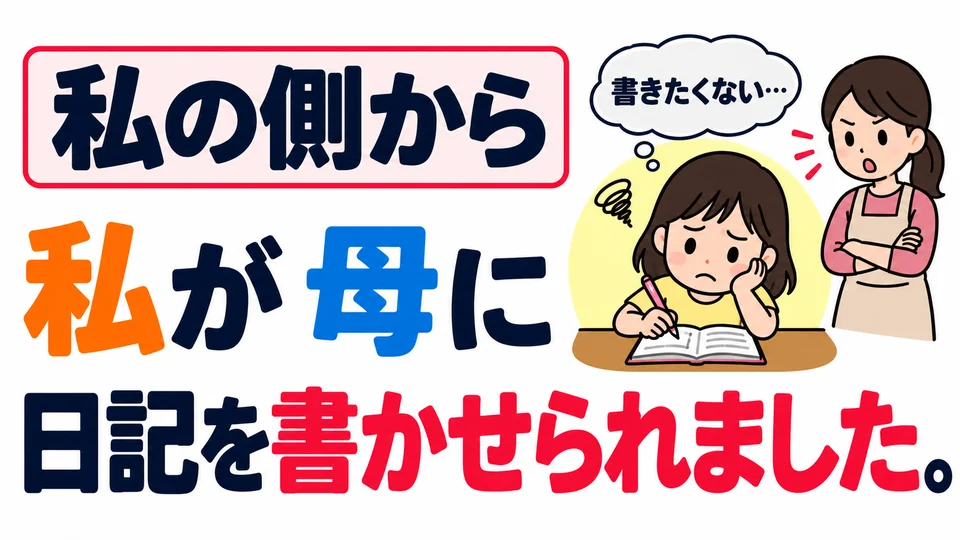
    「母が私に日記を書かせました」: Mom makes it happen, and “I” carry out the action.

  10. 「私が母に日記を書かせられました」: the same event, told from my perspective of having to do it unwillingly.
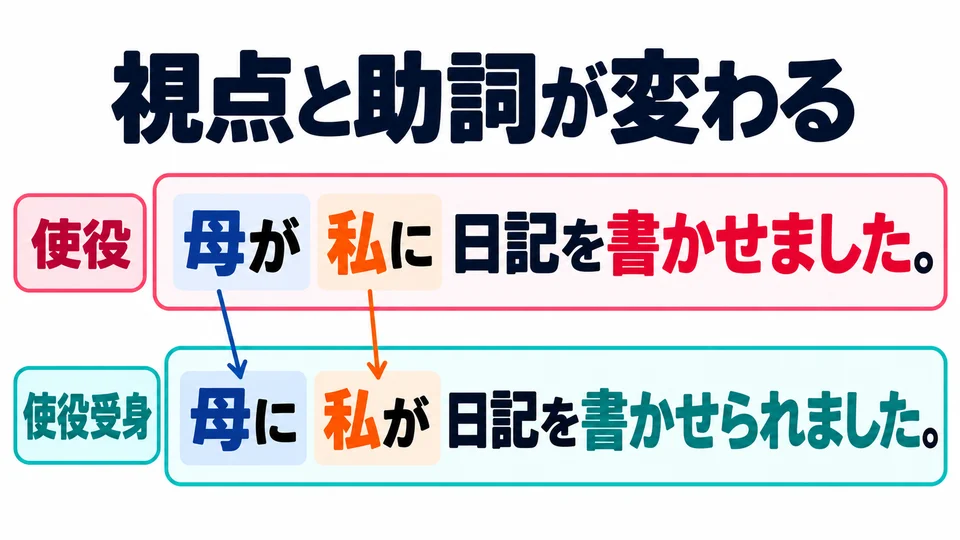
    「私が母に日記を書かせられました」: the same event, told from my perspective of having to do it unwillingly.

  11. When the perspective changes, the particles change too: 「母が」, the person making it happen, becomes 「母に」.

    When the perspective changes, the particles change too: 「母が」, the person making it happen, becomes 「母に」.

Example sentences

  • 子供こどもkodomoのnoころ、koro、私わたしwatashiはわwa母ははhahaにni毎日まいにちmainichi日記にっきnikkiをo書かせられました。かかせられました。kakaseraremashita。

In a conversation
Check yourself

  1. Level 1 · Recognise

    Which sentence is correct?

  2. Level 1 · Recognise

    Listen and choose the meaning

  3. Level 2 · Build

    Put the words in order

    I grew up in a strict home environment, so I was made to help out every day.

  4. Level 3 · Use

    What goes in the blank?

    子供のころ、私は母に毎日日記を____。

    When I was a child, my mother forced me to write a diary every day.

More grammar in this theme

  • 〜させられますbe made to do

Keep practising

Test your Japanese vocabulary12 adaptive questions, freeCheck your pronunciationRead aloud and get a scorePractise verb forms10-question conjugation quizSee the whole courseGrammar, vocabulary and quizzes by theme

When I was a child, I was made to write a diary every day by my mother.

  • A
    子供こどものころ、家いえのお手伝いおてつだいをしていましたか。

    A: Did you do chores at home when you were a child?

  • B
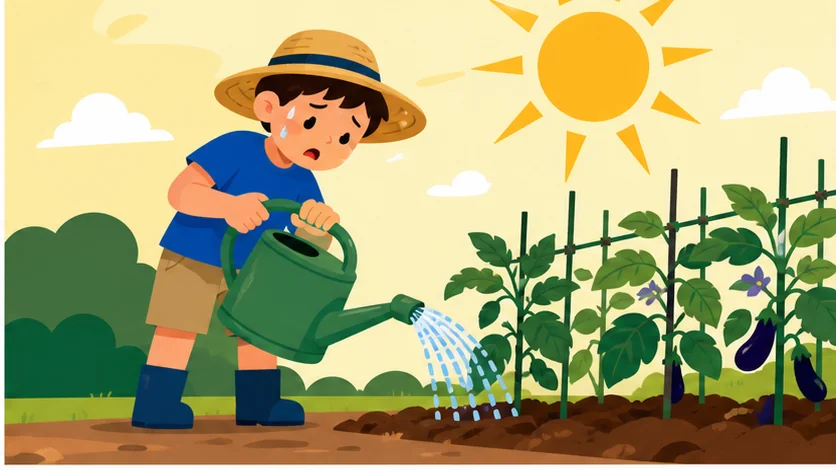
    はい、毎日まいにち庭にわの水やりみずやりをさせられていました。大変でした。たいへんでした。

    B: Yes, I was made to water the garden every day. It was tough.

  • 兄あにaniはわwa子供こどもkodomoのnoころ、koro、ピアノぴあのpianoをo練習れんしゅうrenshuuさせられsaserareてteいました。imashita。

    When my older brother was a child, he was forced to practice the piano.

  • A
    そうでしたか。でも、それはわ今いまの生活せいかつに役立っやくだっていますね。

    A: I see. But that must be useful for your life now.

  • 〜させますmake or let someone act
    〜のを見ましたsaw someone do
    〜ていましたpast repeated habit
    Nばかり/Vてばかりいますkeep doing the same thing
    〜させてくれますkindly let me do
    〜させてもらいますgratefully be allowed to
    PreviousNばかり/Vてばかりいます
    Next〜させてくれます