
Japanese grammar · ≈ JLPT N2 · Intermediate 3
〜だけに~dake ni
precisely because
「〜だけに」 emphasizes a particular reason to make the following result or strong feeling understandable.
How it works
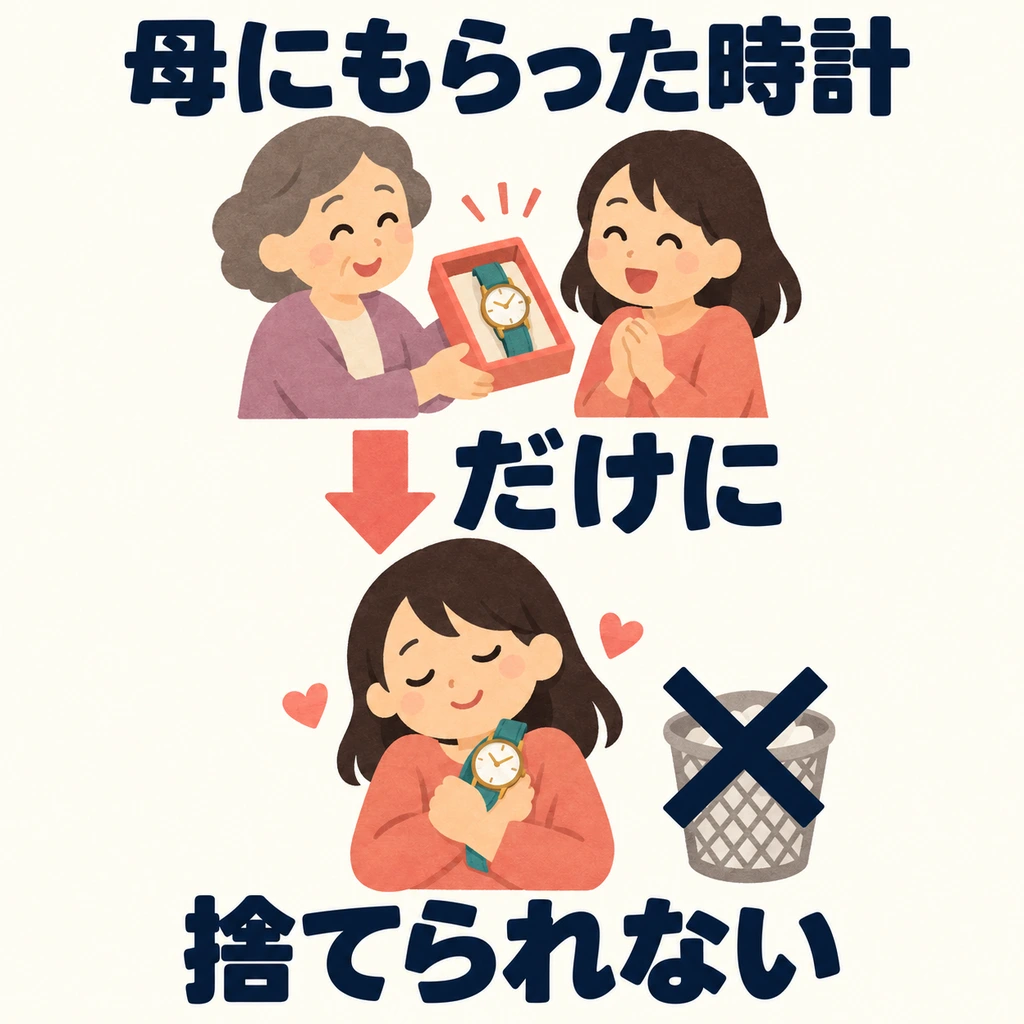
Why is it so hard to throw this watch away? 「だけに」 highlights the special reason: it was a gift from her mother.
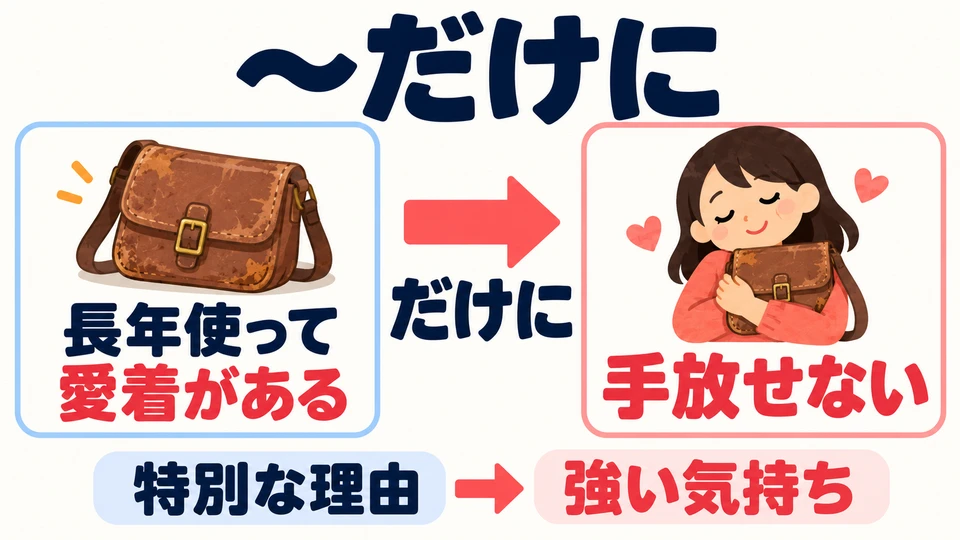
It means “precisely because…”. Emphasizing this background makes the result or strong feeling that follows easier to understand.
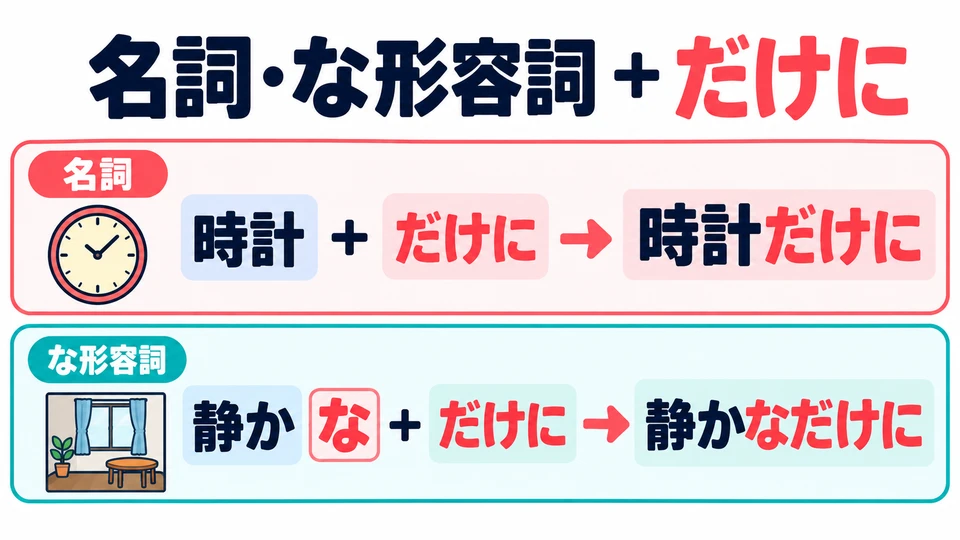
Attach 「だけに」 directly to a noun, as in 「時計だけに」. With a な-adjective, keep 「な」.
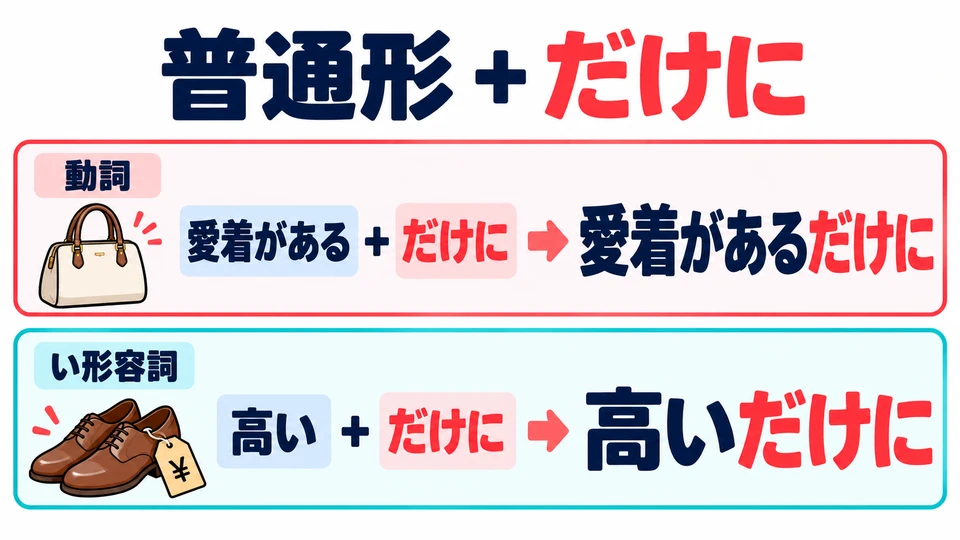
For verbs and い-adjectives, add 「だけに」 to the plain form. 「ある」 in the dialogue is a plain form.
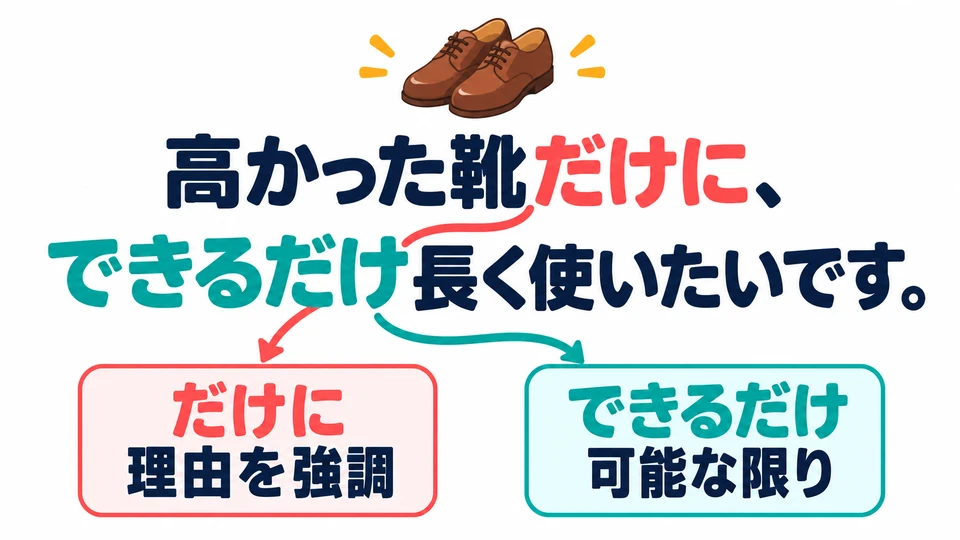
In the shoe example, 「だけに」 emphasizes the reason; 「できるだけ」 means “as much as possible”. The two uses of 「だけ」 have different roles.
Example sentences
- 高かった靴takakattakutsuだけdakeに、ni、できるdekiruだけdake長くnagaku使いたいです。tsukaitaidesu。
Precisely because they were expensive shoes, I want to use them for as long as possible.
- 母
In a conversation

- Aこのバッグ、色落ちやほつれが目立ちますね。
A: The color fading and fraying on this bag are quite noticeable.
- B長年使って愛着がある
Check yourself
Level 1 · Recognise
Which sentence is correct?
Level 1 · Recognise
Listen and choose the meaning
Level 2 · Build
Put the words in order
Since these shoes were expensive, I want to use them for as long as possible.
Level 3 · Use
What goes in the blank?
高かった靴____、できるだけ長く使いたいです。
Since these shoes were expensive, I want to use them as long as possible.
More grammar in this theme
- 〜だけにprecisely because