
Japanese grammar · ≈ JLPT N5 · Beginner 2
〜くて〜/〜で〜~kute / ~de ~
link two qualities
Link two qualities of the same thing with 「〜くて」 for い-adjectives or 「〜で」 for な-adjectives.
How it works
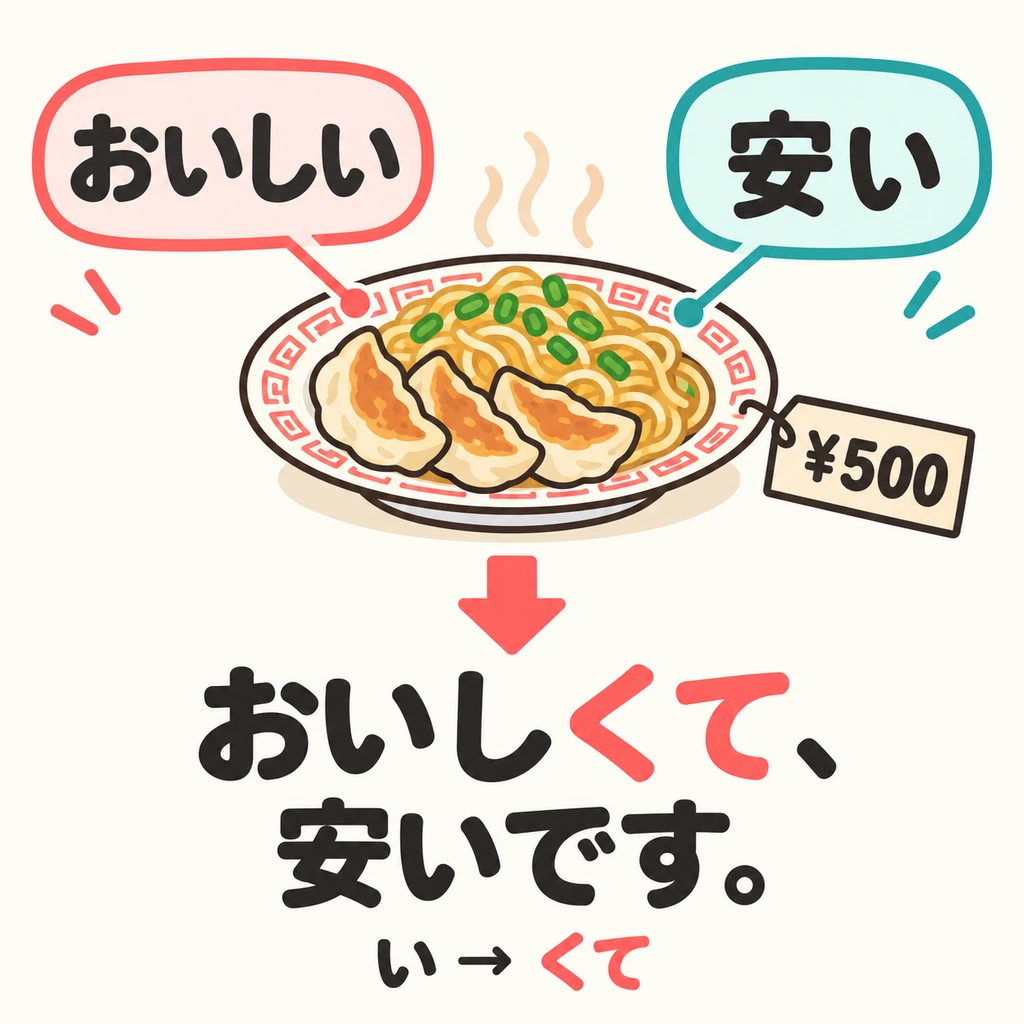
When describing food, a place, or a person, you can link two qualities of the same thing or person.
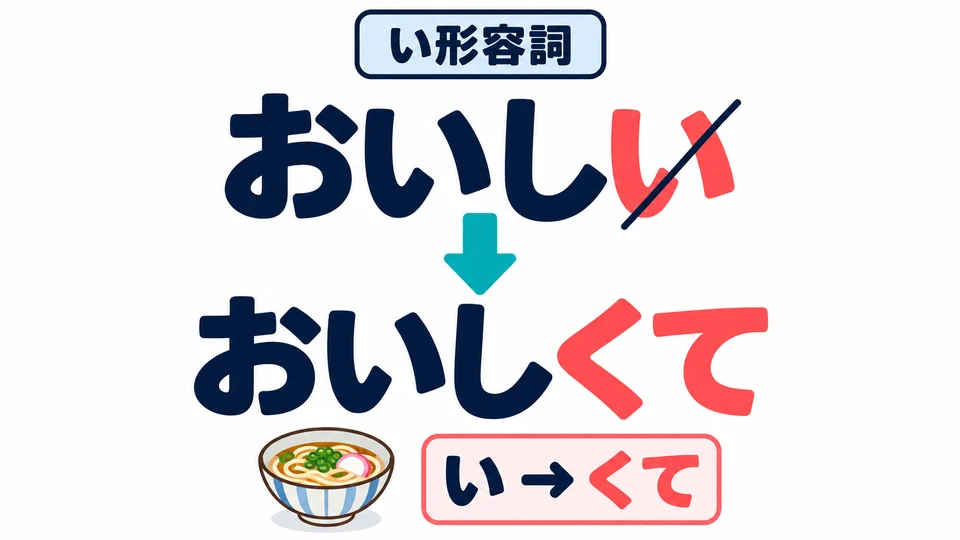
For an い-adjective, remove the final 「い」 and add 「くて」: おいしい→おいしくて.

For a な-adjective, add 「で」 directly: 静か→静かで. Do not add 「な」.
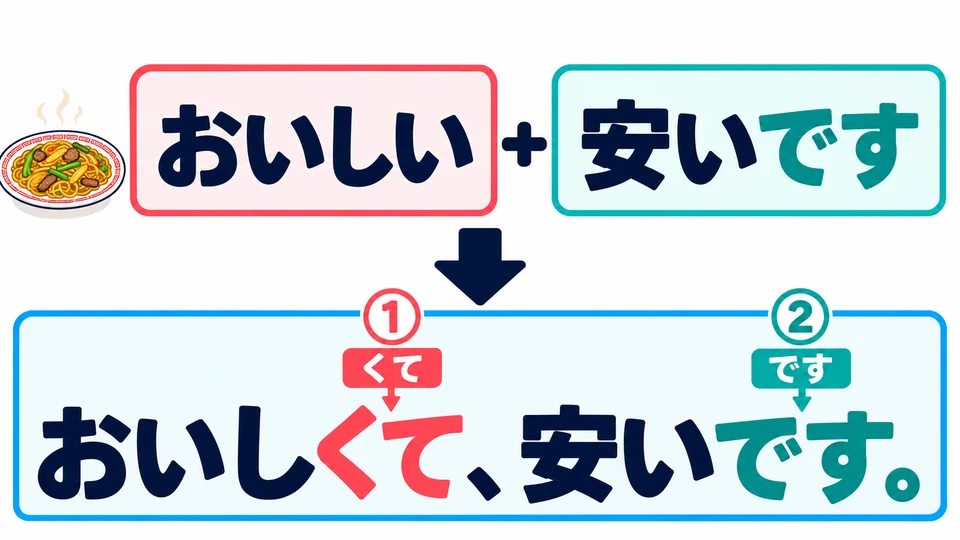
Use the linking form for the first quality. Add 「です」 to the final quality as usual.
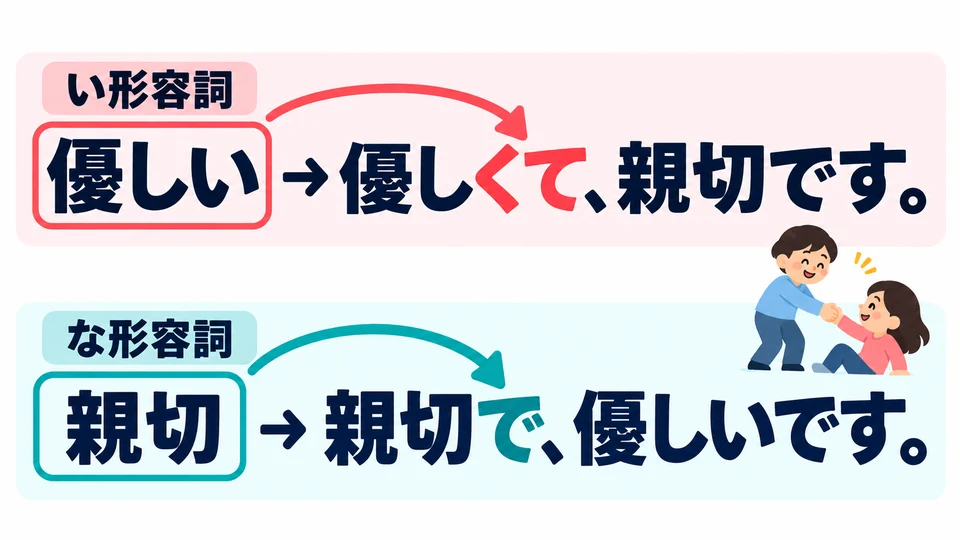
「優しくて、親切です」 links the two types of adjectives. The first adjective determines the linking form.
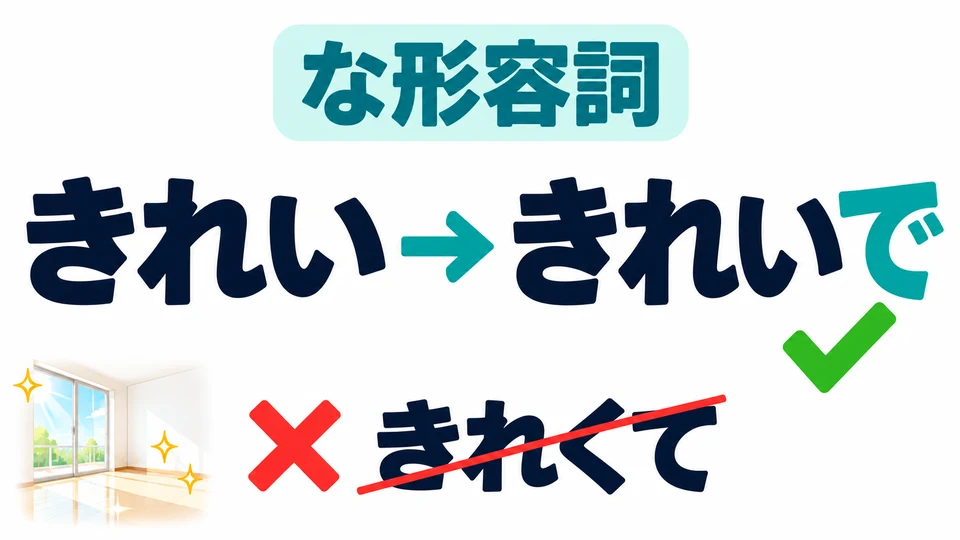
Although 「きれい」 in the example ends in い, it is a な-adjective. Its linking form is きれいで.
Example sentences
- 中華chuuka料理ryouriはwa美味しくoishikuて、te安いです。yasuidesu
Chinese food is delicious and cheap.
- 日本nippon
In a conversation

- A田中さんはどんな人ですか。
What kind of person is Tanaka?
- B田中さんは優しくて、親切ですよ。
Check yourself
Level 1 · Recognise
Which sentence is correct?
Level 1 · Recognise
Listen and choose the meaning
Level 2 · Build
Put the words in order
Tanaka is kind and helpful.
Level 3 · Use
What goes in the blank?
休日は 素晴らしいです。
Holidays are fun and wonderful.
More grammar in this theme
- 〜くて〜/〜で〜link two qualities