Japanese grammar · ≈ JLPT N5 · Beginner 2
〜ができます~ga dekimasu
can do something
Use 「〜ができます」 with a skill or activity noun to say what you can do.
How it works
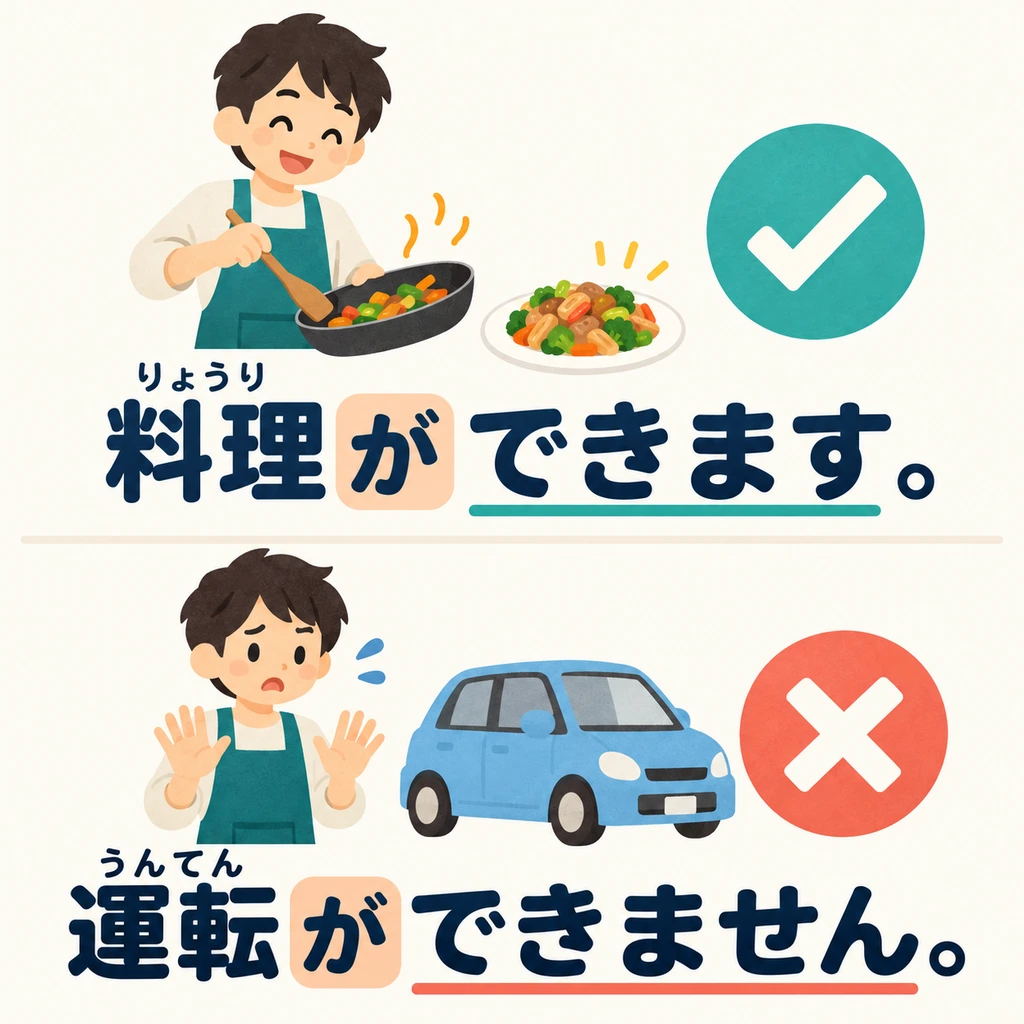
Use 「Nができます」 to introduce your skills and say what you can do.
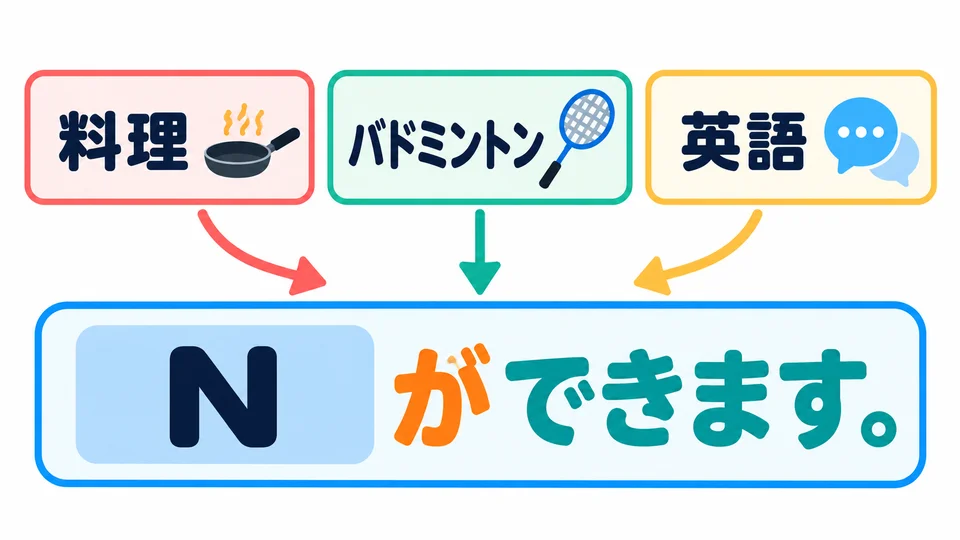
N names a skill or activity, such as 料理, a sport, or a language.
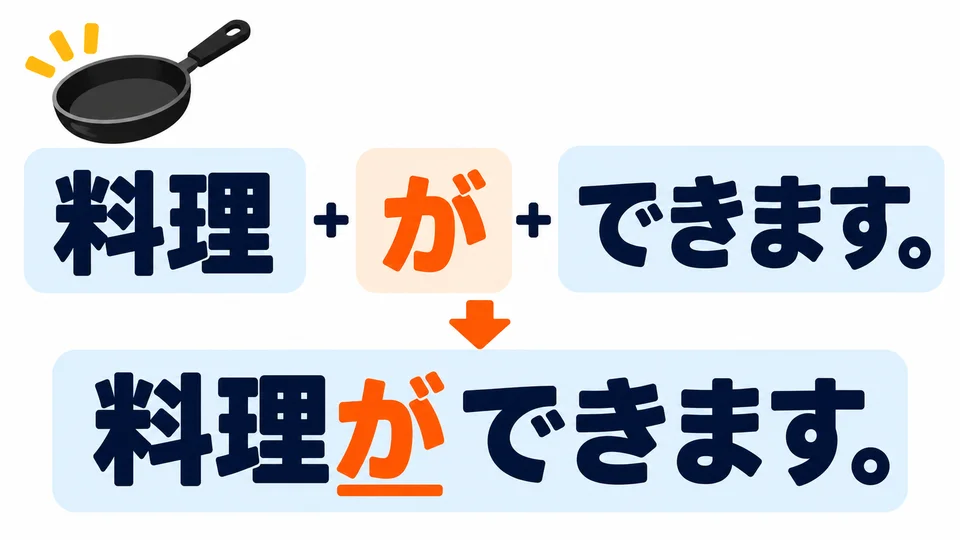
Put 「が」 after the name of the skill: 料理ができます。 Pay attention to this particle.
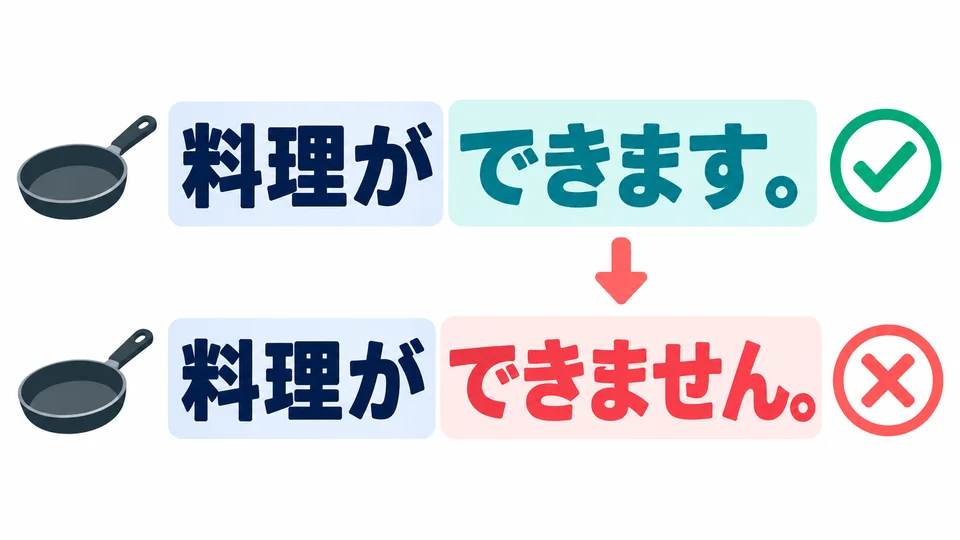
If you cannot do it, replace 「できます」 with 「できません」. The noun stays the same.
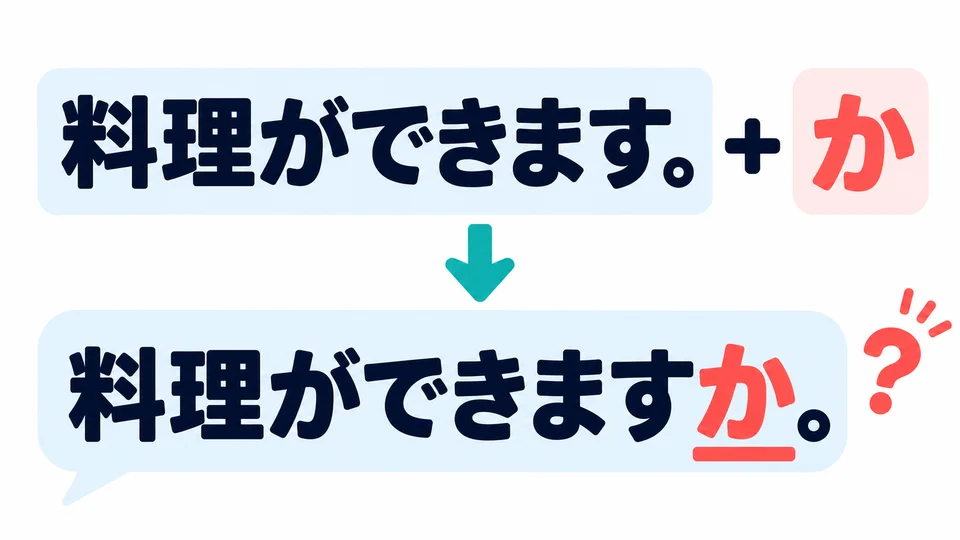
To ask whether someone can do it, add 「か」 at the end: 料理ができますか。
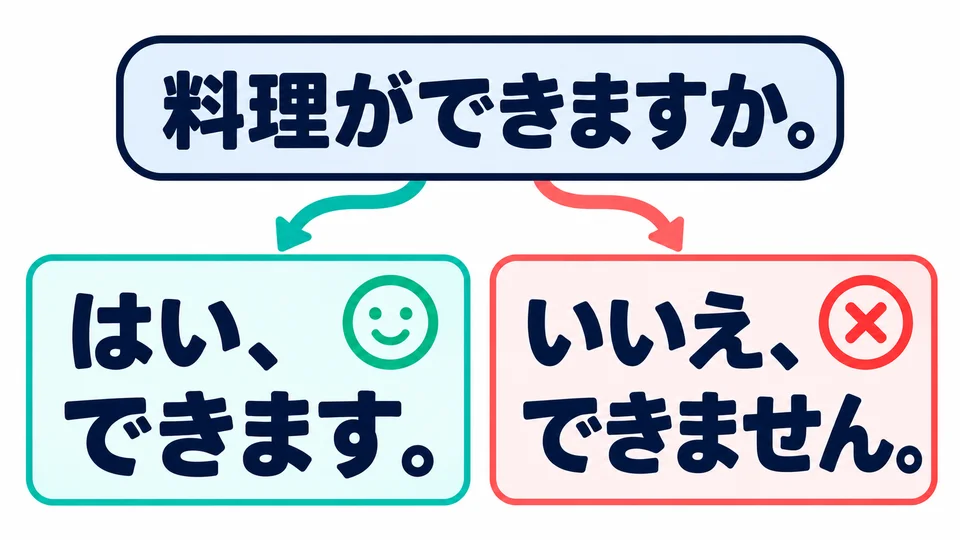
Answer 「はい」 if you can, or 「いいえ」 if you cannot, then say whether you have that skill.
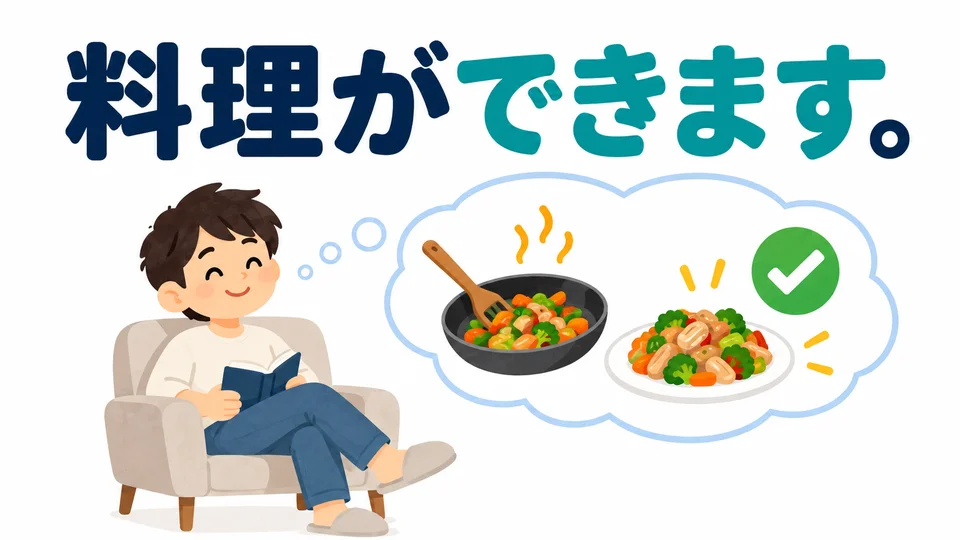
The example means “I can cook”: it describes a skill, not that you are cooking right now.
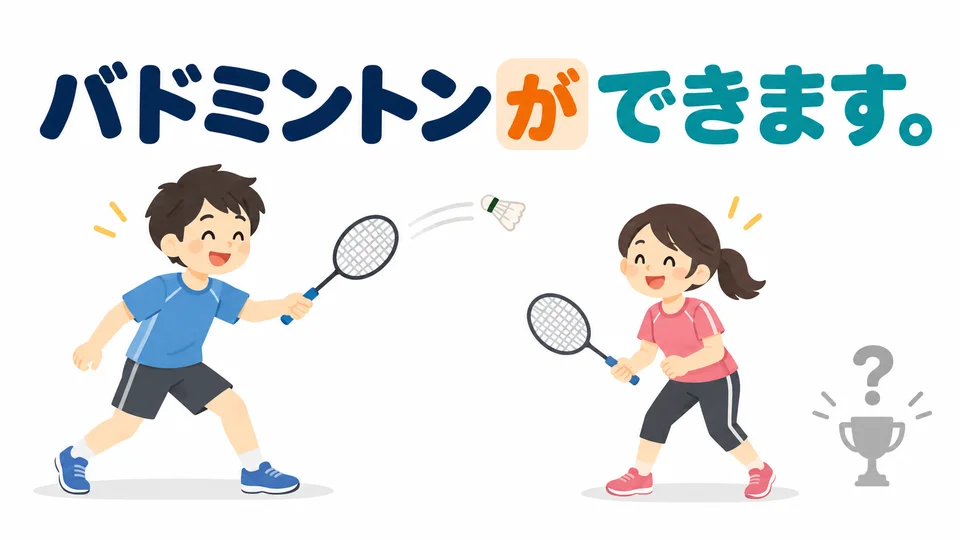
In “I can play badminton,” N is the name of the sport. It means you can play, not necessarily that you play well.
Example sentences
- 料理ryouriがgaできます。dekimasu
I can cook.
- バドミントンbadomintonがgaできます。dekimasu
I can play badminton.
In a conversation

- A料理ができますか。
A: Can you cook?
- Bはい、料理ができます。
B: Yes, I can cook.
- A何の
Check yourself
Level 1 · Recognise
Which sentence is correct?
Level 1 · Recognise
Listen and choose the meaning
Level 2 · Build
Put the words in order
I can cook.
Level 3 · Use
What goes in the blank?
私はピアノ 。
I can play the piano.
More grammar in this theme
- 〜ができますcan do something