
Japanese grammar · ≈ JLPT N4 · Beginner 3
〜と思います~to omoimasu
I think; give an opinion
Use a plain-form thought before 「と」 to politely state your opinion about a present or past situation.
How it works
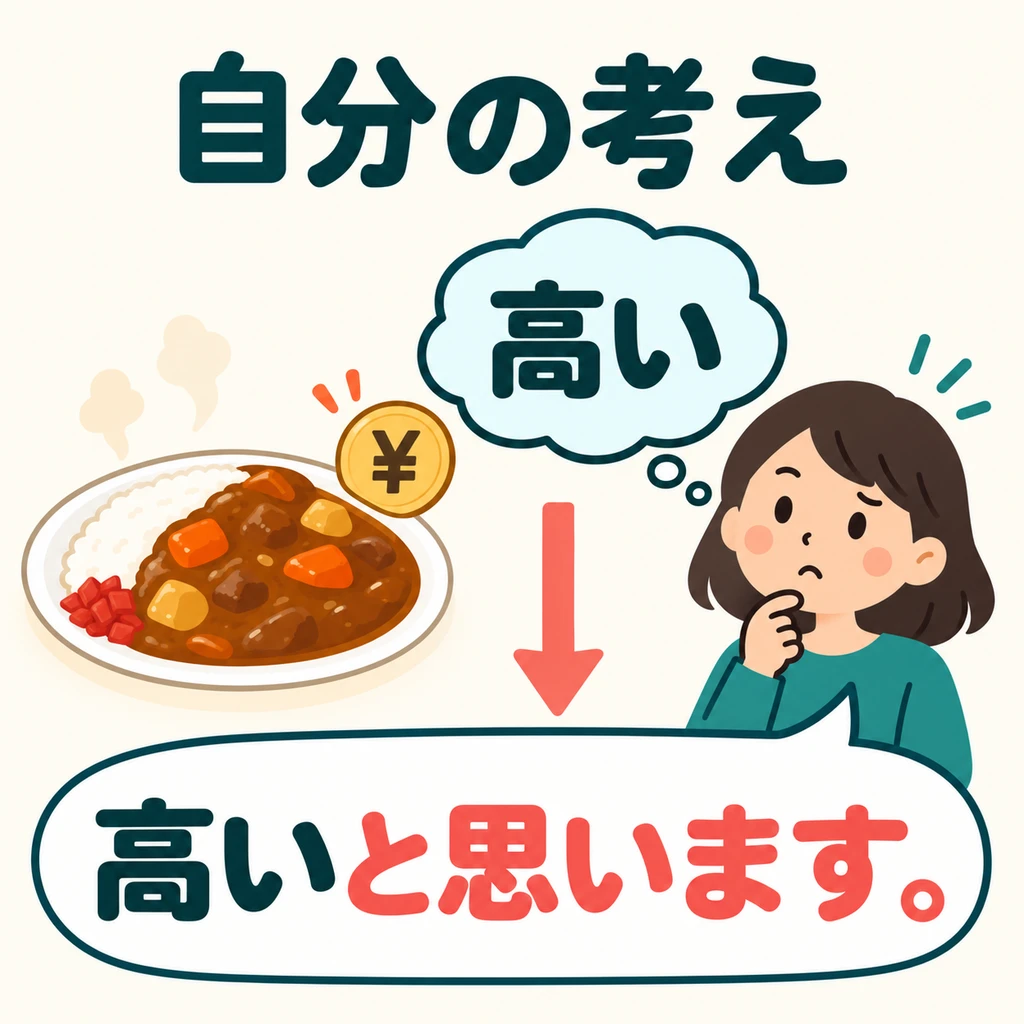
She thinks this dish is expensive. Use 「と思います」 to express your own opinion.
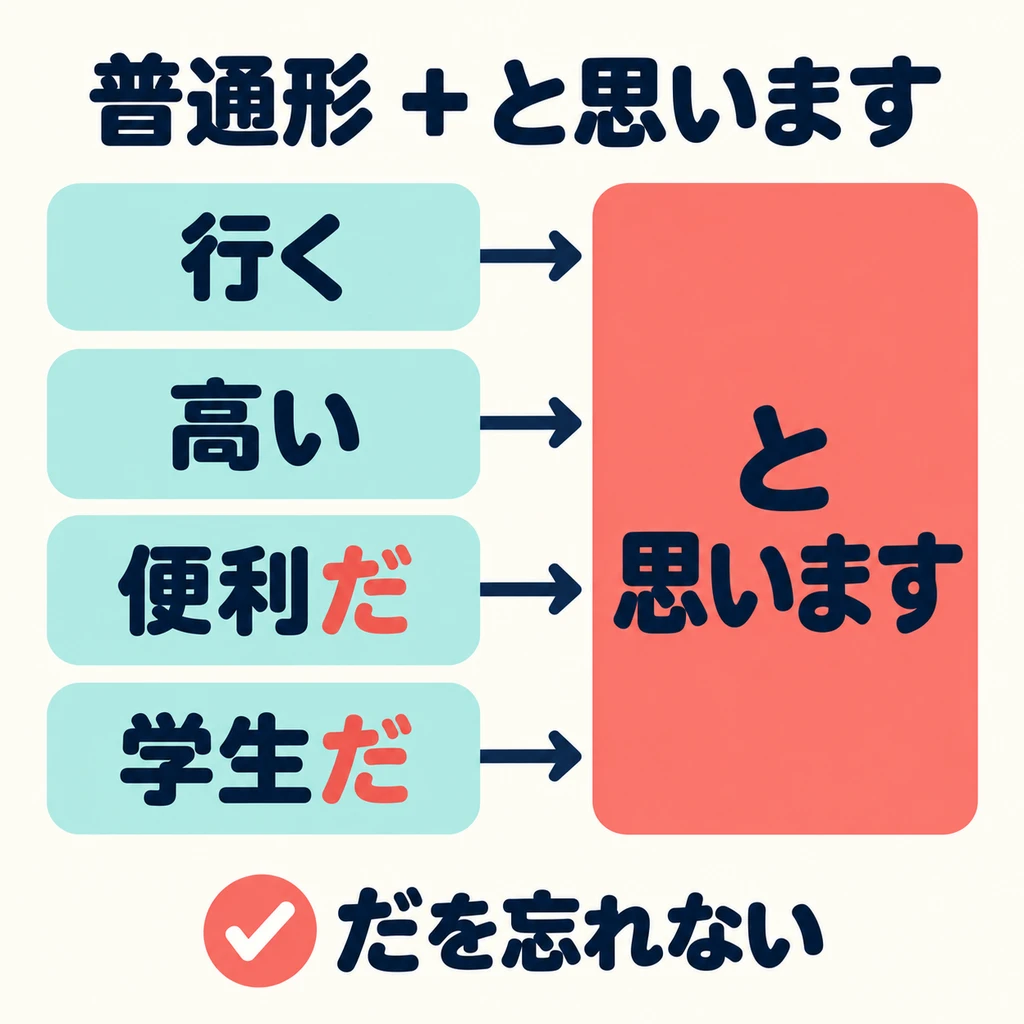
Put your thought before 「と」. Use the plain form for this part, then add 「思います」.
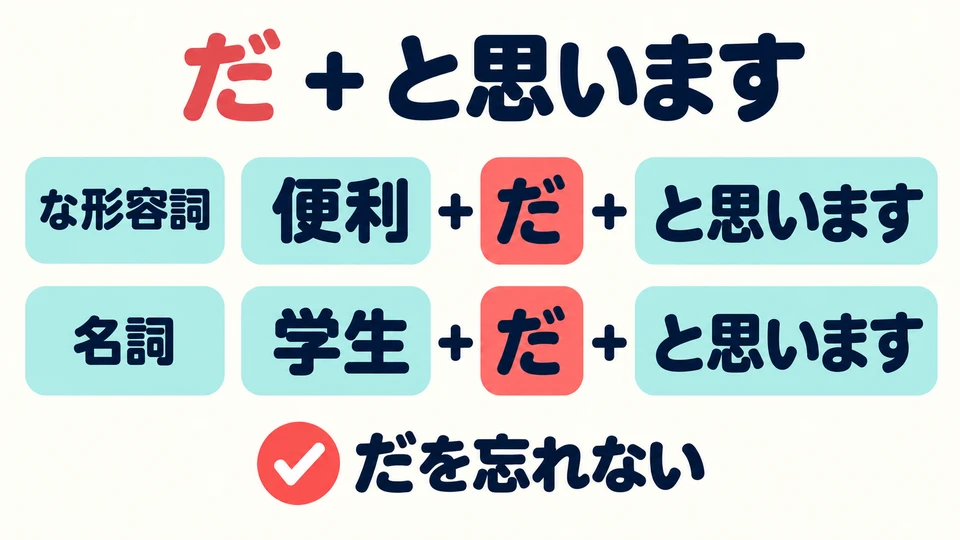
Keep 「だ」 in affirmative present forms of nouns and な-adjectives, as in 「便利だと思います」.
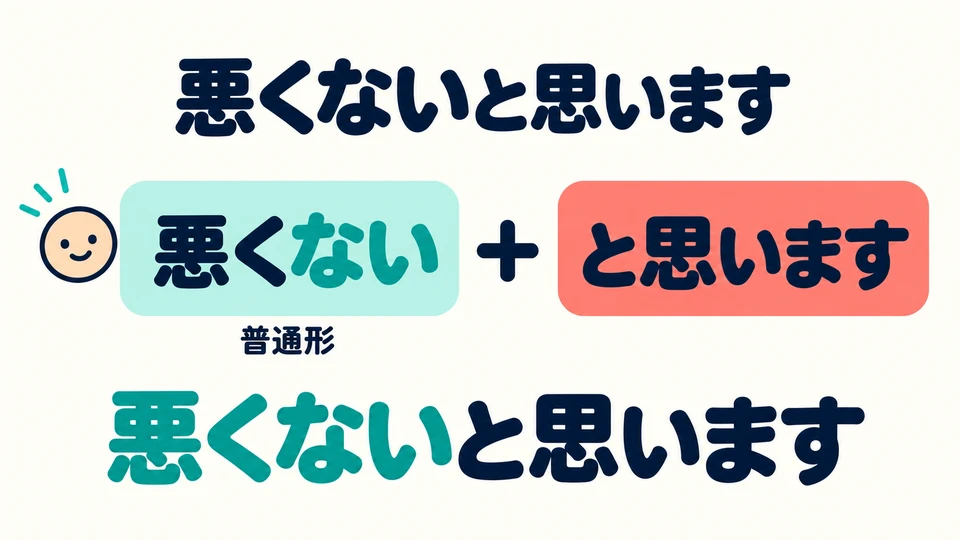
Use the plain form for negative thoughts too. 「悪くないと思います」 means “I think it is not bad.”
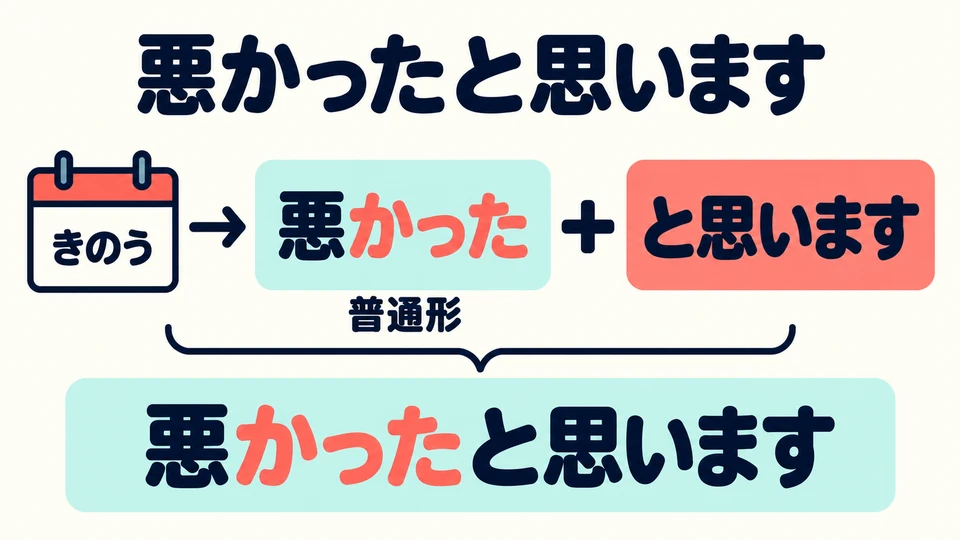
To judge a past situation, use a past plain form before 「と思います」, as in 「悪かったと思います」.
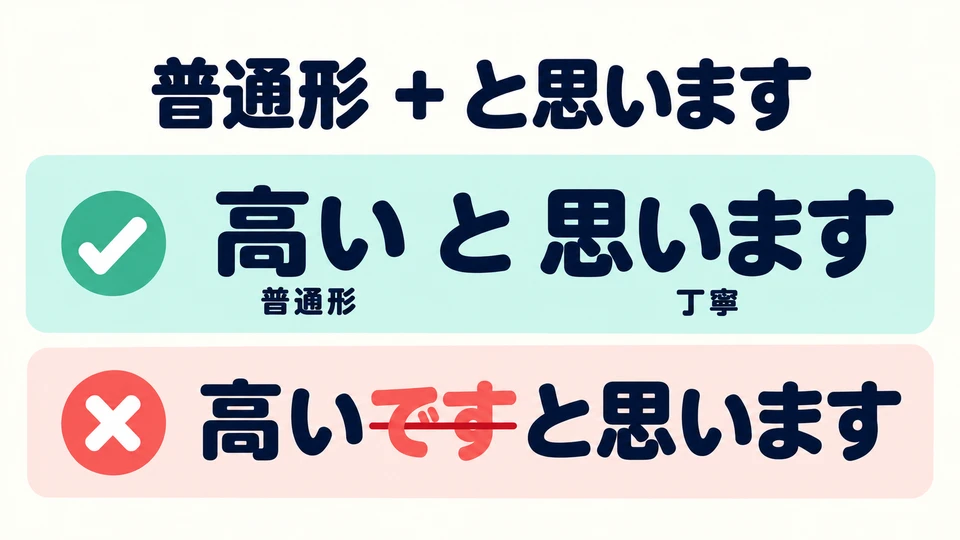
「思います」 makes the whole sentence polite. The part before it stays plain; do not say 「高いですと」.
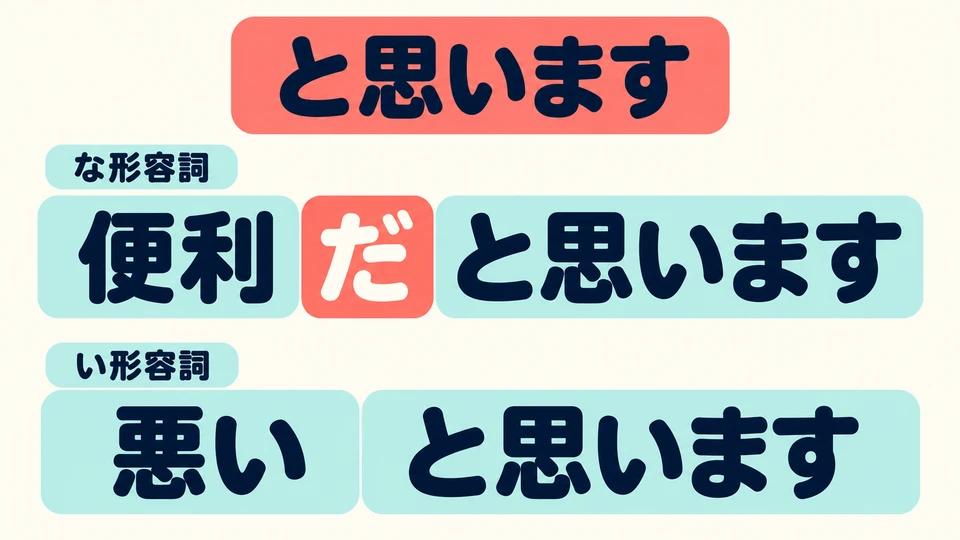
In the examples, 「便利」 is a な-adjective, so add 「だ」. 「悪い」 is an い-adjective, so do not add it.
Example sentences
- このkonoサイトsaitoはwa便利benriだdaとto思いますomoimasu
I think this website is convenient.
- このkono
In a conversation

- A新しいレストランを知っていますか。
A: Do you know the new restaurant?
- Bはい、レビューを見ました。
B: Yes, I read the reviews.
- A
Check yourself
Level 1 · Recognise
Which sentence is correct?
Level 1 · Recognise
Listen and choose the meaning
Level 2 · Build
Put the words in order
I think this review is correct.
Level 3 · Use
What goes in the blank?
ここは危険 。
I think this place is dangerous.
More grammar in this theme
- 〜と思いますI think; give an opinion