
Japanese grammar · ≈ JLPT N4 · Beginner 3
〜なければなりません~nakereba narimasen
obligation; must do
Use 「〜なければなりません」 to say an action is required by a rule or practical need, not merely wanted.
How it works

The new company requires training first. Look at the picture: is this something employees must do?
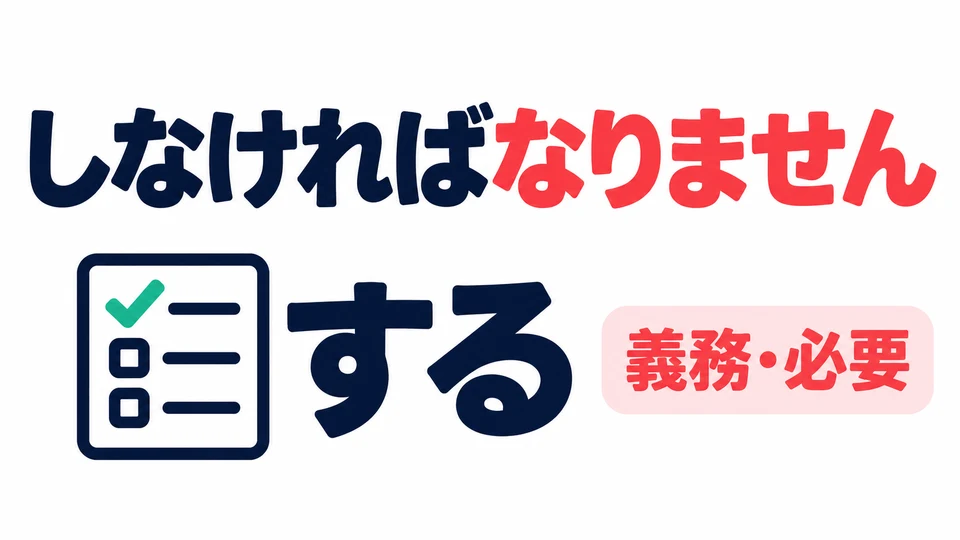
This pattern expresses obligation or necessity: you must do it, whether you want to or not.
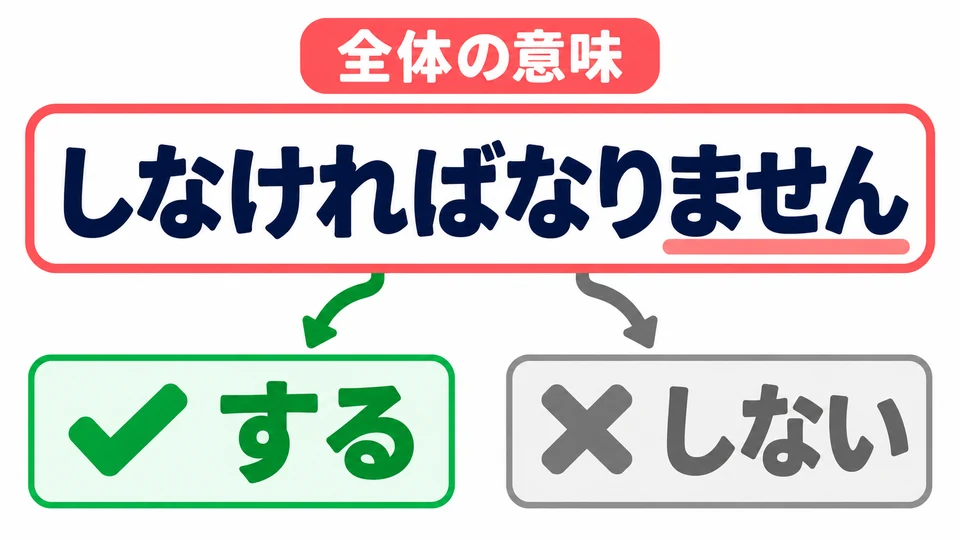
Although it ends in 「ません」, the whole pattern means “must do,” not “do not do.”
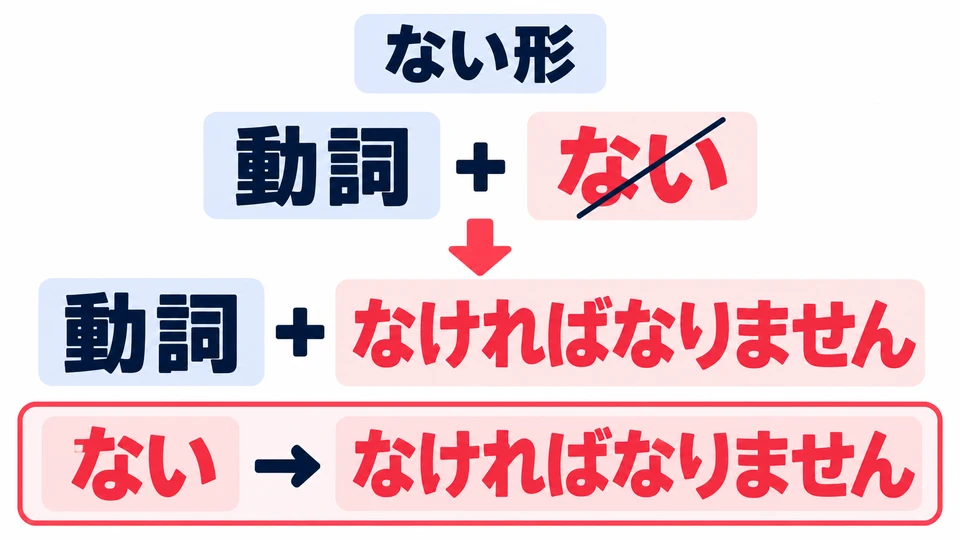
Start with the verb’s ない form, remove the final 「ない」, then add 「なければなりません」.
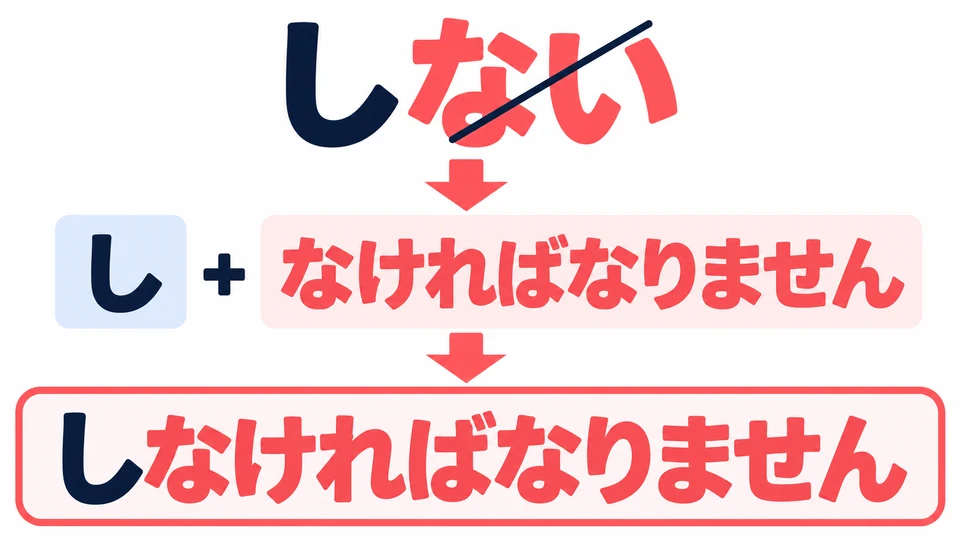
Remove 「ない」 from 「しない」: し+なければなりません means “must do.”
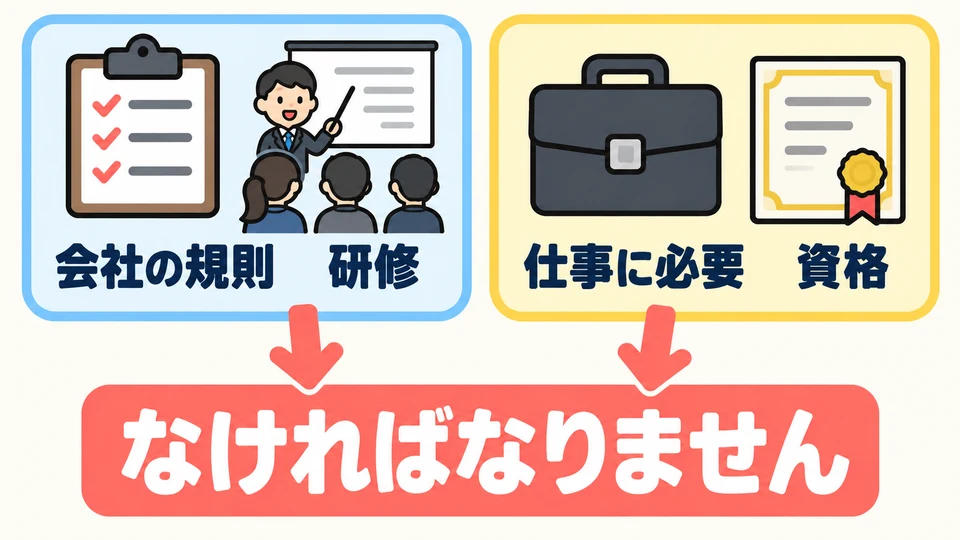
Training is a company rule; a qualification is needed for the job. Rules and practical needs can both create obligations.
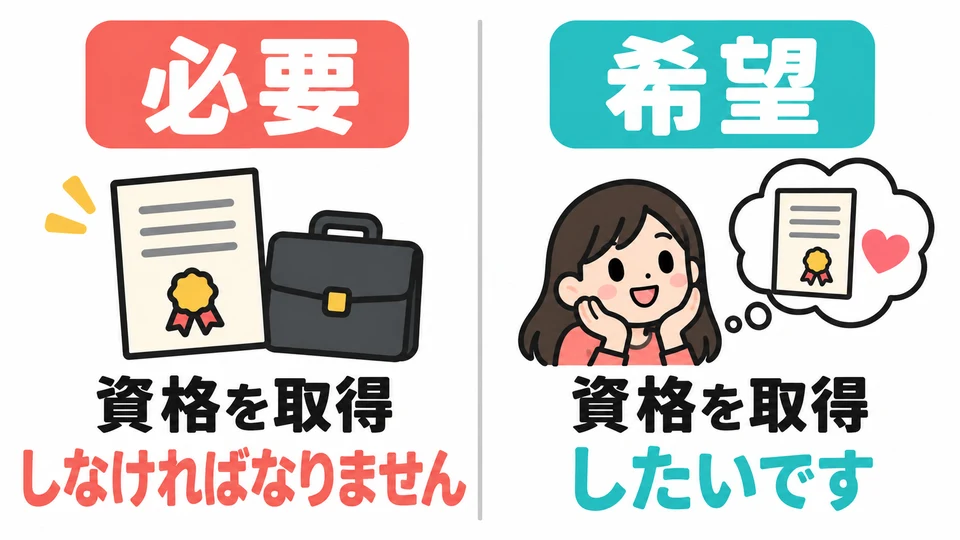
“Must obtain a qualification” describes a requirement, not just the wish “I want to obtain a qualification.”
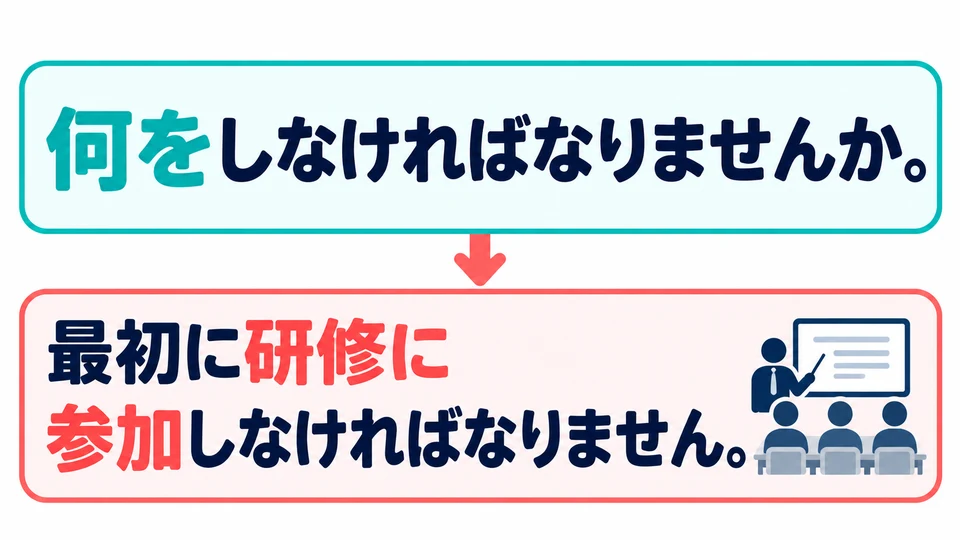
In the dialogue, 「何をしなければなりませんか」 asks what must be done. The other person answers: attend training.
Example sentences
- キャリアkyariaをo積むtsumuためtameにniは、wa資格shikakuをo取得shutokuしなけれshinakereばba
In a conversation

Check yourself
Level 1 · Recognise
Which sentence is correct?
Level 1 · Recognise
Listen and choose the meaning
Level 2 · Build
Put the words in order
You must take the entrance exam.
Level 3 · Use
What goes in the blank?
この会社で働くために、資格を取得し なりません。
To work at this company, you must obtain qualifications.
More grammar in this theme
- 〜なければなりませんobligation; must do