
Japanese grammar · ≈ JLPT N4 · Beginner 3
NをいただきますN o itadakimasu
humbly receive something
Use 「Nをいただきます」 to say you receive an item or advice respectfully from a teacher, elder, or superior.
How it works
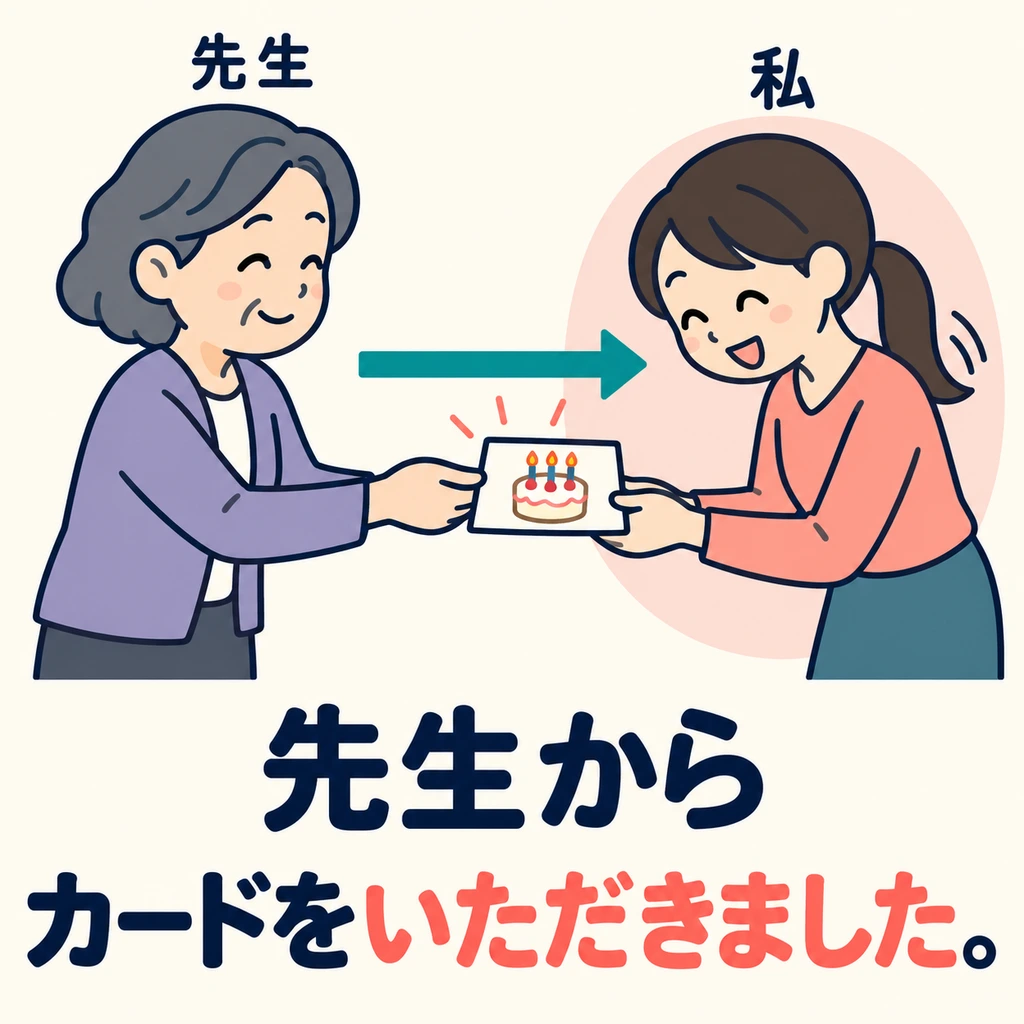
The card goes from the teacher to me. Look at the arrow: this sentence takes the receiver’s point of view.
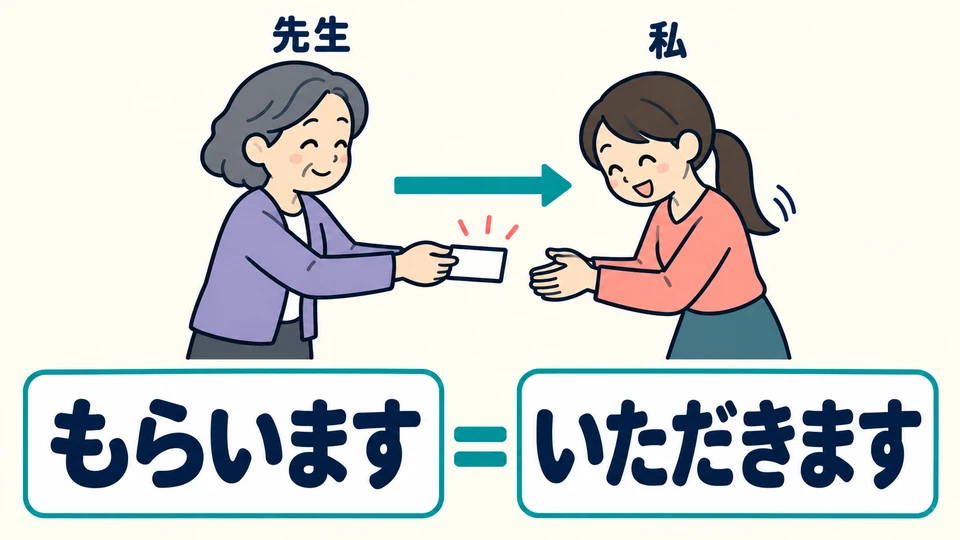
「いただきます」 means “receive.” Its basic meaning is the same as 「もらいます」, which you have already learned.
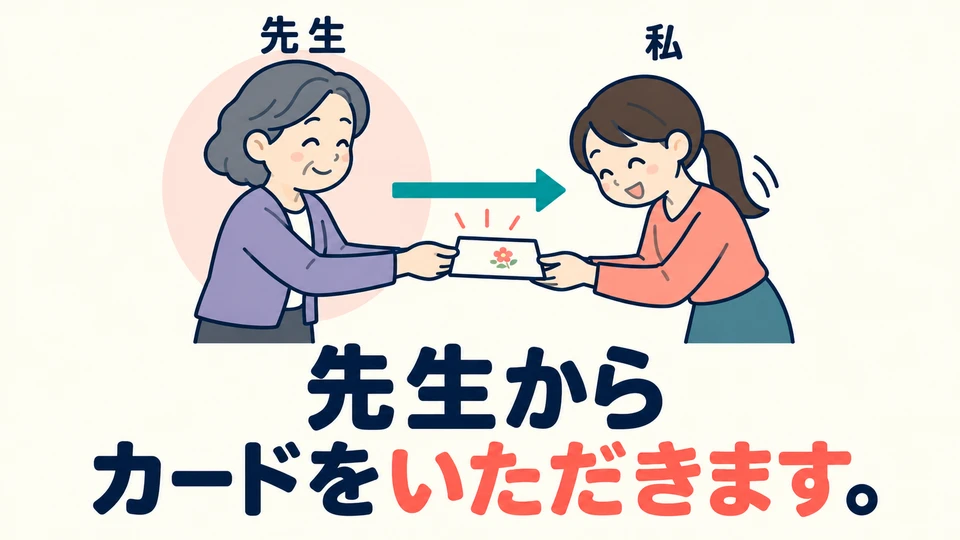
When receiving something from a teacher, an elder, or a superior, use this expression to show respect for the giver.
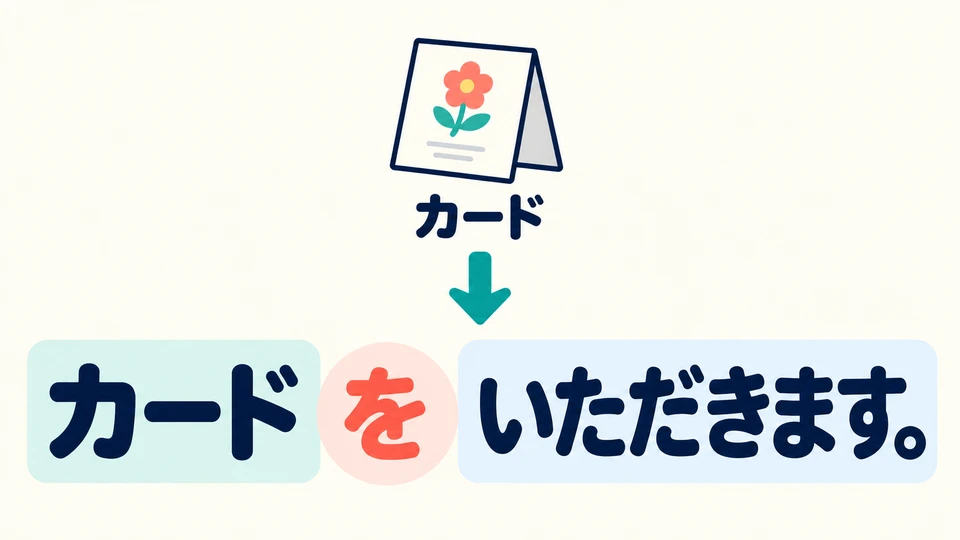
What do you receive? Put the name of the item before 「を」: カードをいただきます。
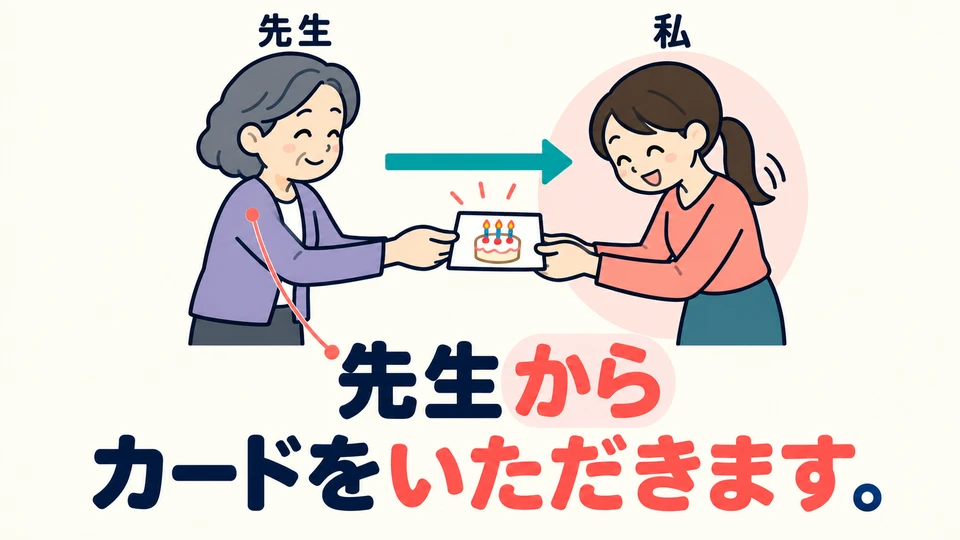
Who do you receive it from? Add 「から」 after the giver: 先生から means “from the teacher.”
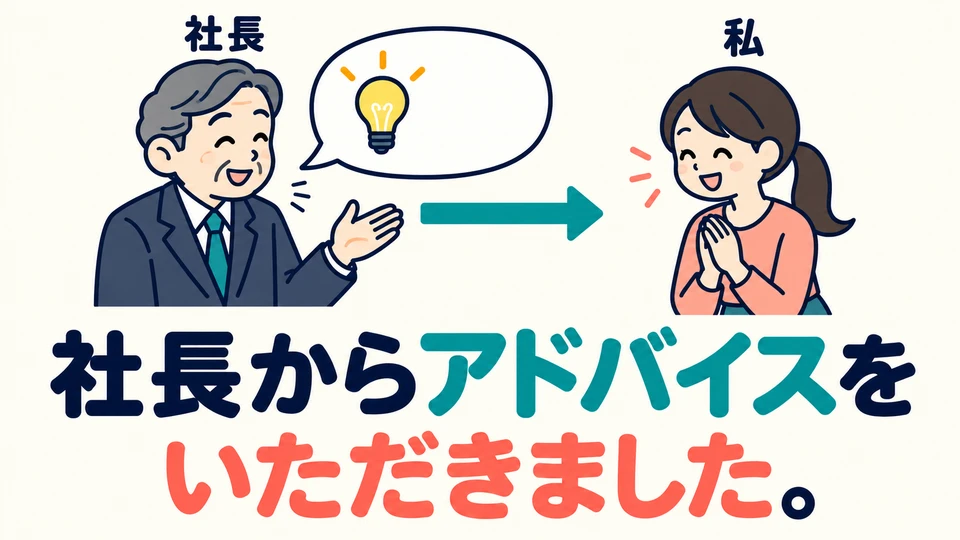
You can also receive advice. The original example is 「社長からアドバイスをいただきました」.
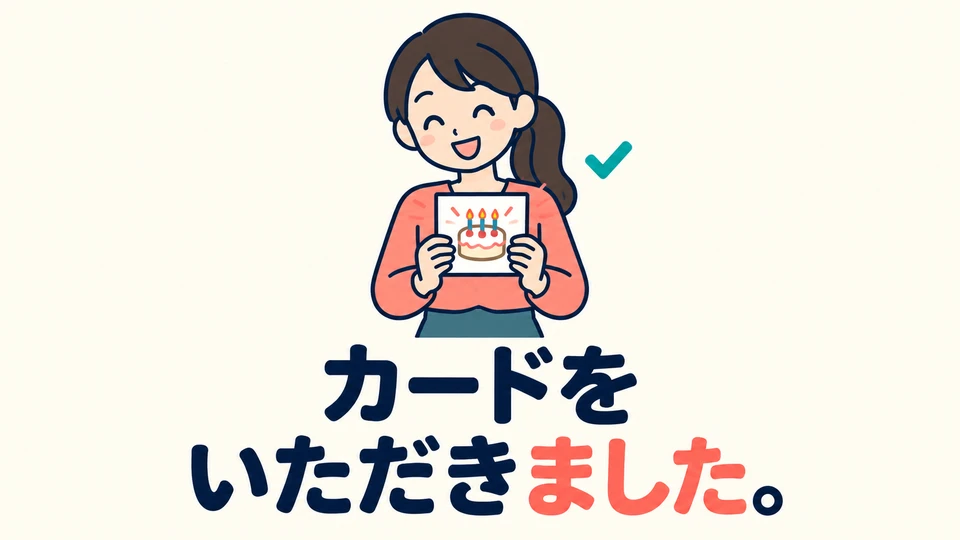
Use 「いただきました」 when you have already received something. The card in the picture is already in my hands, so the sentence uses the past tense.
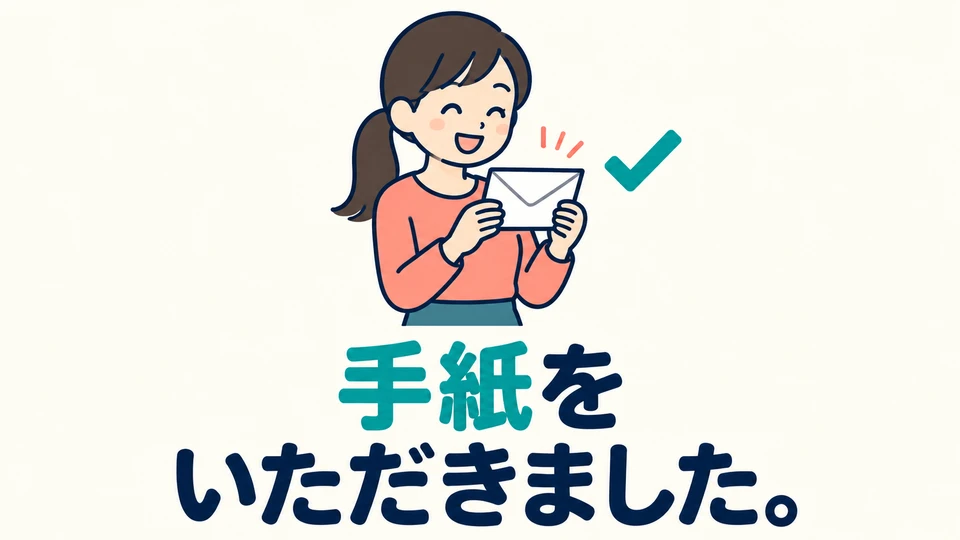
You can leave out the giver when it is already clear who they are. The original example 「手紙をいただきました」 mentions only what was received.
Example sentences
- 手紙tegamiをoいただきました。itadakimashita
I received a letter.
- 社長shachouからkaraアドバイスadobaisuをoいただきました。
In a conversation

- A何かいいことがあったんですか。とても楽しそうですね。
A: Did something good happen? You look very happy.
- Bええ、
Check yourself
Level 1 · Recognise
Which sentence is correct?
Level 1 · Recognise
Listen and choose the meaning
Level 2 · Build
Put the words in order
I received a birthday card from my teacher.
Level 3 · Use
What goes in the blank?
先生から推薦状を 。
I received a letter of recommendation from my teacher.
More grammar in this theme
- Nをいただきますhumbly receive something