JPEDLAB iconJPEDLAB
Save history

Create an account and play

Explore first, then save your progress whenever you are ready. No email address is required.

Start free
Read as articleCards
1/11

The card goes from the teacher to me. Look at the arrow: this sentence takes the receiver’s point of view.

››

Lesson notes · ≈ JLPT N4 · Beginner 3

NをいただきますN o itadakimasu

humbly receive something

Use 「Nをいただきます」 to say you receive an item or advice respectfully from a teacher, elder, or superior.

How it works
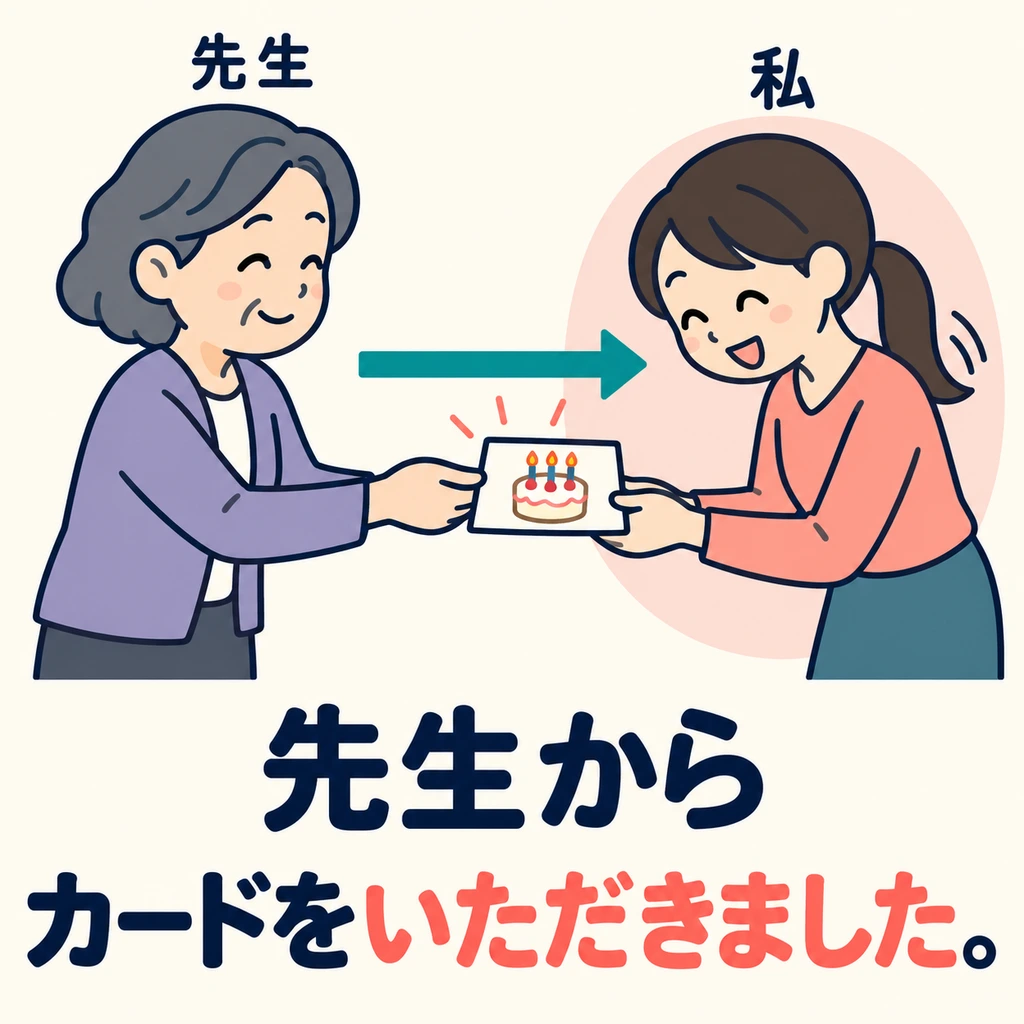
  1. The card goes from the teacher to me. Look at the arrow: this sentence takes the receiver’s point of view.
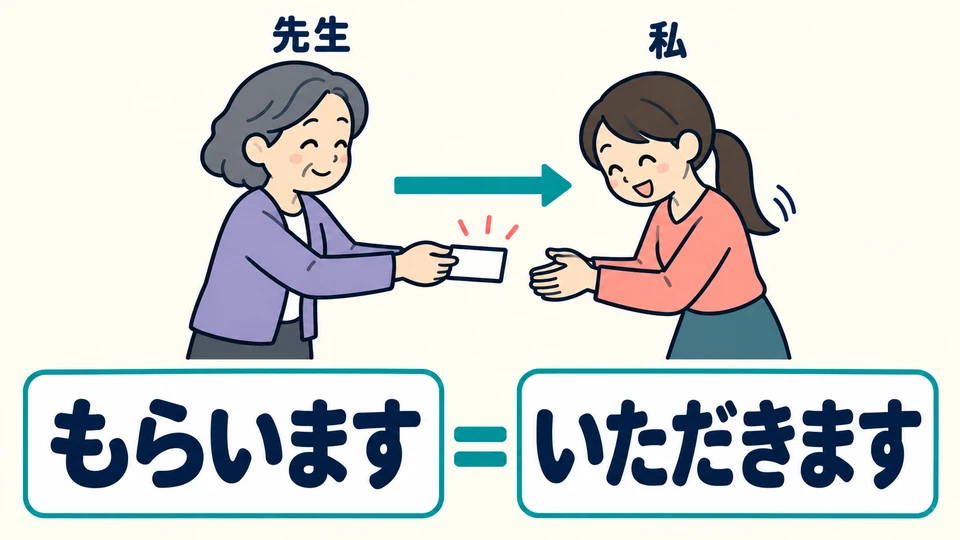
    The card goes from the teacher to me. Look at the arrow: this sentence takes the receiver’s point of view.

  2. 「いただきます」 means “receive.” Its basic meaning is the same as 「もらいます」, which you have already learned.
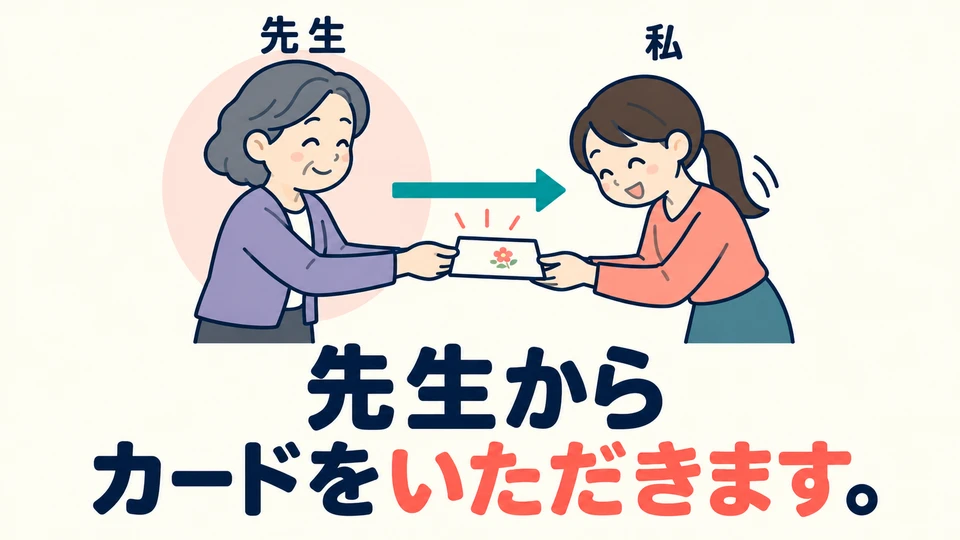
    「いただきます」 means “receive.” Its basic meaning is the same as 「もらいます」, which you have already learned.

  3. When receiving something from a teacher, an elder, or a superior, use this expression to show respect for the giver.
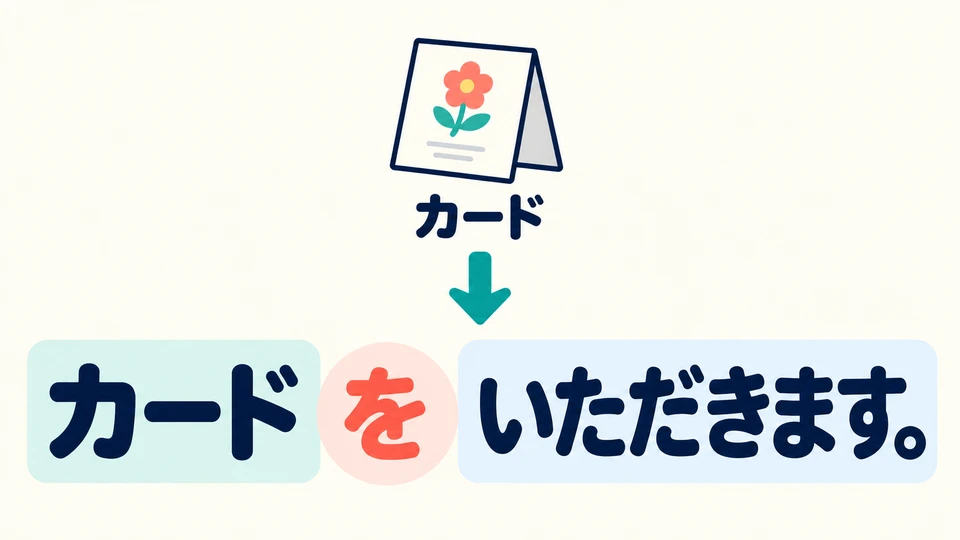
    When receiving something from a teacher, an elder, or a superior, use this expression to show respect for the giver.

  4. What do you receive? Put the name of the item before 「を」: カードをいただきます。
    What do you receive? Put the name of the item before 「を」: カードをいただきます。

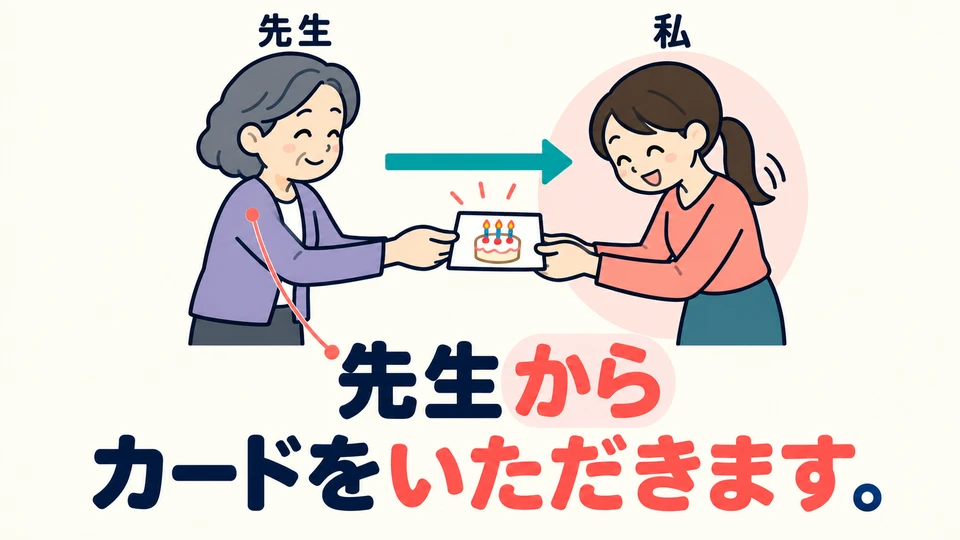
  5. Who do you receive it from? Add 「から」 after the giver: 先生から means “from the teacher.”
    Who do you receive it from? Add 「から」 after the giver: 先生から means “from the teacher.”
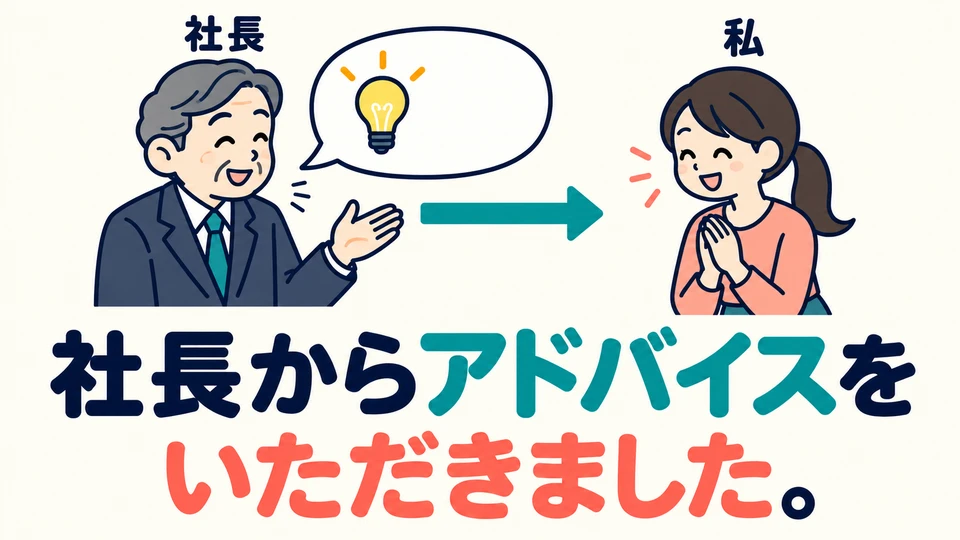
  6. You can also receive advice. The original example is 「社長からアドバイスをいただきました」.

You can also receive advice. The original example is 「社長からアドバイスをいただきました」.

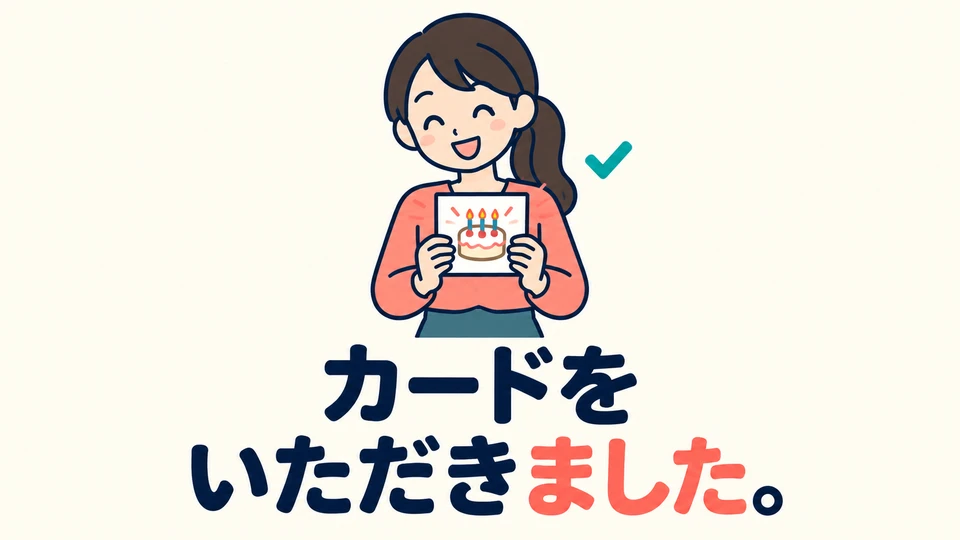
  • Use 「いただきました」 when you have already received something. The card in the picture is already in my hands, so the sentence uses the past tense.

    Use 「いただきました」 when you have already received something. The card in the picture is already in my hands, so the sentence uses the past tense.

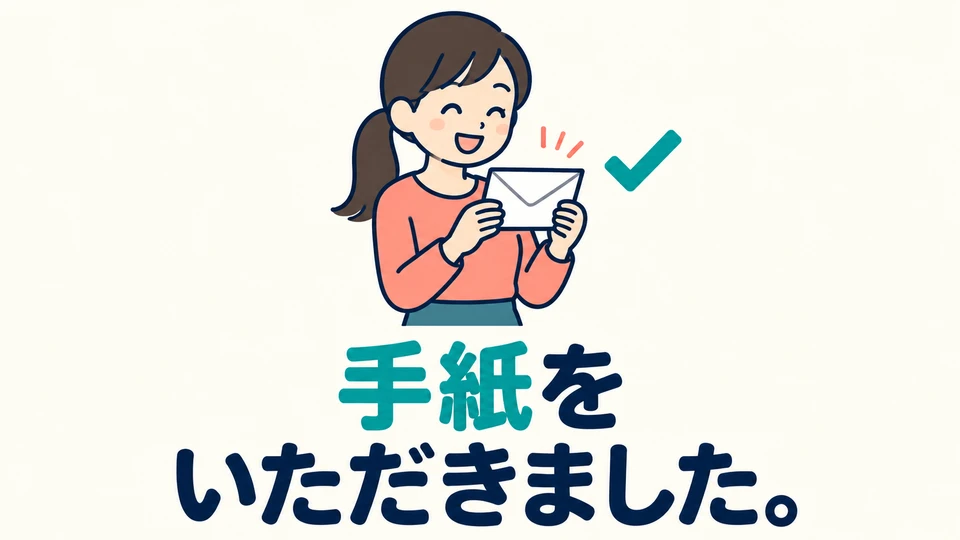
  • You can leave out the giver when it is already clear who they are. The original example 「手紙をいただきました」 mentions only what was received.

    You can leave out the giver when it is already clear who they are. The original example 「手紙をいただきました」 mentions only what was received.

  • Example sentences

    • 手紙てがみtegamiをoいただきました。いただきましたitadakimashita

      I received a letter.

    • 社長しゃちょうshachouからkaraアドバイスあどばいすadobaisuをoいただきました。いただきましたitadakimashita

      I received advice from the president.

    In a conversation

    • A
      何なんかいいことがあったんですか。かとても楽したのしそうですね。ね

      A: Did something good happen? You look very happy.

    • B
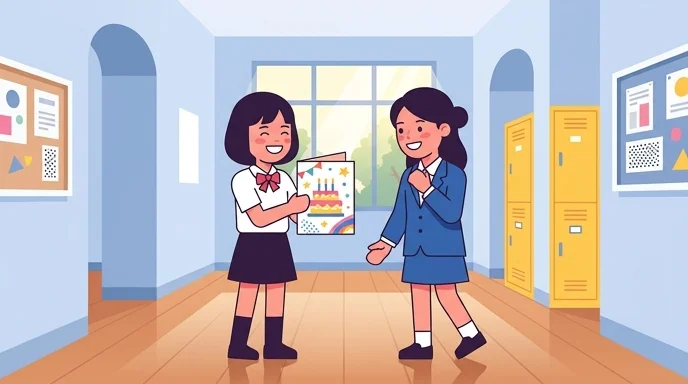
      ええ、ええ先生せんせいから誕生たんじょう日びカードかーどをいただきました。いただきました

      B: Yes, I received a birthday card from my teacher.

    • A
      素敵ですすてきですね。ね先生せんせいから直接ちょくせつカードかーどをいただけるなんて嬉しいです。うれしいです

      A: That's wonderful. It's so nice to receive a card directly from your teacher.

    Check yourself

    1. Level 1 · Recognise

      Which sentence is correct?

    2. Level 1 · Recognise

      Listen and choose the meaning

    3. Level 2 · Build

      Put the words in order

      I received a birthday card from my teacher.

    4. Level 3 · Use

      What goes in the blank?

      先生から推薦状を 。

      I received a letter of recommendation from my teacher.

    More grammar in this theme

    • 〜てあげますdo something to help someone
    • 〜てもらいますreceive someone’s help
    • 〜てくれますsomeone does something for me
    • Nをいただきますhumbly receive something
    • Nをくださいますsomeone respectfully gives me something
    • 〜ていただきますhumbly receive someone’s help
    • 〜てくださいましたrespectful help received
    Previous〜てくれますNextNをくださいます

    Keep practising

    Test your Japanese vocabulary12 adaptive questions, freeCheck your pronunciationRead aloud and get a scorePractise verb forms10-question conjugation quizSee the whole courseGrammar, vocabulary and quizzes by theme
    See the whole course
    Beginner 3
    Helping Each Other