
Japanese grammar · ≈ JLPT N4 · Beginner 3
お〜ください/ご〜くださいo ~ kudasai / go ~ kudasai
formal polite instruction
Use common 「お〜ください/ご〜ください」 forms for formal instructions or requests, such as when serving visitors.
How it works
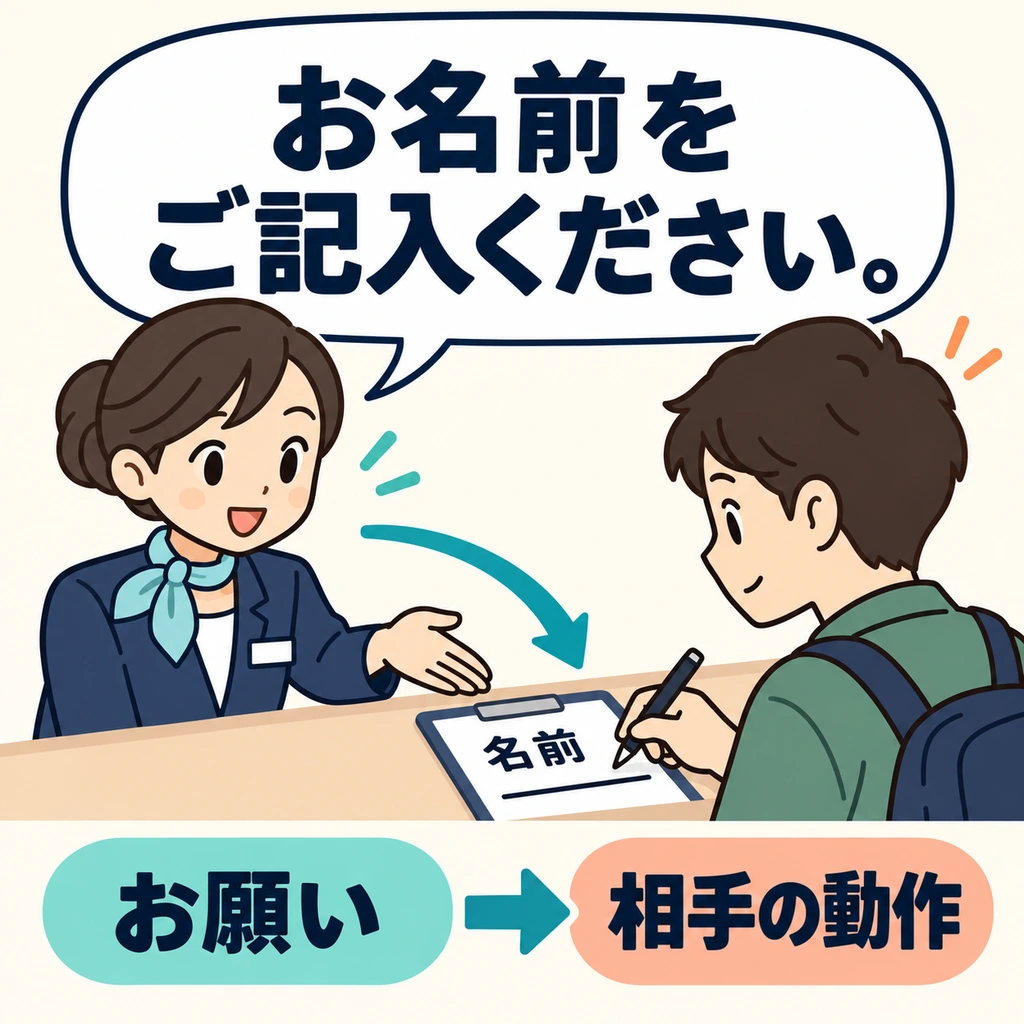
Who fills in the name? The visitor. In the picture, the receptionist politely asks the other person to act.
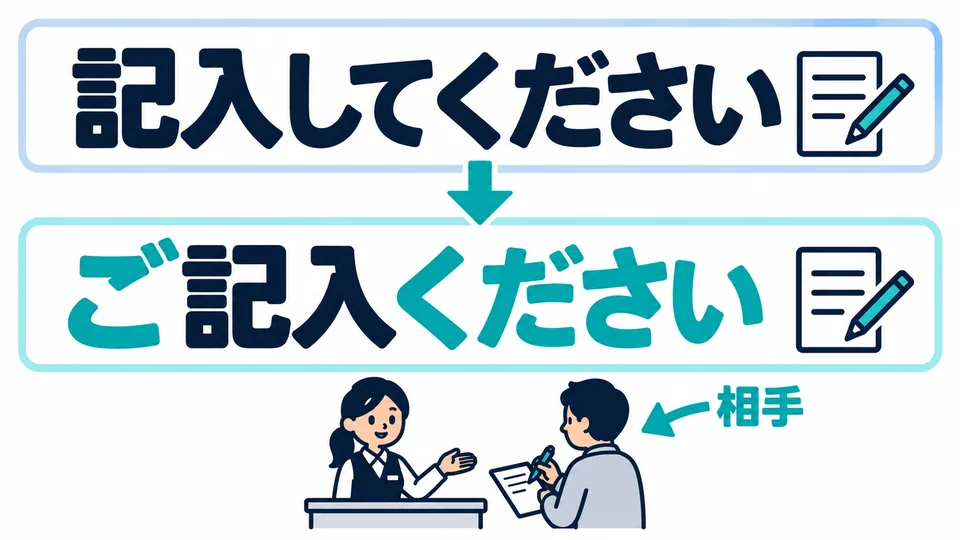
This is a polite instruction or request, more formal than 「〜てください」. The other person performs the action.
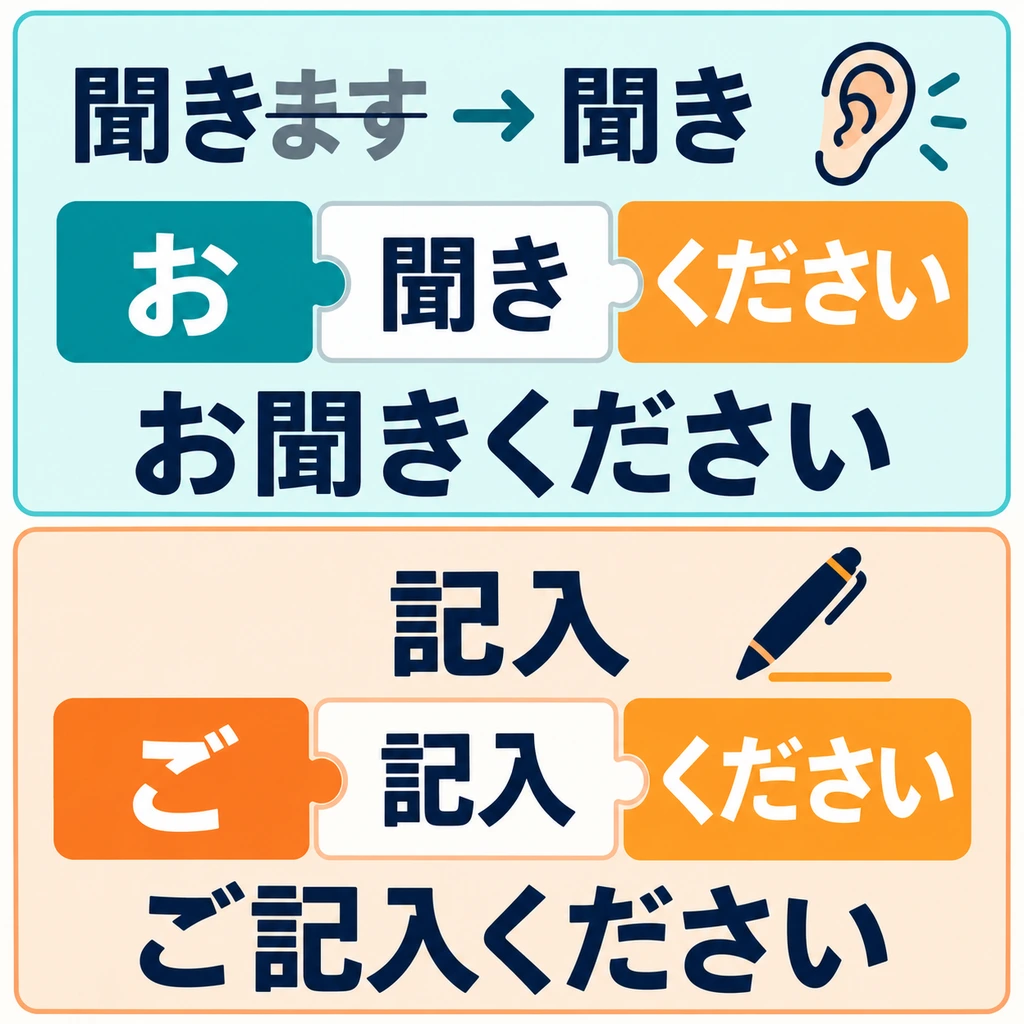
Look at the top half of the picture: remove 「ます」 from 「聞きます」 to form 「お聞きください」.
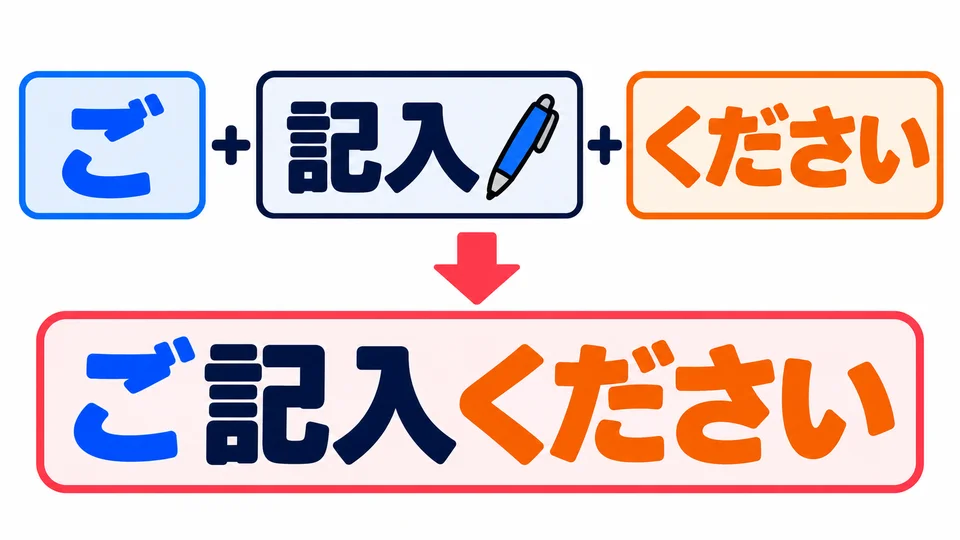
「記入」 is an action noun. Add 「ご…ください」 to form 「ご記入ください」.
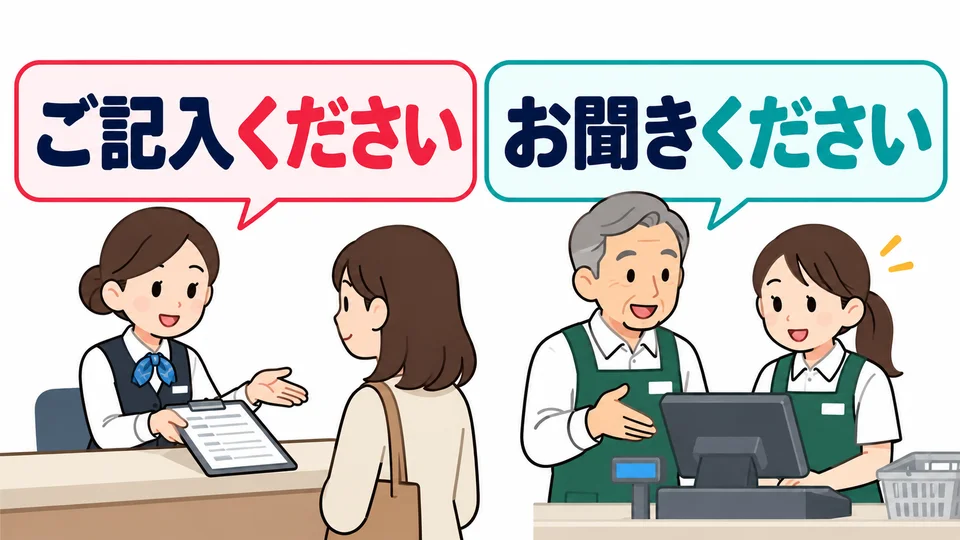
It is common when serving visitors or making announcements. As in the dialogue, it can also give instructions formally, step by step.
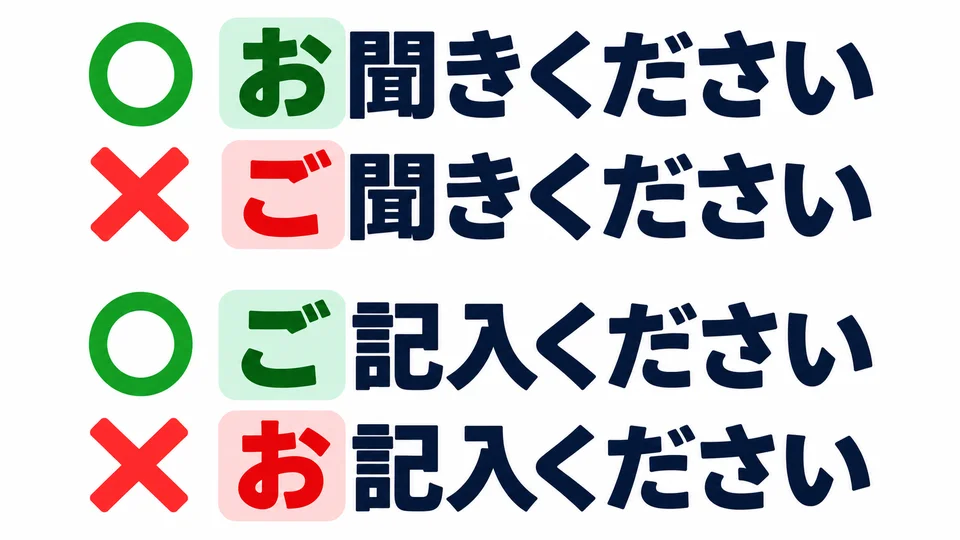
This pattern does not work with every verb. 「お」 and 「ご」 are not freely interchangeable, so learn common combinations first.
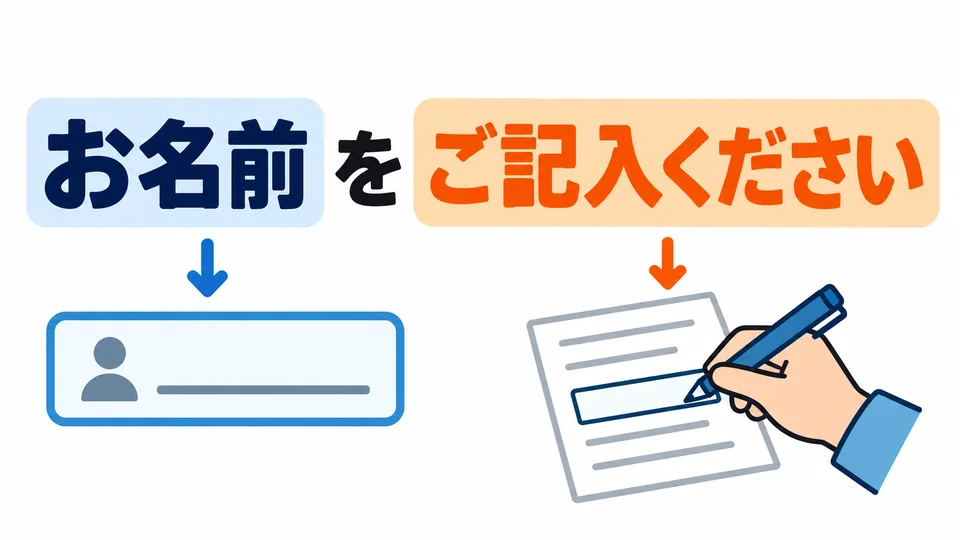
In the example, 「お名前」 is a polite way to refer to the name. 「ご記入ください」 is the part that requests the action.
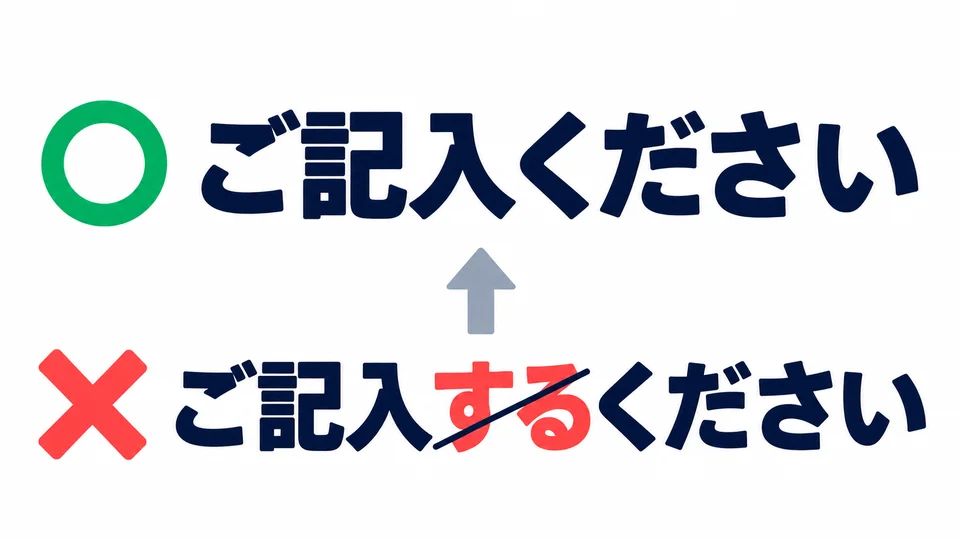
The example adds 「ご…ください」 to 「記入」 without 「する」. Do not say 「ご記入するください」.
Example sentences
- お名前onamaeをoご記入gokinyuu下さいkudasai
Please write your name.
In a conversation

- Aすみません、レジのやり方がわからないんですが。
A: Excuse me, I'm not sure how to use the register.
- Bそうですか。では、
Check yourself
Level 1 · Recognise
Which sentence is correct?
Level 1 · Recognise
Listen and choose the meaning
Level 2 · Build
Put the words in order
If you're in a hurry, please call me right away.
Level 3 · Use
What goes in the blank?
お名前を
Please write your name.
More grammar in this theme
- お〜ください/ご〜くださいformal polite instruction