
Japanese grammar · ≈ JLPT N4 · Beginner 3
〜そうに〜~sou ni ~
appearance while doing something
Use 「〜そうに〜」 to describe the apparent state someone shows while doing an action.
How it works
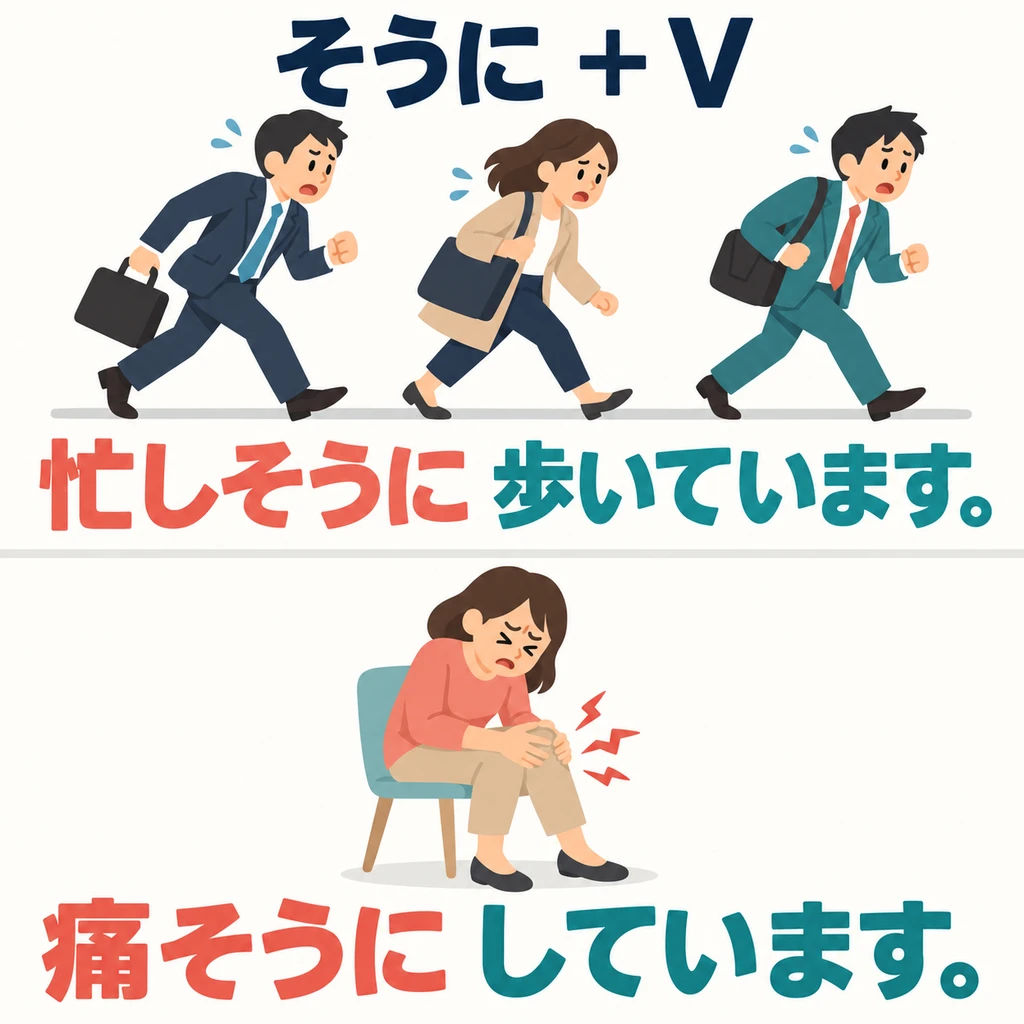
Look at the expressions and movements: 「そうに」 describes how someone looks while doing an action.
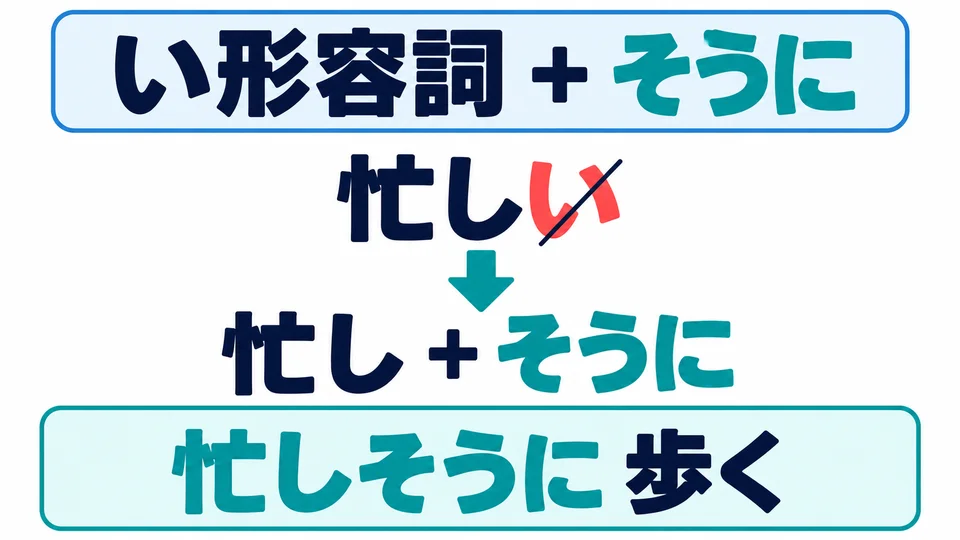
For an い-adjective, remove 「い」 and add 「そうに」: 忙しい→忙しそうに.
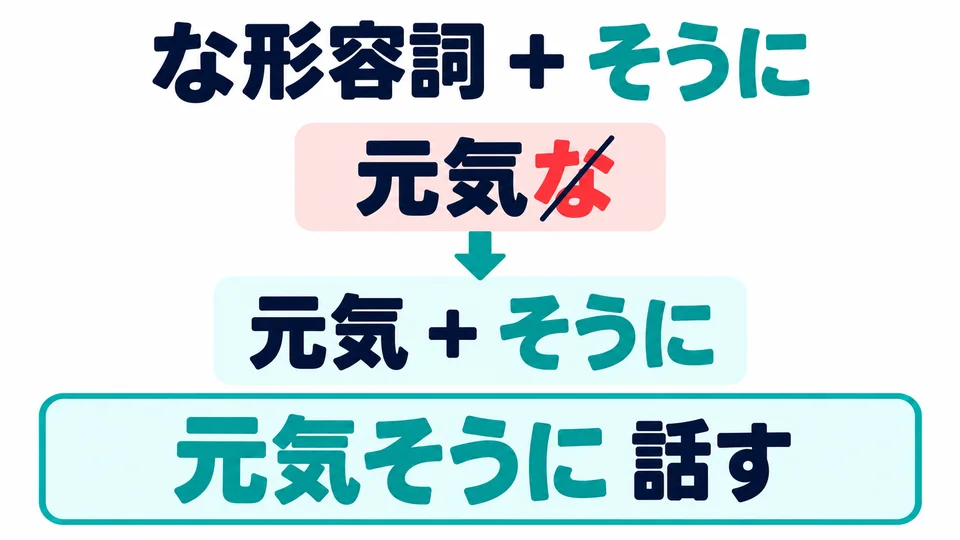
For a な-adjective, leave out 「な」 and add 「そうに」 directly to the stem: 元気→元気そうに.
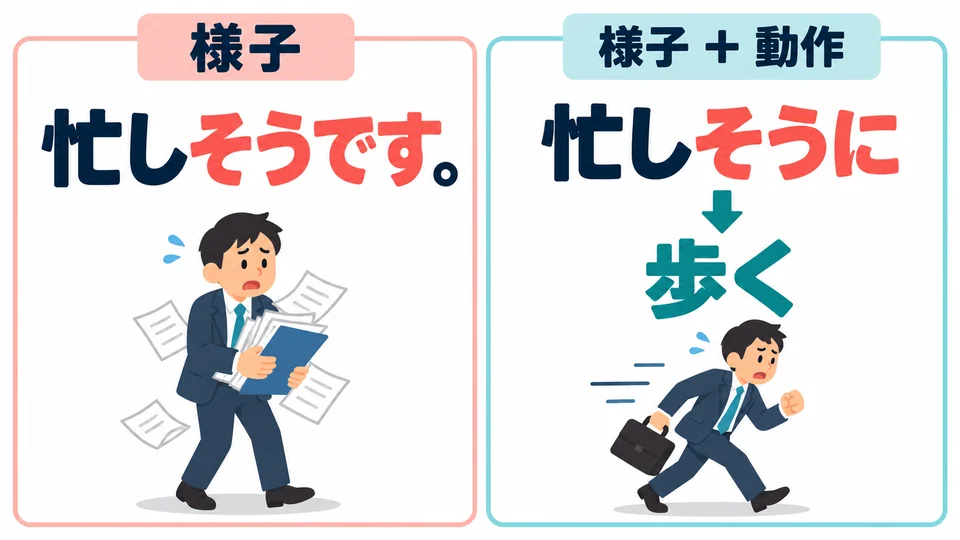
「忙しそうです」 describes an appearance; 「忙しそうに歩く」 links that appearance to the action of walking.
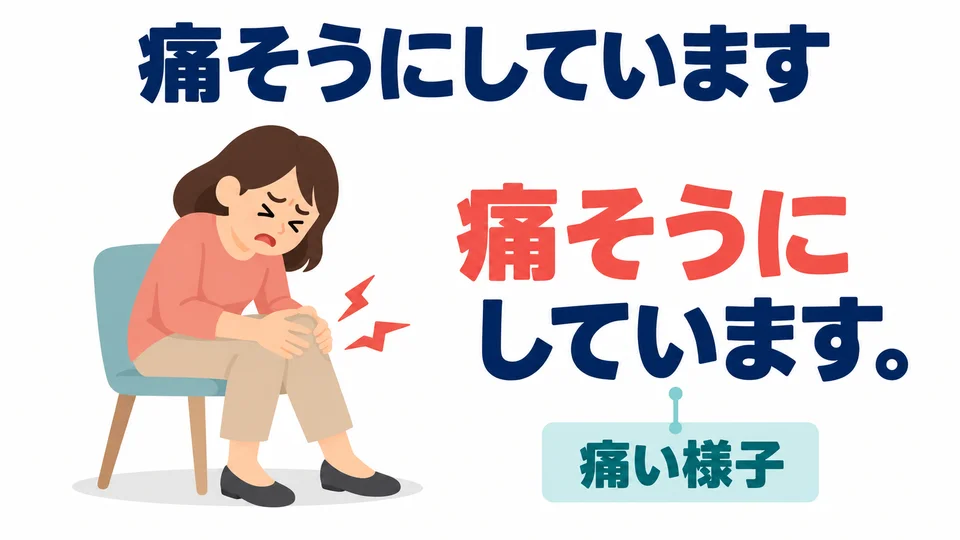
In the example 「痛そうにしています」, 「しています」 describes being in a state that shows pain.
Example sentences
- 痛itaそうにsouniしshiてteいます。imasu
They look like they're in pain.
- みんなminna忙しisogashiそうにsouni
In a conversation
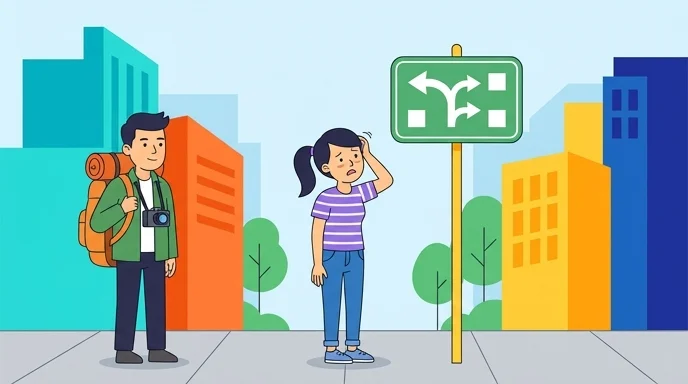
- Aあの人、どうしましたか。
A: What's wrong with that person?
- B疲れた様子ですね。
B: They look tired.
- Aそう
Check yourself
Level 1 · Recognise
Which sentence is correct?
Level 1 · Recognise
Listen and choose the meaning
Level 2 · Build
Put the words in order
The guide is standing there, looking tired.
Level 3 · Use
What goes in the blank?
ガイドさんが疲れ 立っています。
The guide is standing there looking tired.
More grammar in this theme
- 〜そうに〜appearance while doing something