
JPEDLAB iconJPEDLAB
Save history

Create an account and play

Explore first, then save your progress whenever you are ready. No email address is required.

Start free
Read as articleCards
1/8

Look at the expressions and movements: 「そうに」 describes how someone looks while doing an action.

››

Lesson notes · ≈ JLPT N4 · Beginner 3

〜そうに〜~sou ni ~

appearance while doing something

Use 「〜そうに〜」 to describe the apparent state someone shows while doing an action.

How it works
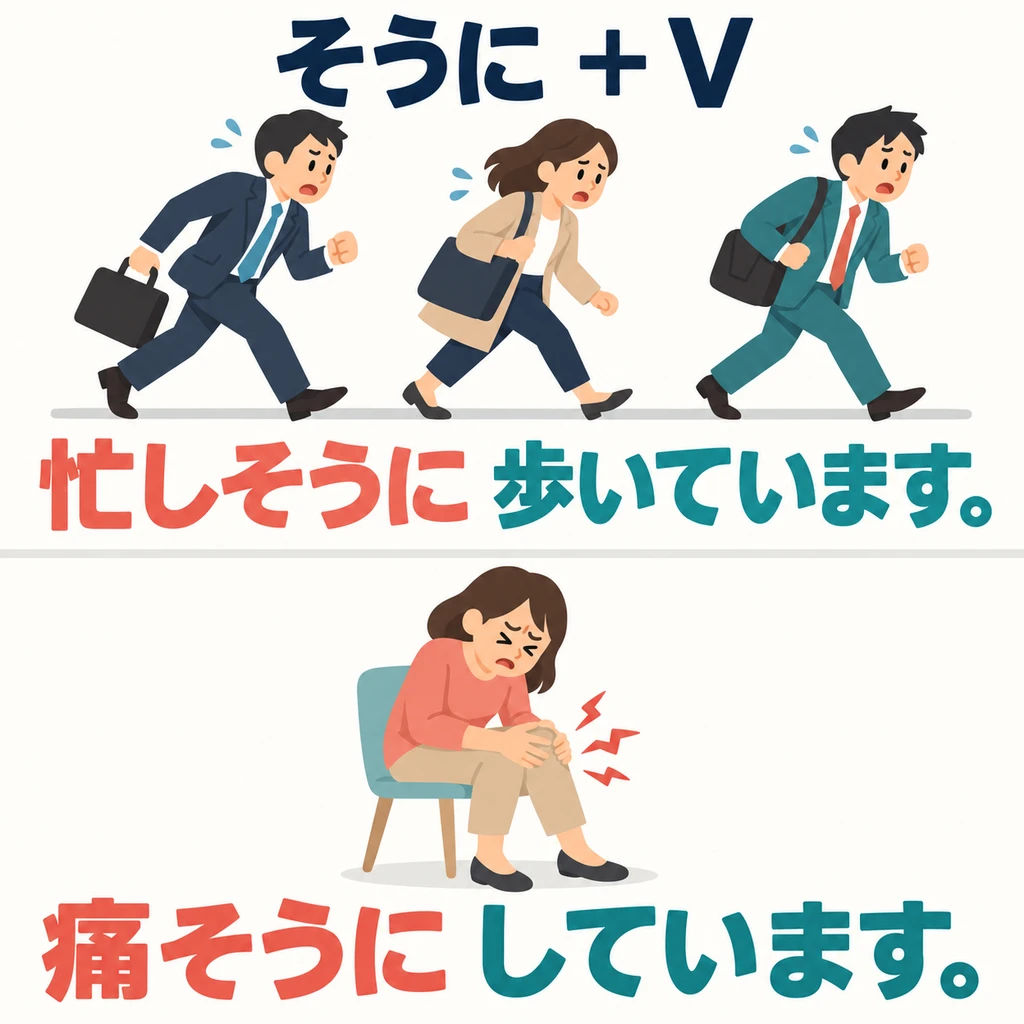
  1. Look at the expressions and movements: 「そうに」 describes how someone looks while doing an action.
    Look at the expressions and movements: 「そうに」 describes how someone looks while doing an action.

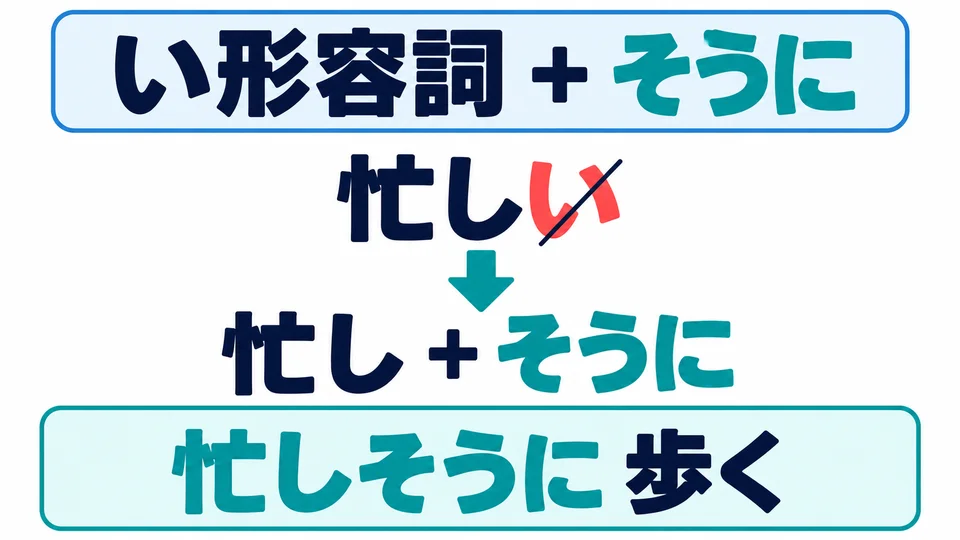
  2. For an い-adjective, remove 「い」 and add 「そうに」: 忙しい→忙しそうに.
    For an い-adjective, remove 「い」 and add 「そうに」: 忙しい→忙しそうに.

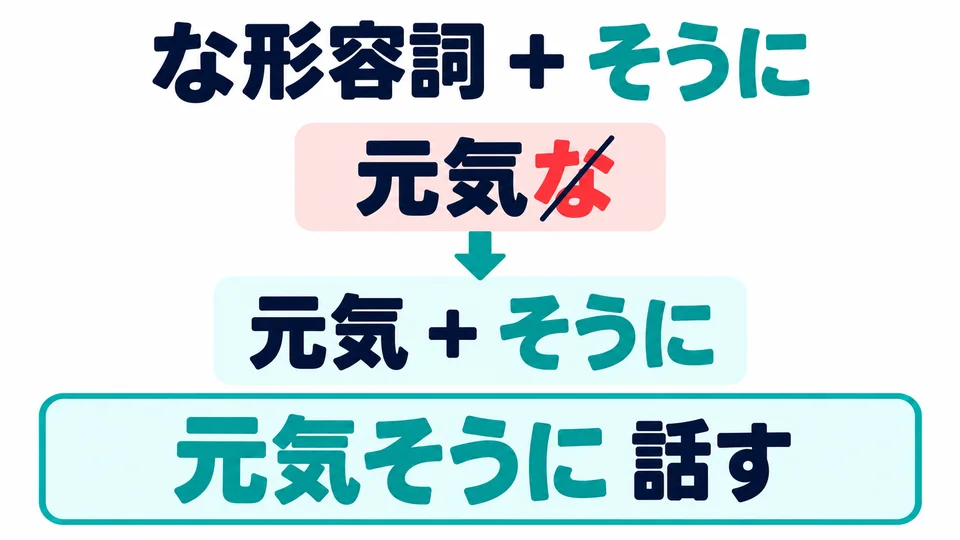
  3. For a な-adjective, leave out 「な」 and add 「そうに」 directly to the stem: 元気→元気そうに.
    For a な-adjective, leave out 「な」 and add 「そうに」 directly to the stem: 元気→元気そうに.

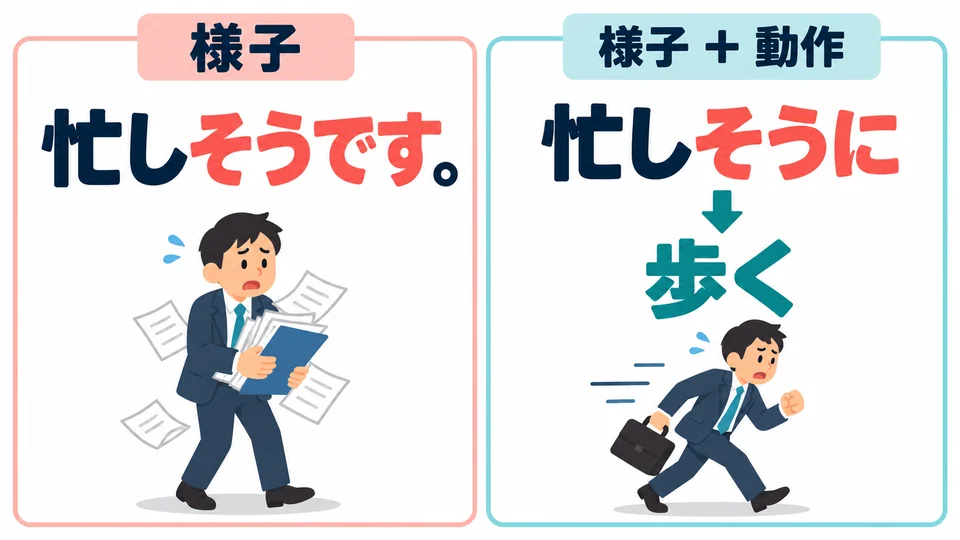
  4. 「忙しそうです」 describes an appearance; 「忙しそうに歩く」 links that appearance to the action of walking.
    「忙しそうです」 describes an appearance; 「忙しそうに歩く」 links that appearance to the action of walking.

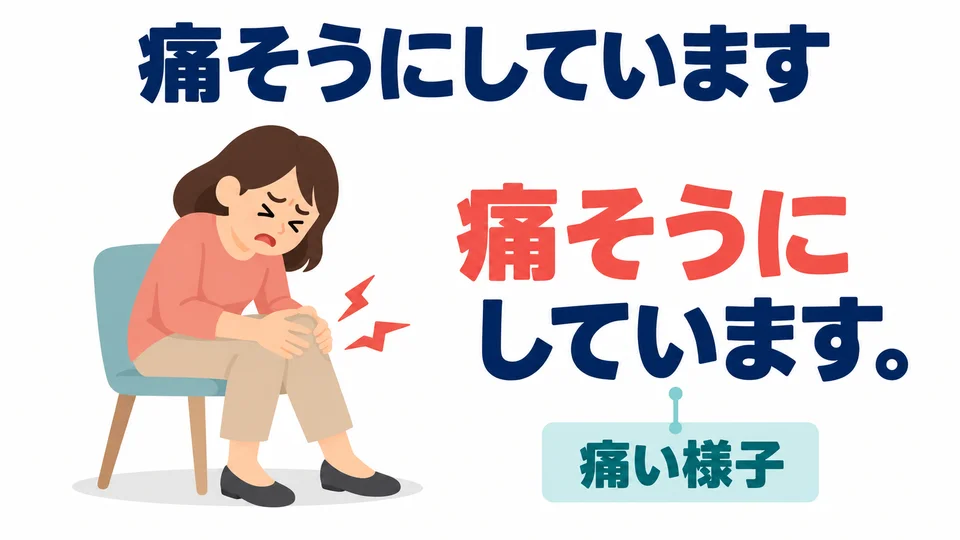
  5. In the example 「痛そうにしています」, 「しています」 describes being in a state that shows pain.
    In the example 「痛そうにしています」, 「しています」 describes being in a state that shows pain.

Example sentences

痛いたitaそうにsouniしshiてteいます。いますimasu

They look like they're in pain.

  • みんなminna忙しいそがしisogashiそうにsouni歩いあるいaruiてteいますimasu

    Everyone is walking busily.

  • In a conversation

    • A
      あの人、ひとどうしましたか。か

      A: What's wrong with that person?

    • B
      疲れたつかれた様子ようすですね。ね

      B: They look tired.

    • A
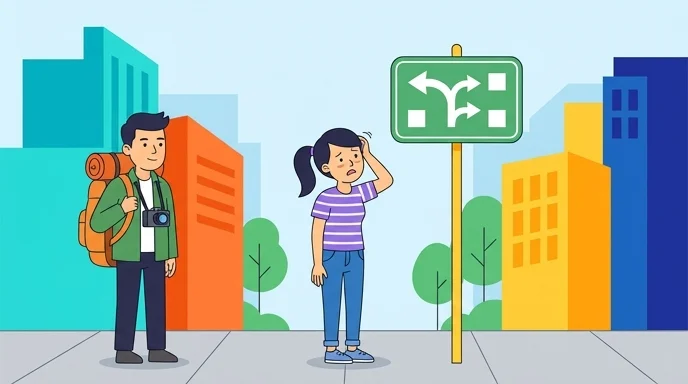
      そうですね。ね何なんか困ったこまったように見えます。みえます

      A: Yes, they look like they're having some trouble.

    • B
      標識ひょうしきを見みていますね。ね

      B: They're looking at the sign.

    Check yourself

    1. Level 1 · Recognise

      Which sentence is correct?

    2. Level 1 · Recognise

      Listen and choose the meaning

    3. Level 2 · Build

      Put the words in order

      The guide is standing there, looking tired.

    4. Level 3 · Use

      What goes in the blank?

      ガイドさんが疲れ 立っています。

      The guide is standing there looking tired.

    More grammar in this theme

    • 受身形passive voice, receiver in focus
    • 〜のにunexpected contrast, despite
    • 〜みたいですseems, based on clues
    • 〜ようですinference from clues
    • 〜ところですaction stage right now
    • 〜てきますgradual approach or appearance
    • 〜そうに〜appearance while doing something
    • 〜みたいですsimilarity-based comparison
    Previous〜てきますNext〜みたいです

    Keep practising

    Test your Japanese vocabulary12 adaptive questions, freeCheck your pronunciationRead aloud and get a scorePractise verb forms10-question conjugation quizSee the whole courseGrammar, vocabulary and quizzes by theme
    See the whole course
    Beginner 3
    Travel Mishaps