
Japanese grammar · ≈ JLPT N4 · Intermediate 1
〜かな~ka na
I wonder if…
Add 「かな」 to a plain form to voice an uncertain thought, such as whether a gift will suit someone.
How it works
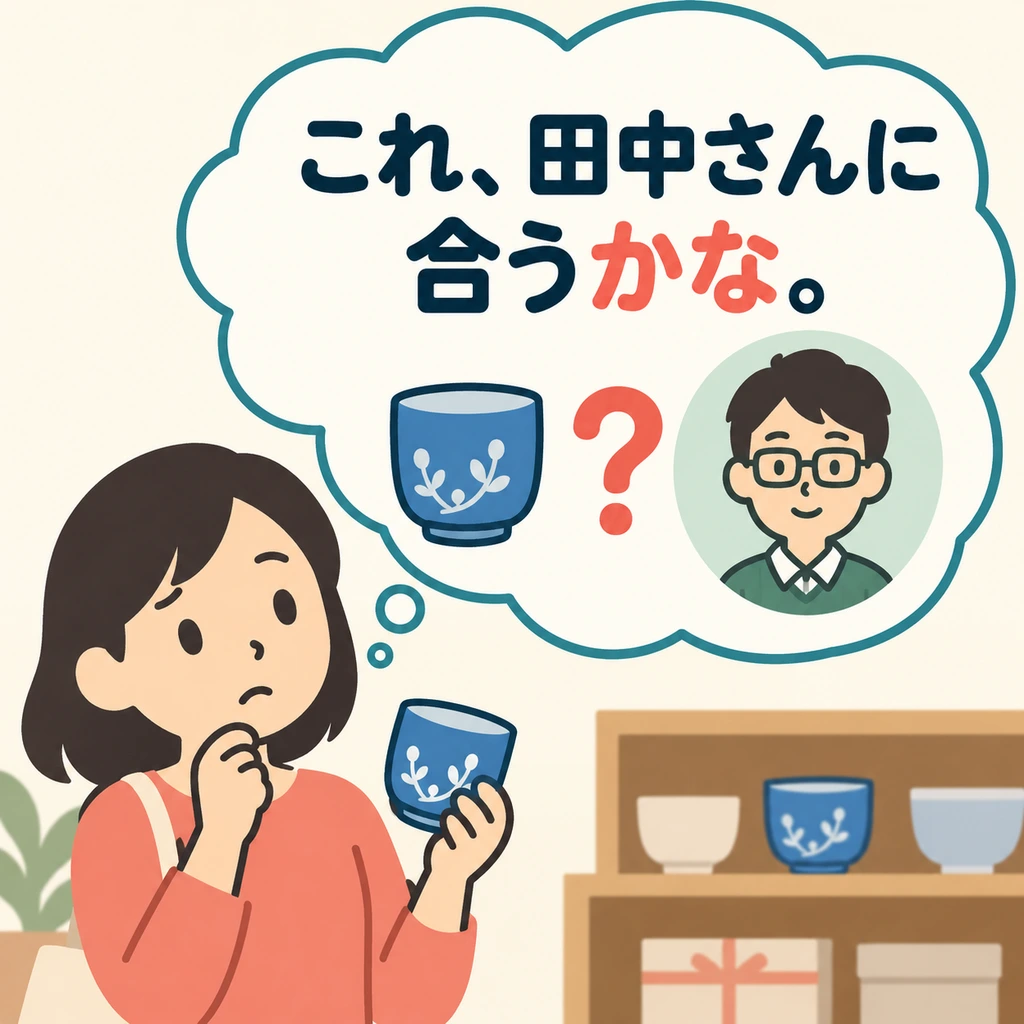
When choosing a gift, use 「かな」 to wonder whether it will suit the recipient.
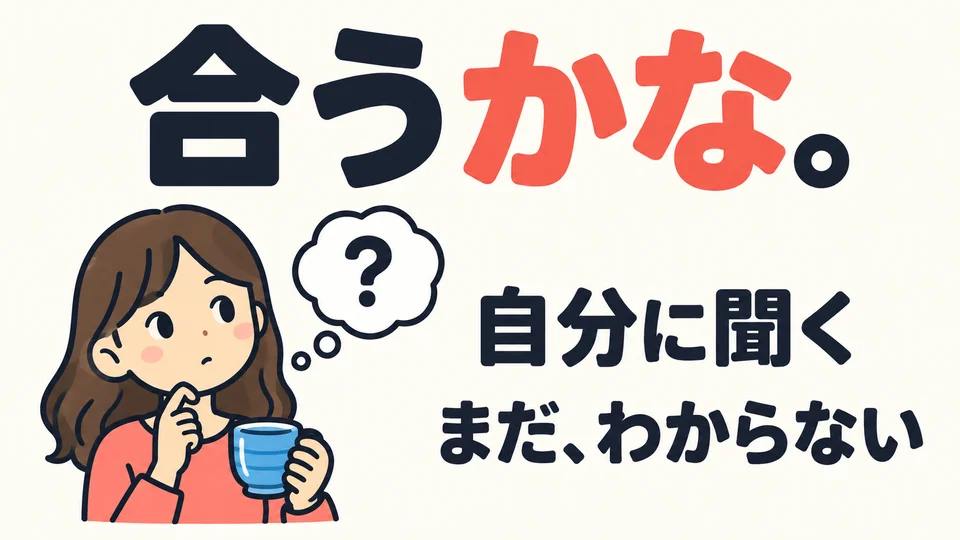
「かな」 means “I wonder…”: it sounds like a question to yourself, with the answer still uncertain.
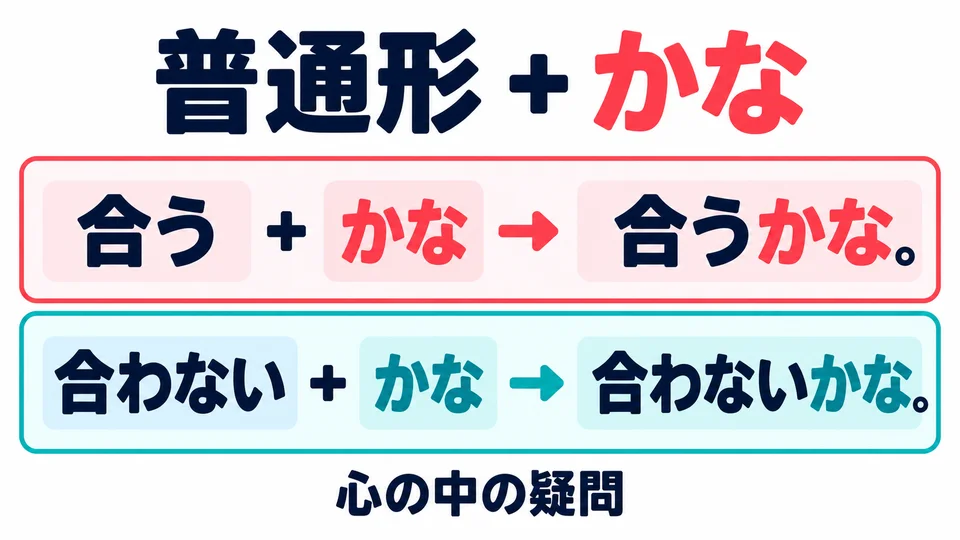
Add 「かな」 after a plain form such as 「合う」 or 「合わない」 to express what you are wondering.
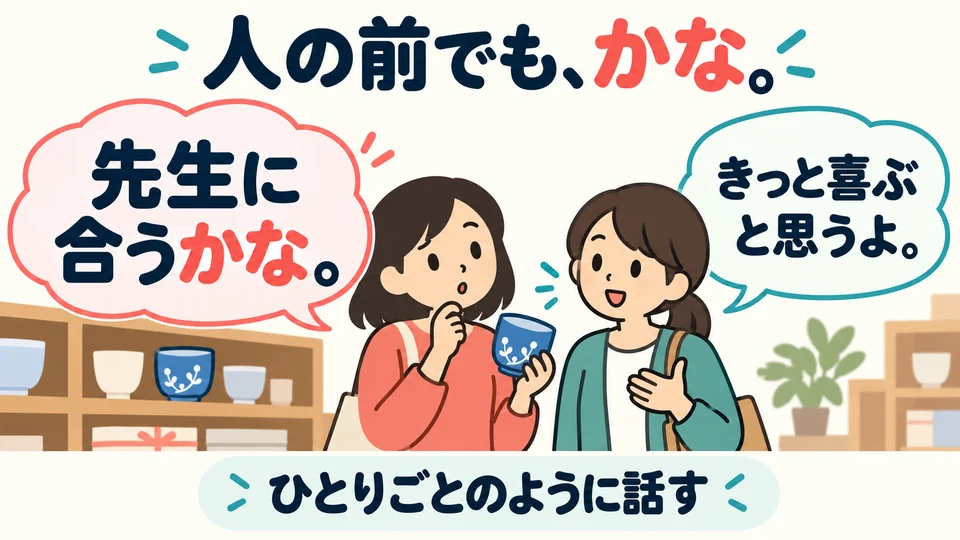
You can also say it in front of someone. It sounds like thinking aloud, and the other person may respond.
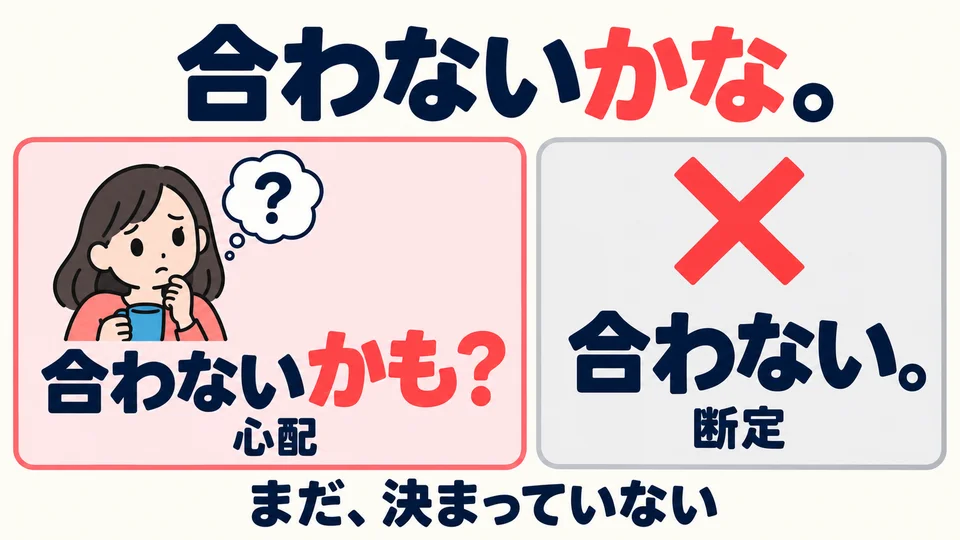
In the example, 「合わないかな」 expresses concern that the color may not match their taste; it does not state that it is unsuitable.
Example sentences
- これ、kore、田中さんtanakasanにni合うauかkaな。na。
I wonder if this would suit Tanaka.
- このkono色iro
In a conversation
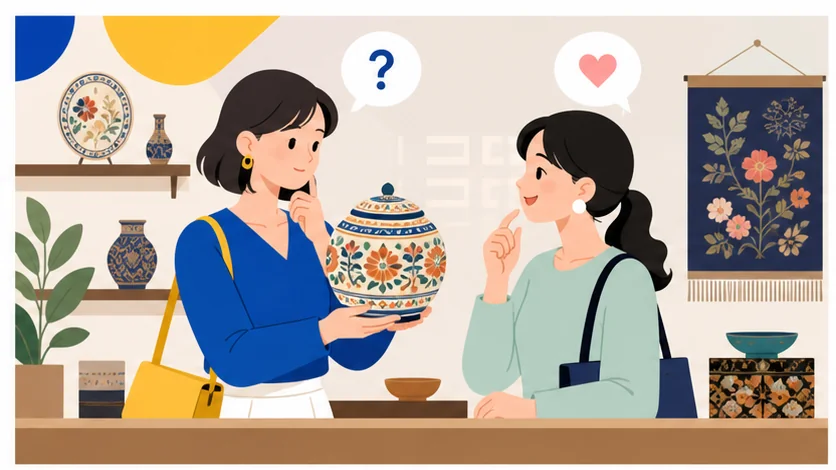
- Aこの工芸品、先生の好みに合うかな。
A: I wonder if this craft item will suit the teacher's taste.
- B上品なデザインだから、きっと喜ぶ
Check yourself
Level 1 · Recognise
Which sentence is correct?
Level 1 · Recognise
Listen and choose the meaning
Level 2 · Build
Put the words in order
I wonder if this perfume is meant for young people.
Level 3 · Use
What goes in the blank?
これ、田中さんに____。
I wonder if this suits Tanaka.
More grammar in this theme
- 〜かなI wonder if…