
Japanese grammar · ≈ JLPT N3 · Intermediate 1
〜てきました~te kimashita
change continuing until now
Use 「〜てきました」 for a change or state that has continued from the past up to now.
How it works
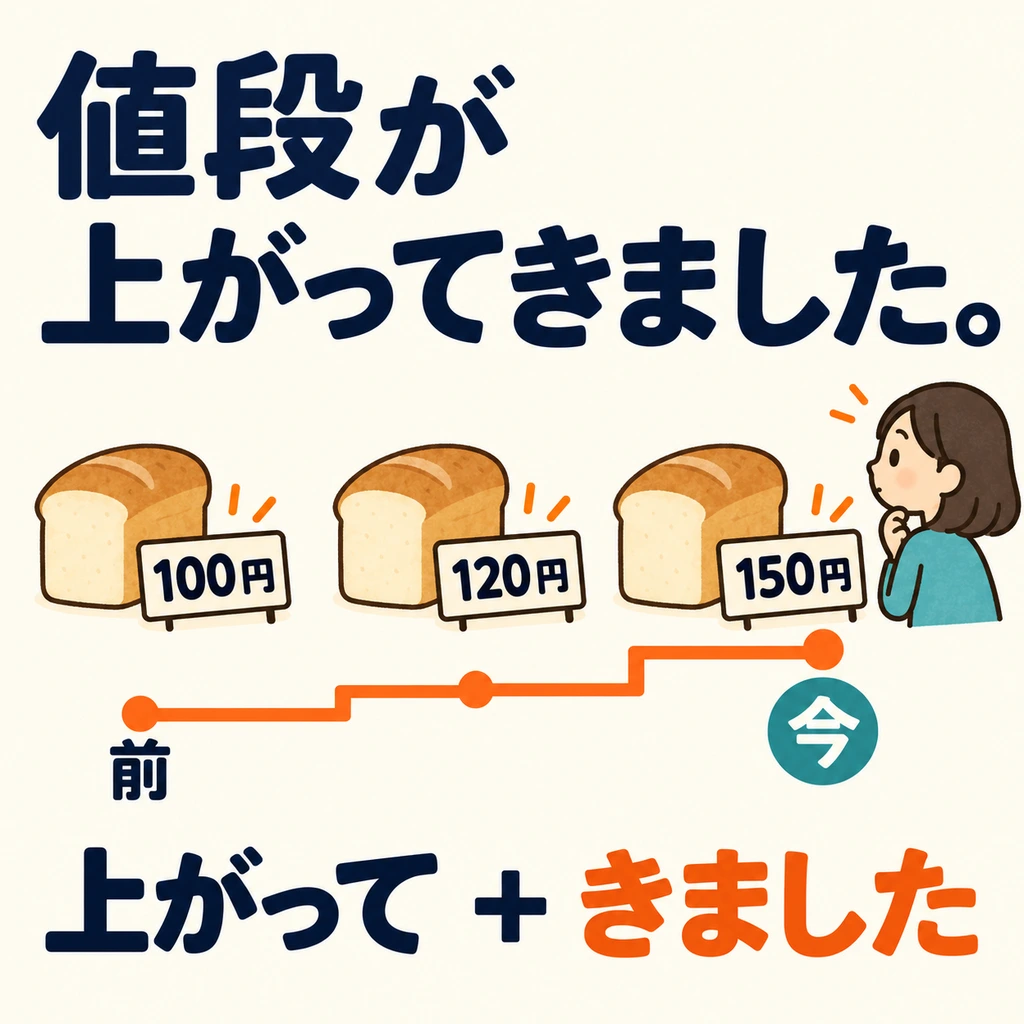
How has the price of the same bread changed? Follow the timeline and compare then and now.
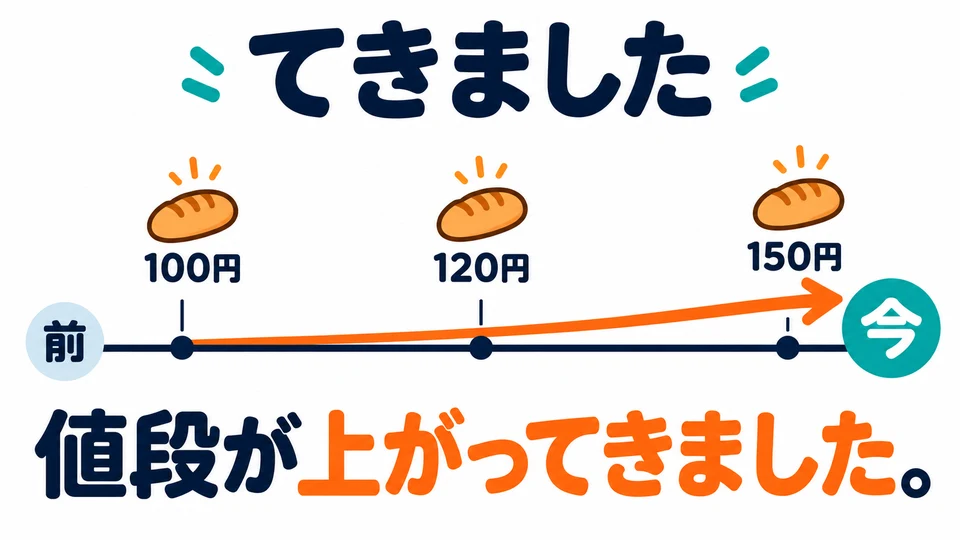
「てきました」 describes a state or change continuing from the past up to now. The focus is on that process.
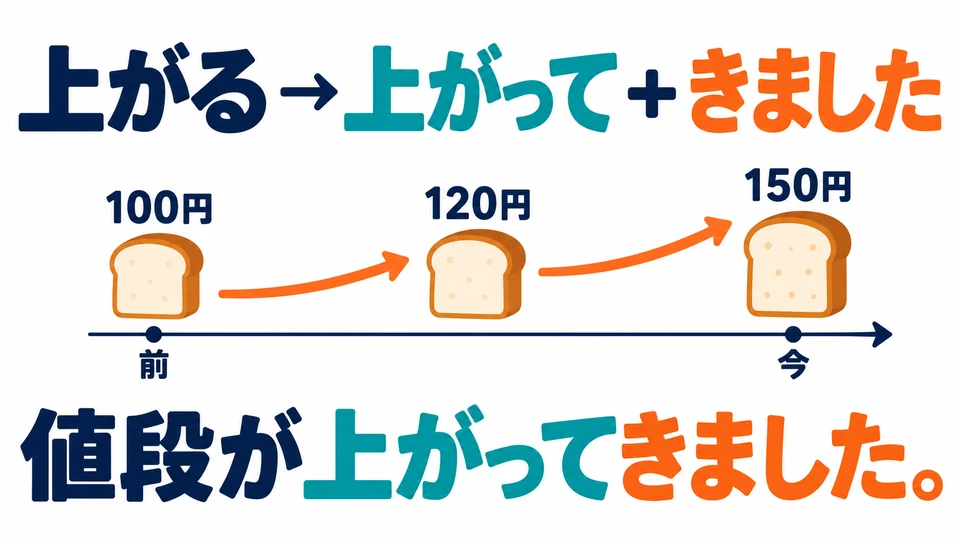
Attach it to a verb’s て-form: 上がる→上がって+きました. In the picture, the price has kept rising up to now.
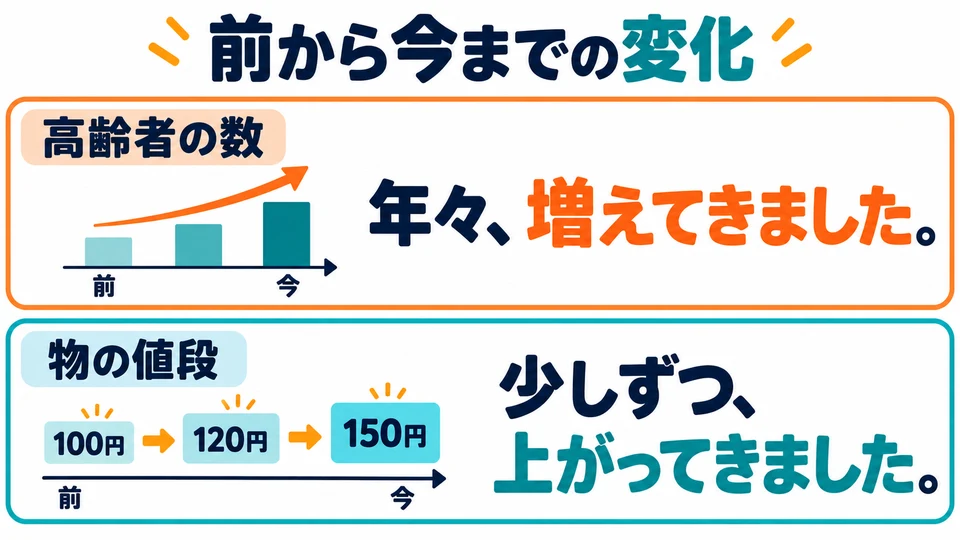
Use it when discussing changes in population or prices to look back at how they have developed up to now.
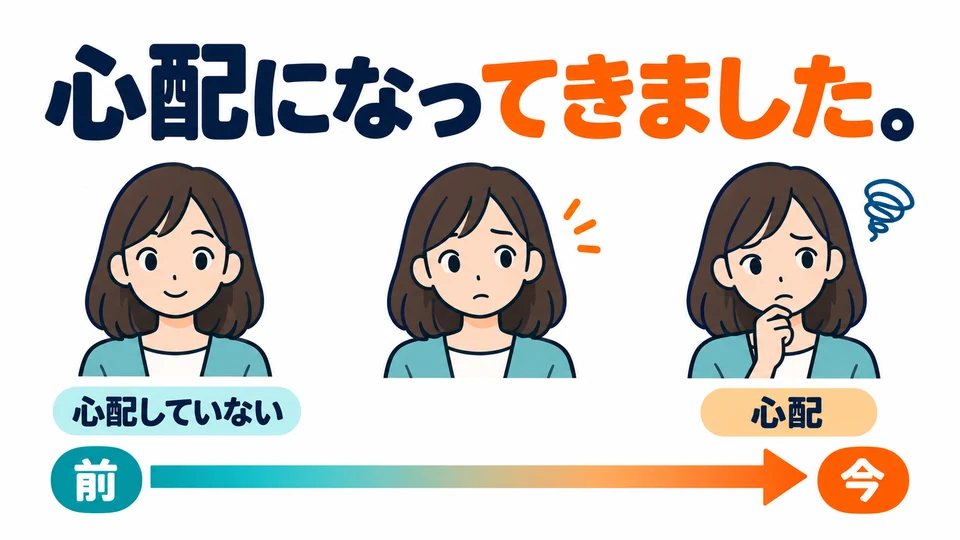
Feelings can change too. 「心配になってきました」 means you have gradually begun to feel worried now.
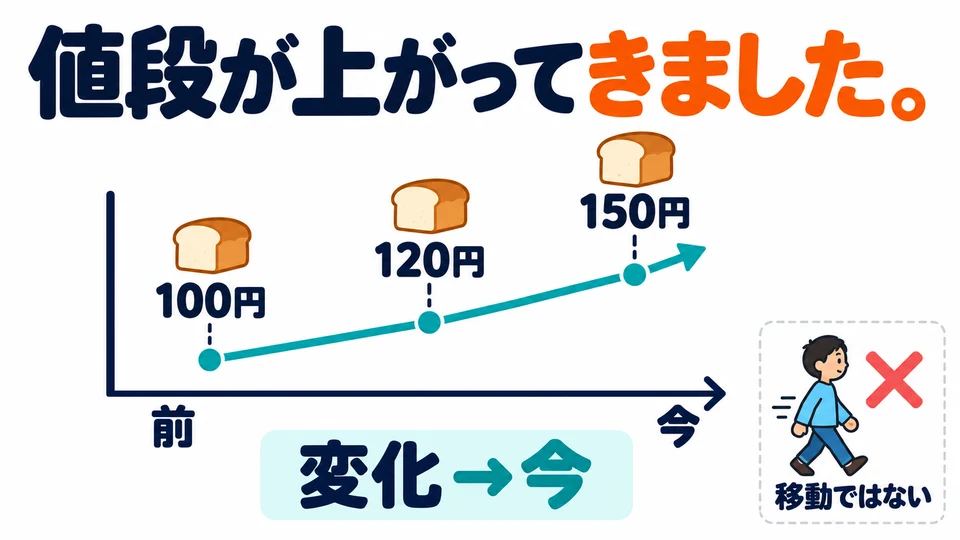
Here, 「きました」 brings the change up to the present. It does not mean a person or thing has physically come here.
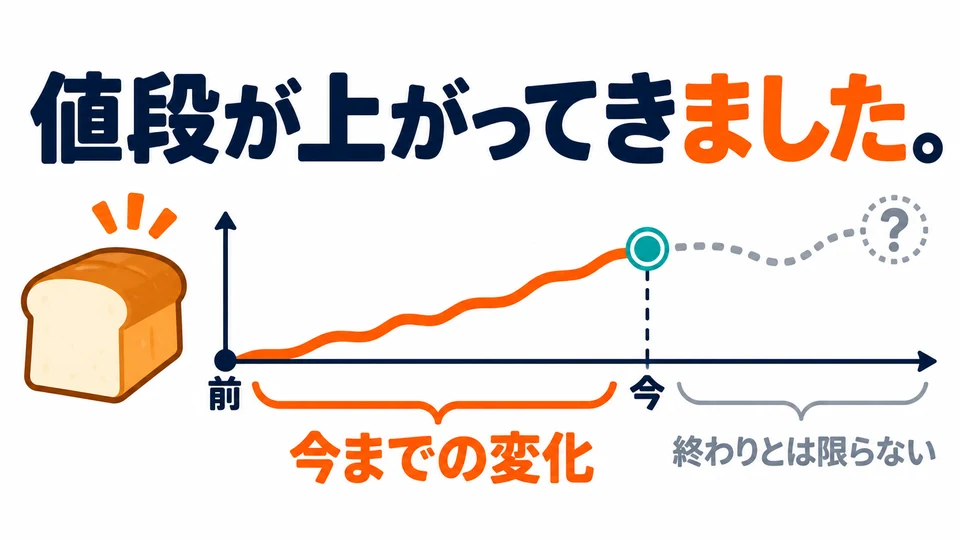
Although it uses the past form 「ました」, the focus is still on now. It does not mean the change has ended.
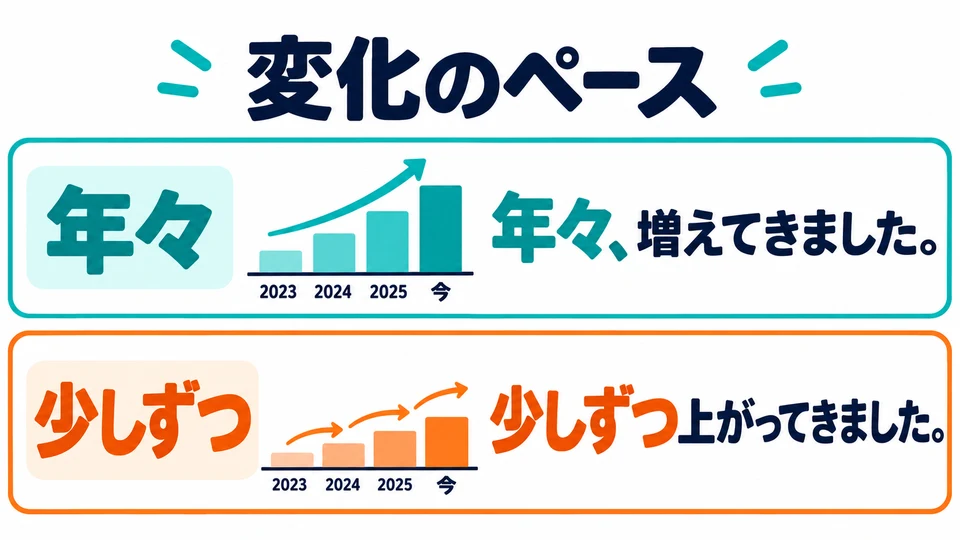
In the examples, 「年々」 and 「少しずつ」 show the pace of change. These words add the sense of gradual progress.
Example sentences
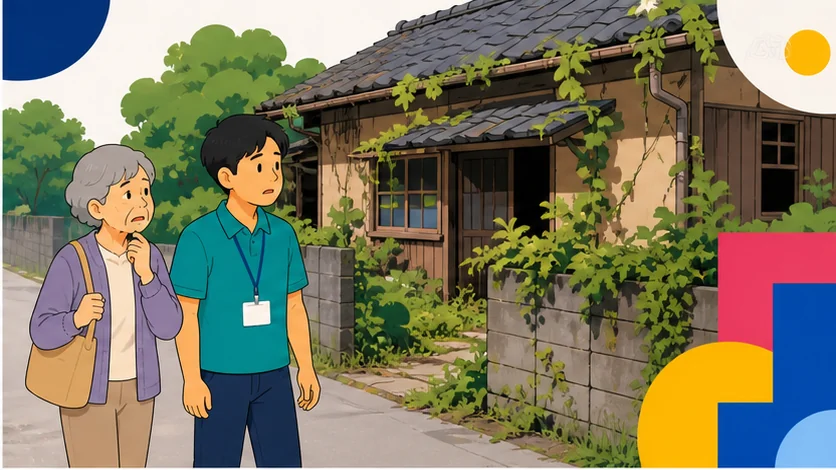
- このkono町machiでdeは、wa、高齢者koureishaのno数kazuがga年々nennen増えfueてte
In a conversation
Check yourself
Level 1 · Recognise
Which sentence is correct?
Level 1 · Recognise
Listen and choose the meaning
Level 2 · Build
Put the words in order
In this town, the number of elderly people has been increasing year by year.
Level 3 · Use
What goes in the blank?
この町では、高齢者の数が年々____。
In this town, the number of elderly people has been increasing year by year.
More grammar in this theme
- 〜てきましたchange continuing until now