JPEDLAB iconJPEDLAB
Save history

Create an account and play

Explore first, then save your progress whenever you are ready. No email address is required.

Start free
Read as articleCards
1/11

How has the price of the same bread changed? Follow the timeline and compare then and now.

››

Lesson notes · ≈ JLPT N3 · Intermediate 1

〜てきました~te kimashita

change continuing until now

Use 「〜てきました」 for a change or state that has continued from the past up to now.

How it works
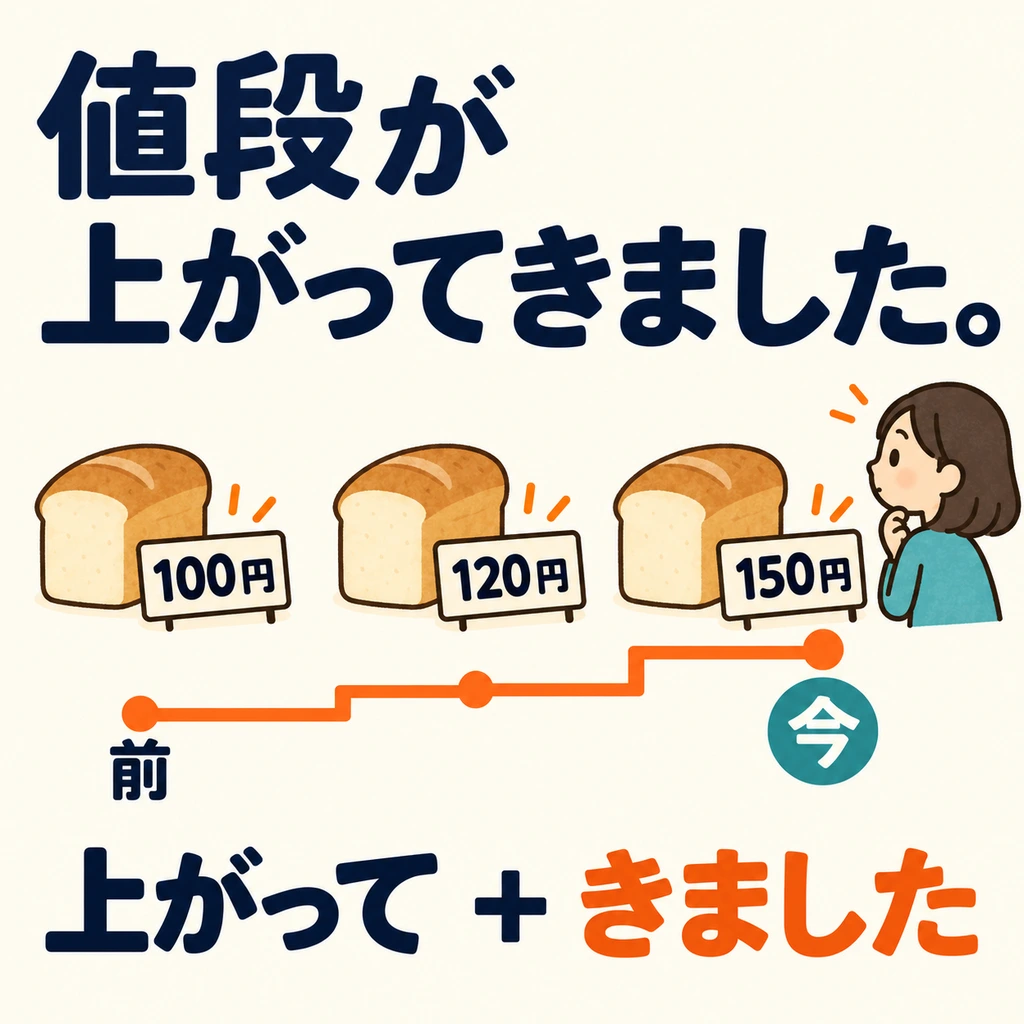
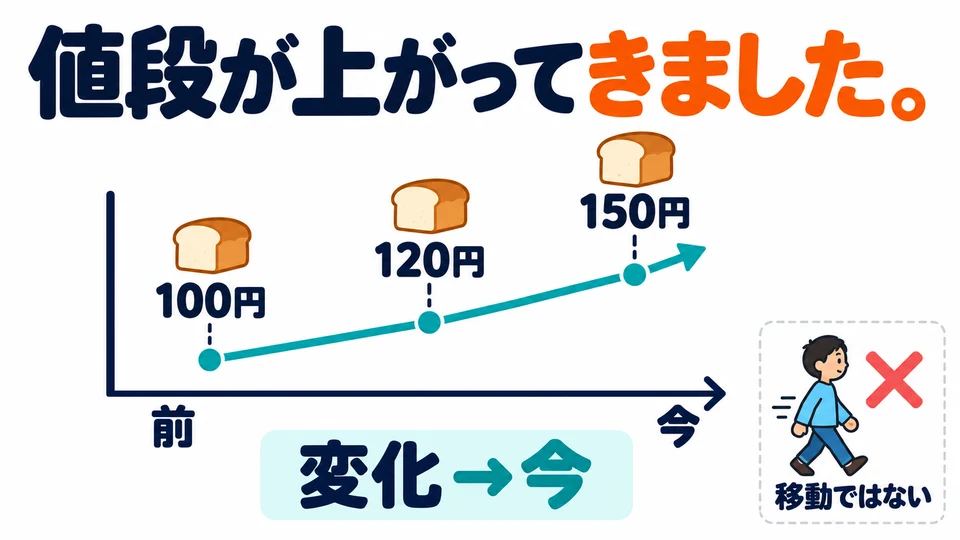
  1. How has the price of the same bread changed? Follow the timeline and compare then and now.
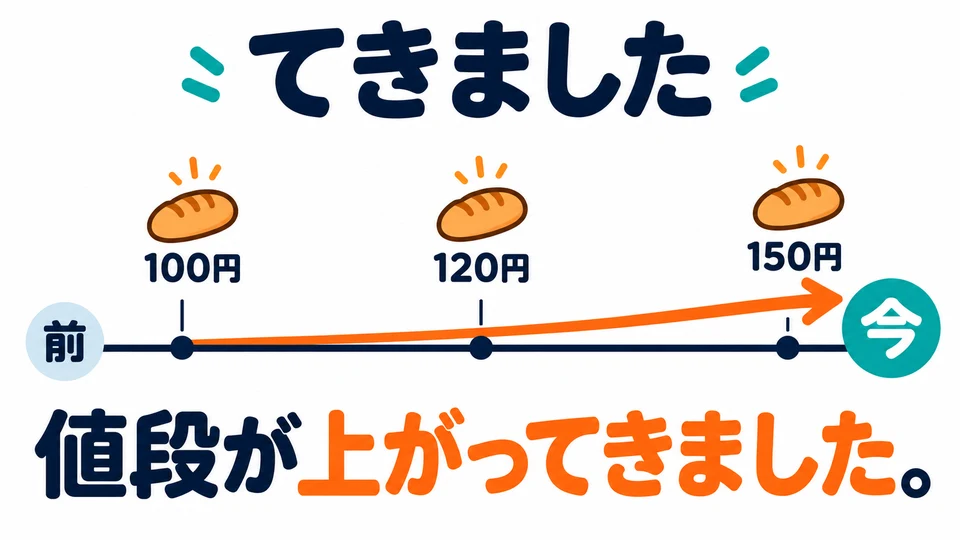
    How has the price of the same bread changed? Follow the timeline and compare then and now.

  2. 「てきました」 describes a state or change continuing from the past up to now. The focus is on that process.
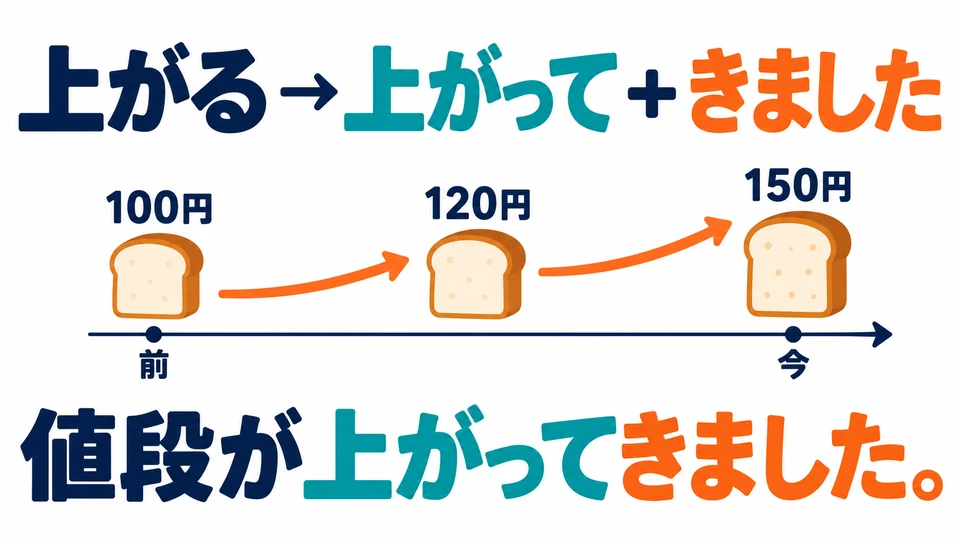
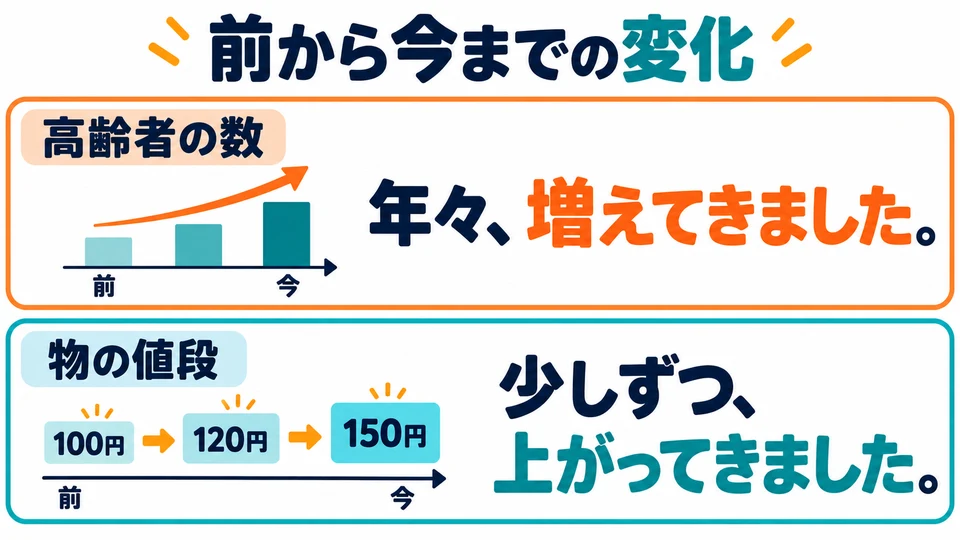
    「てきました」 describes a state or change continuing from the past up to now. The focus is on that process.
  • Attach it to a verb’s て-form: 上がる→上がって+きました. In the picture, the price has kept rising up to now.

    Attach it to a verb’s て-form: 上がる→上がって+きました. In the picture, the price has kept rising up to now.

  • Use it when discussing changes in population or prices to look back at how they have developed up to now.

    Use it when discussing changes in population or prices to look back at how they have developed up to now.

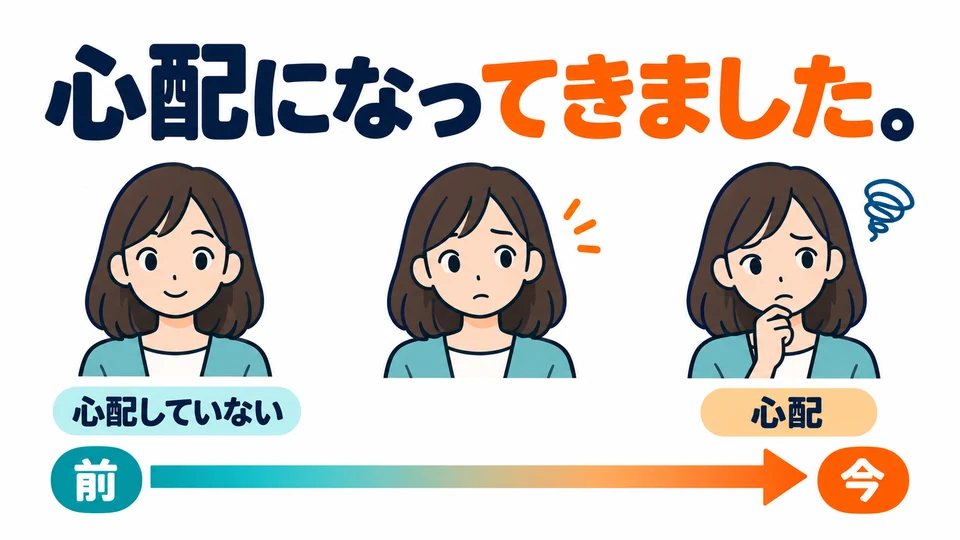
  • Feelings can change too. 「心配になってきました」 means you have gradually begun to feel worried now.

    Feelings can change too. 「心配になってきました」 means you have gradually begun to feel worried now.

  • Here, 「きました」 brings the change up to the present. It does not mean a person or thing has physically come here.

    Here, 「きました」 brings the change up to the present. It does not mean a person or thing has physically come here.

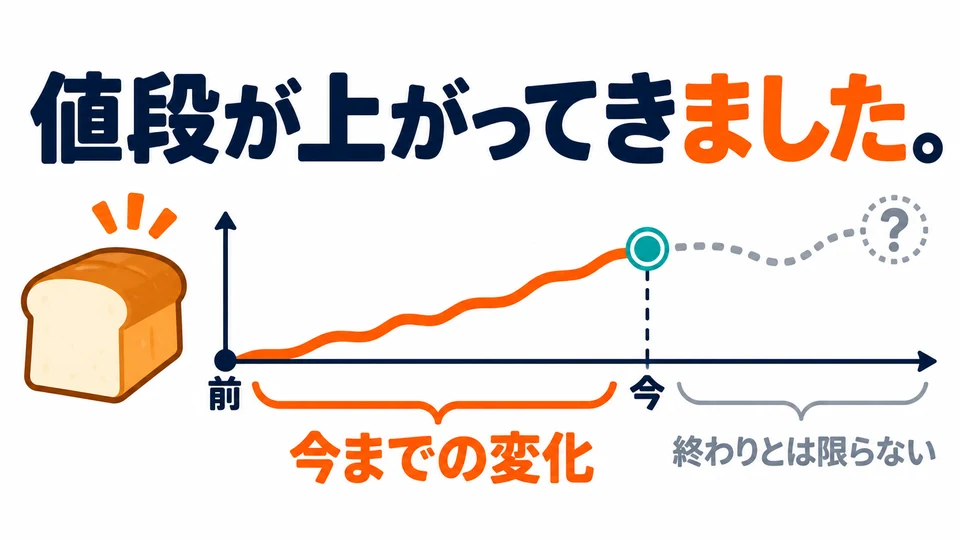
  • Although it uses the past form 「ました」, the focus is still on now. It does not mean the change has ended.

    Although it uses the past form 「ました」, the focus is still on now. It does not mean the change has ended.

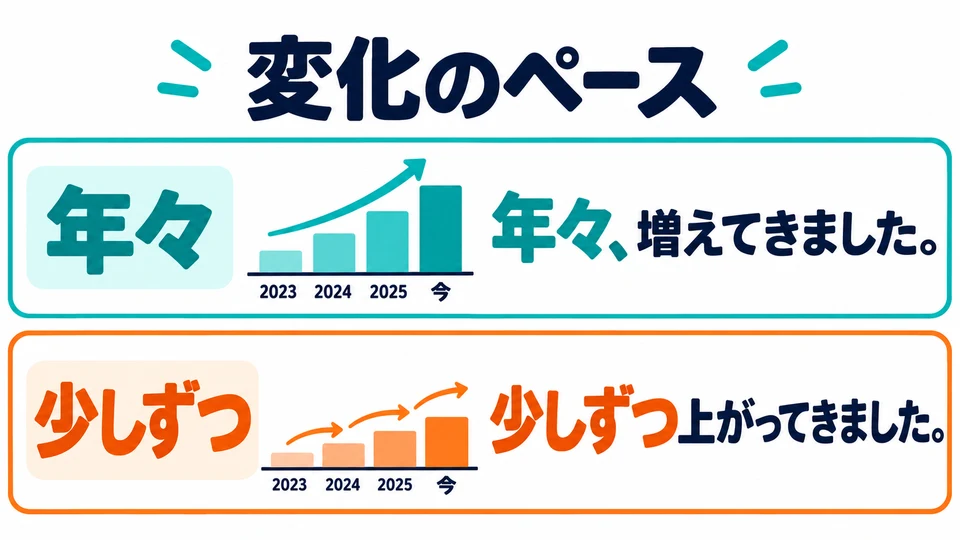
  • In the examples, 「年々」 and 「少しずつ」 show the pace of change. These words add the sense of gradual progress.

    In the examples, 「年々」 and 「少しずつ」 show the pace of change. These words add the sense of gradual progress.

  • Example sentences

    • このkono町まちmachiでdeは、わ、wa、高齢者こうれいしゃkoureishaのno数かずkazuがga年々ねんねんnennen増えふえfueてteきました。kimashita。

      In this town, the number of elderly people has been increasing year by year.

    • 最近、さいきん、saikin、物ものmonoのno値段ねだんnedanがga少しすこしsukoshiずつzutsu上がっあがっagattてteきました。kimashita。

      Recently, the prices of goods have been rising little by little.

    In a conversation

    • A
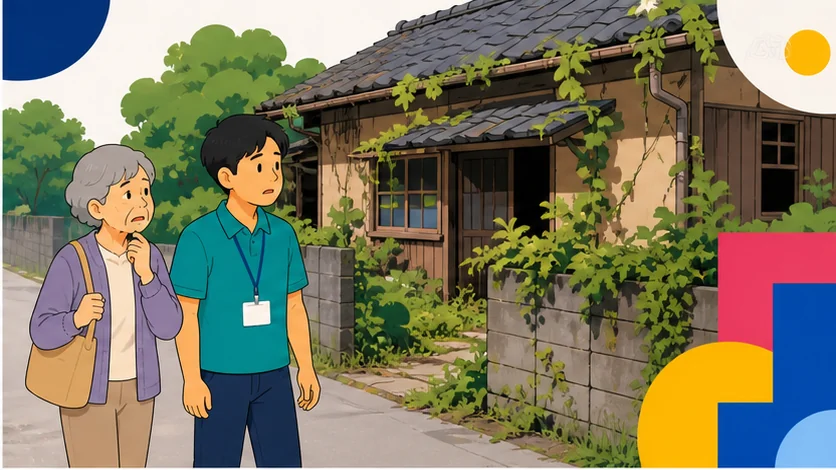
      最近、さいきん、この町まちでも空き家あきやが目立つめだつようになってきましたね。

      A: Recently, vacant houses have become noticeable in this town too, haven't they?

    • B
      ええ、住民じゅうみんの高齢化こうれいかが進んすすんで、地方ちほうへえ引っ越すひっこす人ひとも増えふえてきましたから。

      B: Yes, as the aging of the population progresses, the number of people moving to rural areas has also been increasing.

    • A
      今後こんごの生活せいかつにどんな影響えいきょうを与えるあたえるか、少しすこし心配しんぱいになってきました。

      A: I've started to feel a bit worried about what kind of impact this will have on our lives in the future.

    Check yourself

    1. Level 1 · Recognise

      Which sentence is correct?

    2. Level 1 · Recognise

      Listen and choose the meaning

    3. Level 2 · Build

      Put the words in order

      In this town, the number of elderly people has been increasing year by year.

    4. Level 3 · Use

      What goes in the blank?

      この町では、高齢者の数が年々____。

      In this town, the number of elderly people has been increasing year by year.

    More grammar in this theme

    • 〜んだってcasual hearsay
    • 〜のはどうですかhow about doing…?
    • 〜だけじゃなくて、〜もnot only A but also B
    • 〜ないと、〜if you don't…, then…
    • 〜てきましたchange continuing until now
    • 〜ためにcause: because of
    • 〜ていきますchange continuing into future
    Previous〜ないと、〜Next〜ために

    Keep practising

    Test your Japanese vocabulary12 adaptive questions, freeCheck your pronunciationRead aloud and get a scorePractise verb forms10-question conjugation quizSee the whole courseGrammar, vocabulary and quizzes by theme
    See the whole course
    Intermediate 1
    News and Social Topics