
JPEDLAB iconJPEDLAB
Save history

Create an account and play

Explore first, then save your progress whenever you are ready. No email address is required.

Start free
Read as articleCards
1/10

He tries pressing the switch, but the light stays off. Which part of the picture shows the attempt, and which shows the result?

››

Lesson notes · ≈ JLPT N3 · Intermediate 2

意向形+とするikoukei + to suru

try or be about to

Add とする to a verb’s volitional form to describe an attempt or the moment just before starting an action.

How it works
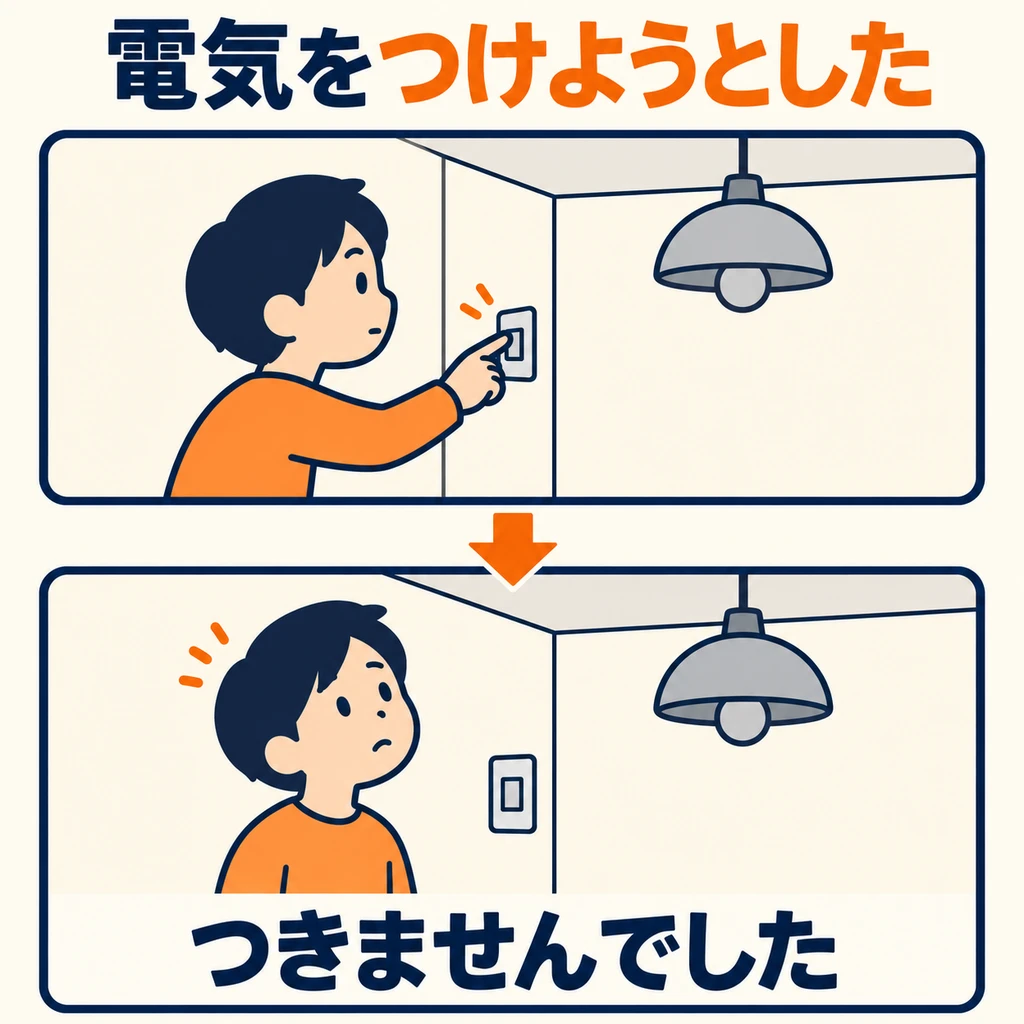
  1. He tries pressing the switch, but the light stays off. Which part of the picture shows the attempt, and which shows the result?
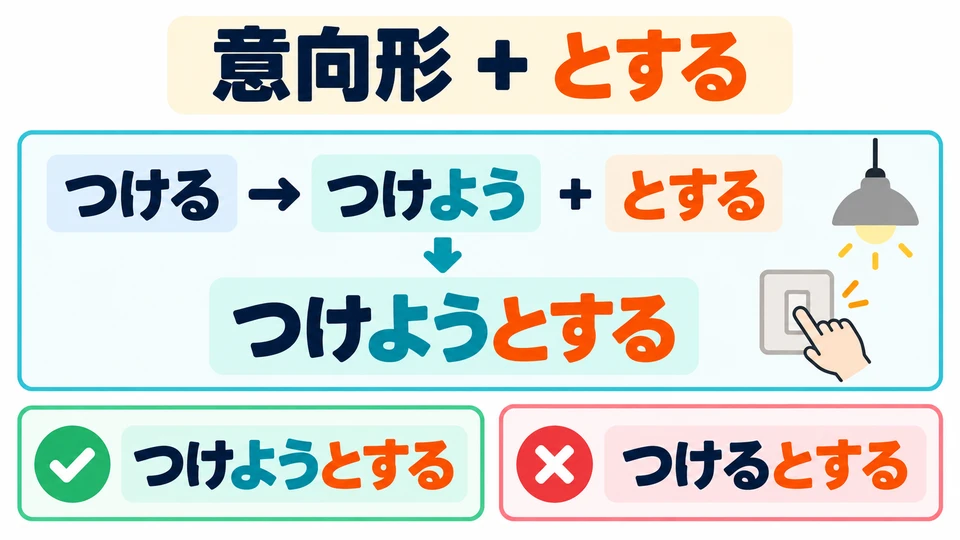
    He tries pressing the switch, but the light stays off. Which part of the picture shows the attempt, and which shows the result?

  2. Add 「とする」 to the verb’s volitional form: つけよう+とする. Use the volitional form, not the dictionary form.
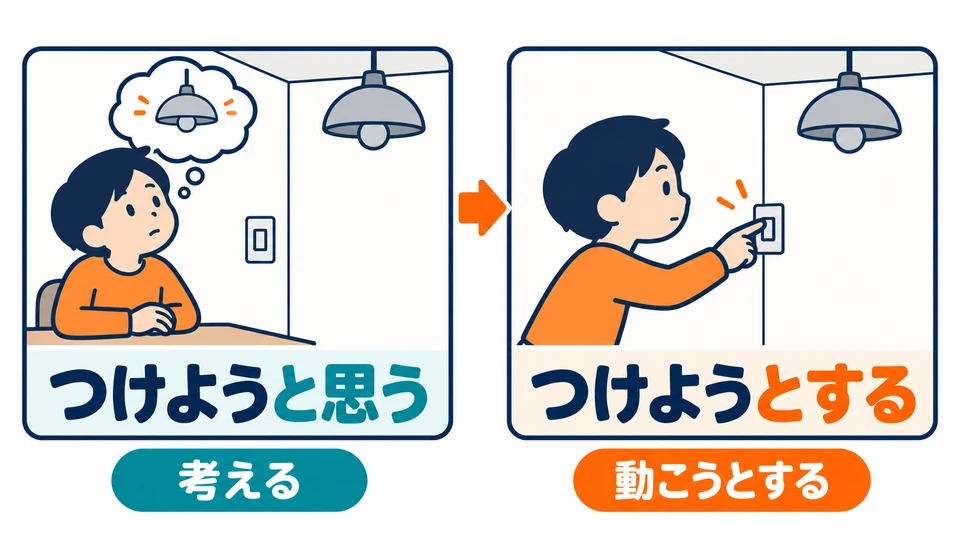
    Add 「とする」 to the verb’s volitional form: つけよう+とする. Use the volitional form, not the dictionary form.

  3. It means trying to do something. The focus is on the attempt to carry out the action, beyond just an intention in your mind.
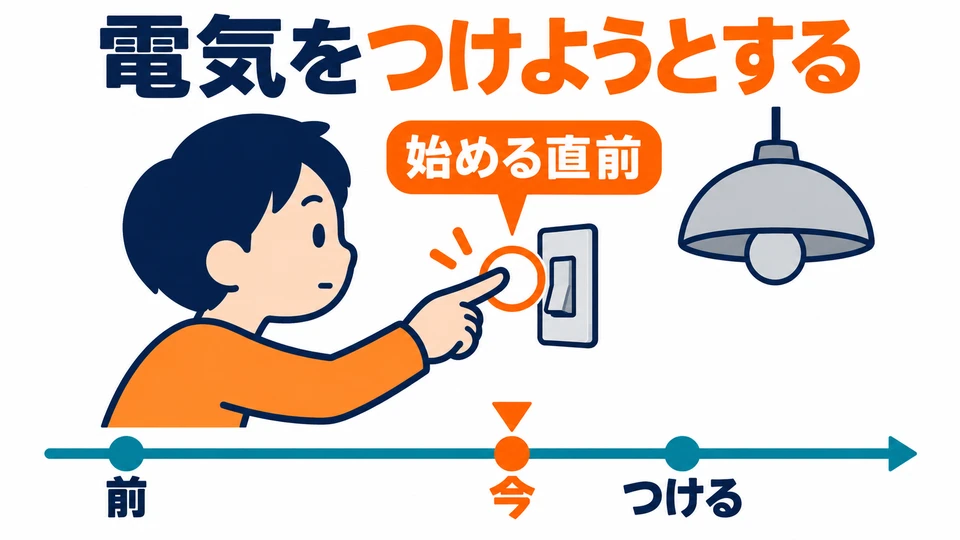
    It means trying to do something. The focus is on the attempt to carry out the action, beyond just an intention in your mind.

  4. It can also mean being just about to start an action. As his hand reaches toward the switch, he is at the moment just before starting.
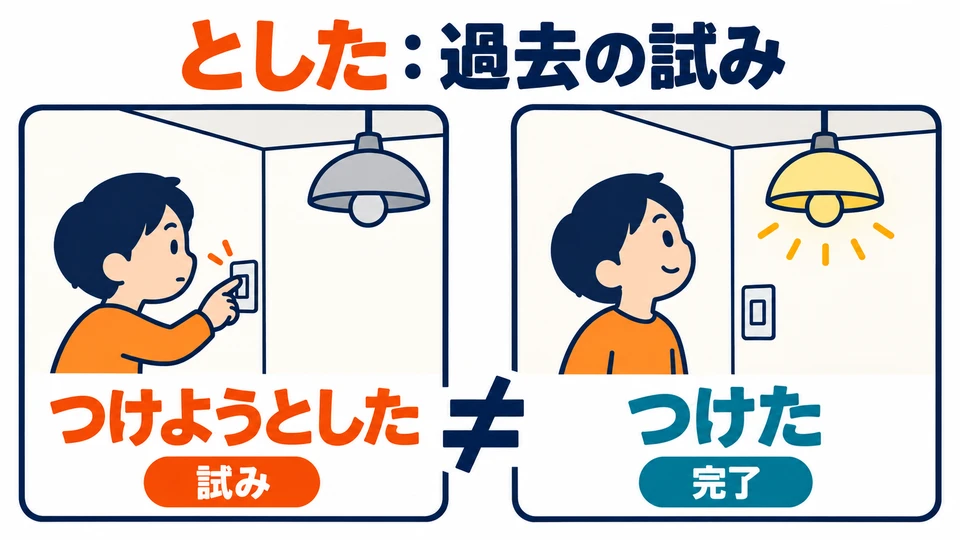
    It can also mean being just about to start an action. As his hand reaches toward the switch, he is at the moment just before starting.

  5. 「とした」 describes a past attempt. Making an attempt does not mean the intended action was completed.
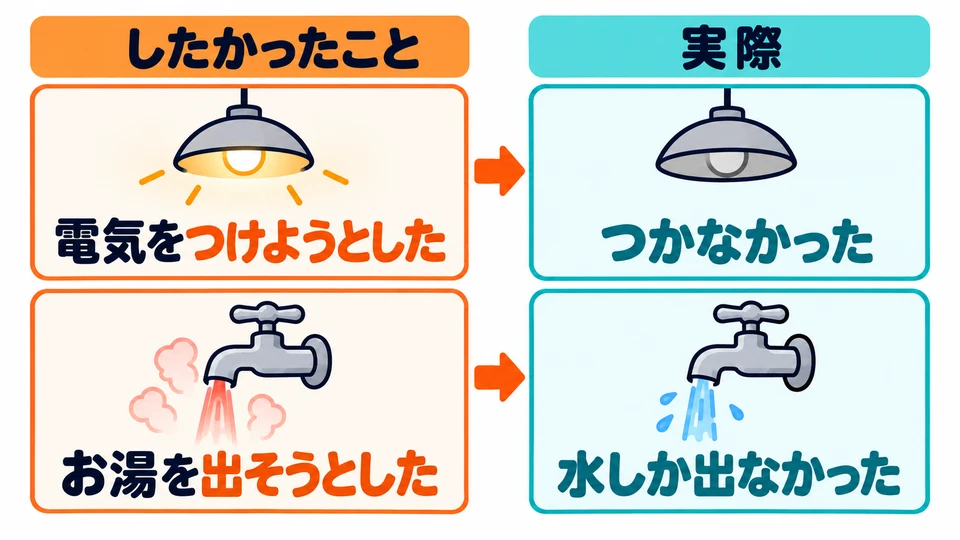
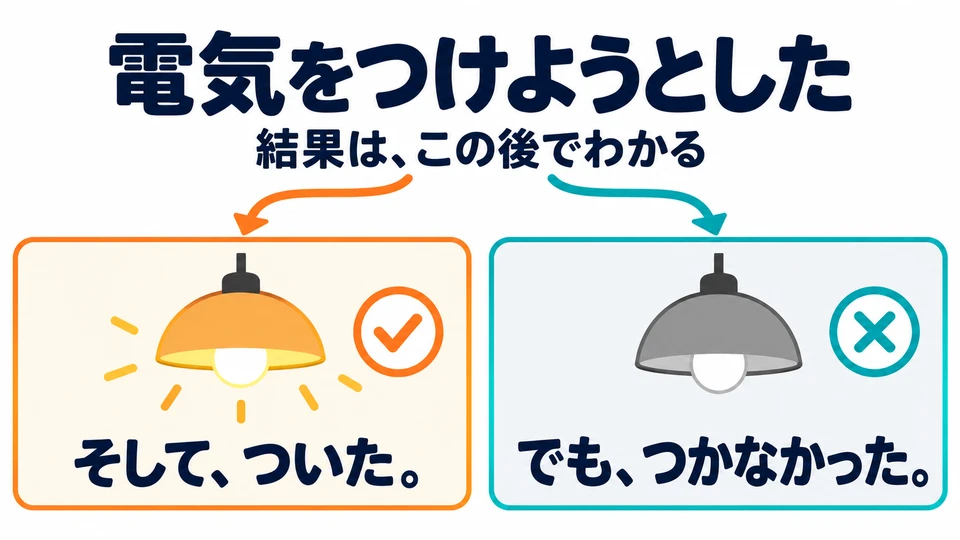
    「とした」 describes a past attempt. Making an attempt does not mean the intended action was completed.
  • You try to turn on the light, but it stays off; you run hot water, but only cold water comes out. The desired result differs from what actually happens.

    You try to turn on the light, but it stays off; you run hot water, but only cold water comes out. The desired result differs from what actually happens.

  • This pattern does not itself mean failure. Whether the attempt succeeds depends on what follows or on the actual situation.

    This pattern does not itself mean failure. Whether the attempt succeeds depends on what follows or on the actual situation.

  • Example sentences

    • 電気でんきdenkiをoつけようtsukeyouとtoしたshitaんnですdesuが、ga、つきませんでした。tsukimasendeshita。

      I tried to turn on the light, but it didn't turn on.

    • お湯おゆoyuをo出そうだそうdasouとtoしたshitaんnですdesuが、ga、水みずmizuしかshika出ませんでした。でませんでした。demasendeshita。

      I tried to run the hot water, but only cold water came out.

    In a conversation

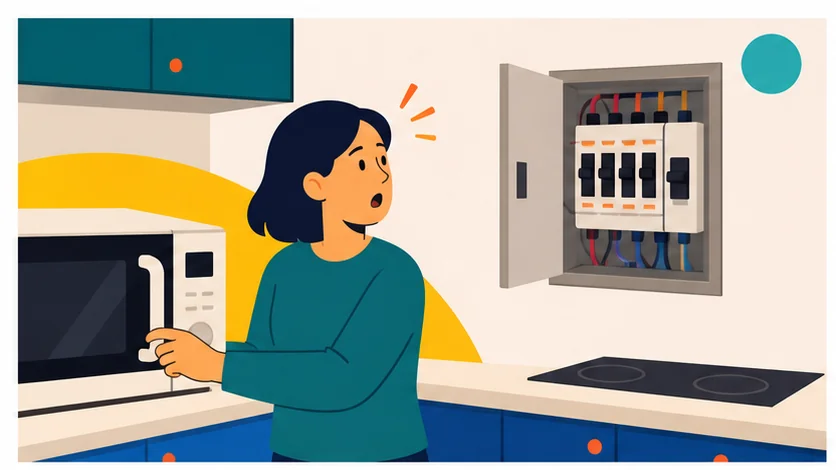
    • A
      ブレーカーぶれーかーを上げようあげようとしたんですが、すぐに落ちおちてしまうんです。

      A: I tried to flip the breaker switch up, but it trips immediately.

    • B
      部屋へやの中なかで一度いちどにたくさんの電気でんき製品せいひんを使っつかっていませんか?か

      B: Are you using a lot of electrical appliances at the same time in your room?

    • A
      あ、エアコンえあこんと電子でんしレンジれんじを一緒いっしょに使っつかっていました。消しけしてみます。

      A: Oh, I was using the air conditioner and the microwave together. I will try turning one off.

    Check yourself

    1. Level 1 · Recognise

      Which sentence is correct?

    2. Level 1 · Recognise

      Listen and choose the meaning

    3. Level 2 · Build

      Put the words in order

      I tried to turn on the light, but it didn't come on.

    4. Level 3 · Use

      What goes in the blank?

      ドアを開け____ら、内側から鍵がかかっていました。

      When I tried to open the door, it was locked from the inside.

    More grammar in this theme

    • お・ご〜です/でしょうrespectful description or question
    • 〜場合in the case that
    • 〜ないことには〜ないunless, it cannot happen
    • 〜たいことがあるんですがgentle topic opener
    • 意向形+とするtry or be about to
    • 〜みたいなんですが・〜ようなんですがtentative problem explanation
    • 〜ていただきたいんですがpolite request for help
    • 〜にはrequirements to reach a goal
    • 〜にかかわらずregardless of a condition
    • 〜次第/〜次第でdepending on; as soon as
    • 〜途中で・〜途中にduring a journey or activity
    • 〜を〜としてuse or treat as
    • 〜を背にしてwith something behind you
    • 〜に沿って・〜に沿う・〜に沿ったalong; in accordance with
    Previous〜たいことがあるんですがNext〜みたいなんですが・〜ようなんですが

    Keep practising

    Test your Japanese vocabulary12 adaptive questions, freeCheck your pronunciationRead aloud and get a scorePractise verb forms10-question conjugation quizSee the whole courseGrammar, vocabulary and quizzes by theme
    See the whole course
    Intermediate 2
    Daily Information and Facility Use