JPEDLAB iconJPEDLAB
Save history

Create an account and play

Explore first, then save your progress whenever you are ready. No email address is required.

Start free
Read as articleCards
1/11

Follow the two arrows: with or without a reservation, the purpose of use is checked. Different conditions, the same procedure.

››

Lesson notes · ≈ JLPT N2 · Intermediate 2

〜にかかわらず~ni kakawarazu

regardless of a condition

Use 〜にかかわらず after a condition to say the same rule or result applies despite it.

How it works
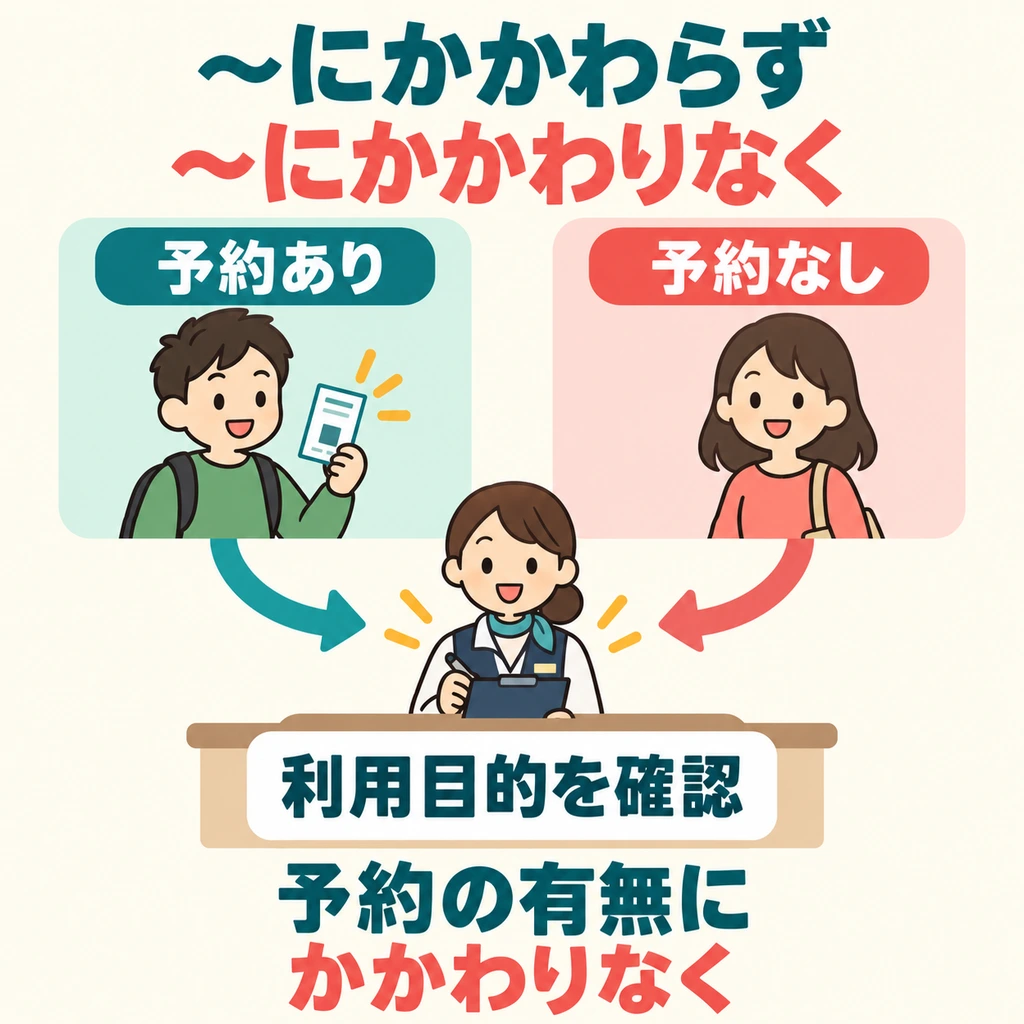
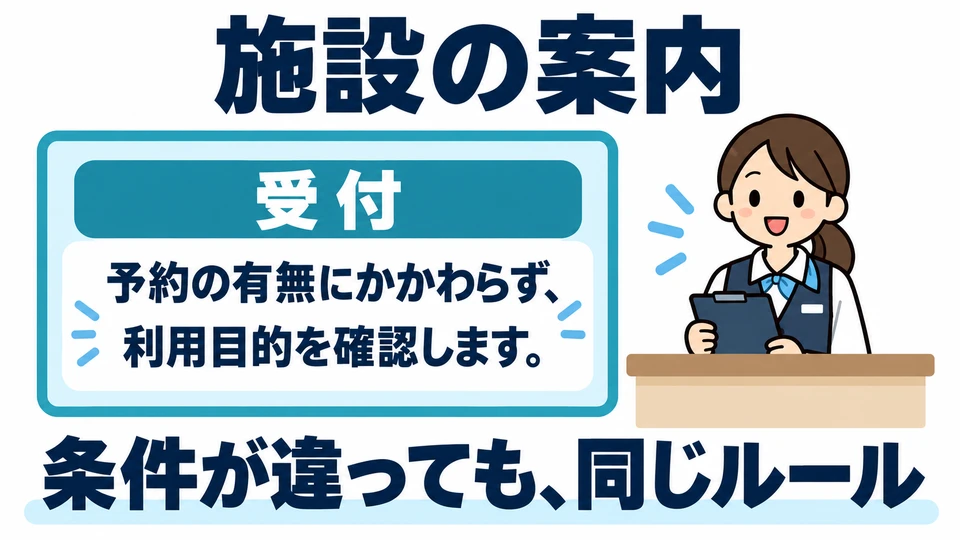
  1. Follow the two arrows: with or without a reservation, the purpose of use is checked. Different conditions, the same procedure.
    Follow the two arrows: with or without a reservation, the purpose of use is checked. Different conditions, the same procedure.
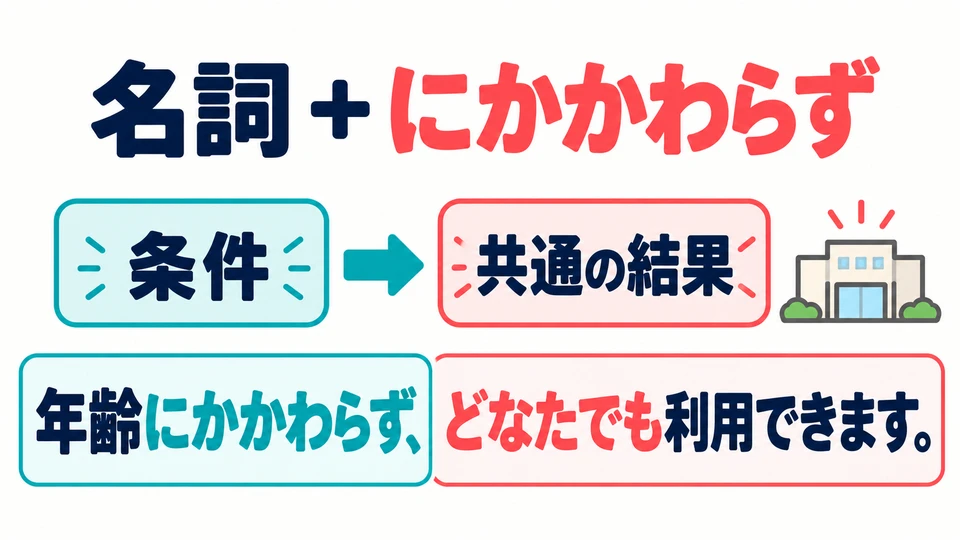
  2. Put the condition that does not affect the outcome first: noun+にかかわらず. Then state the outcome that applies to all cases.

Put the condition that does not affect the outcome first: noun+にかかわらず. Then state the outcome that applies to all cases.

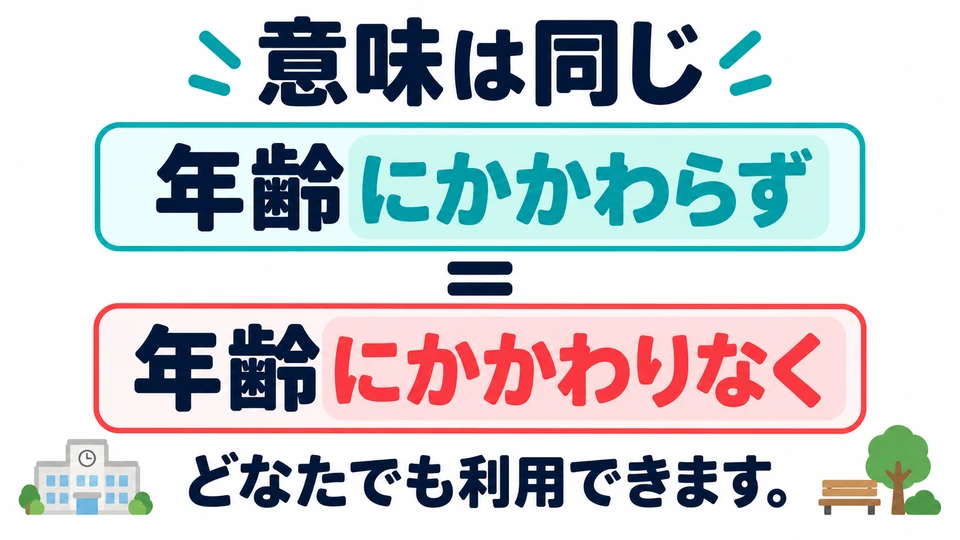
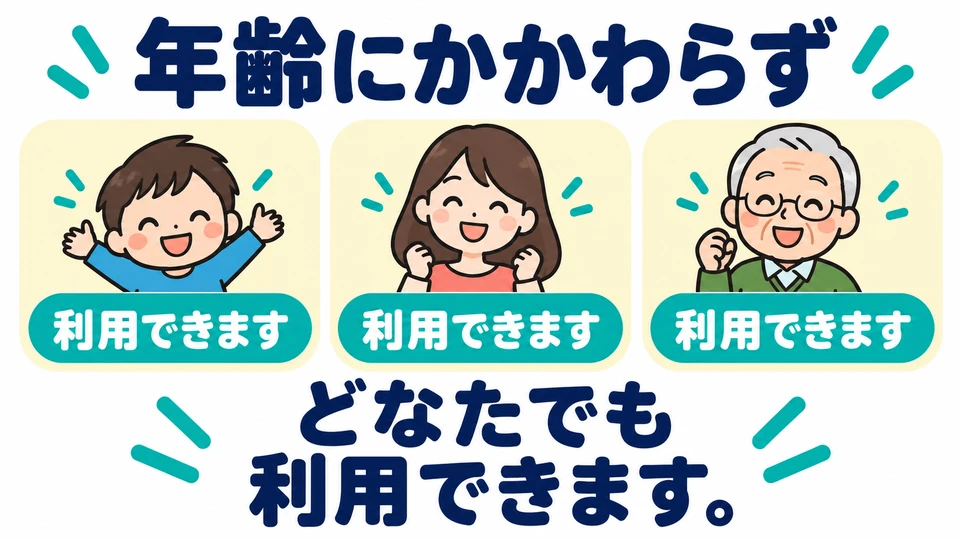
  • 「年齢にかかわらず」 means that age does not affect eligibility to use the service: people of any age can use it.

    「年齢にかかわらず」 means that age does not affect eligibility to use the service: people of any age can use it.

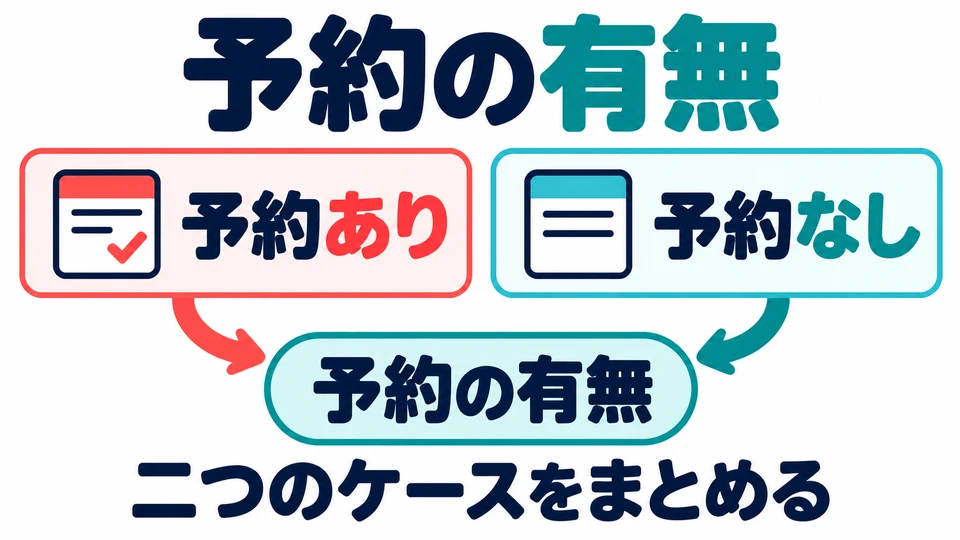
  • 「予約の有無」 covers both having and not having a reservation. One noun expression sums up both cases.

    「予約の有無」 covers both having and not having a reservation. One noun expression sums up both cases.

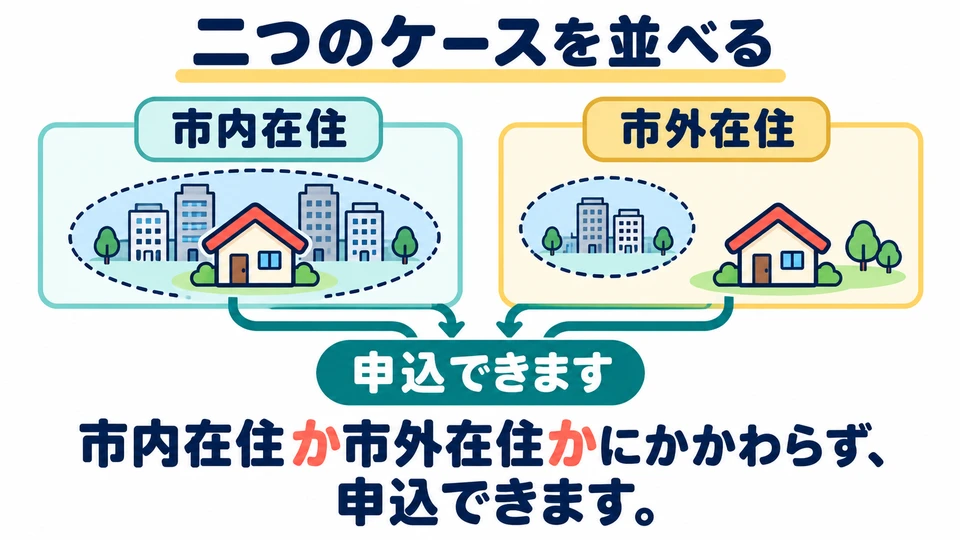
  • You can also list the two cases: 「市内在住か市外在住かにかかわらず」. Residents inside and outside the city can both apply.

    You can also list the two cases: 「市内在住か市外在住かにかかわらず」. Residents inside and outside the city can both apply.

  • 「にかかわりなく」 also means that the preceding condition has no effect. It has the same meaning as 「にかかわらず」.

    「にかかわりなく」 also means that the preceding condition has no effect. It has the same meaning as 「にかかわらず」.

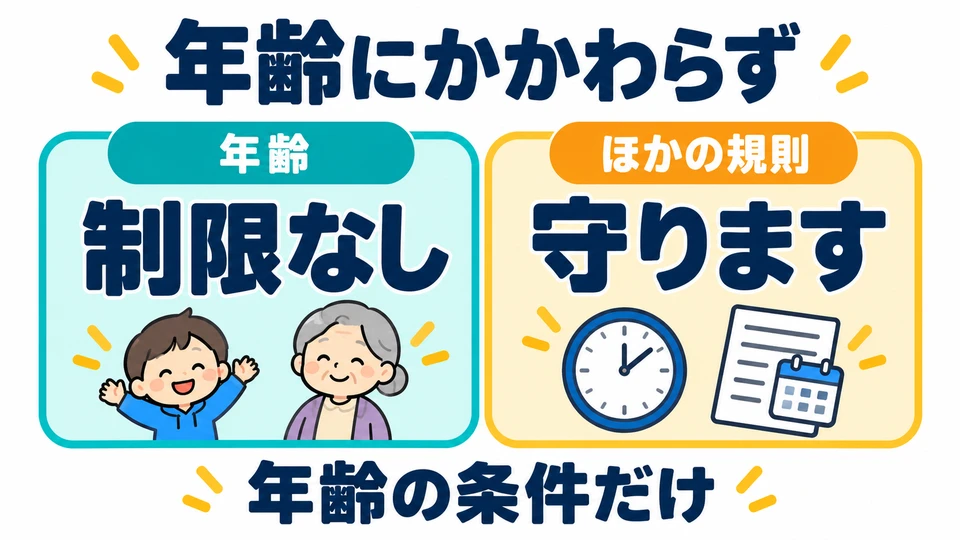
  • Only the condition mentioned earlier is unrestricted. No age limit does not mean that all other rules are waived.

    Only the condition mentioned earlier is unrestricted. No age limit does not mean that all other rules are waived.

  • It often appears in facility rules and procedural guidance, telling readers that the rule stays the same even when conditions differ.

    It often appears in facility rules and procedural guidance, telling readers that the rule stays the same even when conditions differ.

  • Example sentences

    • 年齢ねんれいnenreiにniかかわらず、kakawarazu、どなたdonataでdeもmo利用りようriyouできます。dekimasu。

      Regardless of age, anyone can use it.

    • 予約よやくyoyakuのno有無うむumuにniかかわりkakawariなく、naku、受付うけつけuketsukeでde利用りようriyou目的もくてきmokutekiをo確認かくにんkakuninします。shimasu。

      Regardless of whether you have a reservation or not, the purpose of use will be confirmed at the reception desk.

    In a conversation

    • A
      市外しがい在住ざいじゅうの人ひとは、わ、この体育館たいいくかんの団体だんたい利用りようを申しもうし込むこむことができますか。

      A: Can people living outside the city apply for group use of this gymnasium?

    • B
      はい、市内しない在住ざいじゅうか市外しがい在住ざいじゅうかにかかわらず、どなたでも使用しよう申込もうしこみができますよ。

      B: Yes, anyone can apply for use regardless of whether they live inside or outside the city.

    • A
      そうですか、安心あんしんしました。さっそく空きあき状況じょうきょうを確認かくにんしてみます。

      A: I see, that's a relief. I'll check the availability right away.

    Check yourself

    1. Level 1 · Recognise

      Which sentence is correct?

    2. Level 1 · Recognise

      Listen and choose the meaning

    3. Level 2 · Build

      Put the words in order

      This facility can be used by anyone individually, regardless of whether they live inside or outside the city.

    4. Level 3 · Use

      What goes in the blank?

      経験の有無____、誰でも応募できます。

      Regardless of experience, anyone can apply.

    More grammar in this theme

    • お・ご〜です/でしょうrespectful description or question
    • 〜場合in the case that
    • 〜ないことには〜ないunless, it cannot happen
    • 〜たいことがあるんですがgentle topic opener
    • 意向形+とするtry or be about to
    • 〜みたいなんですが・〜ようなんですがtentative problem explanation
    • 〜ていただきたいんですがpolite request for help
    • 〜にはrequirements to reach a goal
    • 〜にかかわらずregardless of a condition
    • 〜次第/〜次第でdepending on; as soon as
    • 〜途中で・〜途中にduring a journey or activity
    • 〜を〜としてuse or treat as
    • 〜を背にしてwith something behind you
    • 〜に沿って・〜に沿う・〜に沿ったalong; in accordance with
    Previous〜にはNext〜次第/〜次第で

    Keep practising

    Test your Japanese vocabulary12 adaptive questions, freeCheck your pronunciationRead aloud and get a scorePractise verb forms10-question conjugation quizSee the whole courseGrammar, vocabulary and quizzes by theme
    See the whole course
    Intermediate 2
    Daily Information and Facility Use