JPEDLAB iconJPEDLAB
Save history

Create an account and play

Explore first, then save your progress whenever you are ready. No email address is required.

Start free
Read as articleCards
1/13

You meet a friend on the way to the library. 「途中で」 highlights what happens along the way.

››

Lesson notes · ≈ JLPT N3 · Intermediate 2

〜途中で・〜途中に~tochuu de / ~tochuu ni

during a journey or activity

Use 〜途中で for an event during a journey or activity, and 〜途中に to point out a place or moment along the way.

How it works
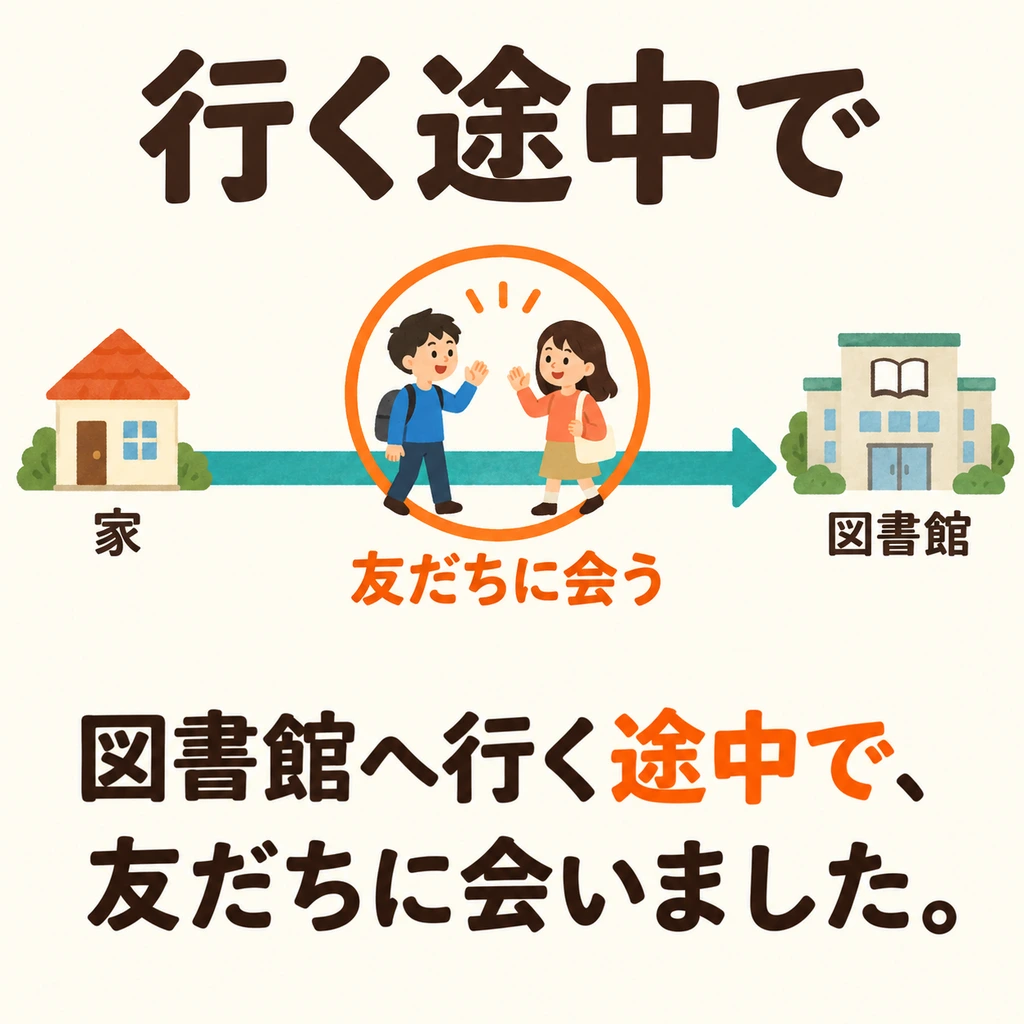
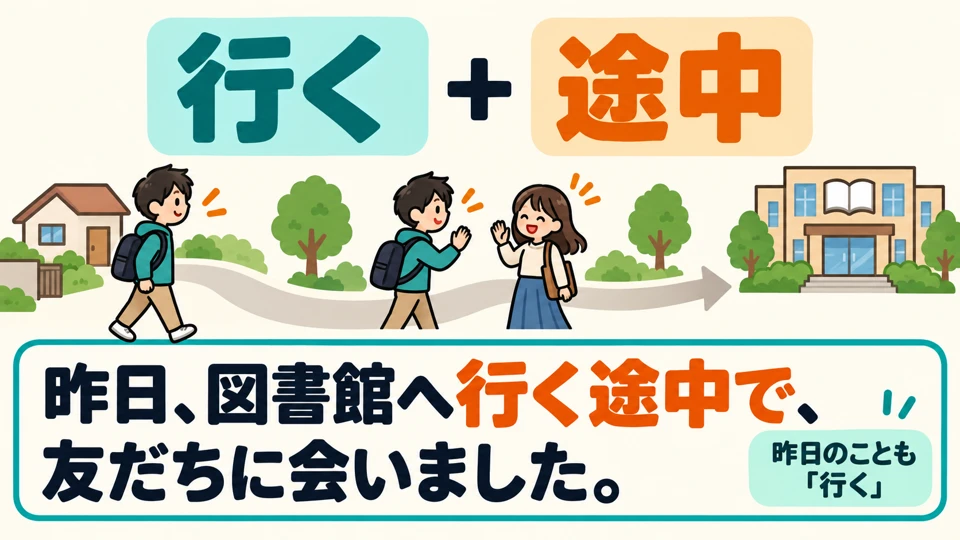
  1. You meet a friend on the way to the library. 「途中で」 highlights what happens along the way.
    You meet a friend on the way to the library. 「途中で」 highlights what happens along the way.
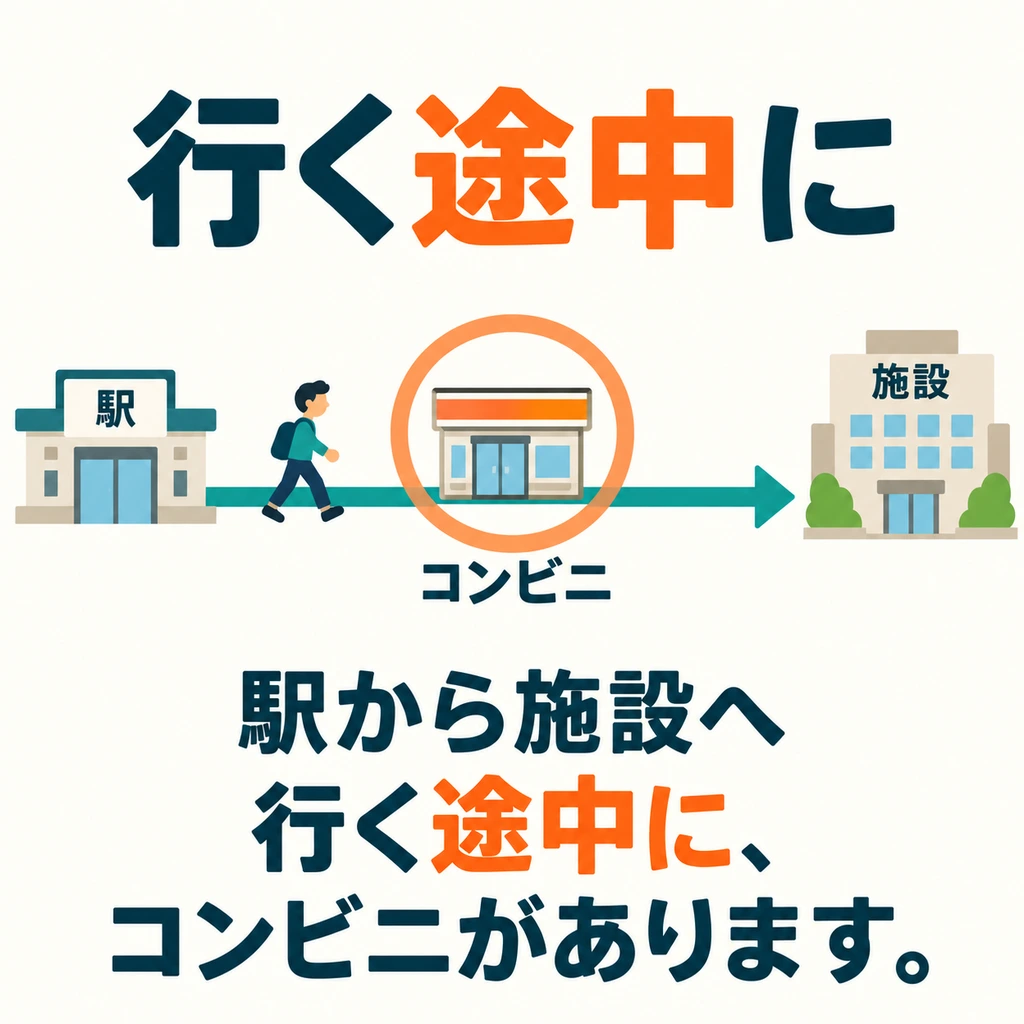
  2. The convenience store is on the way to the facility. 「途中に」 points out a location along the route.

The convenience store is on the way to the facility. 「途中に」 points out a location along the route.

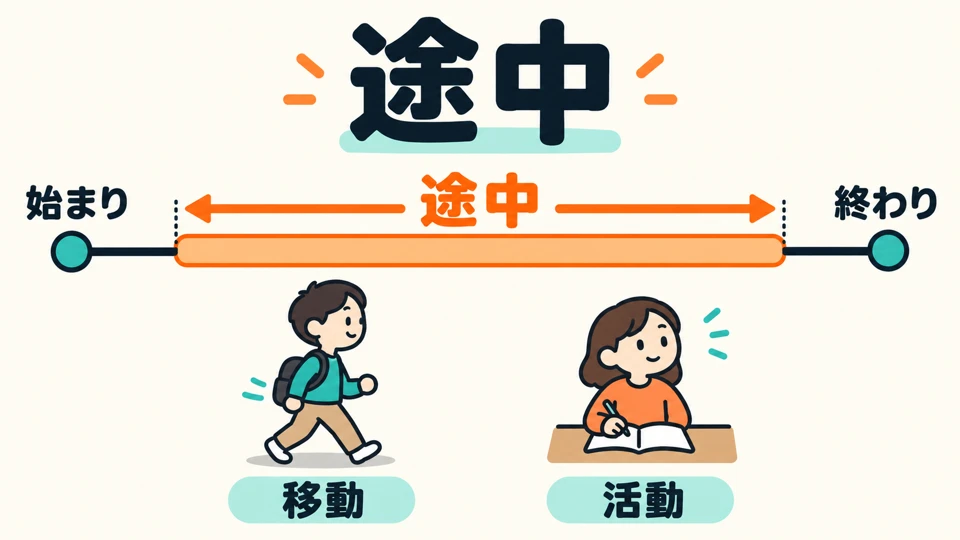
  • 「途中」 refers to a period after something has begun but before it ends. It is also used for activities, not just journeys.

    「途中」 refers to a period after something has begun but before it ends. It is also used for activities, not just journeys.

  • For journeys, use the verb’s dictionary form: 「行く途中」. Keep 「行く」 even when talking about the past.

    For journeys, use the verb’s dictionary form: 「行く途中」. Keep 「行く」 even when talking about the past.

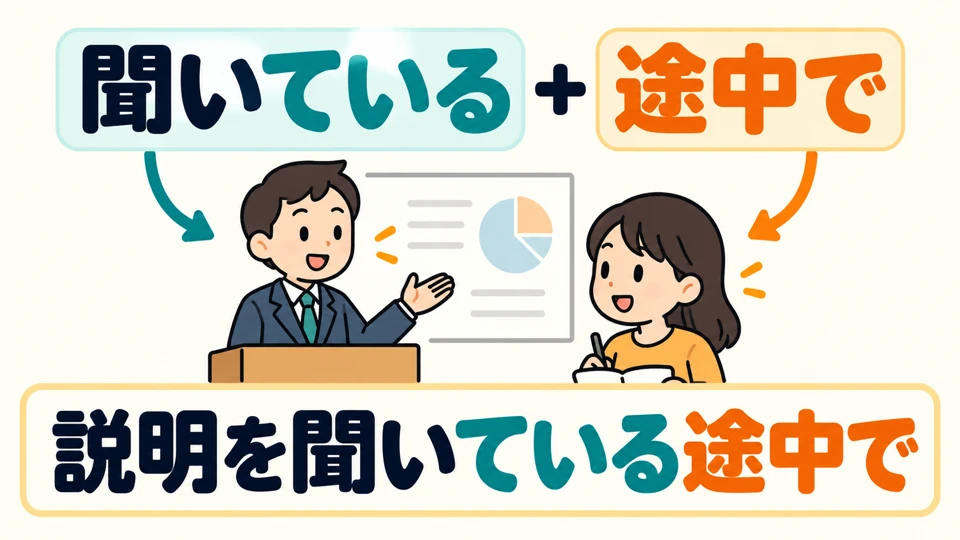
  • For an activity in progress, you can use 「ている」: 「説明を聞いている途中で」.

    For an activity in progress, you can use 「ている」: 「説明を聞いている途中で」.

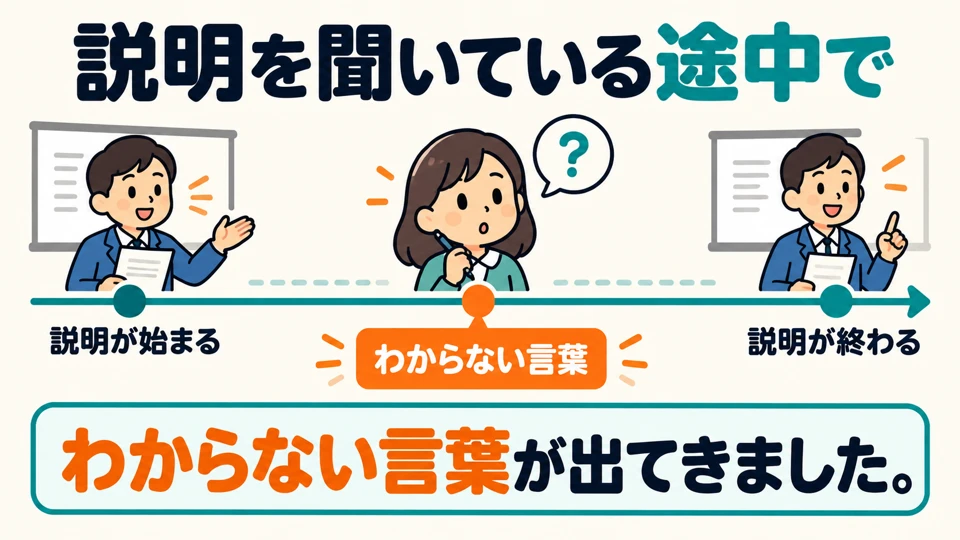
  • An unfamiliar word comes up while you listen to an explanation. This too is something that happens before an activity is over.

    An unfamiliar word comes up while you listen to an explanation. This too is something that happens before an activity is over.

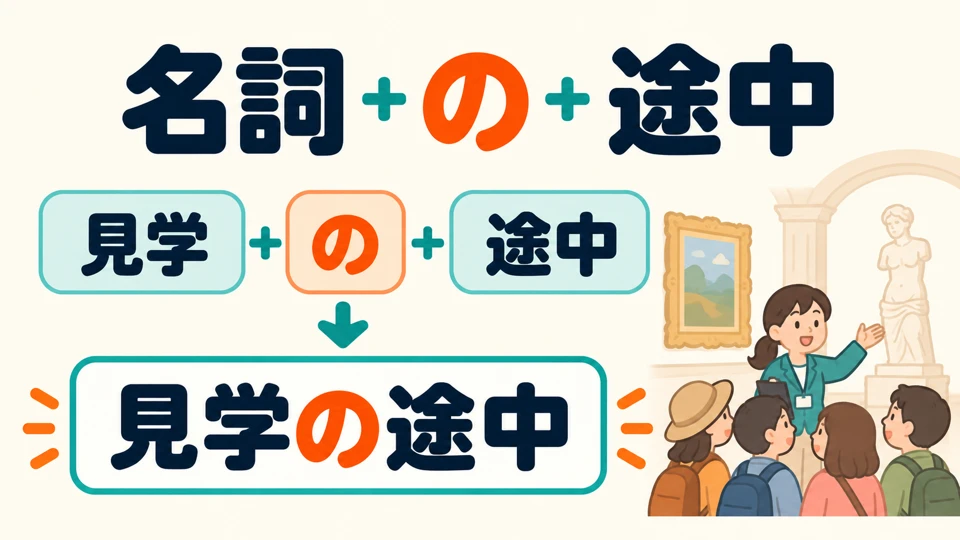
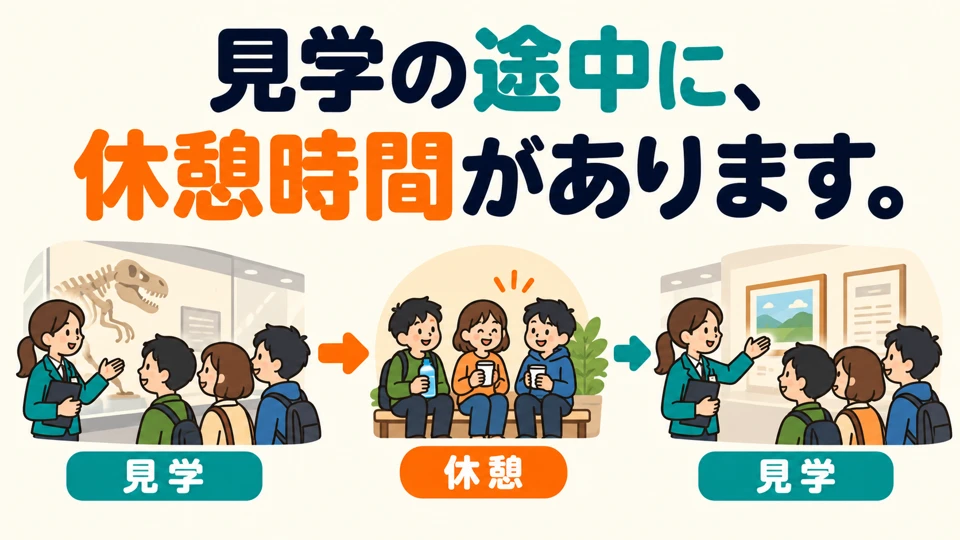
  • With a noun naming an activity, use “noun + の + 途中”: for example, 「見学の途中」.

    With a noun naming an activity, use “noun + の + 途中”: for example, 「見学の途中」.

  • 「見学の途中に、休憩時間があります。」 indicates a point during the visit when there is a break.

    「見学の途中に、休憩時間があります。」 indicates a point during the visit when there is a break.

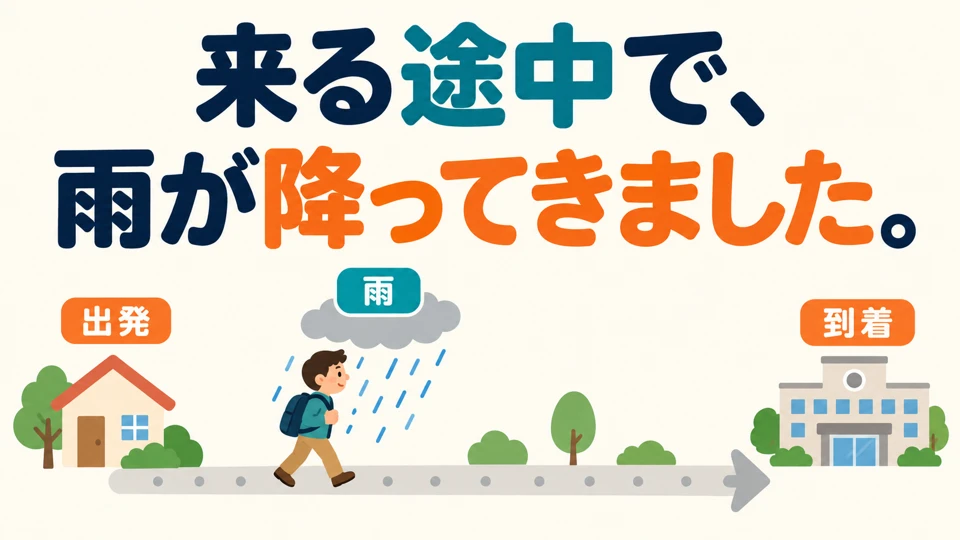
  • 「来る途中で、雨が降ってきました。」 means it started raining on the way here, before you arrived.

    「来る途中で、雨が降ってきました。」 means it started raining on the way here, before you arrived.

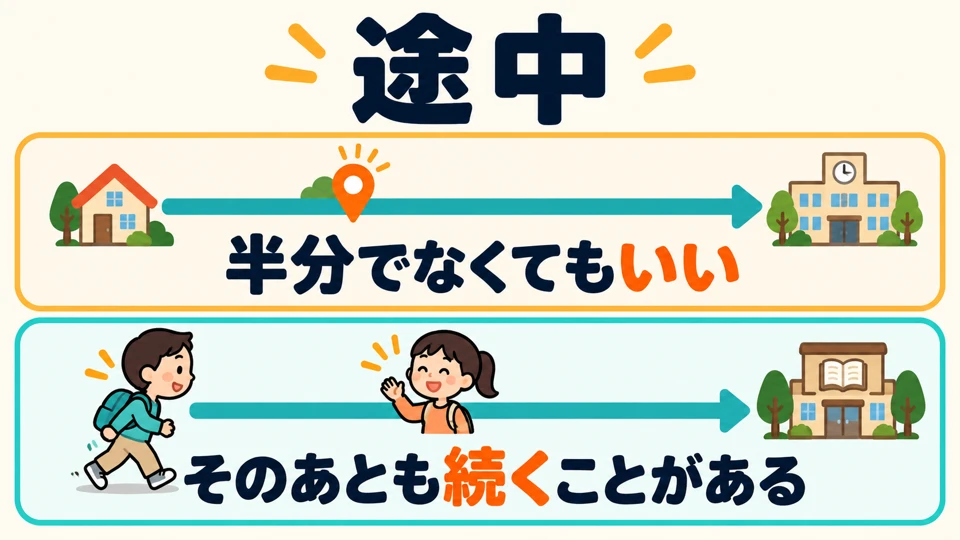
  • 「途中」 does not have to mean exactly halfway. It also does not mean the original action necessarily stops.

    「途中」 does not have to mean exactly halfway. It also does not mean the original action necessarily stops.

  • Example sentences

    • 図書館としょかんtoshokanへえe行くいくiku途中とちゅうtochuuで、de、友だちともだちtomodachiにni会いました。+あいました。aimashita。説明せつめいsetsumeiをo聞いきいkiiてteいるiru途中とちゅうtochuuで、de、わからない言葉わからないことばwakaranaikotobaがga出でdeてteきました。kimashita。

      On my way to the library, I met a friend. + While listening to the explanation, I encountered some words I didn't understand.

    • 駅えきekiからkara施設しせつshisetsuへえe行くいくiku途中とちゅうtochuuに、ni、コンビニこんびにkonbiniがgaあります。+あります。arimasu。施設しせつshisetsu

    In a conversation

    • 市民しみんセンターせんたーへえ来るくる途中とちゅうで、雨あめが降っふってきました。

      On my way to the civic center, it started to rain.

    • それはわ大変でしたたいへんでしたね。交流こうりゅうスペースすぺーすに傘かさがありますから、使っつかってください。

      That must have been tough. There are umbrellas in the community lounge, so please feel free to use one.

    • ありがとうございます。とても助かります。たすかります。

      Thank you very much. That really helps.

    Check yourself

    1. Level 1 · Recognise

      Which sentence is correct?

    2. Level 1 · Recognise

      Listen and choose the meaning

    3. Level 2 · Build

      Put the words in order

      On the way to the self-study area, I found a new copy machine.

    4. Level 3 · Use

      What goes in the blank?

      図書館へ行く____、友だちに会いました。

      On the way to the library, I met a friend.

    More grammar in this theme

    • お・ご〜です/でしょうrespectful description or question
    • 〜場合in the case that
    • 〜ないことには〜ないunless, it cannot happen
    • 〜たいことがあるんですがgentle topic opener
    • 意向形+とするtry or be about to
    • 〜みたいなんですが・〜ようなんですがtentative problem explanation
    • 〜ていただきたいんですがpolite request for help
    • 〜にはrequirements to reach a goal
    • 〜にかかわらずregardless of a condition
    • 〜次第/〜次第でdepending on; as soon as
    • 〜途中で・〜途中にduring a journey or activity
    • 〜を〜としてuse or treat as
    • 〜を背にしてwith something behind you
    • 〜に沿って・〜に沿う・〜に沿ったalong; in accordance with
    Previous〜次第/〜次第でNext〜を〜として

    Keep practising

    Test your Japanese vocabulary12 adaptive questions, freeCheck your pronunciationRead aloud and get a scorePractise verb forms10-question conjugation quizSee the whole courseGrammar, vocabulary and quizzes by theme
    See the whole course
    Intermediate 2
    Daily Information and Facility Use
    の
    no
    見学けんがくkengaku
    のno
    途中とちゅうtochuu
    に、ni、
    休憩きゅうけいkyuukei
    時間じかんjikan
    がga
    あります。arimasu。

    On the way from the station to the facility, there is a convenience store. + During the tour of the facility, there is a break time.