JPEDLAB iconJPEDLAB
Save history

Create an account and play

Explore first, then save your progress whenever you are ready. No email address is required.

Start free
Read as articleCards
See the whole course›Intermediate 3›Trends and Everyday Topics

Japanese grammar · ≈ JLPT N3 · Intermediate 3

〜一方で~ippou de

while also showing another side

「〜一方で」 presents two true sides of the same subject, often highlighting how they differ.

Start the interactive lessonIllustrated cards, audio and speaking practice

How it works

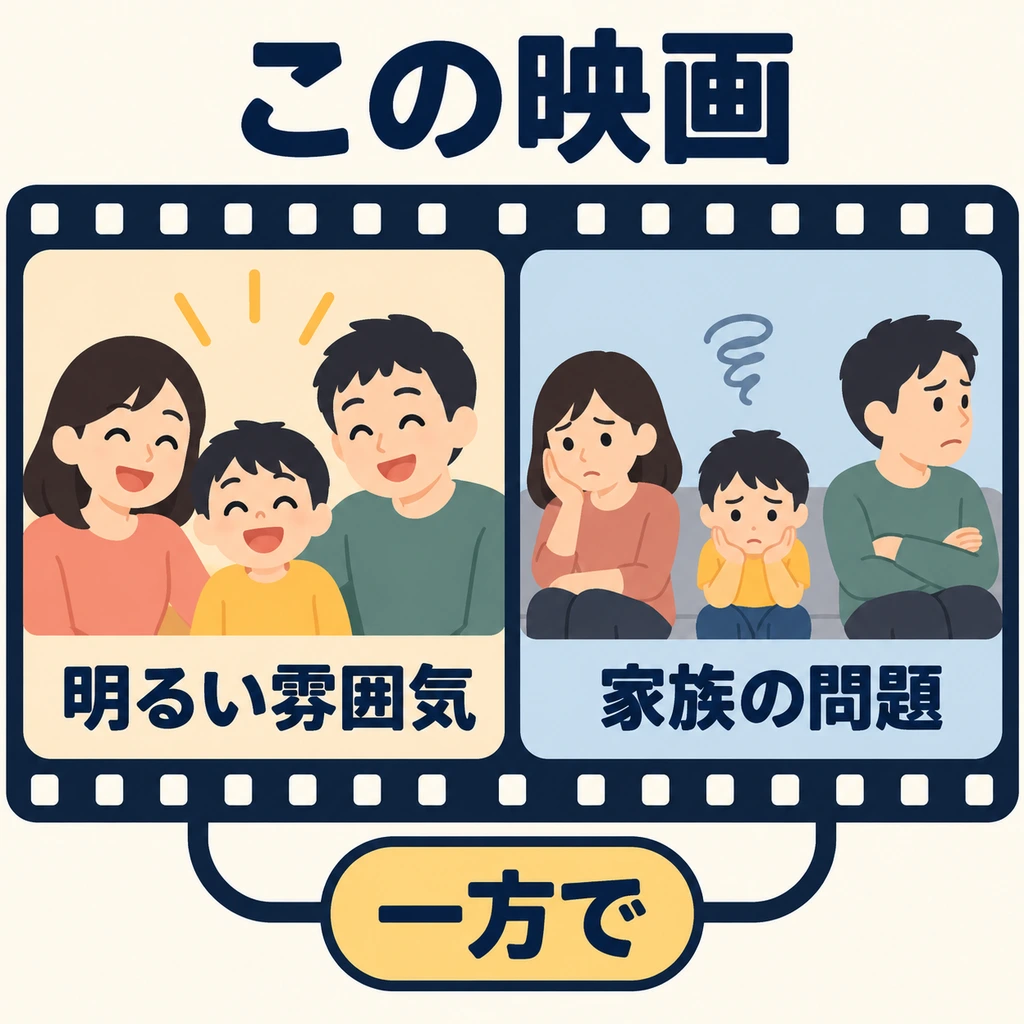
  1. When describing a movie, is “cheerful” enough? Use 「一方で」 to add another side of the same film.
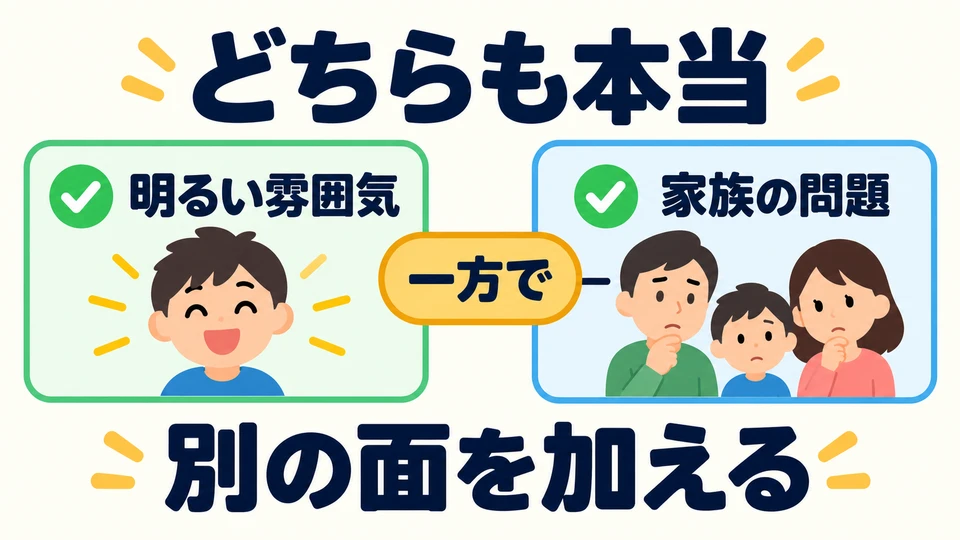
    When describing a movie, is “cheerful” enough? Use 「一方で」 to add another side of the same film.

  2. Both aspects are true. They may be opposite or simply different; the second clause does not negate the first.
    Both aspects are true. They may be opposite or simply different; the second clause does not negate the first.

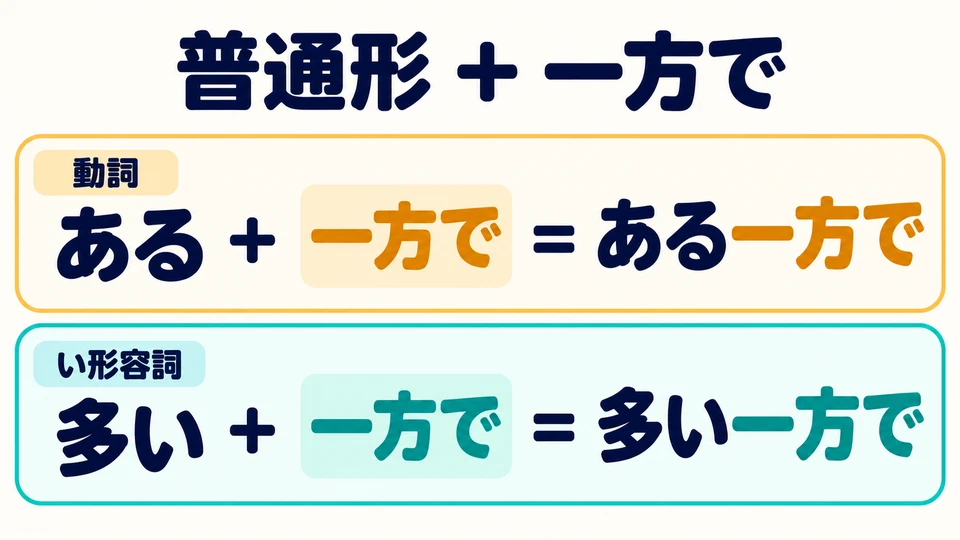
  3. It follows the plain form: with a verb, 「ある一方で」; with an い-adjective, 「多い一方で」.
    It follows the plain form: with a verb, 「ある一方で」; with an い-adjective, 「多い一方で」.

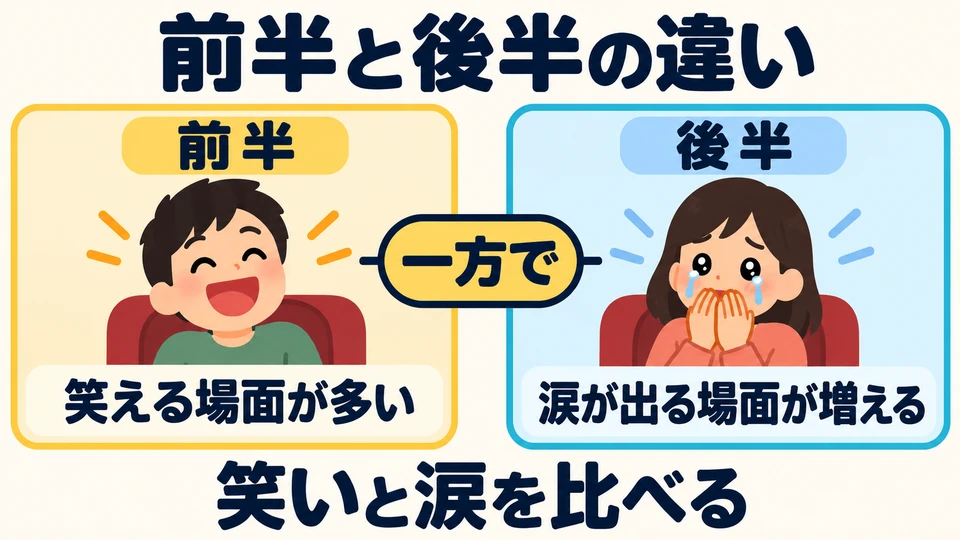
  4. The example contrasts laughter in the first half with tears in the second. 「一方で」 highlights the difference, not just the sequence.

    The example contrasts laughter in the first half with tears in the second. 「一方で」 highlights the difference, not just the sequence.

Example sentences

  • このkono映画えいがeigaはわwa明るいあかるいakarui雰囲気ふんいきfunikiがgaあるaru一方いっぽうippouで、de、家族かぞくkazokuのno

In a conversation

Check yourself

  1. Level 1 · Recognise

    Which sentence is correct?

  2. Level 1 · Recognise

    Listen and choose the meaning

  3. Level 2 · Build

    Put the words in order

    While this film has a bright atmosphere, it also deeply portrays family issues.

  4. Level 3 · Use

    What goes in the blank?

    この映画は明るい雰囲気がある____、家族の問題も深く描いています。

    This film has a bright atmosphere, while also deeply depicting family issues.

More grammar in this theme

  • 〜一方でwhile also showing another side

Keep practising

Test your Japanese vocabulary12 adaptive questions, freeCheck your pronunciationRead aloud and get a scorePractise verb forms10-question conjugation quizSee the whole courseGrammar, vocabulary and quizzes by theme
問題もんだい
mondai
もmo
深くふかくfukaku
描いえがいegai
てte
います。imasu。

While this movie has a cheerful atmosphere, it also deeply portrays family issues.

  • A
    この映画えいがの舞台ぶたいはわ未来みらいの都市としですか。

    A: Is this movie set in a futuristic city?

  • B
    はい、美しいうつくしい世界観せかいかんが楽しめるたのしめる一方いっぽうで、科学かがく技術ぎじゅつがもたらす恐ろしいおそろしい結末けつまつも描いえがいていますよ。

    B: Yes, while you can enjoy a beautiful view of the world, it also depicts the terrifying consequences brought about by science and technology.

  • 前半ぜんはんzenhanはわwa笑えるわらえるwaraeru場面ばめんbamenがga多いおおいooi一方いっぽうippouで、de、後半こうはんkouhanはわwa涙なみだnamidaがga出るでるderu場面ばめんbamenがga増えます。ふえます。fuemasu。

    While there are many funny scenes in the first half, the number of tear-jerking scenes increases in the second half.

  • A
    なるほど、ただ明るいあかるいだけの未来みらいではわないのですね。

    A: I see, so it's not just a bright and simple future.

  • 〜とともにtogether with
    〜しかないhave no choice but to
    〜ずにはいられないcan't help doing
    〜させられるbe prompted to feel or think
    〜のみならずnot only, but also
    〜と同時にat the same time; while also
    〜によって・〜により・〜によるby means of; due to
    〜だけにprecisely because
    〜としてもeven if; supposing that
    〜に先立って・〜に先立ちbefore; prior to an event
    どちらかというと〜・どちらかといえば〜if I had to choose; rather
    Previous〜ずにはいられない
    Next〜させられる