
Japanese grammar · ≈ JLPT N4 · Intermediate 3
〜させられる~saserareru
be prompted to feel or think
「〜させられる」 describes a thought or feeling naturally stirred by something outside you.
How it works

After watching the film, she cannot help thinking about the importance of family. An outside influence naturally prompts the thought.
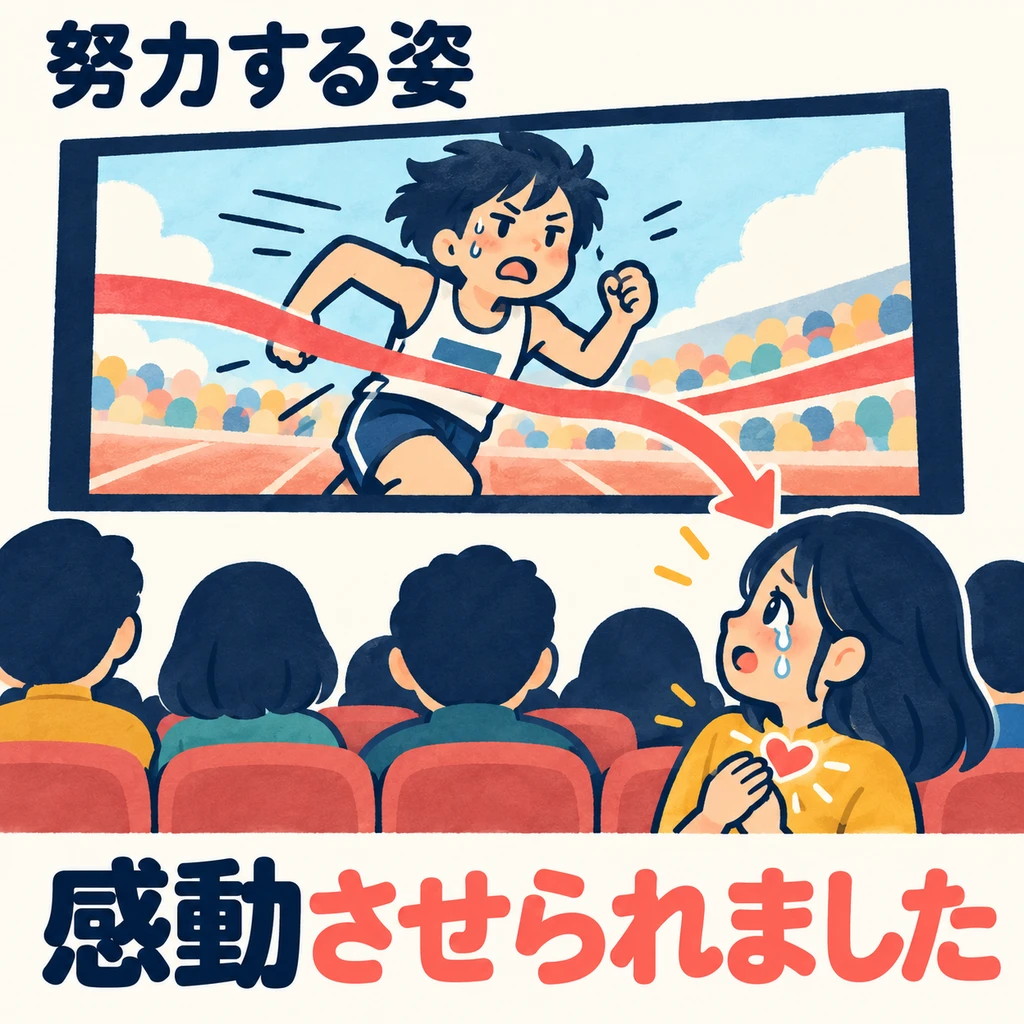
Seeing the protagonist striving so hard deeply moves her. This form also expresses emotions that arise naturally.
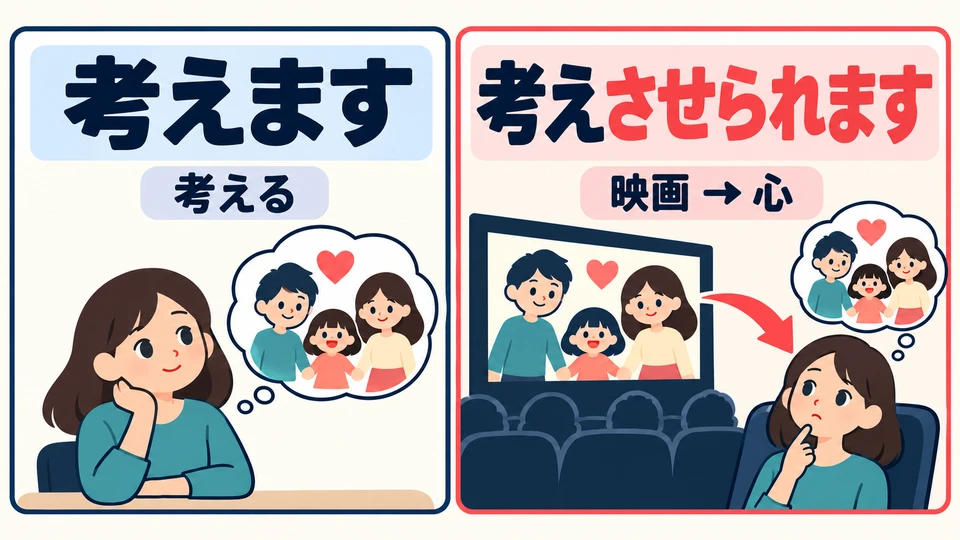
Compared with simply saying 「考えます」, 「考えさせられます」 puts more emphasis on something outside us prompting an inner response.

In these two sentences, no one gives an order. The film and the sight of someone striving stir an inner response, unlike being forced to do something.
Example sentences
- このkono映画eigaをo見るmiruと、to、家族kazokuのno大切さtaisetsusaにniついtsuiてte考えさせられます。
In a conversation

Check yourself
Level 1 · Recognise
Which sentence is correct?
Level 1 · Recognise
Listen and choose the meaning
Level 2 · Build
Put the words in order
Watching this movie makes me think about the importance of family.
Level 3 · Use
What goes in the blank?
この映画を見ると、家族の大切さについて____。
Watching this movie makes me reflect on the importance of family.
More grammar in this theme
- 〜させられるbe prompted to feel or think