
Japanese grammar · ≈ JLPT N3 · Intermediate 3
〜と同時に~to douji ni
at the same time; while also
「〜と同時に」 links events happening nearly together or two qualities that coexist, including contrasting sides.
How it works

The same phone has two qualities at once. Here, the pattern is about more than when an action happens.
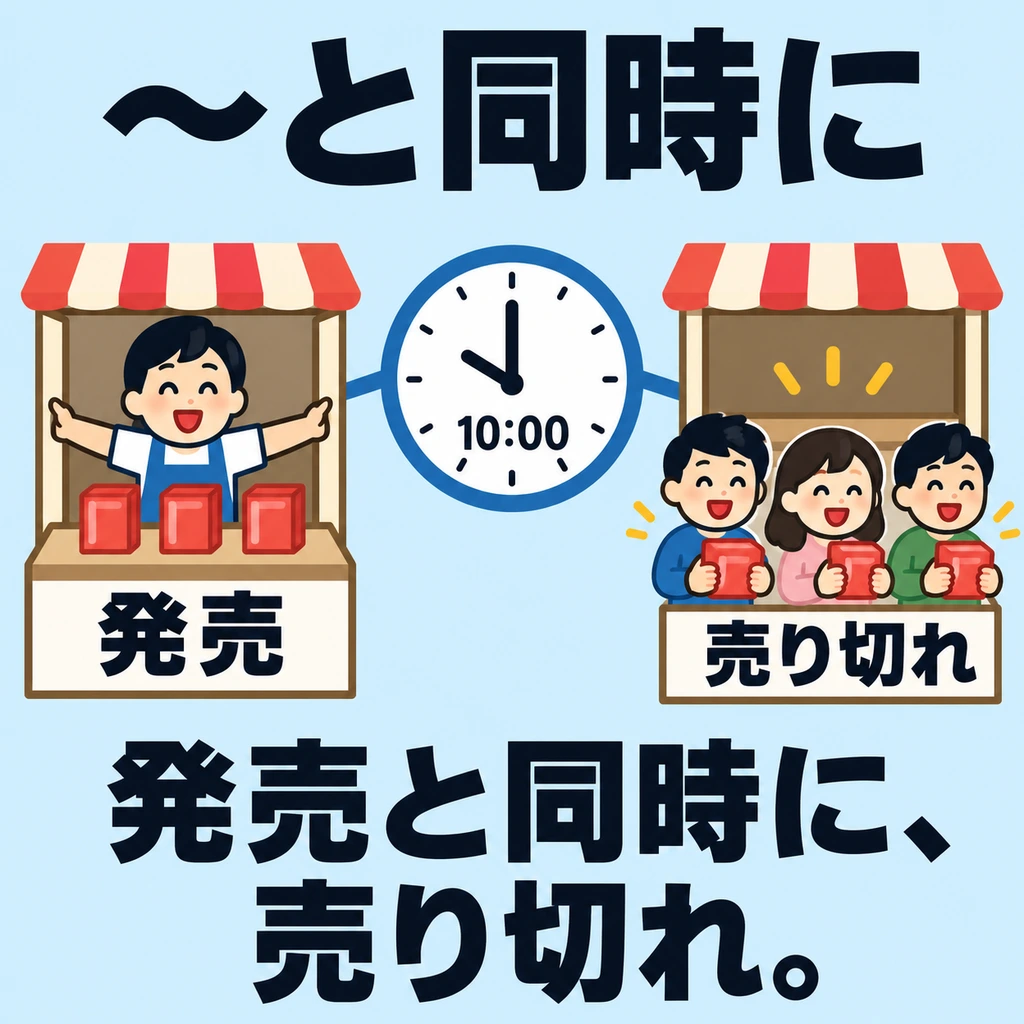
The two events share one clock: the product sells out as soon as it goes on sale, emphasizing that they happen almost at the same instant.
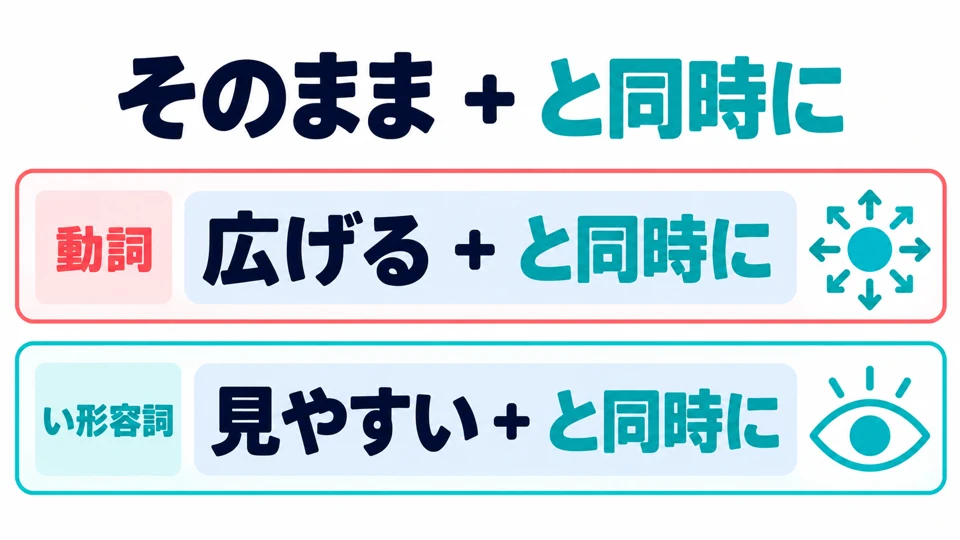
Attach the pattern directly to the plain form of verbs and い-adjectives. The examples use 「広げる」 and 「見やすい」.
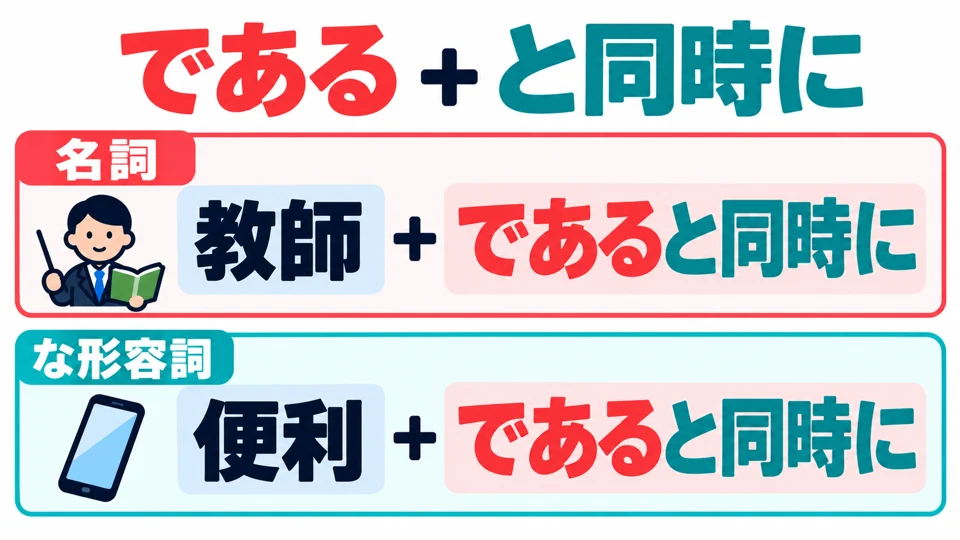
Nouns and な-adjectives often take 「であると同時に」, as in 「便利であると同時に」.
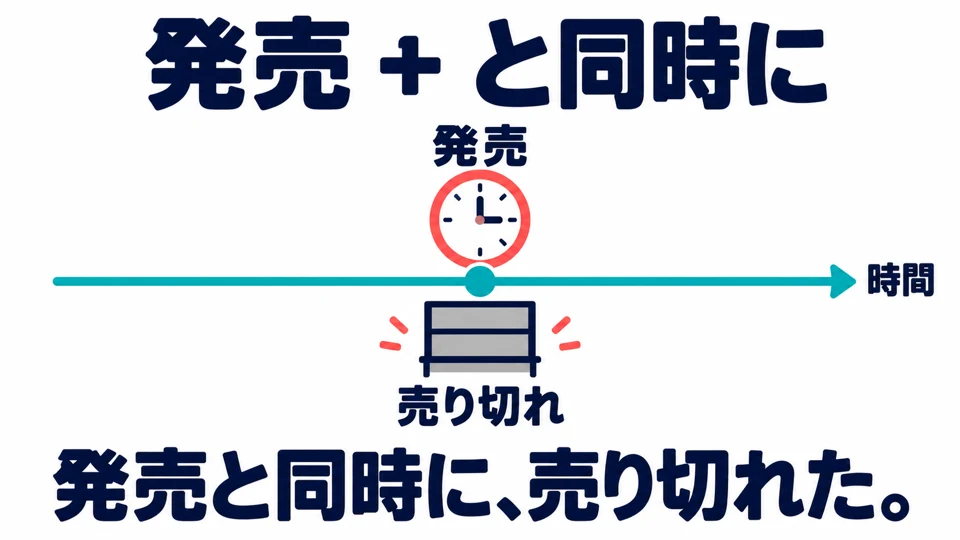
Nouns marking a starting point in time can take the pattern directly. 「発売と同時に」 means at the very moment something goes on sale.
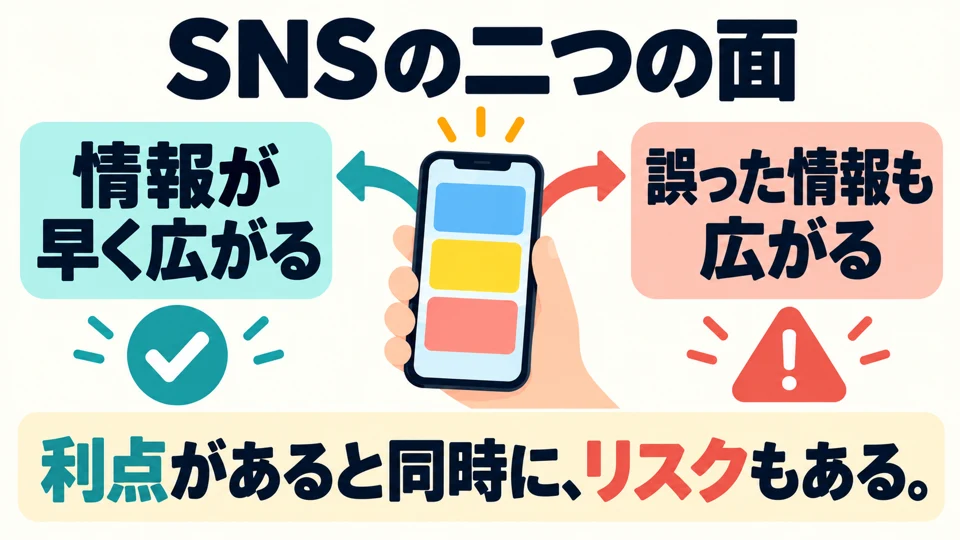
In the SNS example, the benefit and the risk coexist. This pattern can also connect two contrasting sides.
Example sentences
- SNSesuenuesuはwa情報jouhouをo早くhayaku広げるhirogeruとto同時doujiに、ni、誤った情報ayamattajouhouも
In a conversation

Check yourself
Level 1 · Recognise
Which sentence is correct?
Level 1 · Recognise
Listen and choose the meaning
Level 2 · Build
Put the words in order
Social media can spread information quickly while also spreading misinformation.
Level 3 · Use
What goes in the blank?
SNSは情報を早く広げる____、誤った情報も広げてしまうことがあります。
Social media can spread information quickly while also spreading misinformation.
More grammar in this theme
- 〜と同時にat the same time; while also