JPEDLAB iconJPEDLAB
Save history

Create an account and play

Explore first, then save your progress whenever you are ready. No email address is required.

Start free
Read as articleCards
See the whole course›Intermediate 3›Trends and Everyday Topics

Japanese grammar · ≈ JLPT N3 · Intermediate 3

〜によって・〜により・〜による~ni yotte / ~ni yoru

by means of; due to

「〜によって/〜により」 names a means or cause; 「〜による」 modifies the noun that follows.

Start the interactive lessonIllustrated cards, audio and speaking practice

How it works

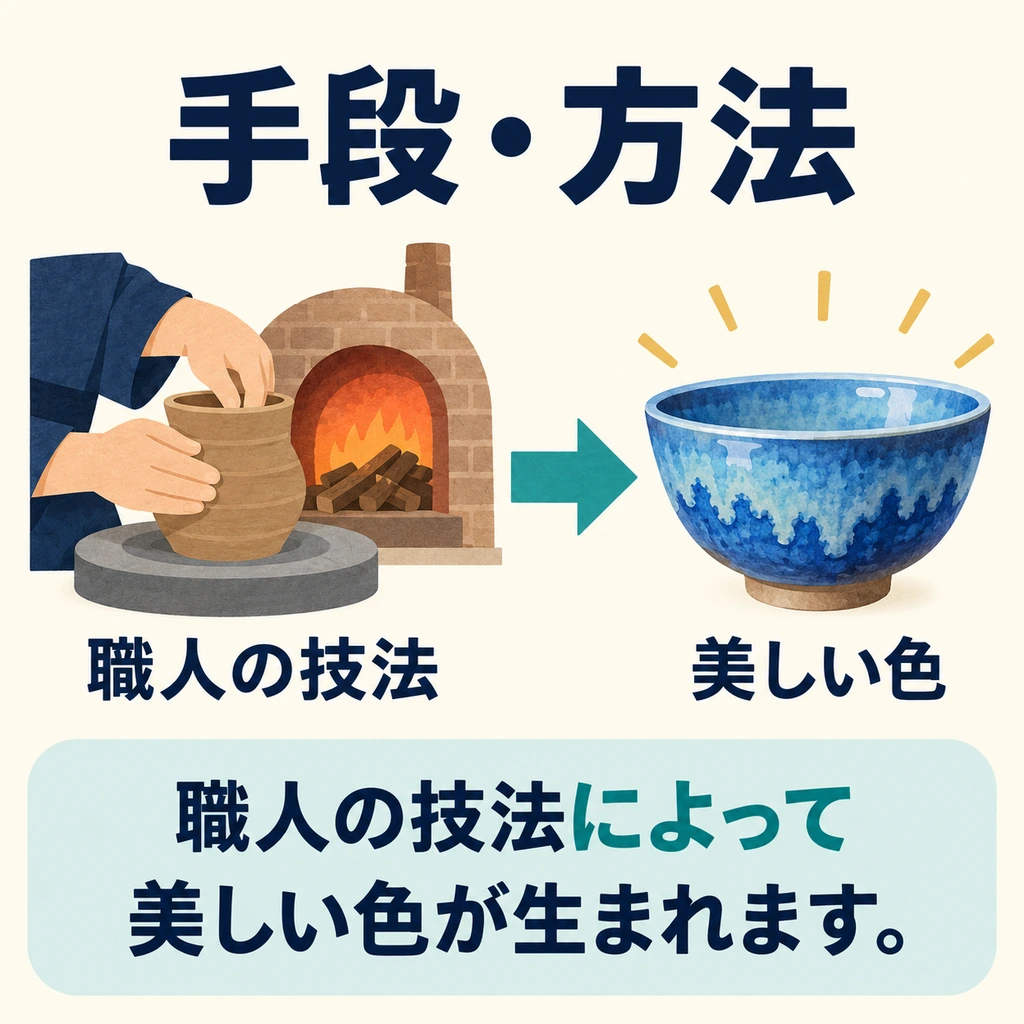
  1. How is the beautiful color created? 「によって」 connects the means or method to the result.
    How is the beautiful color created? 「によって」 connects the means or method to the result.

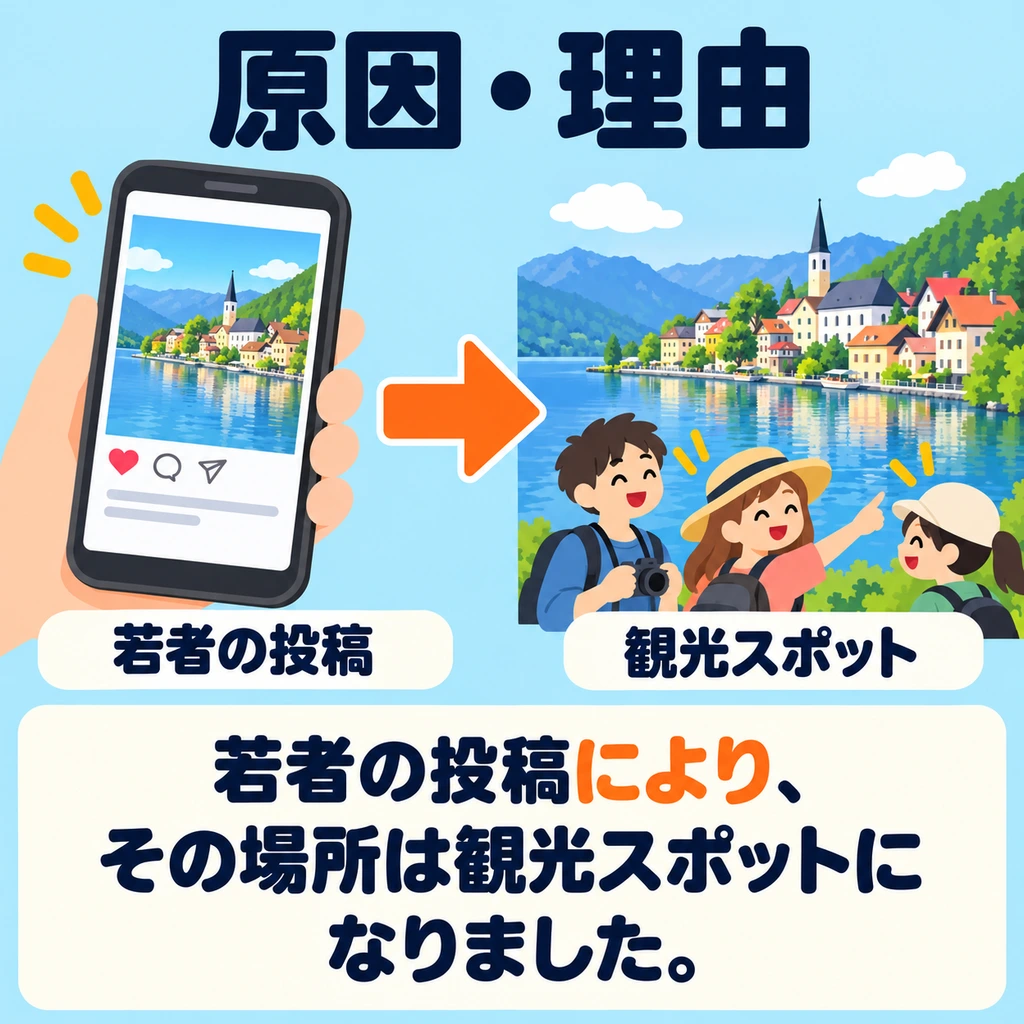
  2. What changed because of the posts? 「により」 connects the cause of a change to its result.
    What changed because of the posts? 「により」 connects the cause of a change to its result.

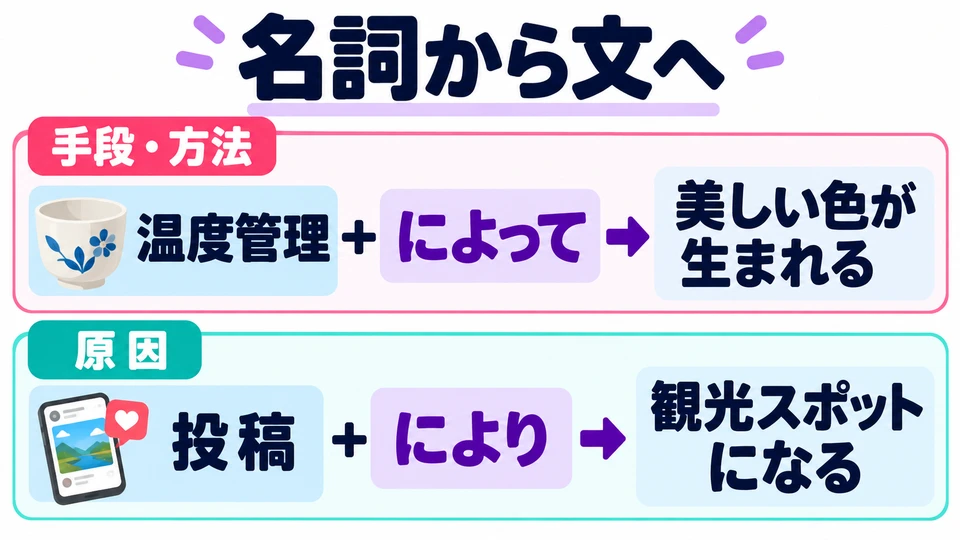
  3. First name the method or cause with a noun, then add 「によって」 or 「により」 to connect it to the following clause.
    First name the method or cause with a noun, then add 「によって」 or 「により」 to connect it to the following clause.

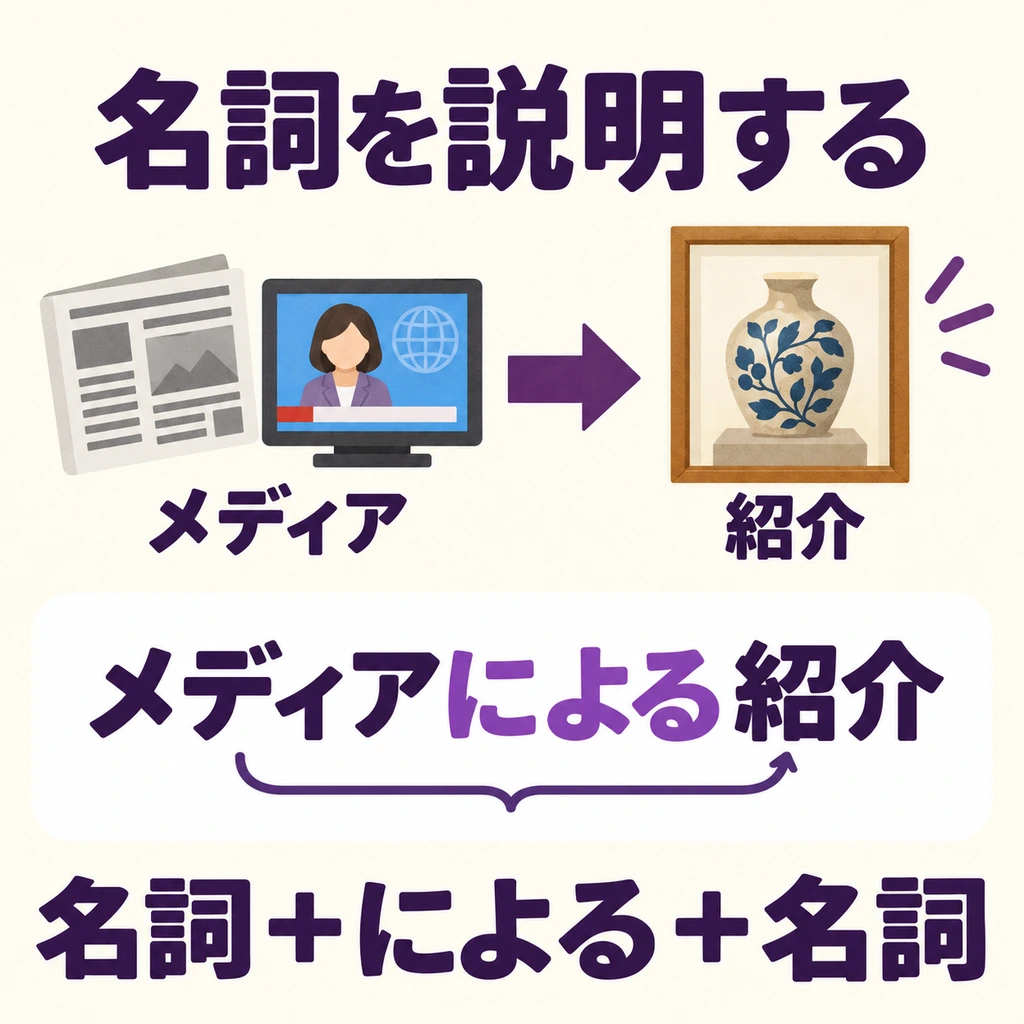
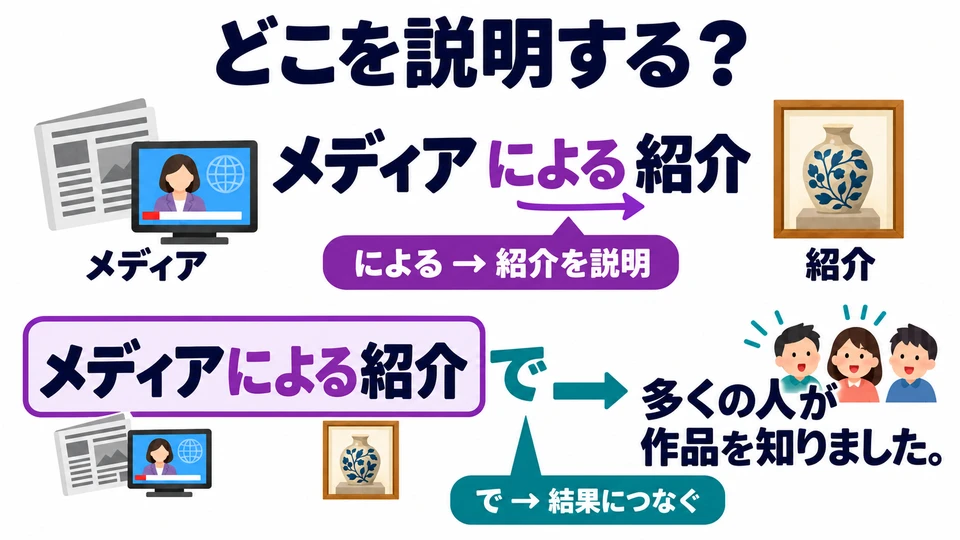
  4. Use 「による」 when describing the noun that follows. Here it means “coverage provided by the media.”
    Use 「による」 when describing the noun that follows. Here it means “coverage provided by the media.”

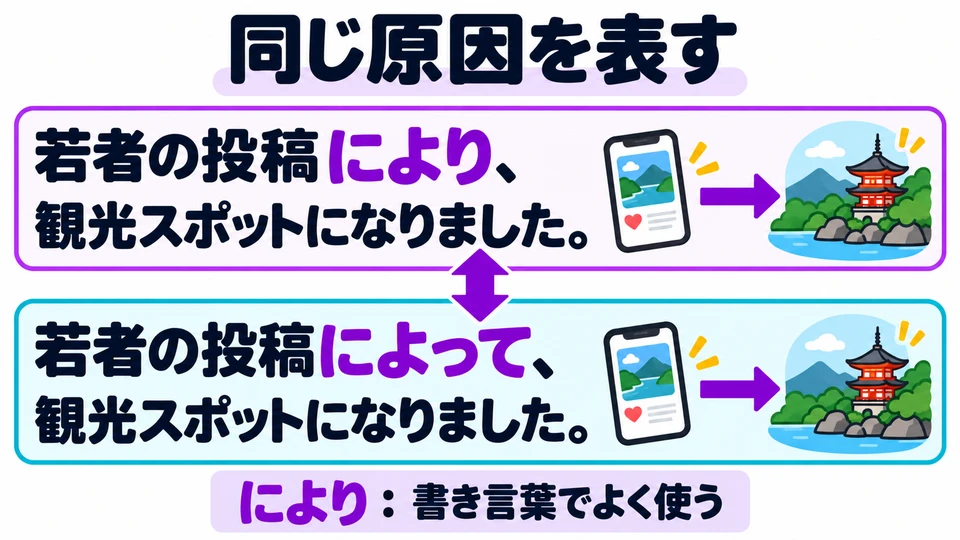
  5. 「により」 in the example suits written explanations. Replacing it with 「によって」 also expresses this cause.
    「により」 in the example suits written explanations. Replacing it with 「によって」 also expresses this cause.

  6. 「による」 modifies only 「紹介」. The following 「で」 connects that media coverage to people learning about the work.

    「による」 modifies only 「紹介」. The following 「で」 connects that media coverage to people learning about the work.

Example sentences

  • メディアめでぃあmediaにniよるyoru紹介しょうかいshoukaiで、de、多くおおくookuのno人ひとhitoがgaそのsono作品さくひんsakuhin

In a conversation

Check yourself

  1. Level 1 · Recognise

    Which sentence is correct?

  2. Level 1 · Recognise

    Listen and choose the meaning

  3. Level 2 · Build

    Put the words in order

    Through media exposure, many people came to know the work.

  4. Level 3 · Use

    What goes in the blank?

    メディア____紹介で、多くの人がその作品を知りました。

    Through media coverage, many people came to know the work.

More grammar in this theme

  • 〜によって・〜により・〜によるby means of; due to

Keep practising

Test your Japanese vocabulary12 adaptive questions, freeCheck your pronunciationRead aloud and get a scorePractise verb forms10-question conjugation quizSee the whole courseGrammar, vocabulary and quizzes by theme
を
o
知りました。しりました。shirimashita。

Many people learned about the work through media coverage.

  • A
    この焼き物やきものの美しいうつくしい色いろは、わ、どうやって出しだしているのですか。

    A: How do you produce the beautiful color of this pottery?

  • B
    職人しょくにんの高度な技法こうどなぎほうと、特別な窯とくべつなかまの温度おんど管理かんりによって生みうみ出されだされています。

    B: It is created by the artisan's advanced techniques and special kiln temperature control.

  • 若者わかものwakamonoのno投稿とうこうtoukouにniより、yori、そのsono場所ばしょbashoはわwa新しいあたらしいatarashii観光かんこうkankouスポットすぽっとsupottoにniなりました。narimashita。

    Due to posts by young people, that place has become a new tourist spot.

  • A
    手仕事てしごとによる丁寧な作りていねいなつくりだからこそ、こんなに美しいこんなにうつくしいのですね。

    A: That is why it is so beautiful, precisely because it is carefully made by hand.

  • 〜とともにtogether with
    〜しかないhave no choice but to
    〜ずにはいられないcan't help doing
    〜一方でwhile also showing another side
    〜させられるbe prompted to feel or think
    〜のみならずnot only, but also
    〜と同時にat the same time; while also
    〜だけにprecisely because
    〜としてもeven if; supposing that
    〜に先立って・〜に先立ちbefore; prior to an event
    どちらかというと〜・どちらかといえば〜if I had to choose; rather
    Previous〜と同時に
    Next〜だけに