
JPEDLAB iconJPEDLAB
Save history

Create an account and play

Explore first, then save your progress whenever you are ready. No email address is required.

Start free
Read as articleCards
1/10

To say how cooking feels, use 「のは」 to make “cooking” the topic, then say what you think of it.

››

Lesson notes · ≈ JLPT N4 · Beginner 3

〜のは〜です~no wa ~desu

make an activity the topic

Use 「〜のは〜です」 to make an activity the topic, then describe or contrast how it is.

How it works
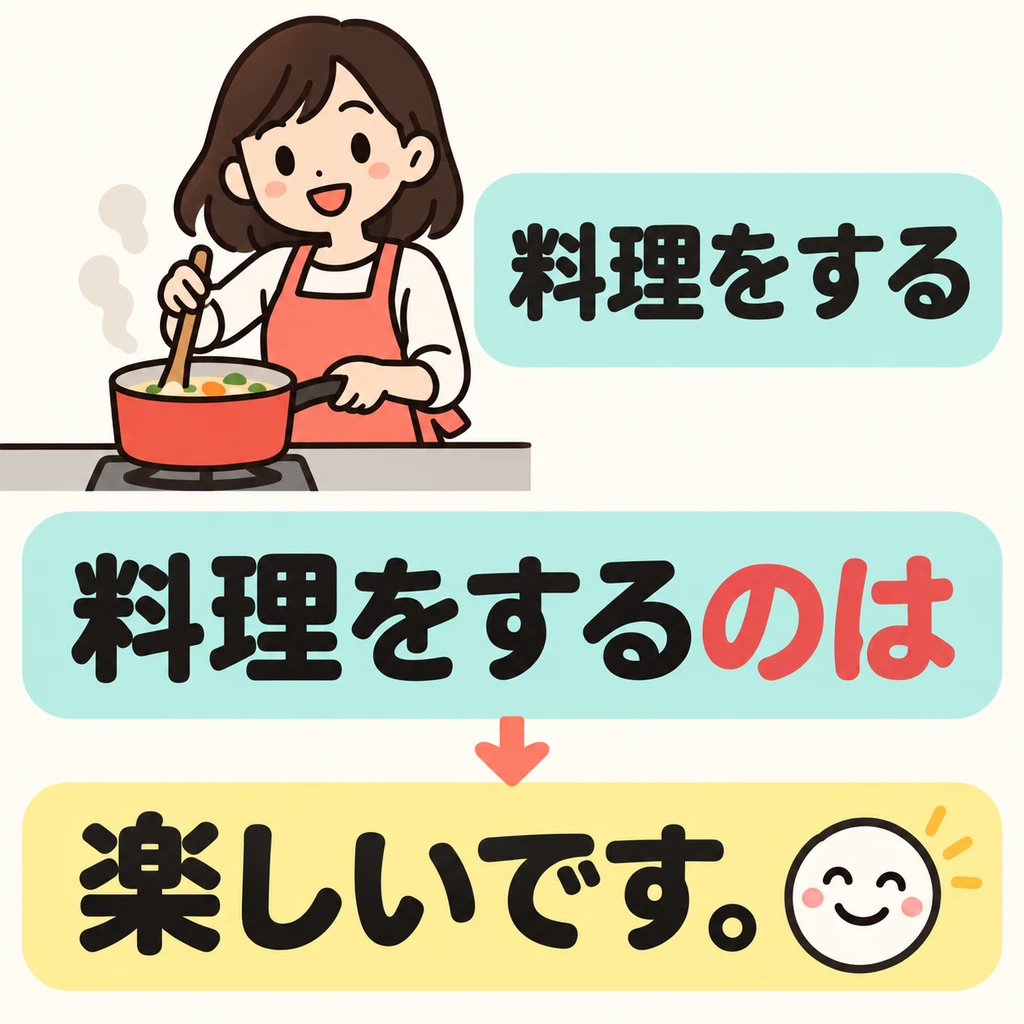
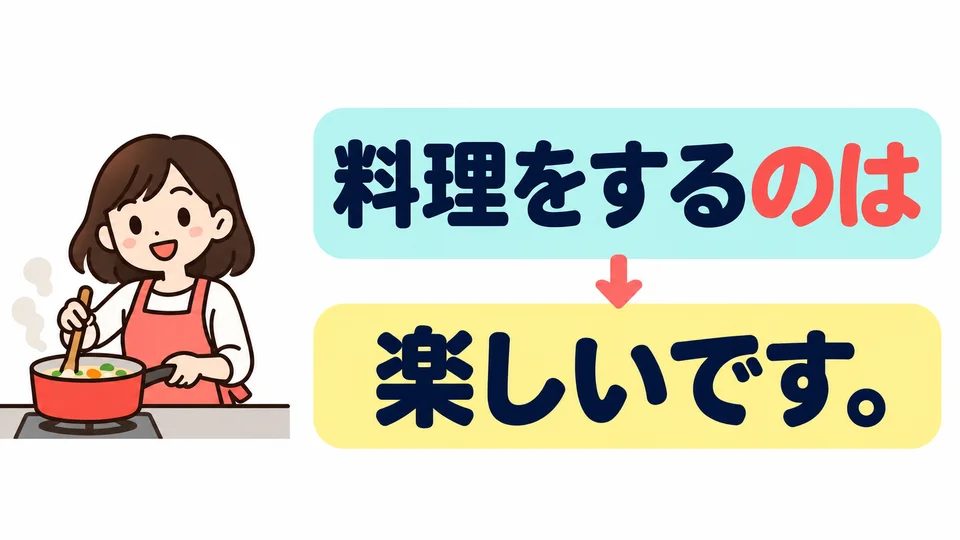
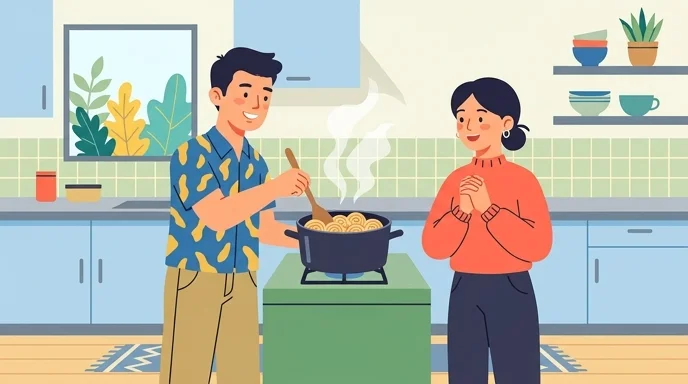
  1. To say how cooking feels, use 「のは」 to make “cooking” the topic, then say what you think of it.
    To say how cooking feels, use 「のは」 to make “cooking” the topic, then say what you think of it.

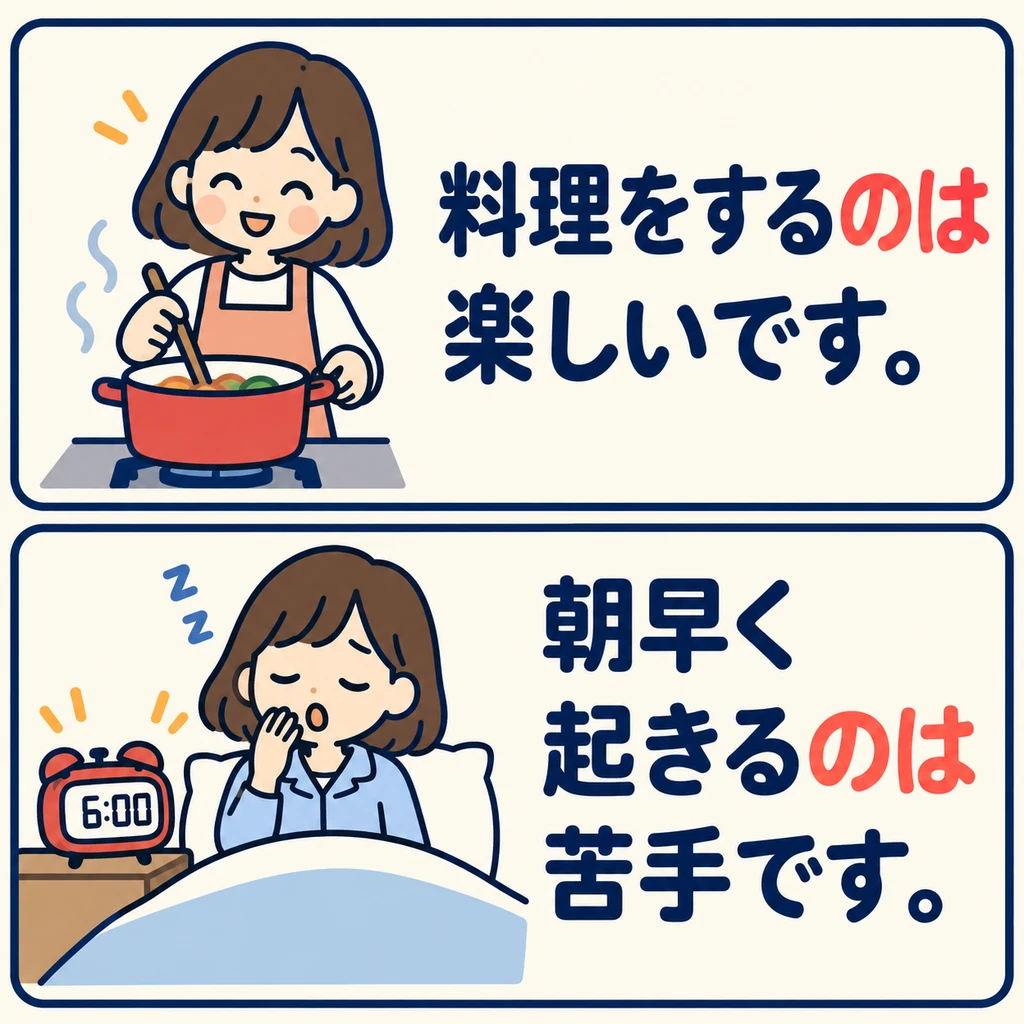
  2. The same person enjoys cooking but struggles with getting up early. Each activity gets a different evaluation.
    The same person enjoys cooking but struggles with getting up early. Each activity gets a different evaluation.

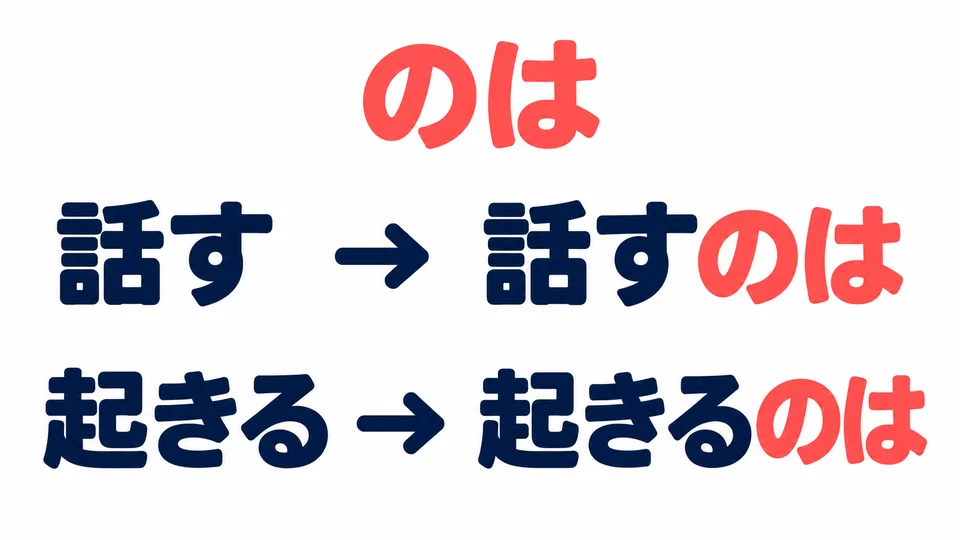
  3. Attach it to the dictionary form of a verb: 話す→話すのは, 起きる→起きるのは.
    Attach it to the dictionary form of a verb: 話す→話すのは, 起きる→起きるのは.

  4. 「のは」 can also describe a single activity. You do not have to compare two activities.
    「のは」 can also describe a single activity. You do not have to compare two activities.

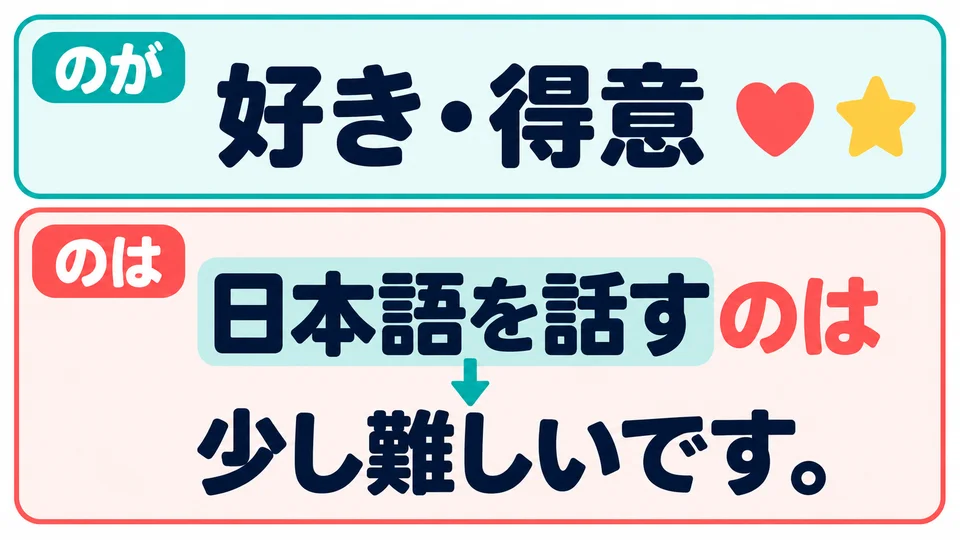
  5. 「のが」 often directly expresses likes or abilities. 「のは」 first makes an activity the topic, then describes or contrasts it.
    「のが」 often directly expresses likes or abilities. 「のは」 first makes an activity the topic, then describes or contrasts it.
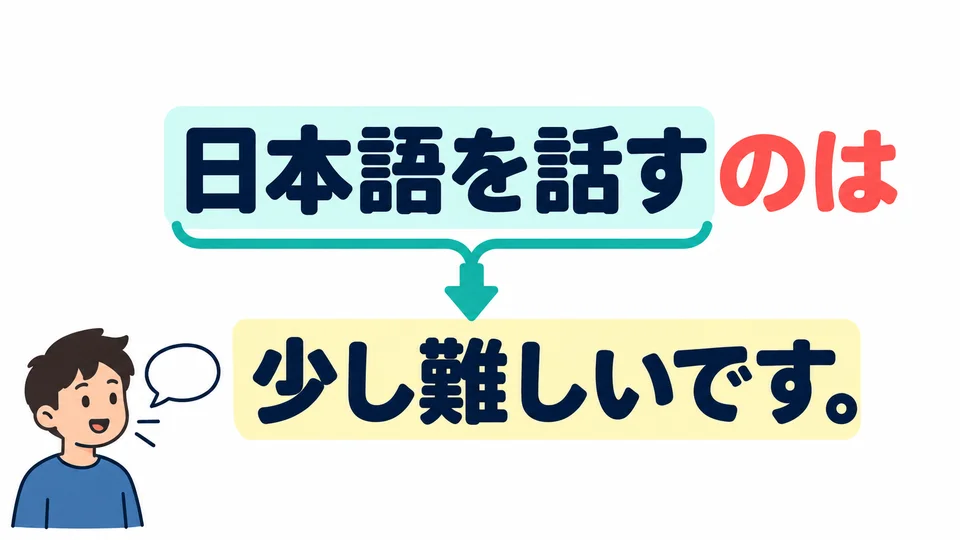
  6. In the example, it is speaking Japanese that is “a bit difficult.” The sentence does not evaluate every aspect of Japanese.

In the example, it is speaking Japanese that is “a bit difficult.” The sentence does not evaluate every aspect of Japanese.

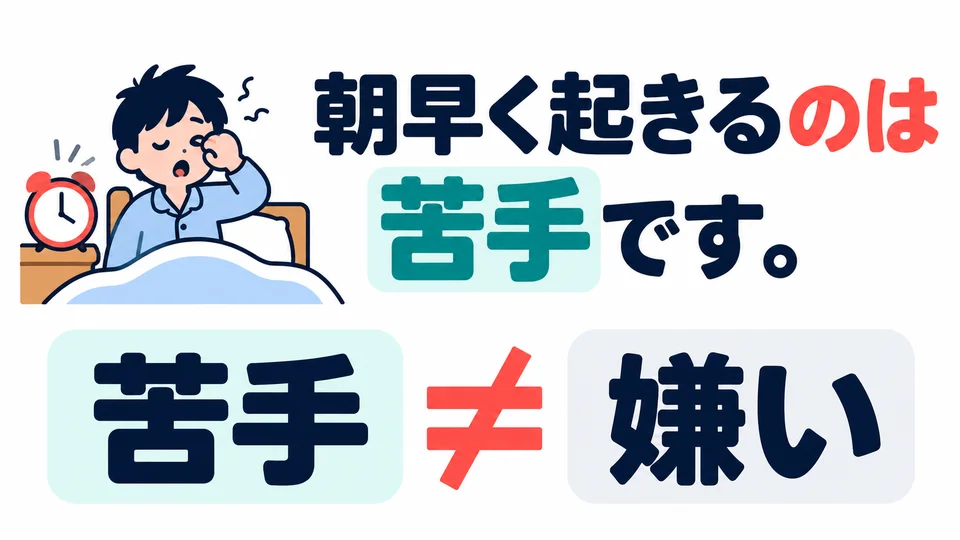
  • In the example about getting up early, 「苦手」 means you are not good at it or find it hard. It does not mean you dislike getting up early.

    In the example about getting up early, 「苦手」 means you are not good at it or find it hard. It does not mean you dislike getting up early.

  • Example sentences

    • 日本にほんnihon語ごgoをo話すはなすhanasuのnoはわwa少しすこしsukoshi難しいです。むずかしいですmuzukashiidesu

      Speaking Japanese is a bit difficult.

    • 朝あさasa早くはやくhayaku起きるおきるokiruのnoはわwa苦手にがてnigateです。ですdesu

      I'm not good at waking up early.

    In a conversation

    • A
      料理りょうりはわ好きですすきですか。か

      A: Do you like cooking?

    • B
      はい、はい料理りょうりをするのはわ楽しいです。たのしいです

      B: Yes, cooking is fun.

    • A
      何なにを作るつくるのが好きですすきですか。か

      A: What do you like to cook?

    • B
      パスタぱすたを作るつくるのはわ簡単で、かんたんで美味しいです。おいしいです

      B: Making pasta is easy and delicious.

    • A
      そうですか。か私わたしもパスタぱすたが好きです。すきです

      A: I see. I like pasta too.

    Check yourself

    1. Level 1 · Recognise

      Which sentence is correct?

    2. Level 1 · Recognise

      Listen and choose the meaning

    3. Level 2 · Build

      Put the words in order

      Speaking Japanese is a little difficult.

    4. Level 3 · Use

      What goes in the blank?

      本を読 面白いです。

      Reading books is interesting.

    More grammar in this theme

    • いらっしゃいますrespectful be, come, go
    • 〜と申しますformal humble self-introduction
    • 可能形ability or possibility
    • 〜ので/〜なのでreason; gentle explanation
    • 参りますhumble go or come
    • 〜ならif; under that condition
    • 〜のが好きですlike doing; be good at
    • 〜のは〜ですmake an activity the topic
    • 〜ようになりますbecome able; develop a habit
    Previous〜のが好きですNext〜ようになります

    Keep practising

    Test your Japanese vocabulary12 adaptive questions, freeCheck your pronunciationRead aloud and get a scorePractise verb forms10-question conjugation quizSee the whole courseGrammar, vocabulary and quizzes by theme
    See the whole course
    Beginner 3
    New Life