
Japanese grammar · ≈ JLPT N4 · Intermediate 2
〜みたいなんですが・〜ようなんですが~mitai nan desu ga / ~you nan desu ga
tentative problem explanation
Use 〜みたいなんですが to tentatively describe a problem from clues and invite someone to respond or help.
How it works
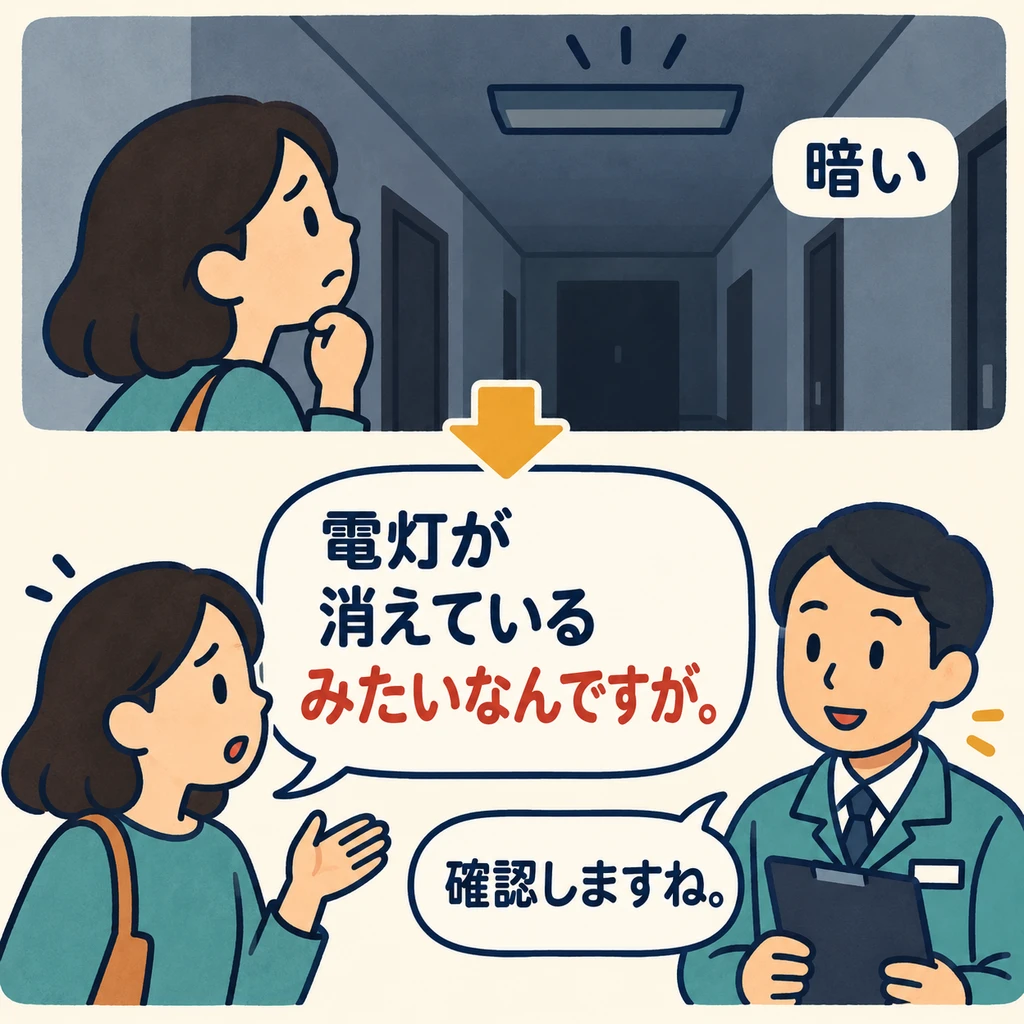
The hallway is dark, so there may be a problem with the light. What you observe gives you a clue when reporting it to the building manager.
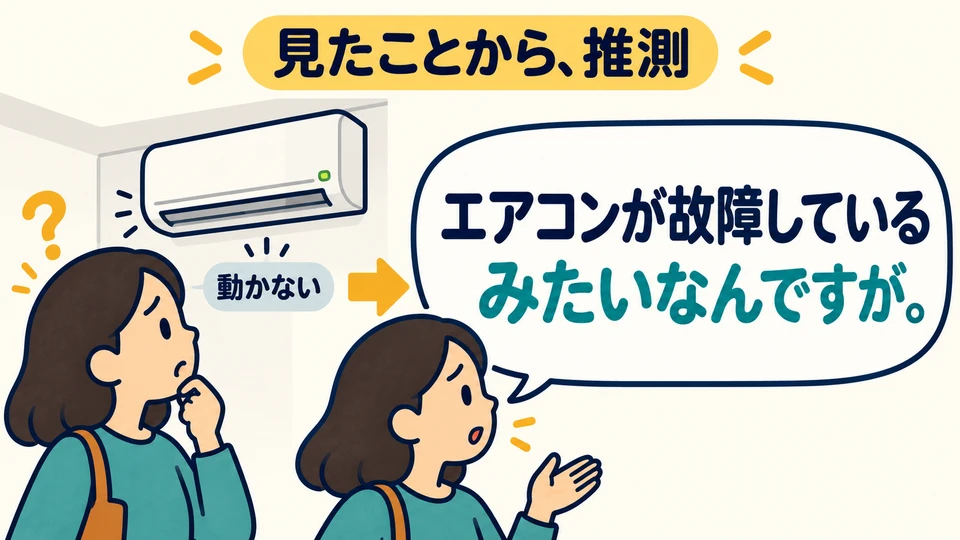
When drawing a conclusion from clues, say “it seems.” Even if you are quite sure, avoid stating it as a definite fact.
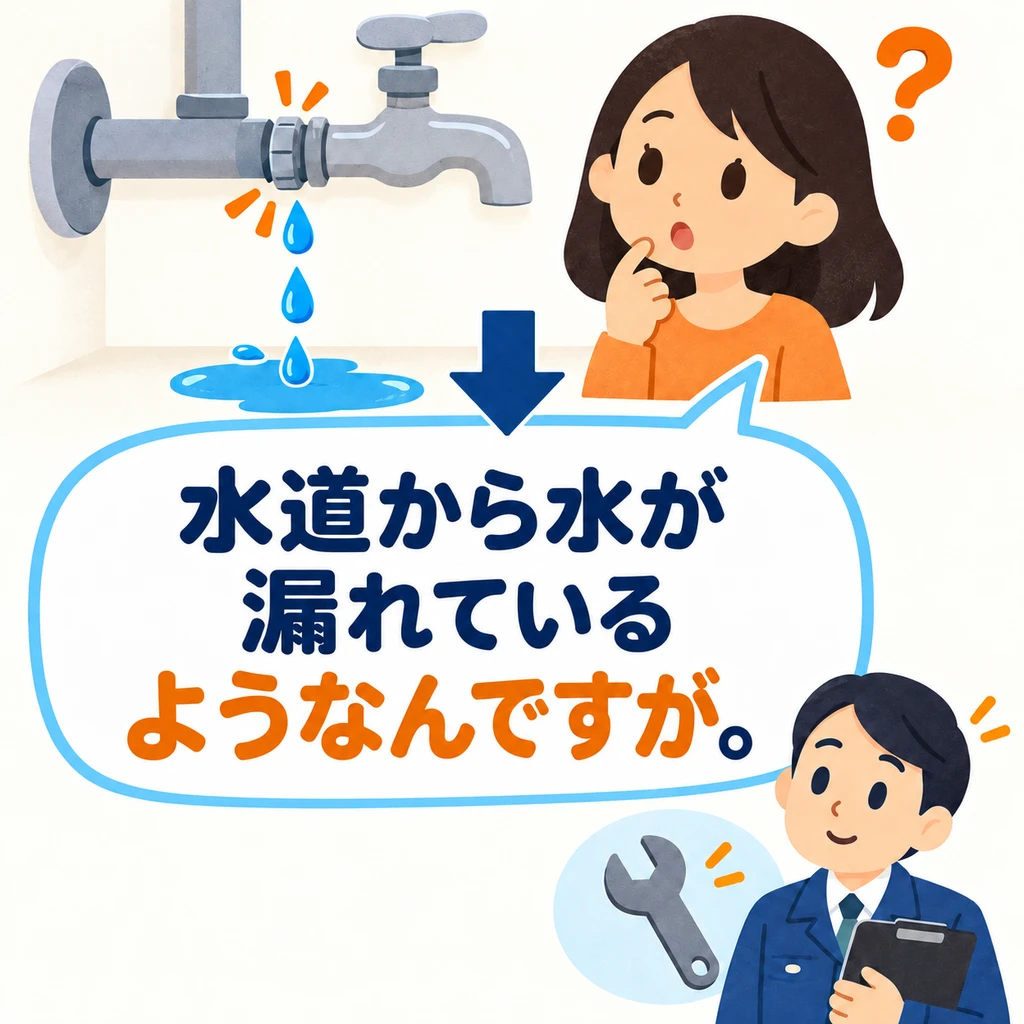
Seeing the drops, you tell the building manager there seems to be a leak. You can use 「ようなんですが」 this way too.
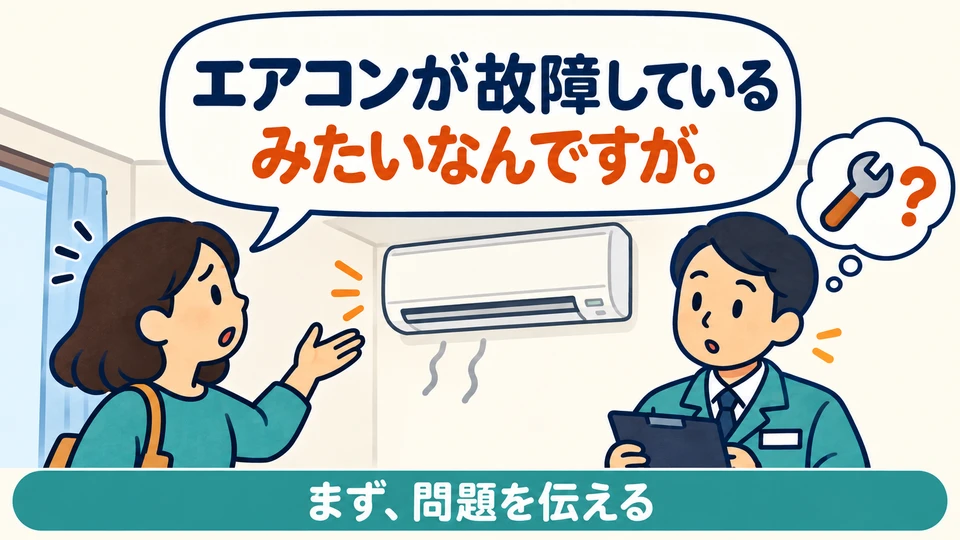
If equipment seems to be faulty and you want someone to check it, first use this expression to gently explain the problem.
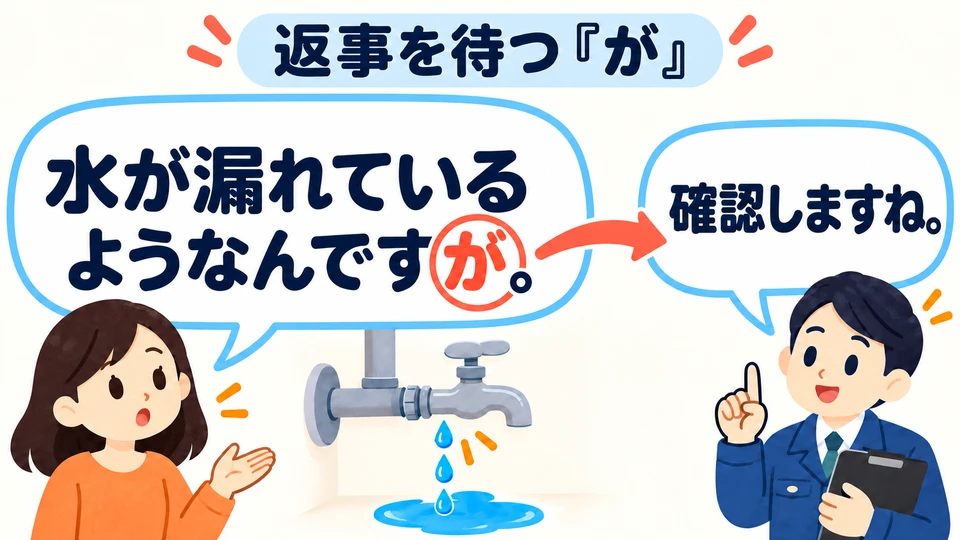
The final 「が」 leaves room for a reply, inviting the other person to check or help. It need not mean “but” here.
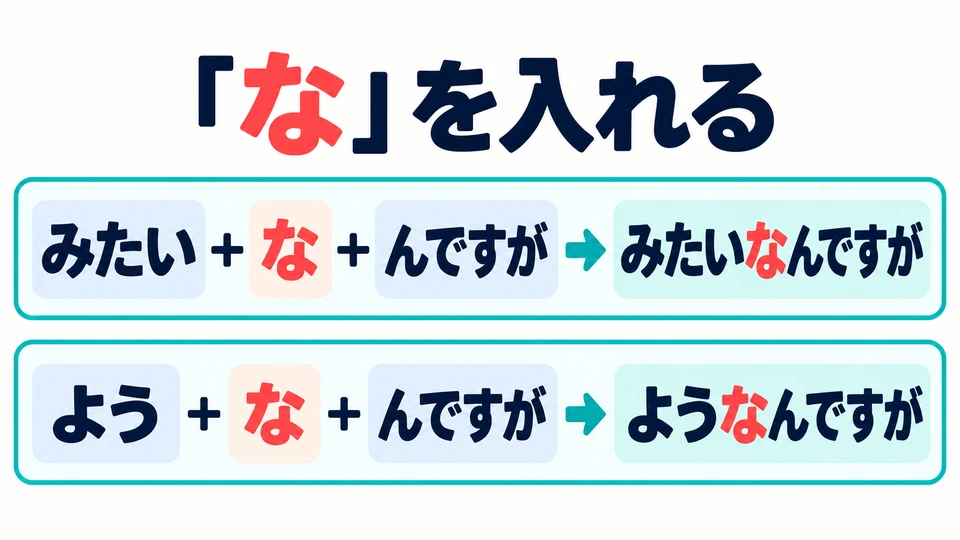
Before 「んですが」, add 「な」: みたいな/ような+んですが。
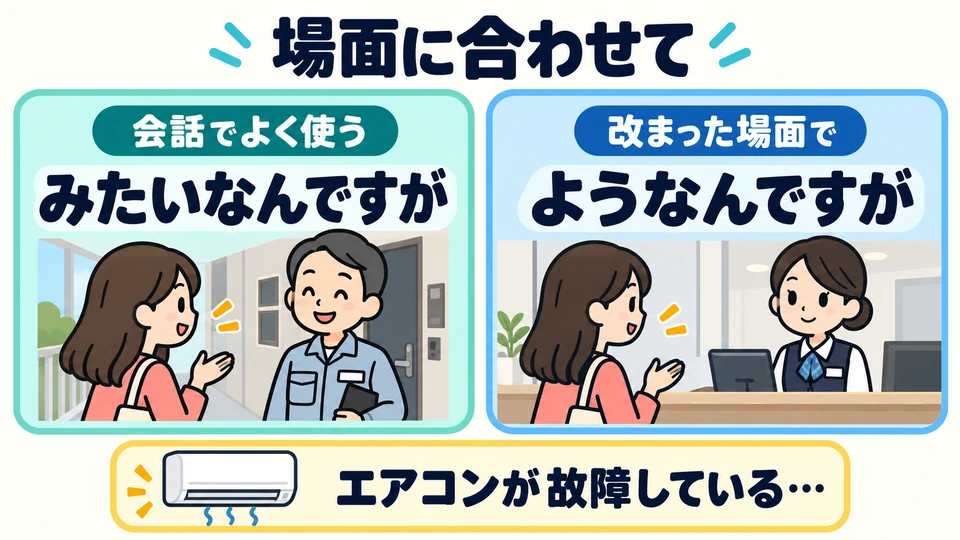
「みたい」 is more conversational, while 「よう」 is more formal. Choose whichever suits the situation.
Example sentences
- エアコンeakonがga故障koshouしshiてteいるiruみたいなmitainaんnですdesuが。ga。
It seems like the air conditioner is broken.
In a conversation
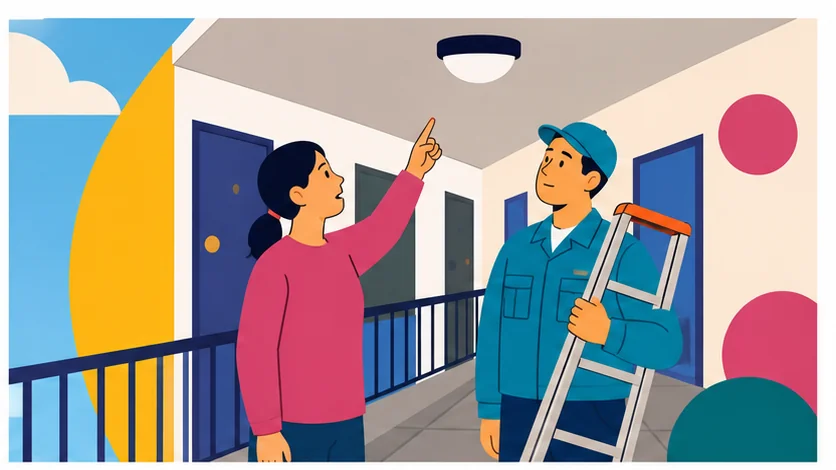
- A管理人さん、共用廊下の電灯が消えているみたいなんですが。
A: Manager, it seems like the light in the shared hallway is out.
- B本当
Check yourself
Level 1 · Recognise
Which sentence is correct?
Level 1 · Recognise
Listen and choose the meaning
Level 2 · Build
Put the words in order
It seems like water is leaking from the water heater.
Level 3 · Use
What goes in the blank?
エアコンが故障している____。
It seems the air conditioner is broken.
More grammar in this theme
- 〜みたいなんですが・〜ようなんですがtentative problem explanation