JPEDLAB iconJPEDLAB
Save history

Create an account and play

Explore first, then save your progress whenever you are ready. No email address is required.

Start free
Read as articleCards
1/10

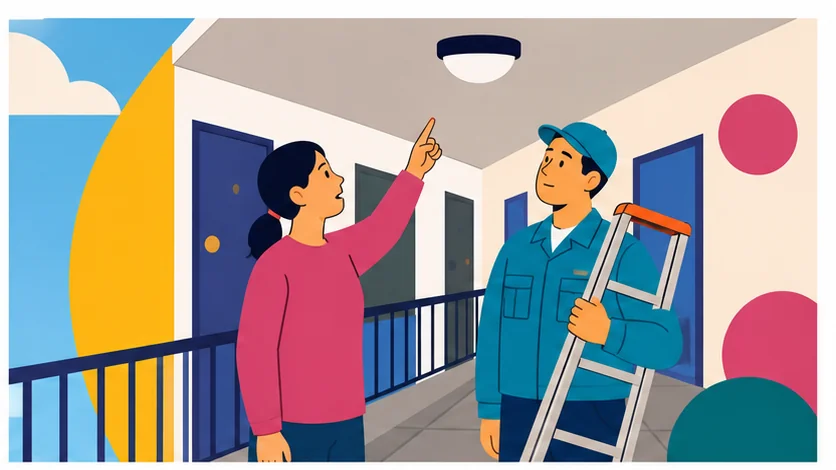
The hallway is dark, so there may be a problem with the light. What you observe gives you a clue when reporting it to the building manager.

››

Lesson notes · ≈ JLPT N4 · Intermediate 2

〜みたいなんですが・〜ようなんですが~mitai nan desu ga / ~you nan desu ga

tentative problem explanation

Use 〜みたいなんですが to tentatively describe a problem from clues and invite someone to respond or help.

How it works
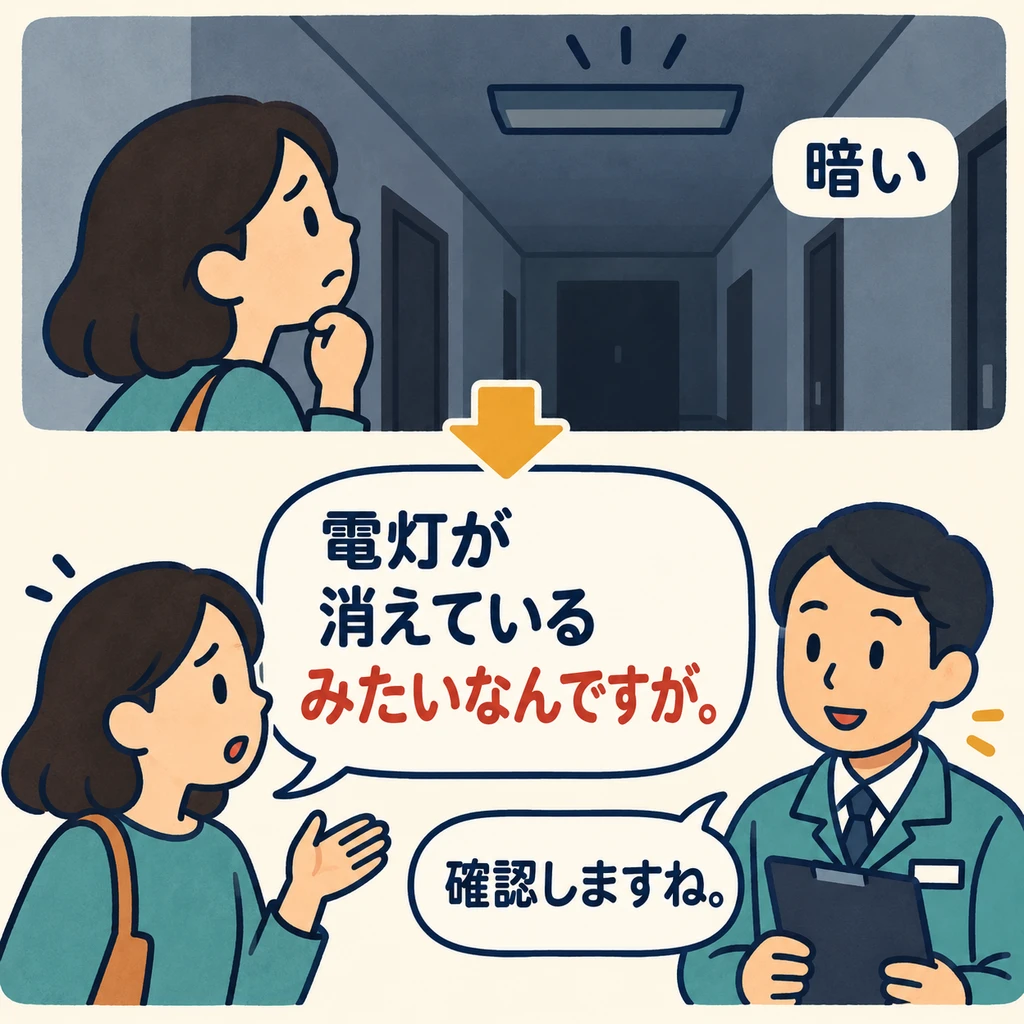
  1. The hallway is dark, so there may be a problem with the light. What you observe gives you a clue when reporting it to the building manager.
    The hallway is dark, so there may be a problem with the light. What you observe gives you a clue when reporting it to the building manager.

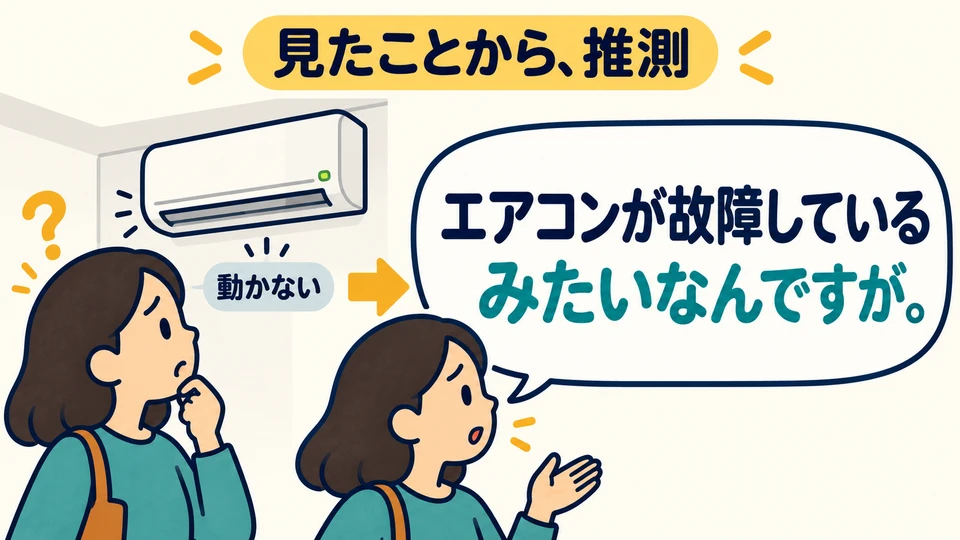
  2. When drawing a conclusion from clues, say “it seems.” Even if you are quite sure, avoid stating it as a definite fact.
    When drawing a conclusion from clues, say “it seems.” Even if you are quite sure, avoid stating it as a definite fact.

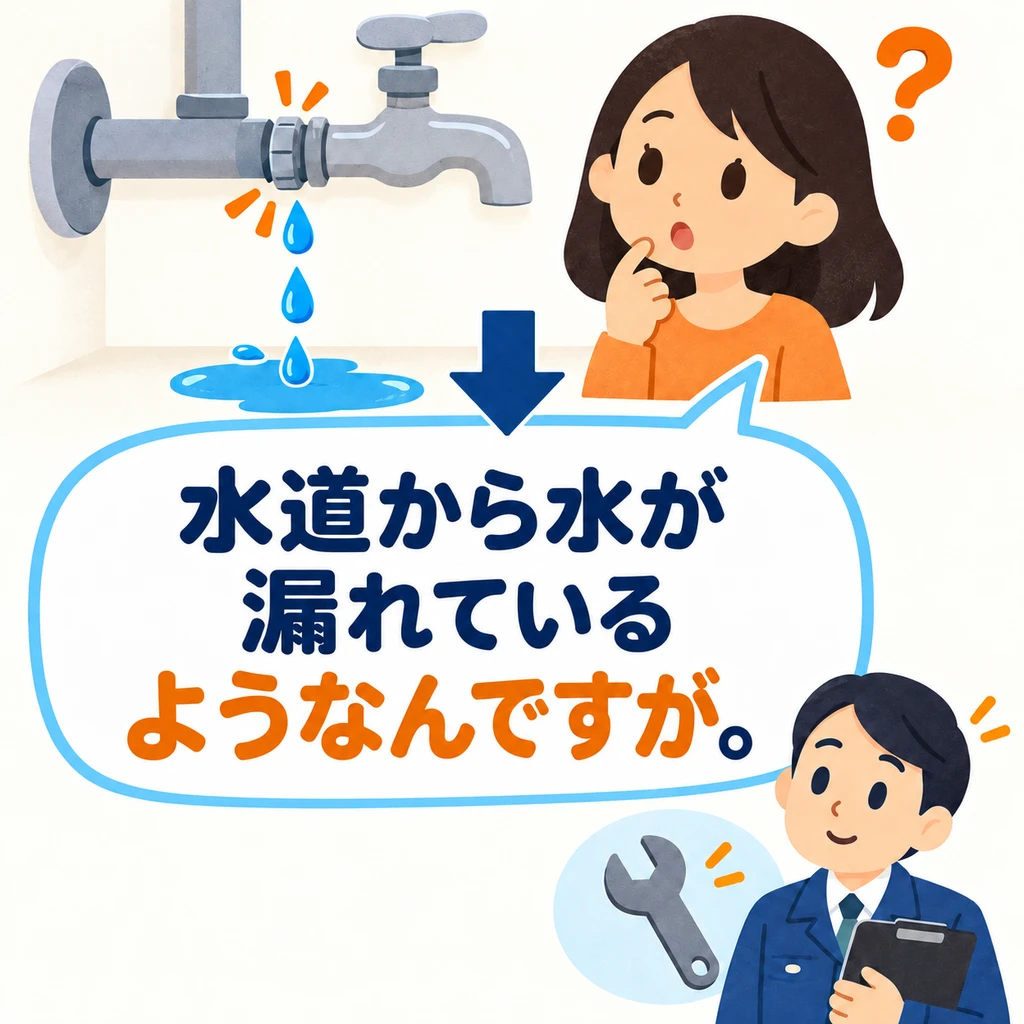
  3. Seeing the drops, you tell the building manager there seems to be a leak. You can use 「ようなんですが」 this way too.
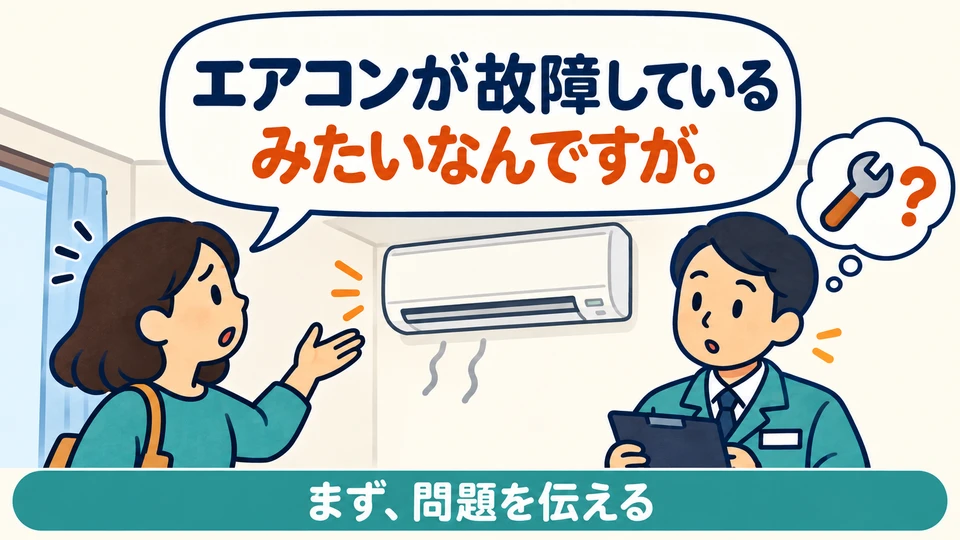
    Seeing the drops, you tell the building manager there seems to be a leak. You can use 「ようなんですが」 this way too.

  4. If equipment seems to be faulty and you want someone to check it, first use this expression to gently explain the problem.
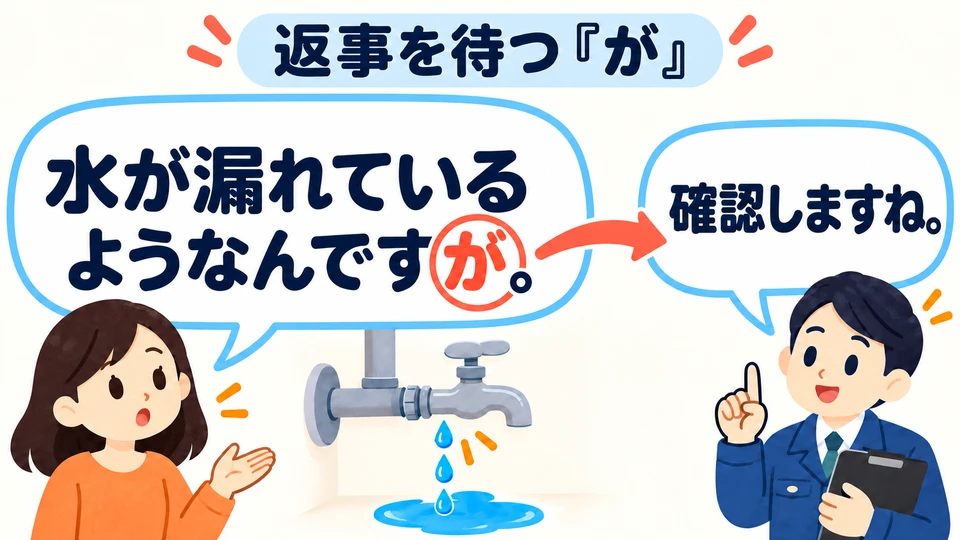
    If equipment seems to be faulty and you want someone to check it, first use this expression to gently explain the problem.
  5. The final 「が」 leaves room for a reply, inviting the other person to check or help. It need not mean “but” here.

The final 「が」 leaves room for a reply, inviting the other person to check or help. It need not mean “but” here.
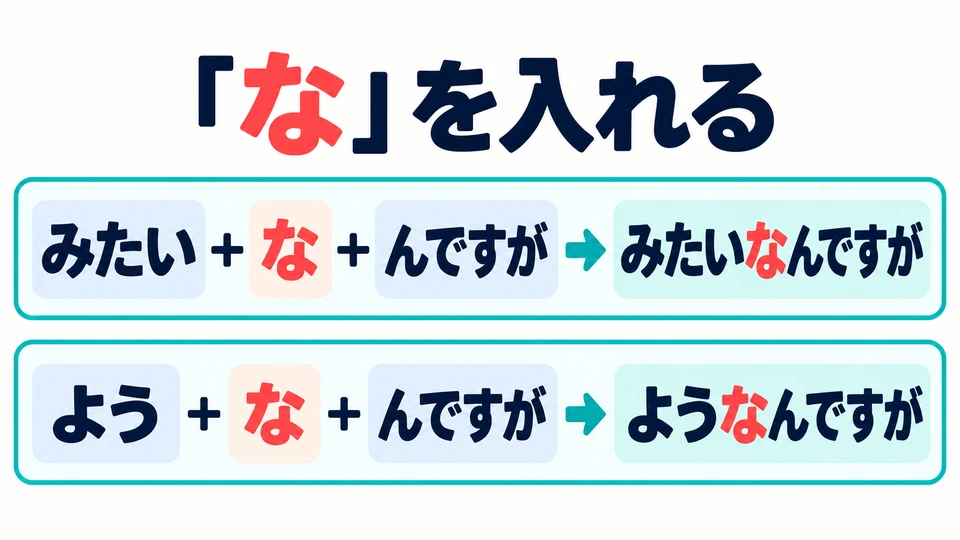
  • Before 「んですが」, add 「な」: みたいな/ような+んですが。

    Before 「んですが」, add 「な」: みたいな/ような+んですが。

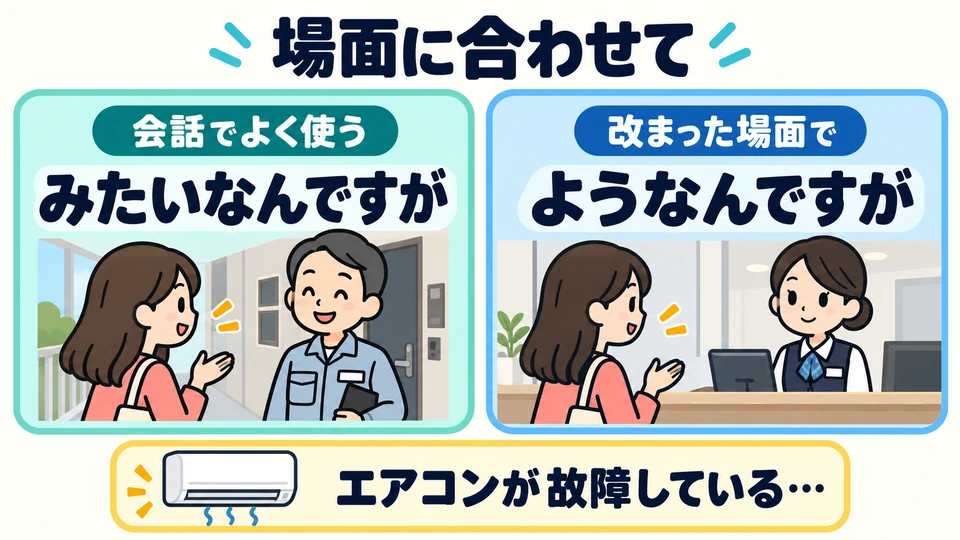
  • 「みたい」 is more conversational, while 「よう」 is more formal. Choose whichever suits the situation.

    「みたい」 is more conversational, while 「よう」 is more formal. Choose whichever suits the situation.

  • Example sentences

    • エアコンえあこんeakonがga故障こしょうkoshouしshiてteいるiruみたいなmitainaんnですdesuが。ga。

      It seems like the air conditioner is broken.

    • 水道すいどうsuidouからkara水みずmizuがga漏れもれmoreてteいるiruようなyounaんnですdesuが。ga。

      It seems like water is leaking from the water pipe.

    In a conversation

    • A
      管理人さん、かんりにんさん、共用きょうよう廊下ろうかの電灯でんとうが消えきえているみたいなんですが。

      A: Manager, it seems like the light in the shared hallway is out.

    • B
      本当ほんとうですか?か確認かくにんして、すぐに新しいあたらしいものと交換こうかんしますね。

      B: Really? I will check and replace it with a new one right away.

    • A
      暗くくらくて危ないですあぶないですから、よろしくお願いおねがいします。

      A: It's dark and dangerous, so please take care of it.

    Check yourself

    1. Level 1 · Recognise

      Which sentence is correct?

    2. Level 1 · Recognise

      Listen and choose the meaning

    3. Level 2 · Build

      Put the words in order

      It seems like water is leaking from the water heater.

    4. Level 3 · Use

      What goes in the blank?

      エアコンが故障している____。

      It seems the air conditioner is broken.

    More grammar in this theme

    • お・ご〜です/でしょうrespectful description or question
    • 〜場合in the case that
    • 〜ないことには〜ないunless, it cannot happen
    • 〜たいことがあるんですがgentle topic opener
    • 意向形+とするtry or be about to
    • 〜みたいなんですが・〜ようなんですがtentative problem explanation
    • 〜ていただきたいんですがpolite request for help
    • 〜にはrequirements to reach a goal
    • 〜にかかわらずregardless of a condition
    • 〜次第/〜次第でdepending on; as soon as
    • 〜途中で・〜途中にduring a journey or activity
    • 〜を〜としてuse or treat as
    • 〜を背にしてwith something behind you
    • 〜に沿って・〜に沿う・〜に沿ったalong; in accordance with
    Previous意向形+とするNext〜ていただきたいんですが

    Keep practising

    Test your Japanese vocabulary12 adaptive questions, freeCheck your pronunciationRead aloud and get a scorePractise verb forms10-question conjugation quizSee the whole courseGrammar, vocabulary and quizzes by theme
    See the whole course
    Intermediate 2
    Daily Information and Facility Use