JPEDLAB iconJPEDLAB
Save history

Create an account and play

Explore first, then save your progress whenever you are ready. No email address is required.

Start free
Read as articleCards
See the whole course›Intermediate 3›Trends and Everyday Topics

Japanese grammar · ≈ JLPT N2 · Intermediate 3

〜としても~to shite mo

even if; supposing that

「〜としても」 supposes a premise is true, then gives a conclusion that remains unchanged despite it.

Start the interactive lessonIllustrated cards, audio and speaking practice

How it works

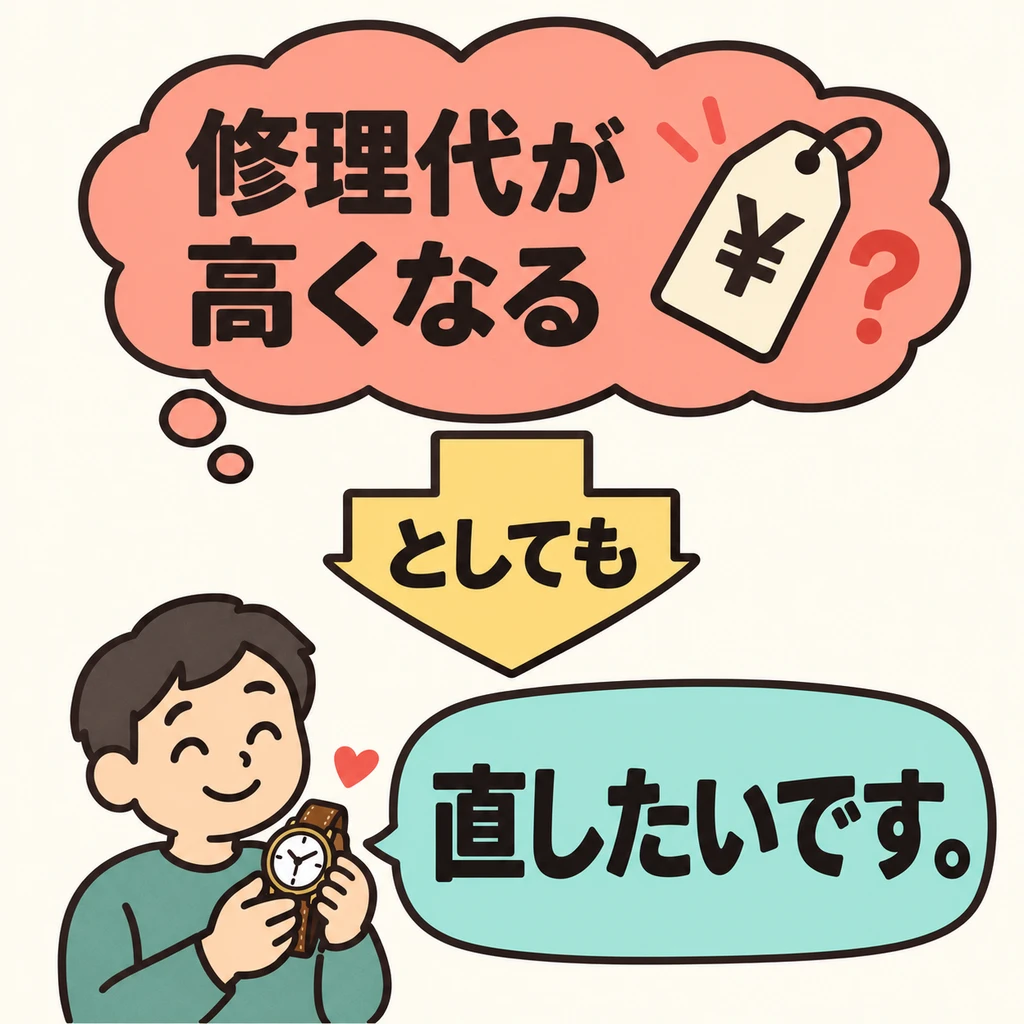
  1. The repair may cost more. Look at the picture: would you still want to repair this treasured watch?
    The repair may cost more. Look at the picture: would you still want to repair this treasured watch?

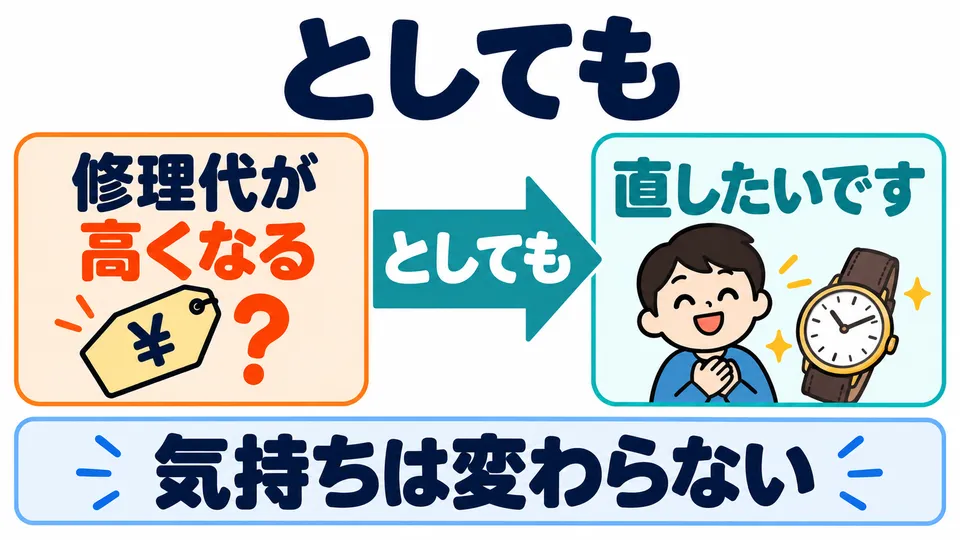
  2. 「としても」 means “even if…”: the judgment that follows stays the same even if the premise is true.
    「としても」 means “even if…”: the judgment that follows stays the same even if the premise is true.

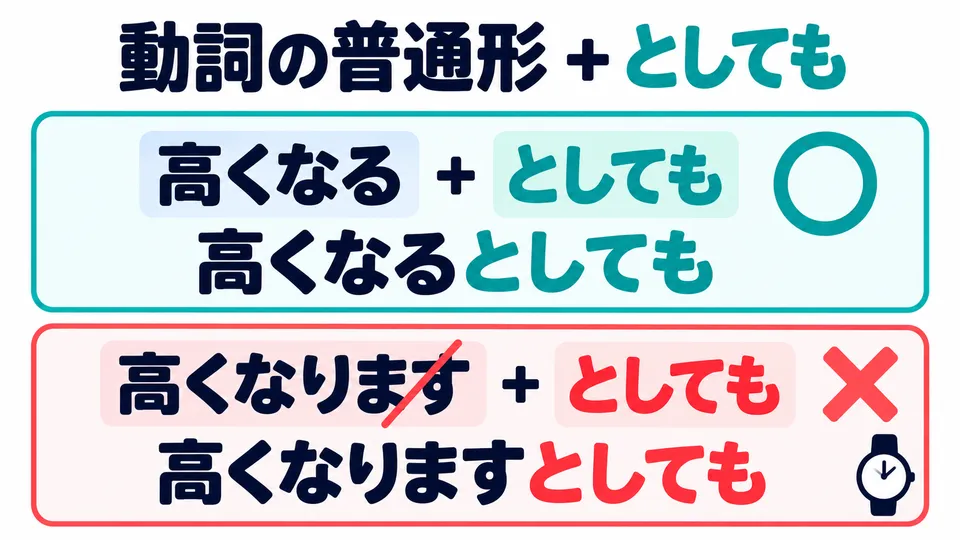
  3. Use a verb’s plain form: 「高くなるとしても」. Do not attach it to 「なります」.
    Use a verb’s plain form: 「高くなるとしても」. Do not attach it to 「なります」.

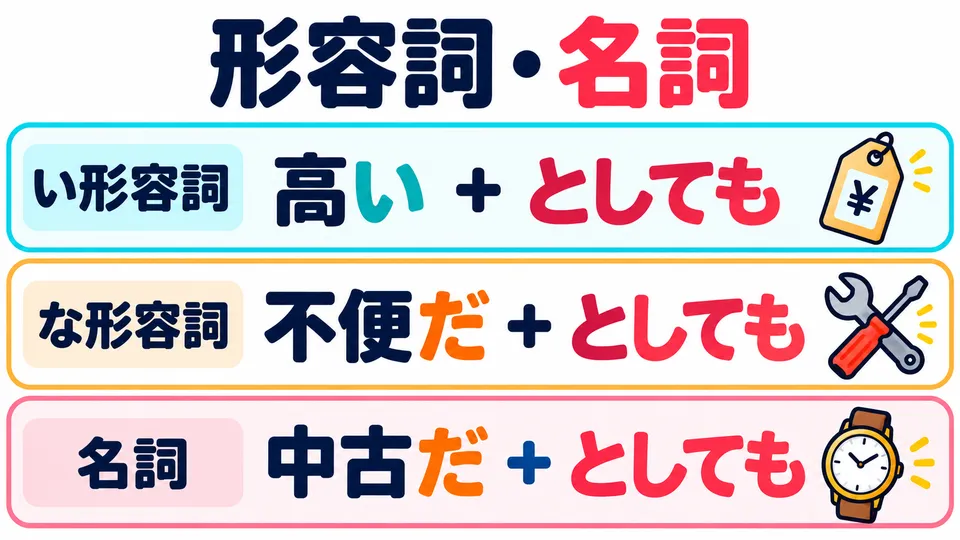
  4. Adjectives also use the plain form. For nouns and な-adjectives, use 「だとしても」.
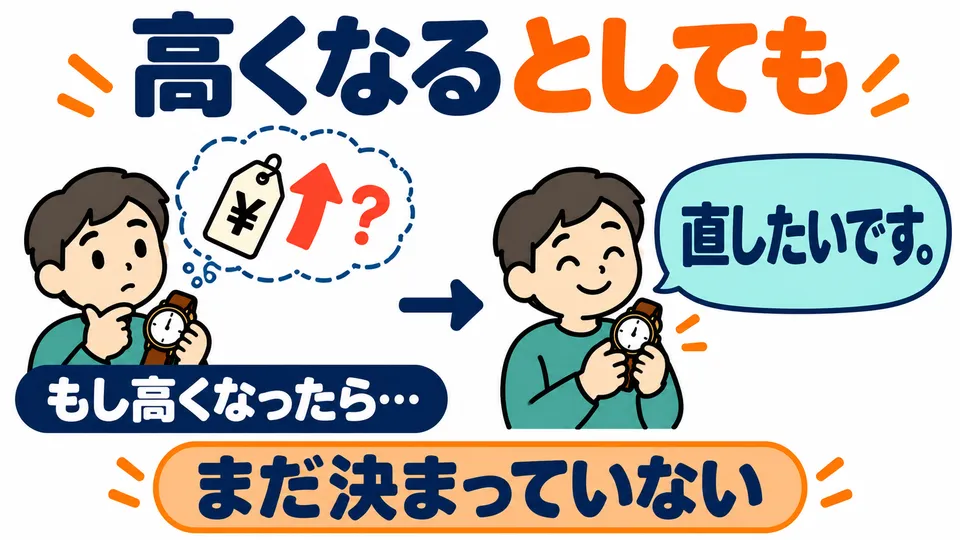
    Adjectives also use the plain form. For nouns and な-adjectives, use 「だとしても」.

  5. First accept or suppose the premise is true, then state the conclusion. This sentence does not say the repair cost has already risen.
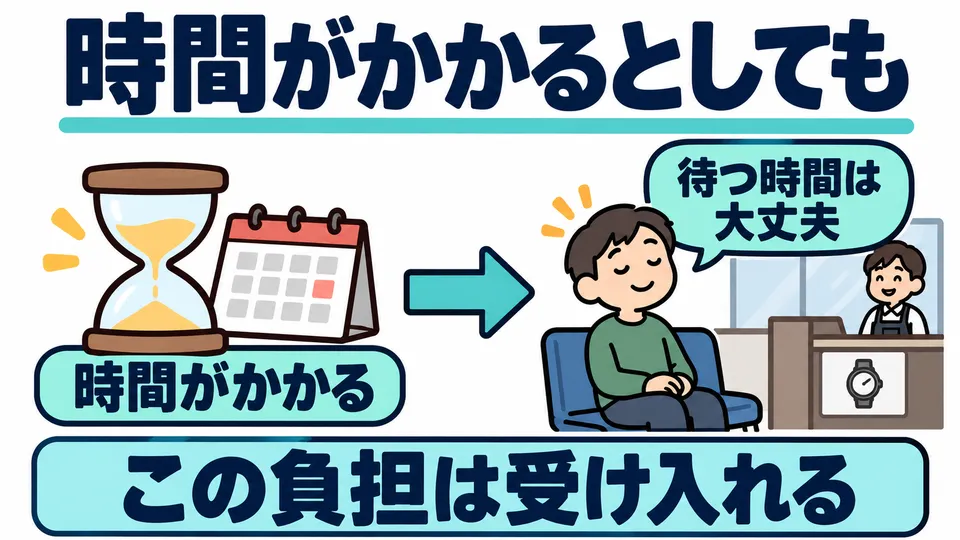
    First accept or suppose the premise is true, then state the conclusion. This sentence does not say the repair cost has already risen.

  6. In the example, 「時間がかかるとしても」 means: I can accept the inconvenience of it taking time.
    In the example, 「時間がかかるとしても」 means: I can accept the inconvenience of it taking time.

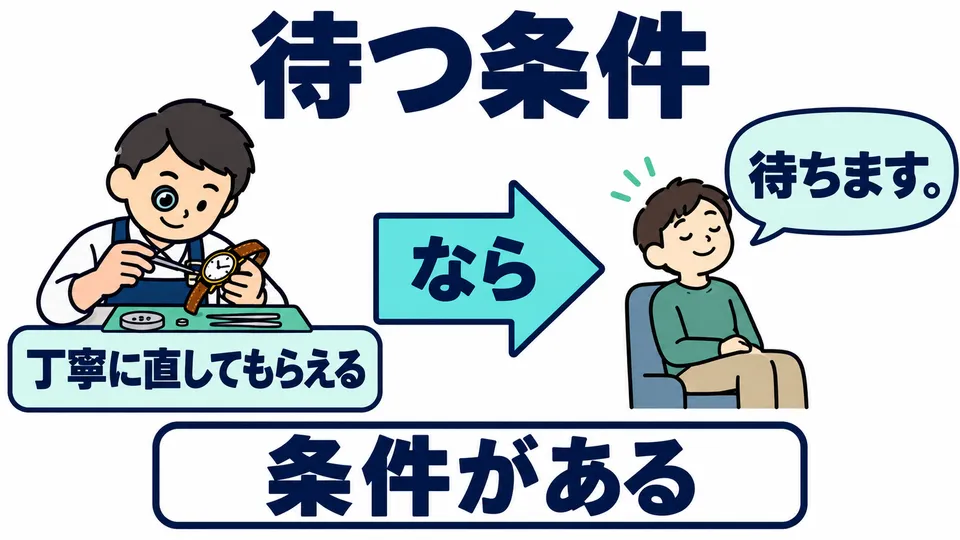
  7. But 「丁寧に直してもらえるなら」 still sets a condition for waiting: the watch must be repaired carefully. The waiting is not unconditional.

    But 「丁寧に直してもらえるなら」 still sets a condition for waiting: the watch must be repaired carefully. The waiting is not unconditional.

Example sentences

  • 修理代しゅうりだいshuuridaiがga少しすこしsukoshi高くたかくtakakuなるnaruとtoしshiてteも、mo、このkono時計とけいtokeiは

In a conversation

Check yourself

  1. Level 1 · Recognise

    Which sentence is correct?

  2. Level 1 · Recognise

    Listen and choose the meaning

  3. Level 2 · Build

    Put the words in order

    Even if the repair cost is a little higher, I still want to have this watch fixed.

  4. Level 3 · Use

    What goes in the blank?

    修理代が少し高くなる____、この時計は直したいです。

    Even if the repair cost goes up a little, I still want to fix this watch.

More grammar in this theme

  • 〜としてもeven if; supposing that

Keep practising

Test your Japanese vocabulary12 adaptive questions, freeCheck your pronunciationRead aloud and get a scorePractise verb forms10-question conjugation quizSee the whole courseGrammar, vocabulary and quizzes by theme
わ
wa
直したいです。なおしたいです。naoshitaidesu。

Even if the repair cost is a bit high, I still want to fix this watch.

  • A
    エアコンえあこんの不具合ふぐあいについて、修理しゅうり会社かいしゃに原因げんいん調査ちょうさを依頼いらいしますね。

    A: I'll request a repair company to investigate the cause of the air conditioner's malfunction.

  • B
    点検てんけんの費用ひようがかかるとしても、早くはやく直したいなおしたいのでお願いおねがいします。

    B: Even if there is an inspection fee, I want to get it fixed quickly, so please go ahead.

  • 時間じかんjikanがgaかかるkakaruとtoしshiてteも、mo、丁寧に直していねいになおしteineininaoshiてteもらえるなら待ちます。もらえるならまちます。moraerunaramachimasu。

    Even if it takes time, I'll wait if they can repair it carefully.

  • A
    分かりました。わかりました。訪問ほうもん時間じかんが決まりきまり次第、しだい、連絡れんらくします。

    A: Understood. I will contact you as soon as the visit time is decided.

  • 〜とともにtogether with
    〜しかないhave no choice but to
    〜ずにはいられないcan't help doing
    〜一方でwhile also showing another side
    〜させられるbe prompted to feel or think
    〜のみならずnot only, but also
    〜と同時にat the same time; while also
    〜によって・〜により・〜によるby means of; due to
    〜だけにprecisely because
    〜に先立って・〜に先立ちbefore; prior to an event
    どちらかというと〜・どちらかといえば〜if I had to choose; rather
    Previous〜だけに
    Next〜に先立って・〜に先立ち