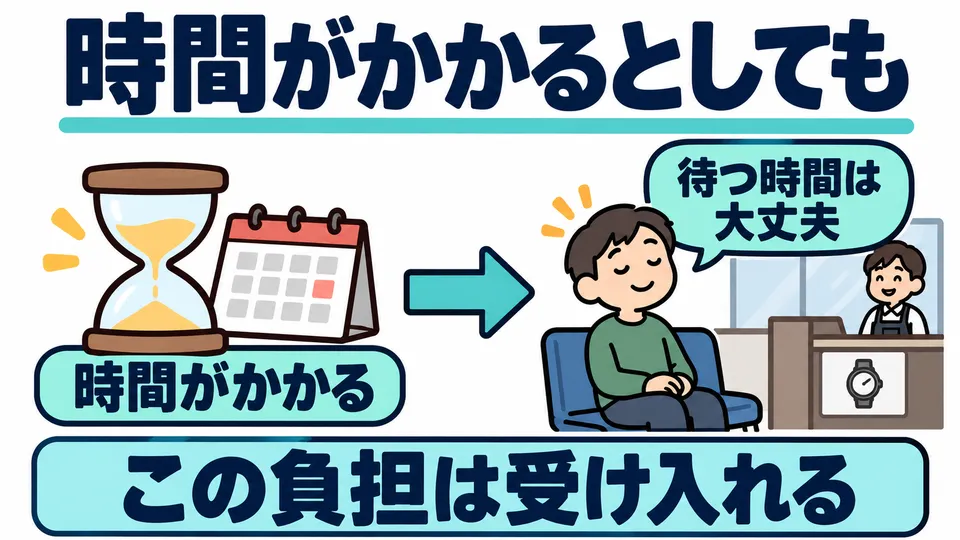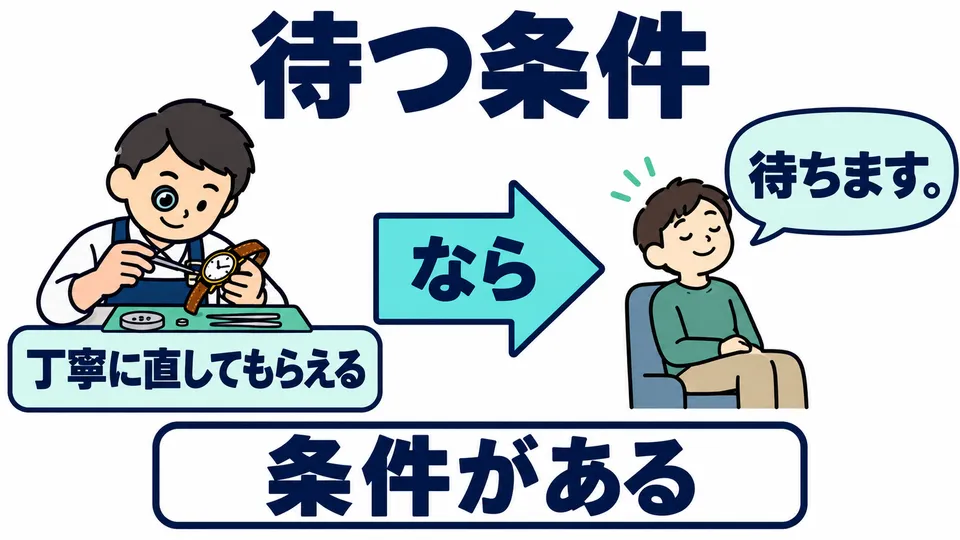
Lesson notes · ≈ JLPT N2 · Intermediate 3
〜としても~to shite mo
even if; supposing that
「〜としても」 supposes a premise is true, then gives a conclusion that remains unchanged despite it.
How it works
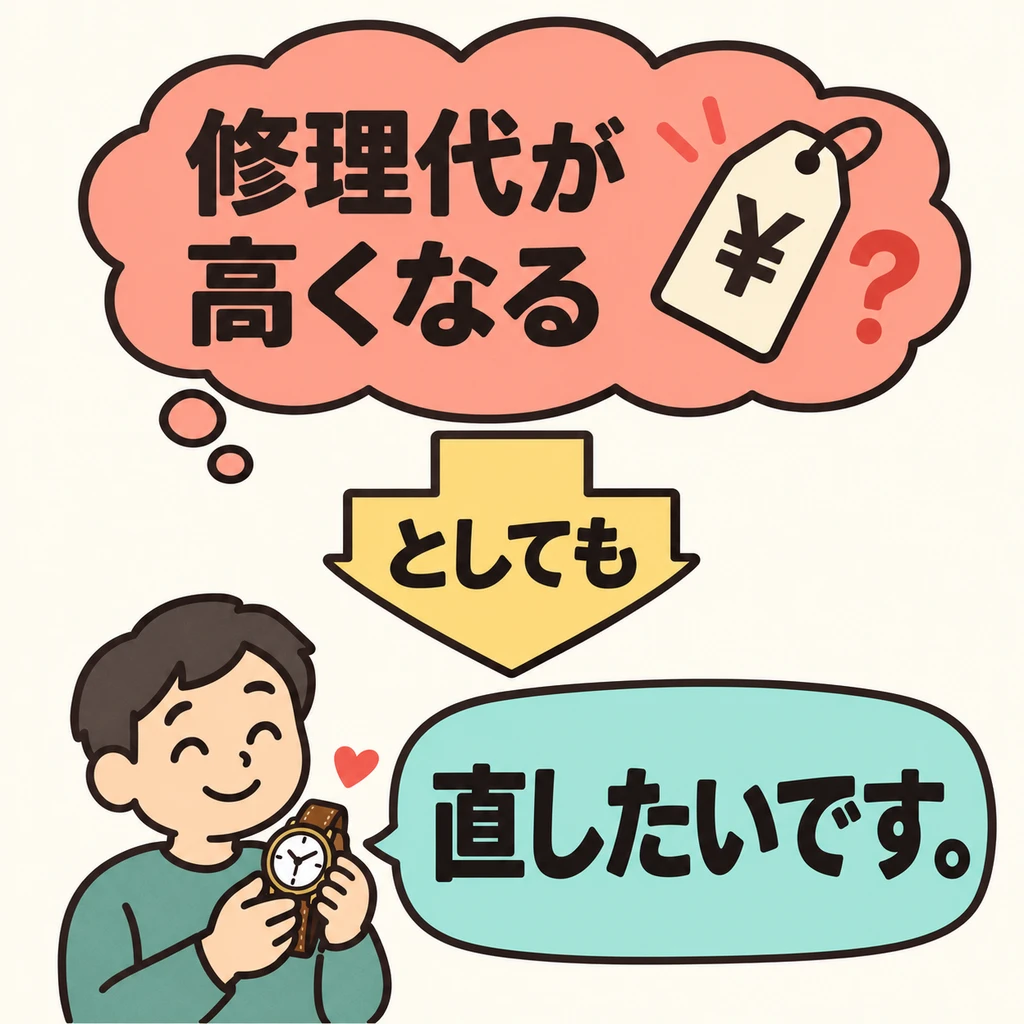
The repair may cost more. Look at the picture: would you still want to repair this treasured watch?
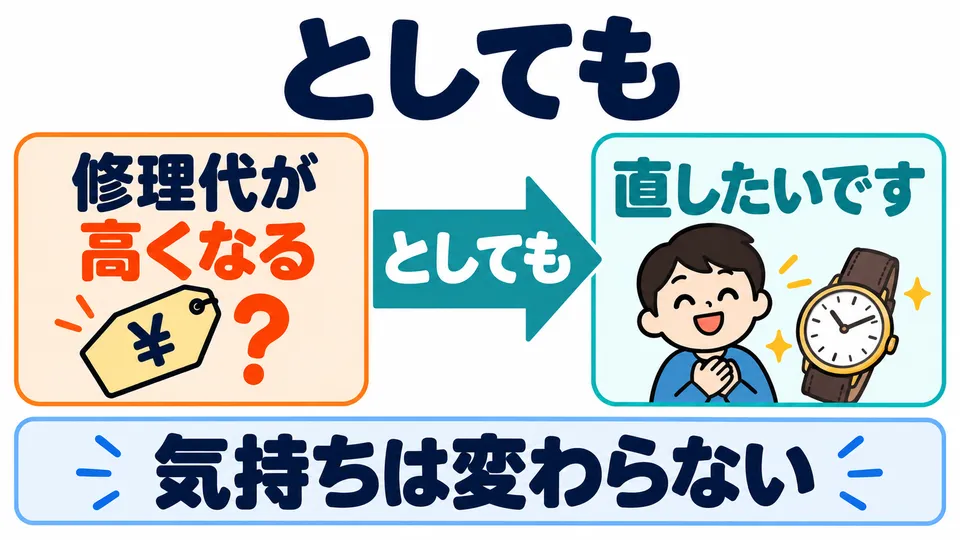
「としても」 means “even if…”: the judgment that follows stays the same even if the premise is true.
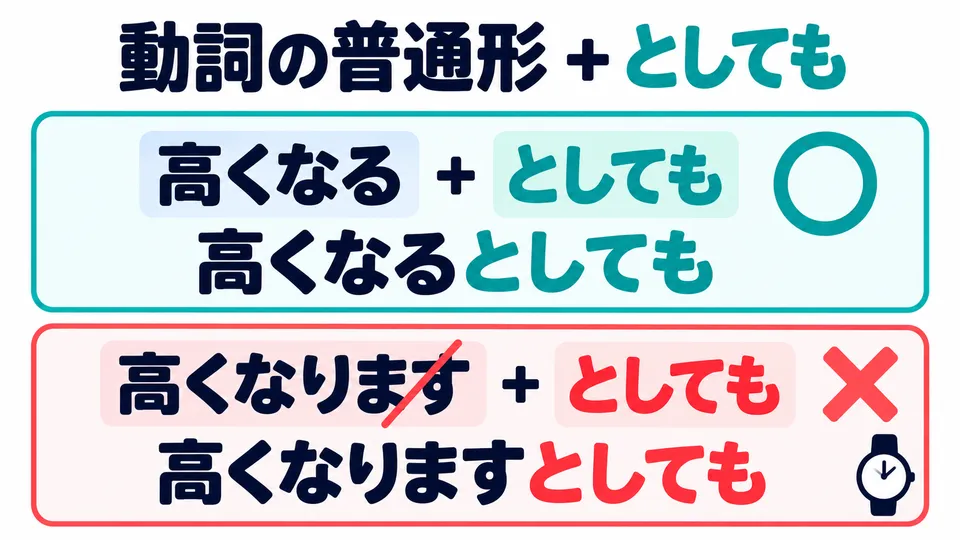
Use a verb’s plain form: 「高くなるとしても」. Do not attach it to 「なります」.
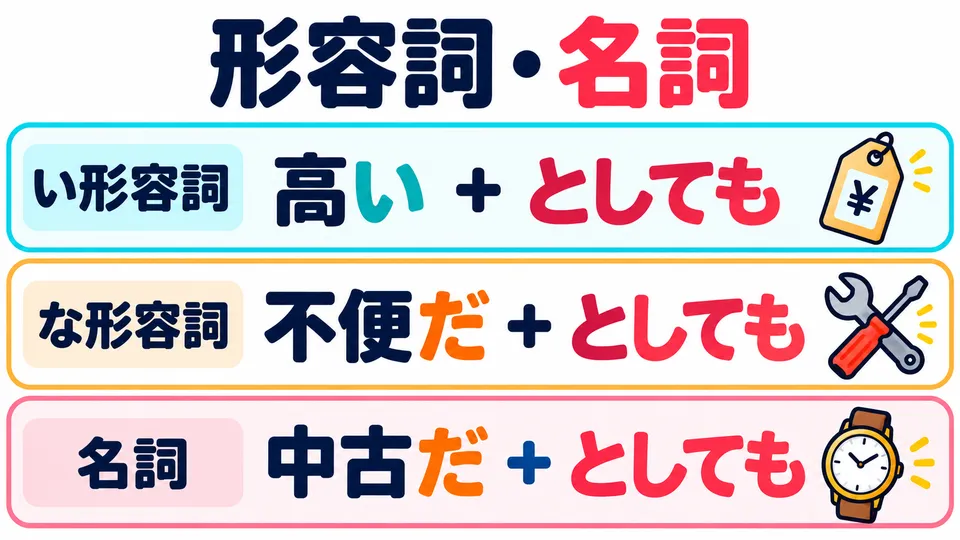
Adjectives also use the plain form. For nouns and な-adjectives, use 「だとしても」.
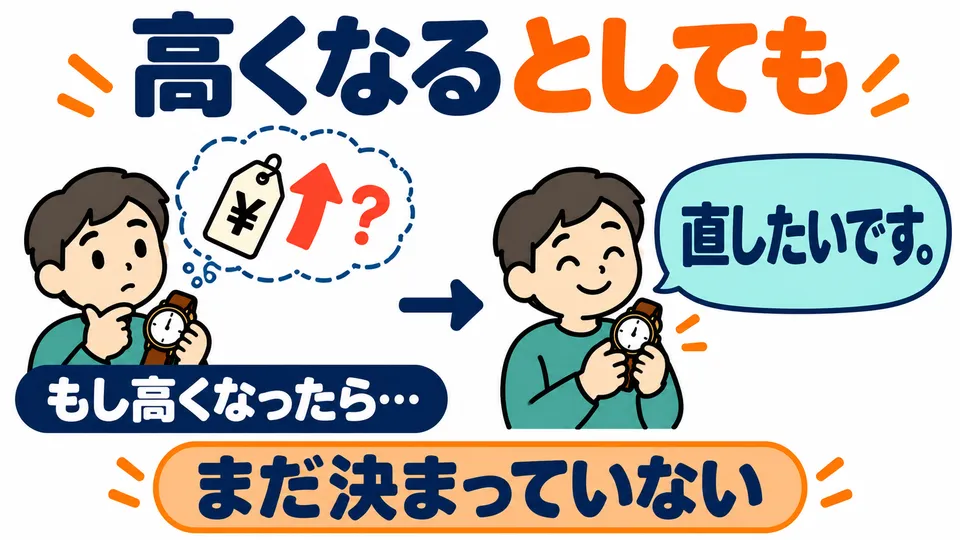
First accept or suppose the premise is true, then state the conclusion. This sentence does not say the repair cost has already risen.