
Japanese grammar · ≈ JLPT N2 · Intermediate 1
〜ようになっている~you ni natte iru
system feature or mechanism
Use 「〜ようになっている」 to explain a function or mechanism built into a machine, system, or arrangement.
How it works

Follow the arrow: a customer orders on a phone, and the kitchen receives the order. What feature has the restaurant set up?
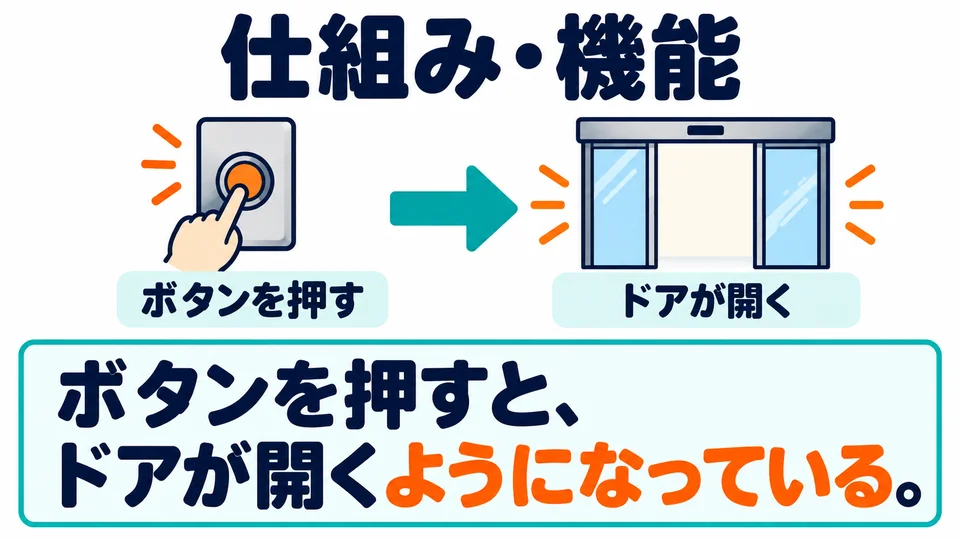
Use this pattern to explain the functions of machines, systems, or social arrangements and how they work.
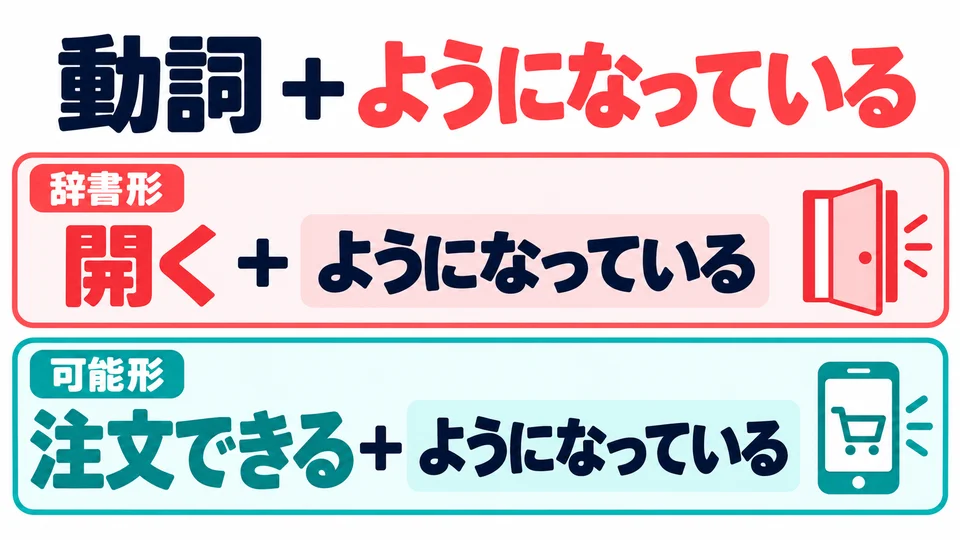
Add 「ようになっている」 after a verb’s dictionary form. The potential form also works to describe an available feature.
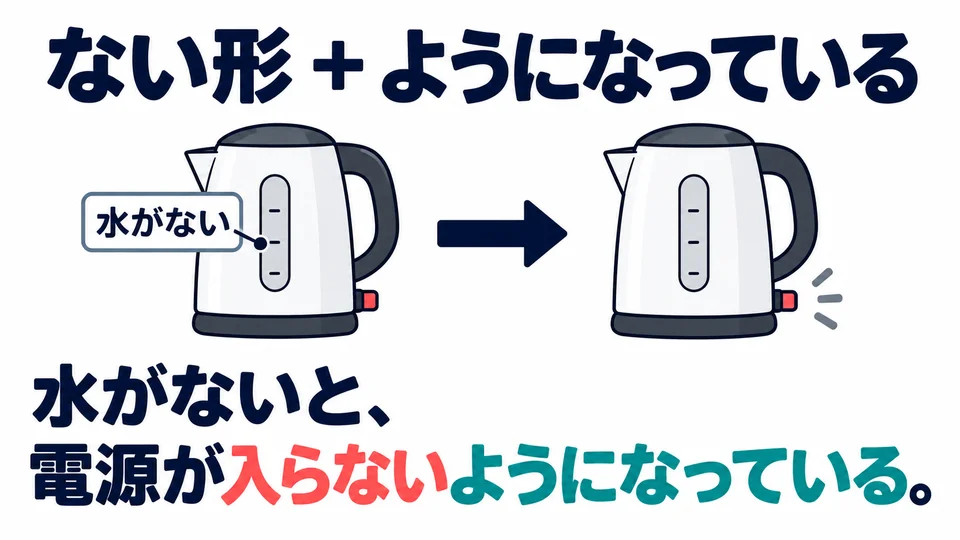
It also follows a verb’s ない form: the mechanism prevents something from happening; it does not express a prohibition.
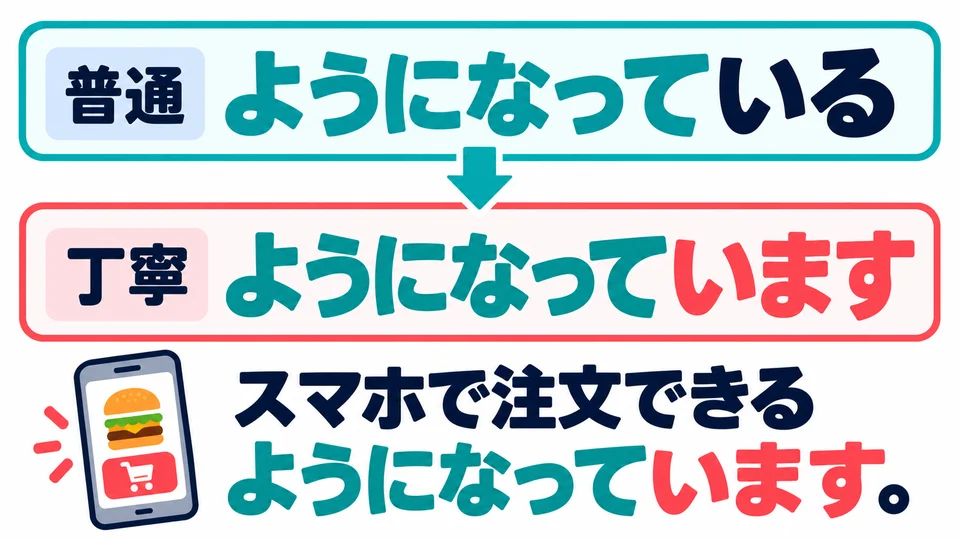
For a polite explanation, use 「ようになっています」. It still describes a mechanism already in place.
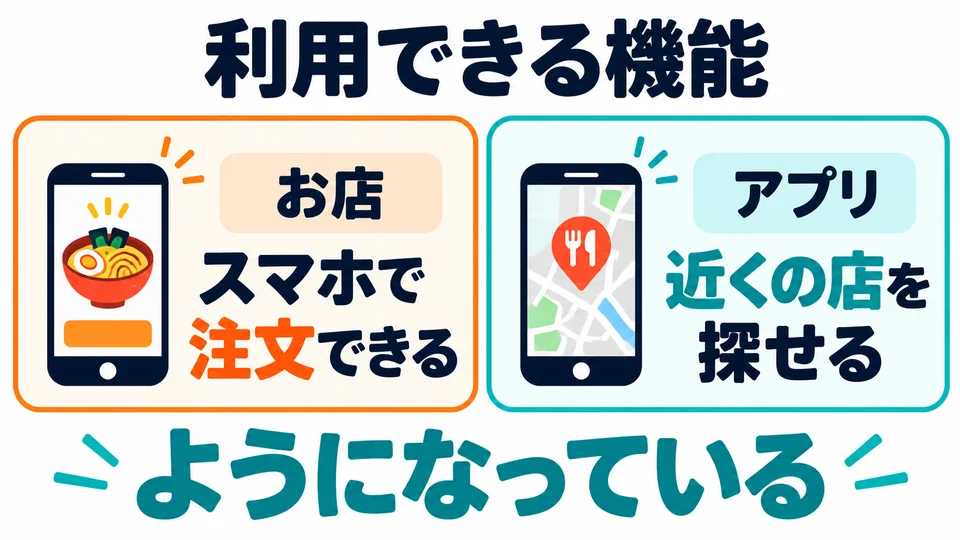
Ordering food and finding restaurants in the examples are features the restaurant or app makes available to users.
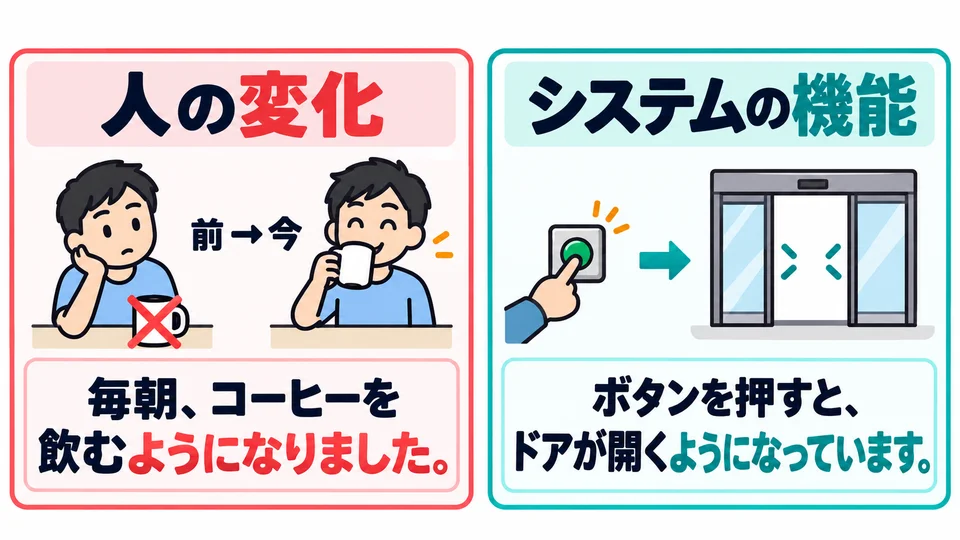
The 「ようになりました」 you learned earlier describes a change in someone’s habits. Here, we describe a system’s function.
Example sentences
- このkono店miseでdeは、wa、スマホsumahoでde注文chuumonできるdekiruようになっyouninattてteいます。imasu。
In a conversation

Check yourself
Level 1 · Recognise
Which sentence is correct?
Level 1 · Recognise
Listen and choose the meaning
Level 2 · Build
Put the words in order
At this store, you can order with your smartphone.
Level 3 · Use
What goes in the blank?
この店では、スマホで注文できる____。
At this store, you can order using your smartphone.
More grammar in this theme
- 〜ようになっているsystem feature or mechanism