
Japanese grammar · ≈ JLPT N3 · Intermediate 1
〜ことで~ koto de
by doing; through
Use a verb in dictionary form plus 「ことで」 when an action brings about a result or explains its cause.
How it works
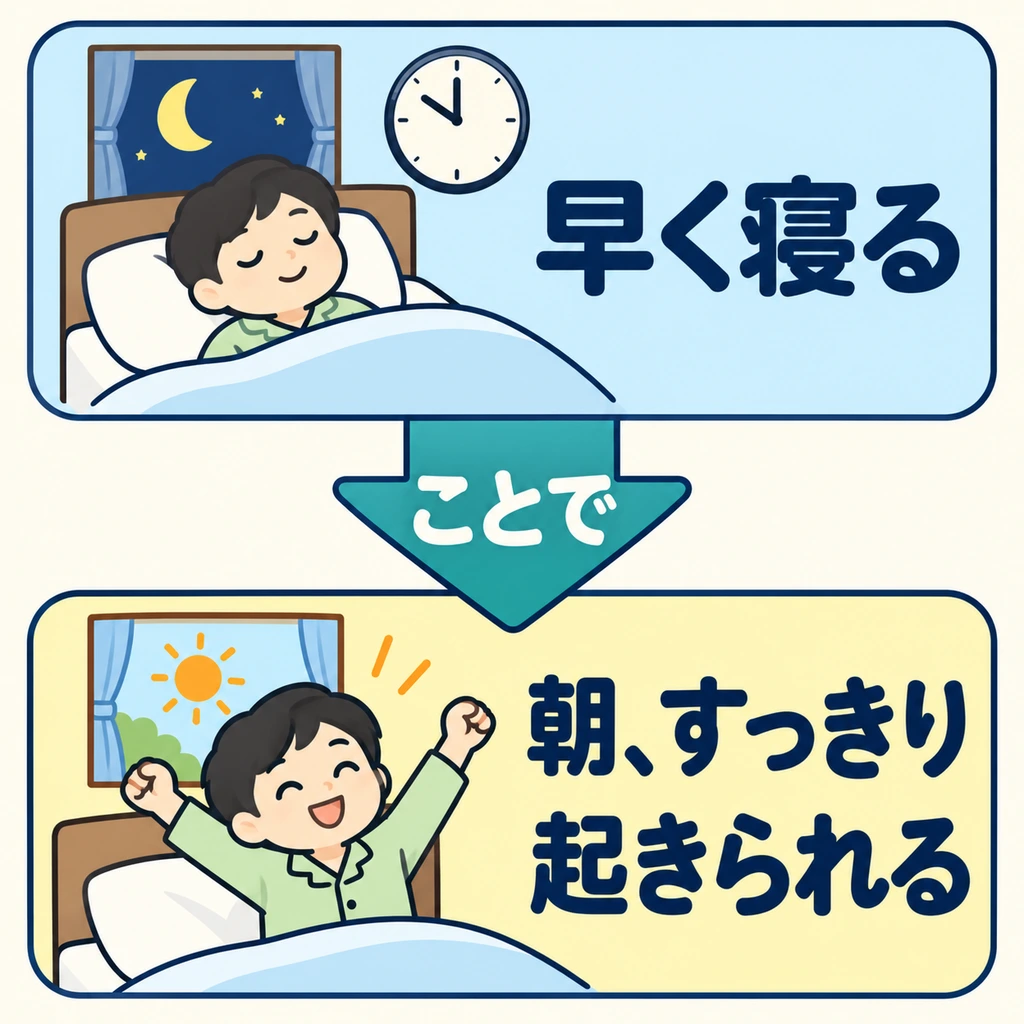
What changes in the morning if you go to bed early? Follow the arrow: the action leads to the result below.
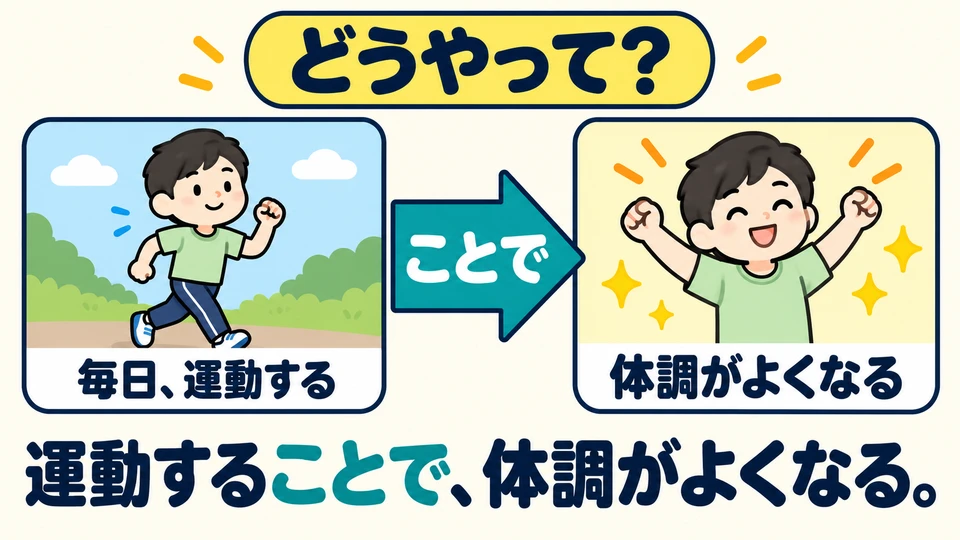
Use 「ことで」 to explain how a result is achieved. It means “by doing…” or “through…”.
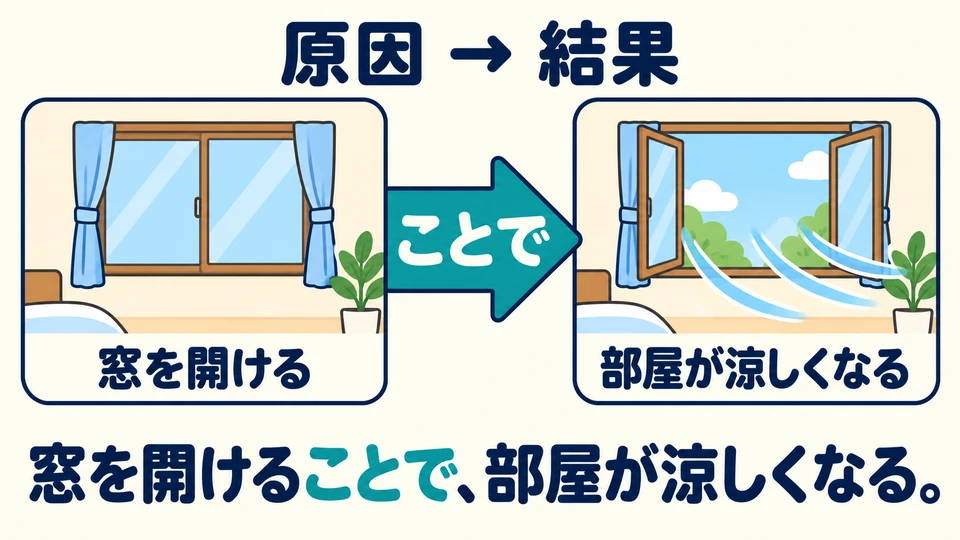
「ことで」 can also explain a cause: what comes before it brings about the change or result that follows.
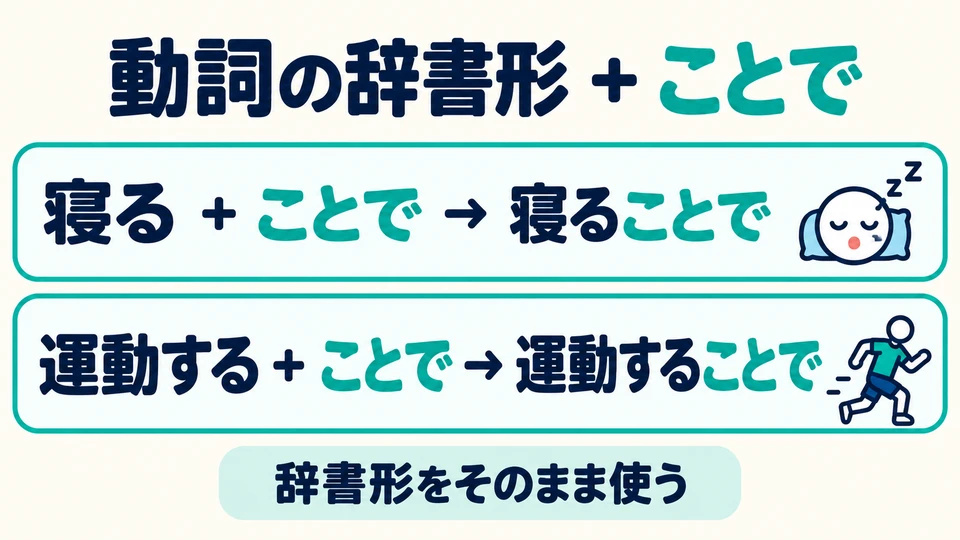
Verb dictionary form + ことで: for example, 「寝ることで」 and 「運動することで」.
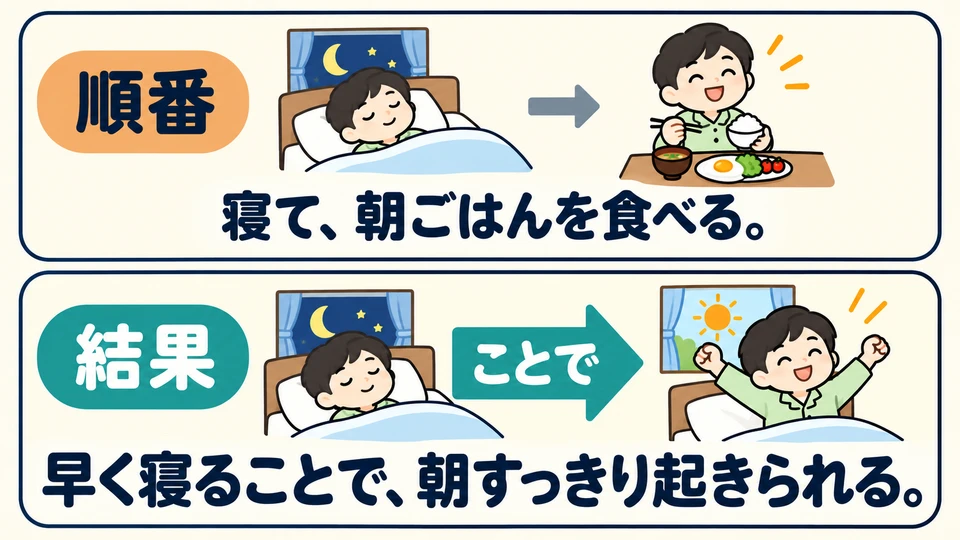
This is more than “first do this, then do that”. 「ことで」 emphasizes that the first action brings about the result.
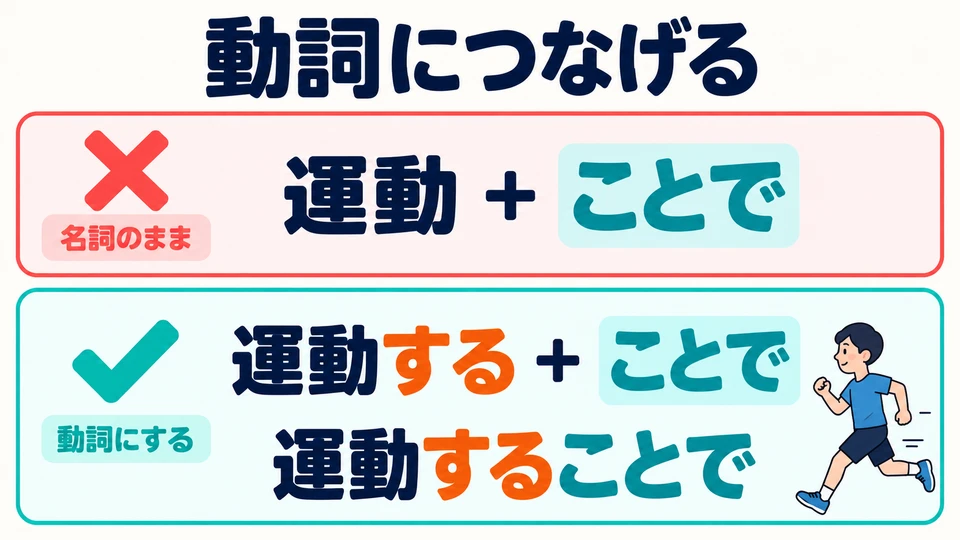
In this lesson, we practice using verbs. Nouns and similar words must first form a predicate; they cannot take 「ことで」 directly.
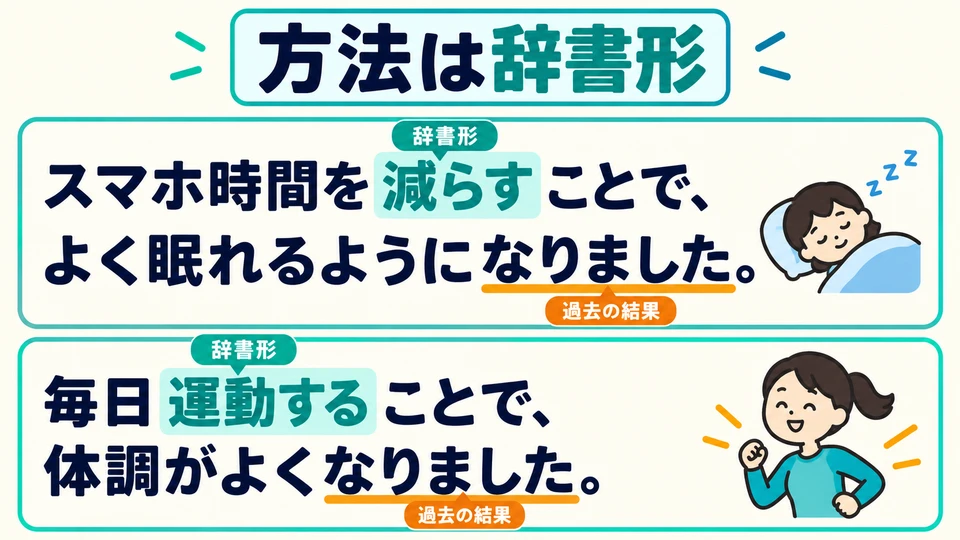
Although the results in the examples have already happened, 「減らす」 and 「運動する」 stay in dictionary form to describe the methods used.
Example sentences
- 夜yoruのnoスマホsumaho時間jikanをo減らすherasuことkotoで、de、よくyoku眠れるnemureruようになりました。youninarimashita。
In a conversation

Check yourself
Level 1 · Recognise
Which sentence is correct?
Level 1 · Recognise
Listen and choose the meaning
Level 2 · Build
Put the words in order
By going to bed early and getting up early, it becomes much easier to concentrate on work in the morning.
Level 3 · Use
What goes in the blank?
毎日ニュースを見る____、社会の動きが分かるようになりました。
By watching the news every day, I can understand what's happening in society.
More grammar in this theme
- 〜ことでby doing; through