
Japanese grammar · ≈ JLPT N3 · Intermediate 1
〜こともあります~koto mo arimasu
sometimes also happens
Use 〜こともあります to add that something can also happen sometimes, whether it is a positive or negative situation.
How it works
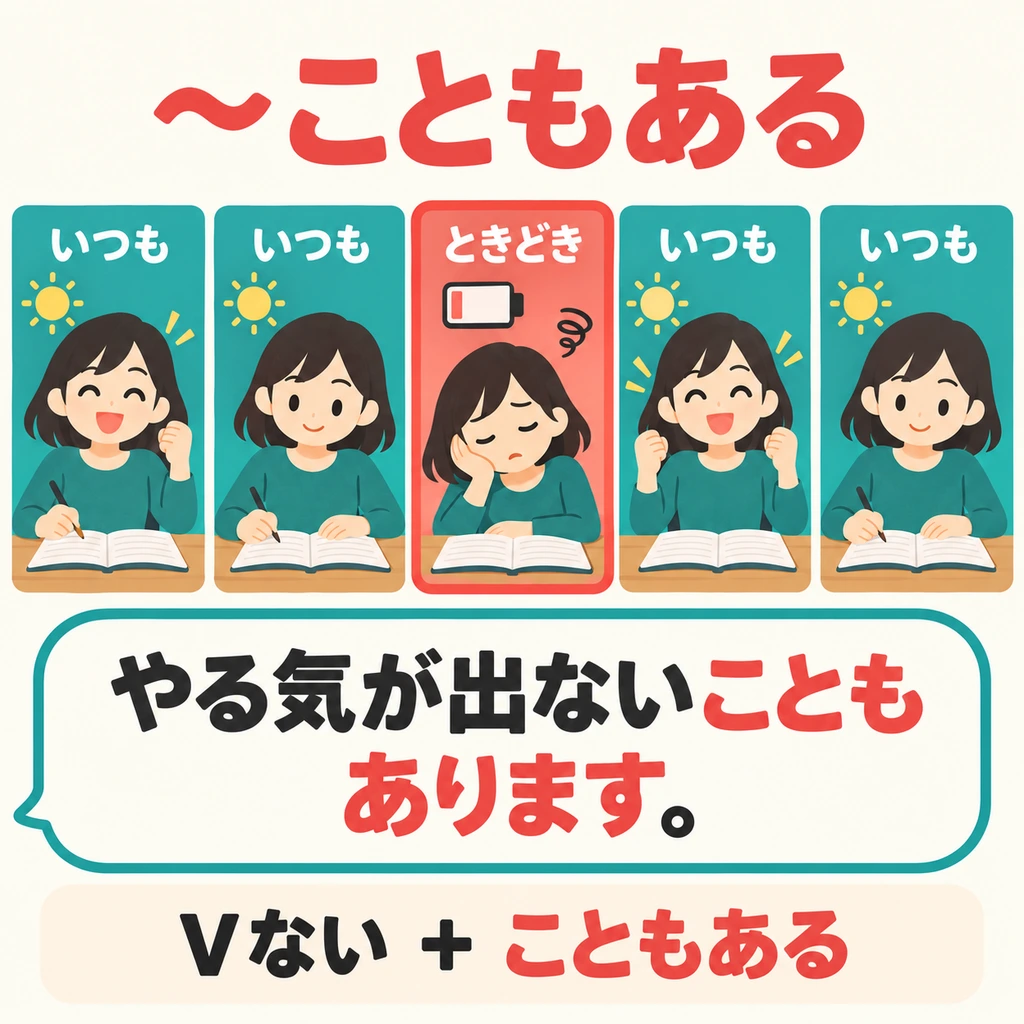
Look at the picture: usually she studies hard, but sometimes she feels unmotivated. This does not happen every day.
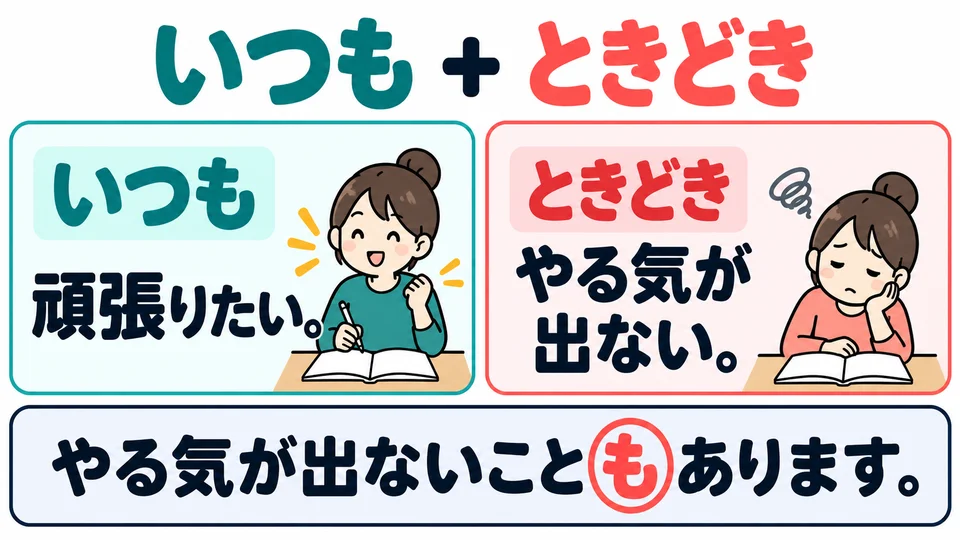
「も」 adds another situation: usually she wants to try hard, but there are also times when she has no motivation.
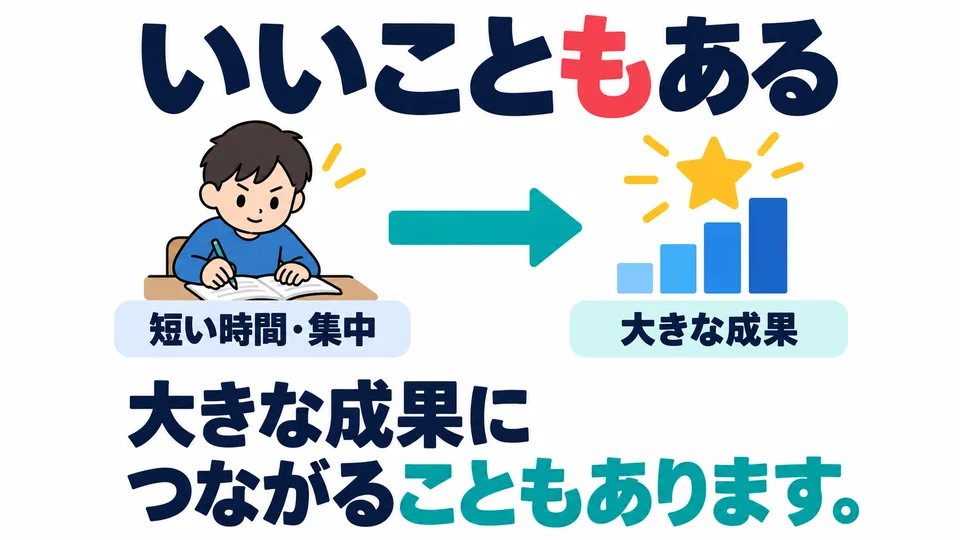
It also describes positive situations: a short, focused study session can sometimes bring great results.
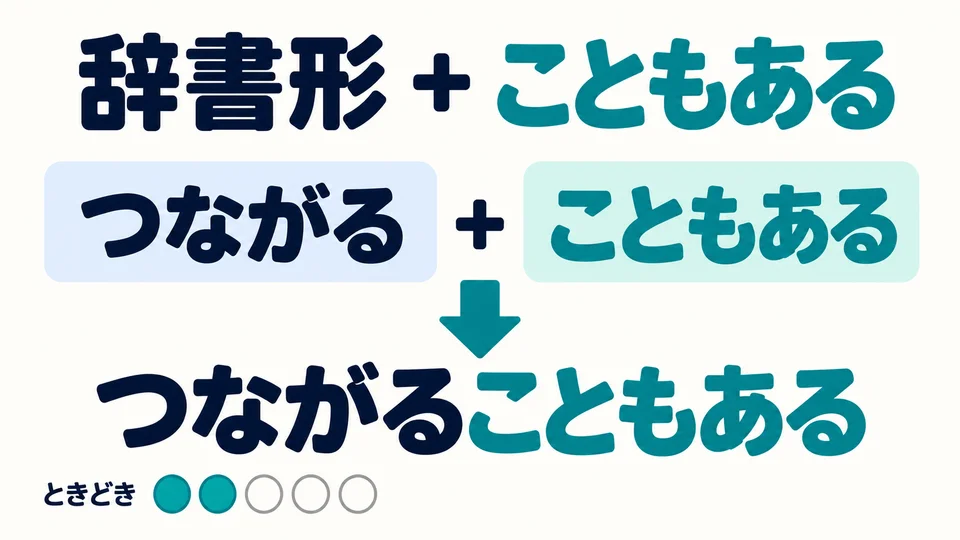
For something that sometimes happens, add 「こともある」 to the verb’s dictionary form, as in 「つながる」.
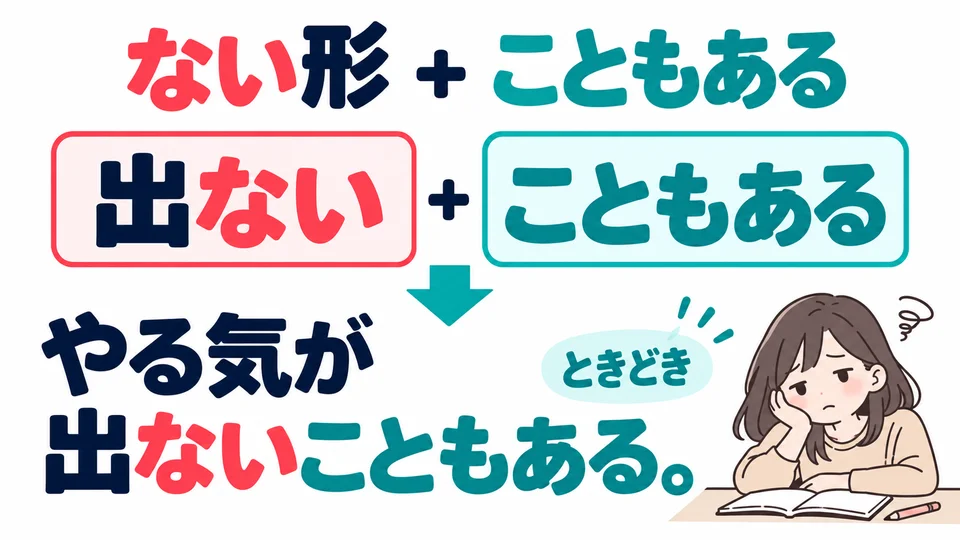
For something that sometimes does not happen, use the ない form: not feeling motivated is 「出ないこともある」.
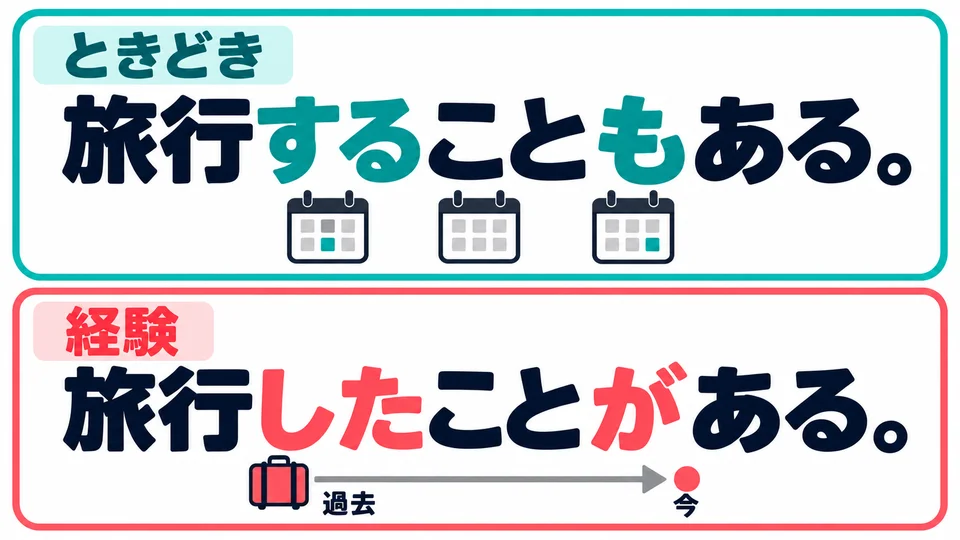
Here we mean that something also happens sometimes. For experience of doing something in the past, use 「た形ことがある」.
Example sentences
- 毎日mainichi頑張りたいですganbaritaidesuが、ga、やる気yarukiがga出ないことdenaikotoもmoあります。arimasu。
I want to do my best every day, but there are also times when I don't feel motivated.
In a conversation

- A今の勉強のやり方で本当に役に立つ経験になるのか、心配
Check yourself
Level 1 · Recognise
Which sentence is correct?
Level 1 · Recognise
Listen and choose the meaning
Level 2 · Build
Put the words in order
Gaining a variety of experiences can sometimes broaden your perspective.
Level 3 · Use
What goes in the blank?
毎日頑張りたいですが、やる気が出ない____。
Although I want to work hard every day, there are times when I can't find the motivation.
More grammar in this theme
- 〜こともありますsometimes also happens