
JPEDLAB iconJPEDLAB
Save history

Create an account and play

Explore first, then save your progress whenever you are ready. No email address is required.

Start free
Read as articleCards
1/9

Look at the picture: usually she studies hard, but sometimes she feels unmotivated. This does not happen every day.

››

Lesson notes · ≈ JLPT N3 · Intermediate 1

〜こともあります~koto mo arimasu

sometimes also happens

Use 〜こともあります to add that something can also happen sometimes, whether it is a positive or negative situation.

How it works
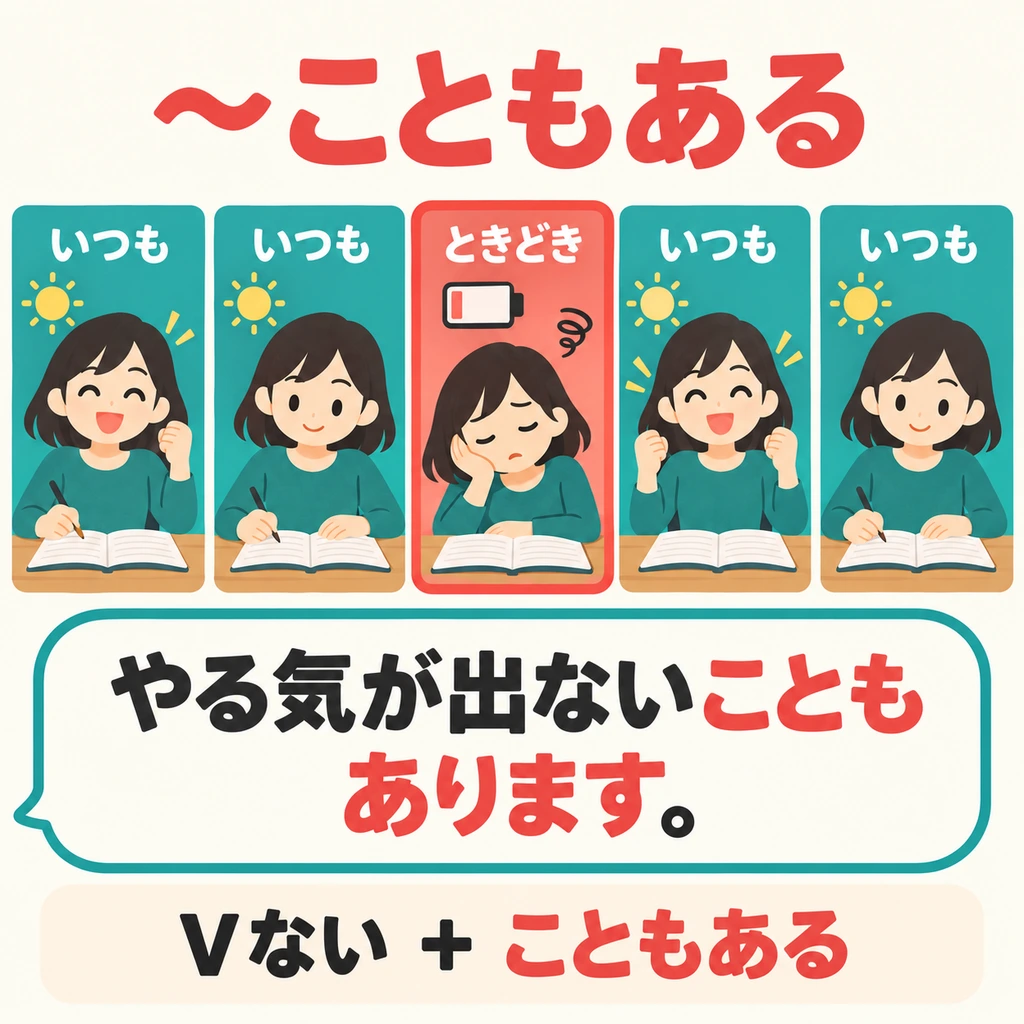
  1. Look at the picture: usually she studies hard, but sometimes she feels unmotivated. This does not happen every day.
    Look at the picture: usually she studies hard, but sometimes she feels unmotivated. This does not happen every day.

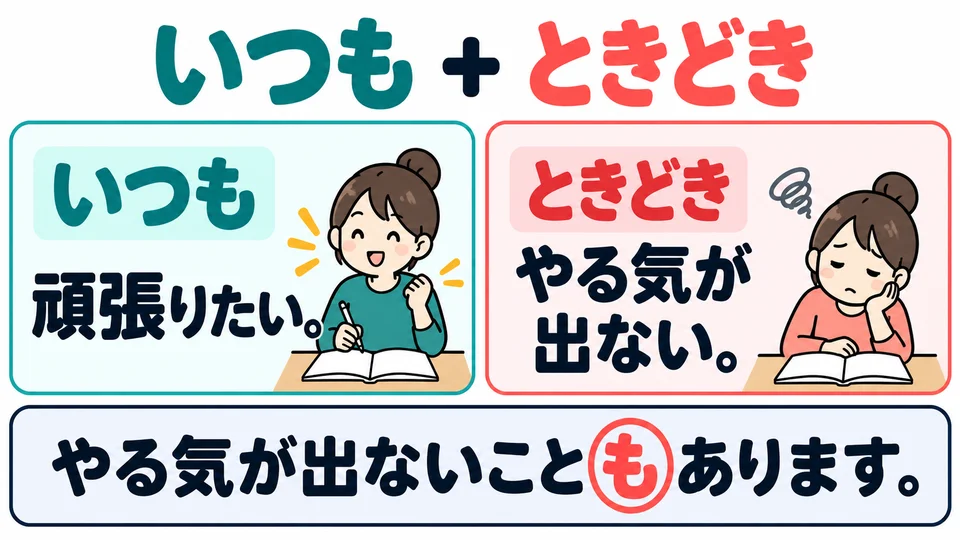
  2. 「も」 adds another situation: usually she wants to try hard, but there are also times when she has no motivation.
    「も」 adds another situation: usually she wants to try hard, but there are also times when she has no motivation.

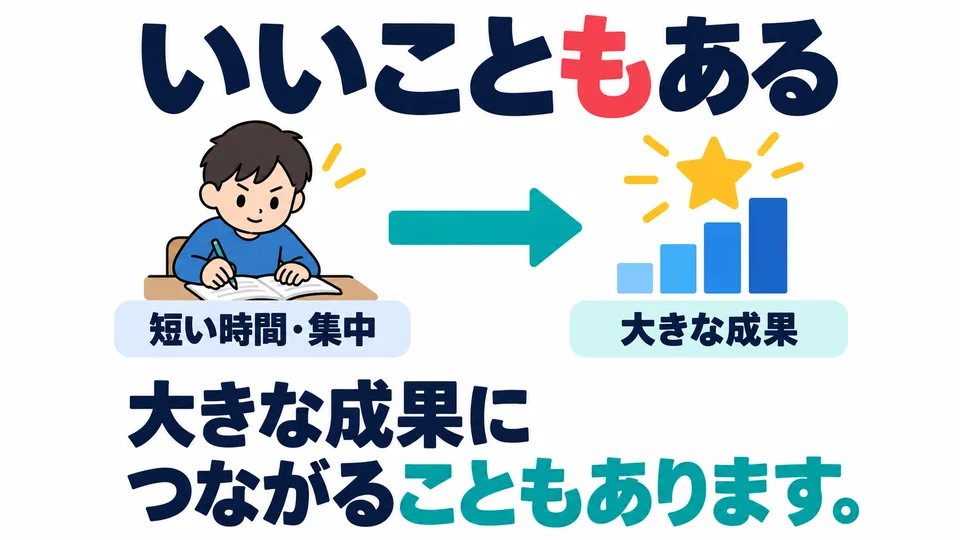
  3. It also describes positive situations: a short, focused study session can sometimes bring great results.
    It also describes positive situations: a short, focused study session can sometimes bring great results.

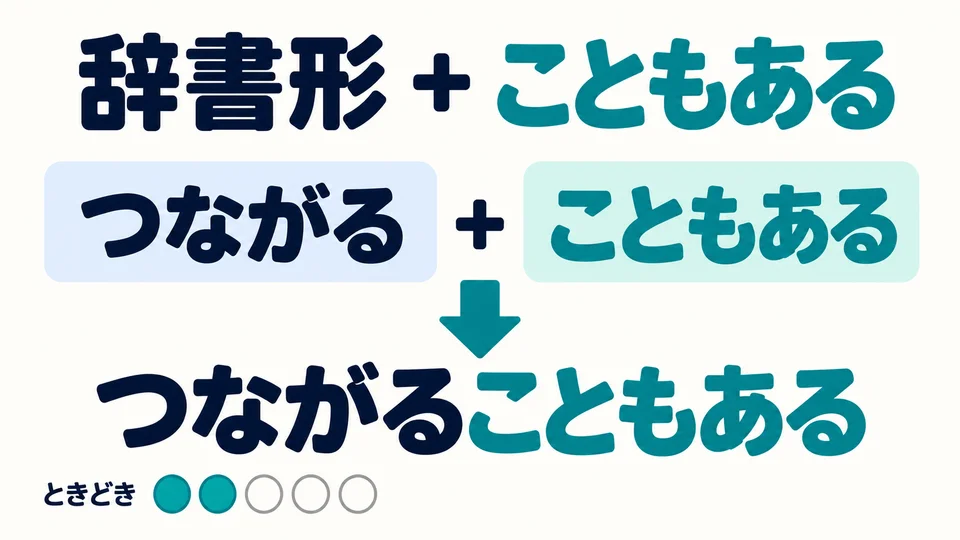
  4. For something that sometimes happens, add 「こともある」 to the verb’s dictionary form, as in 「つながる」.
    For something that sometimes happens, add 「こともある」 to the verb’s dictionary form, as in 「つながる」.

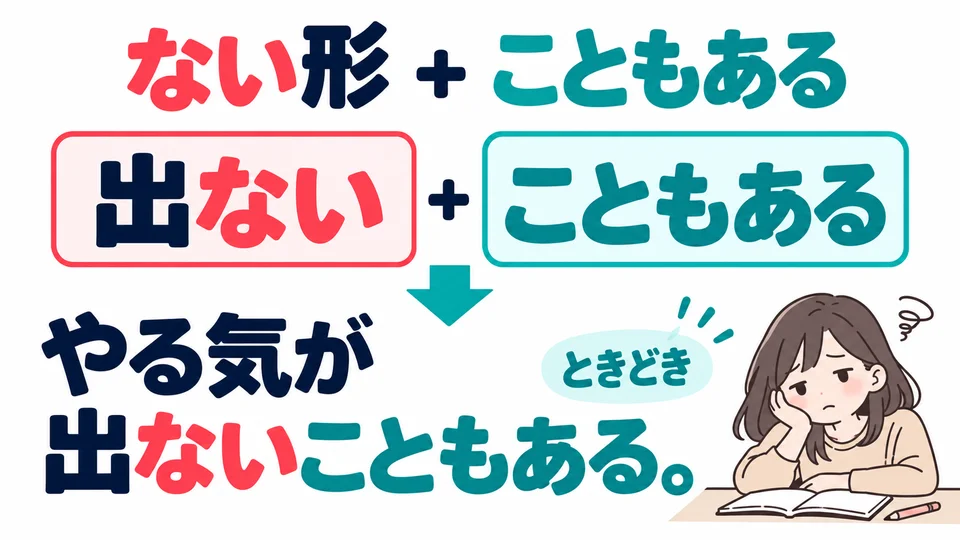
  5. For something that sometimes does not happen, use the ない form: not feeling motivated is 「出ないこともある」.

    For something that sometimes does not happen, use the ない form: not feeling motivated is 「出ないこともある」.

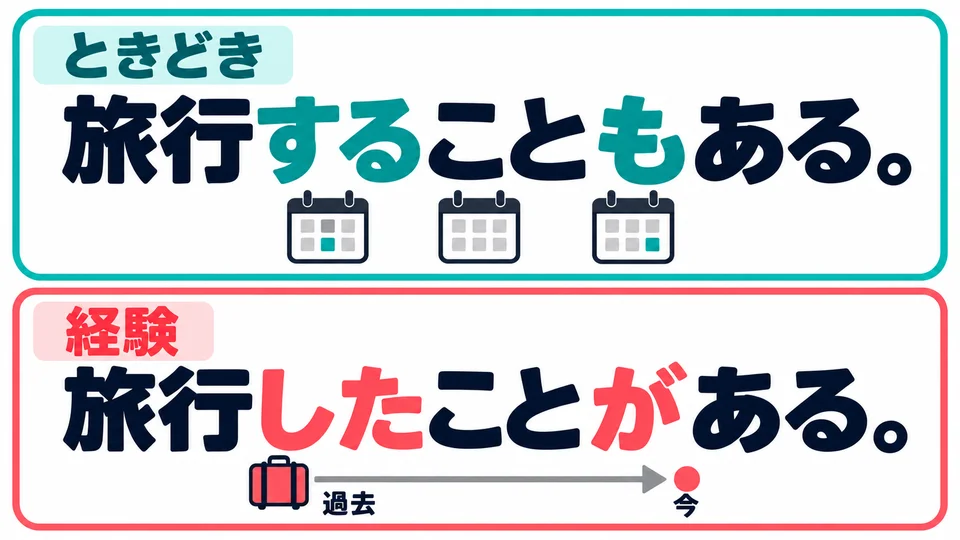
Here we mean that something also happens sometimes. For experience of doing something in the past, use 「た形ことがある」.

Here we mean that something also happens sometimes. For experience of doing something in the past, use 「た形ことがある」.

Example sentences

  • 毎日まいにちmainichi頑張りたいですがんばりたいですganbaritaidesuが、ga、やる気やるきyarukiがga出ないことでないことdenaikotoもmoあります。arimasu。

    I want to do my best every day, but there are also times when I don't feel motivated.

  • 短いみじかいmijikai時間じかんjikanでdeも、mo、集中しゅうちゅうshuuchuuすれsureばba大きなおおきなookina成果せいかseikaにniつながるtsunagaruことkotoもmo

    Even if it's for a short time, concentrating can sometimes lead to great results.

In a conversation

  • A
    今いまの勉強べんきょうのやり方やりかたで本当ほんとうに役やくに立つたつ経験けいけんになるのか、心配しんぱいになることもあります。

    A: Sometimes I worry about whether my current study method will really lead to a useful experience.

  • B
    すぐに成果せいかが出なくでなくても、毎日まいにちの積み重ねつみかさねが後あとで生きるいきることもありますよ。

    B: Even if you don't see results right away, your daily efforts can sometimes pay off later.

  • A
    そうですね。無駄むだなことはわ何なんもないと信じしんじて、前向きに考えるまえむきにかんがえるようにします。

    A: That's true. Believing that nothing is a waste, I will try to think positively.

Check yourself

  1. Level 1 · Recognise

    Which sentence is correct?

  2. Level 1 · Recognise

    Listen and choose the meaning

  3. Level 2 · Build

    Put the words in order

    Gaining a variety of experiences can sometimes broaden your perspective.

  4. Level 3 · Use

    What goes in the blank?

    毎日頑張りたいですが、やる気が出ない____。

    Although I want to work hard every day, there are times when I can't find the motivation.

More grammar in this theme

  • 〜はずがないcannot possibly; no way
  • 〜なんてsurprise; can you believe
  • 〜ば〜ほどthe more…, the more…
  • こんな・そんな・あんな・どんなthis, that, what kind
  • こんなふうにin this way
  • 〜ことでby doing; through
  • 〜なぁsoftly voiced wish
  • 〜ことがありますsometimes happens
  • 〜こともありますsometimes also happens
  • 〜にとってfrom someone’s perspective
  • 〜ことだしsince, given that
  • 〜てくれない?casual request for help
  • 〜てくれる?could you do it for me
  • 〜じゃない?・〜んじゃない?right?; gentle suggestion
Previous〜ことがありますNext〜にとって

Keep practising

Test your Japanese vocabulary12 adaptive questions, freeCheck your pronunciationRead aloud and get a scorePractise verb forms10-question conjugation quizSee the whole courseGrammar, vocabulary and quizzes by theme
See the whole course
Intermediate 1
Time Use and Future Planning
あります。arimasu。