
Japanese grammar · ≈ JLPT N3 · Intermediate 1
〜にとって~ni totte
from someone’s perspective
Use 〜にとって after a person or entity to evaluate what something means or is like from that standpoint.
How it works
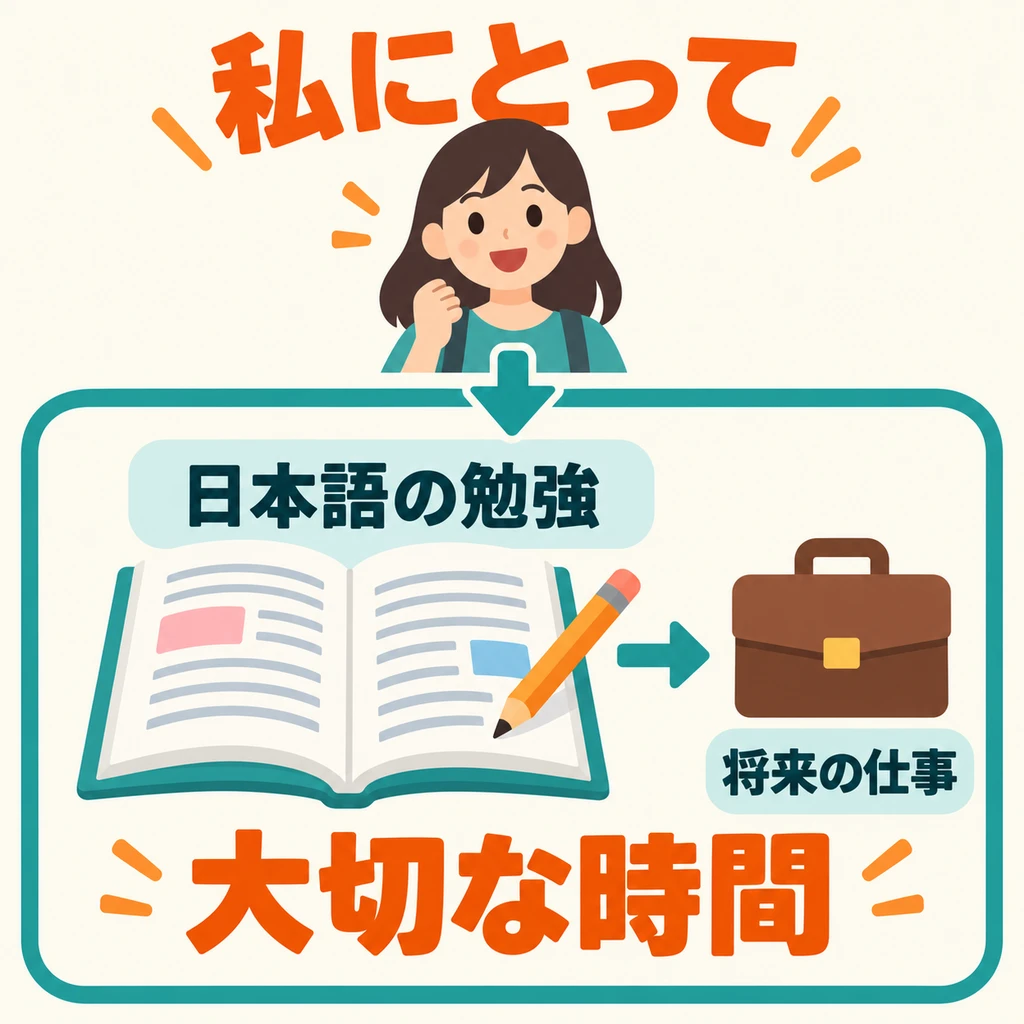
Why is study time important? For her, it has value because it connects to her future work.
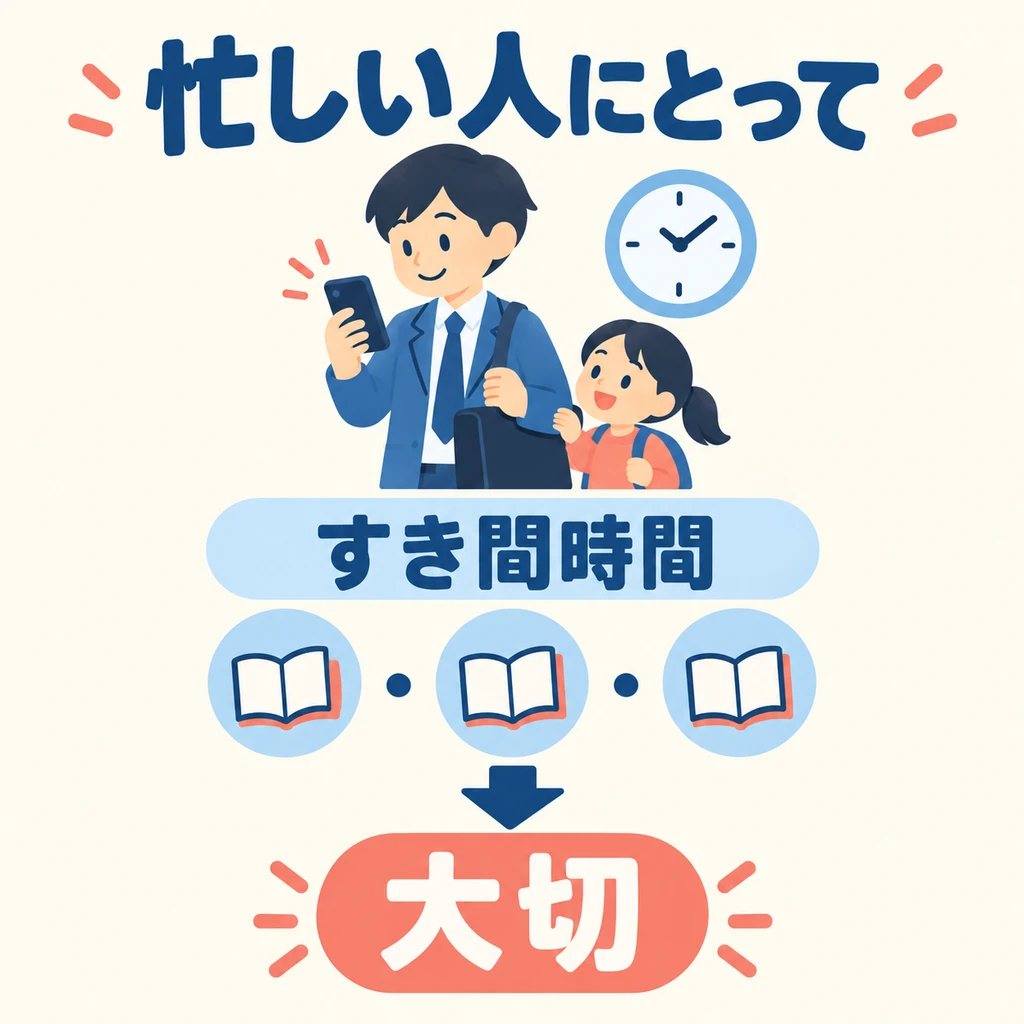
From a busy person’s standpoint, using little pockets of free time matters. The evaluation depends on whose perspective we take.
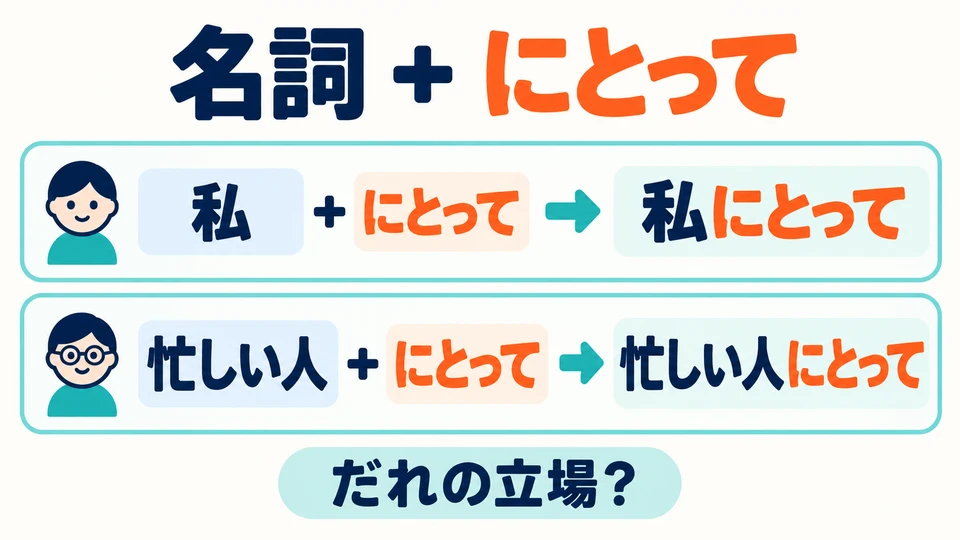
Attach it to a noun: 私にとって, 忙しい人にとって. First, show whose standpoint you are taking.
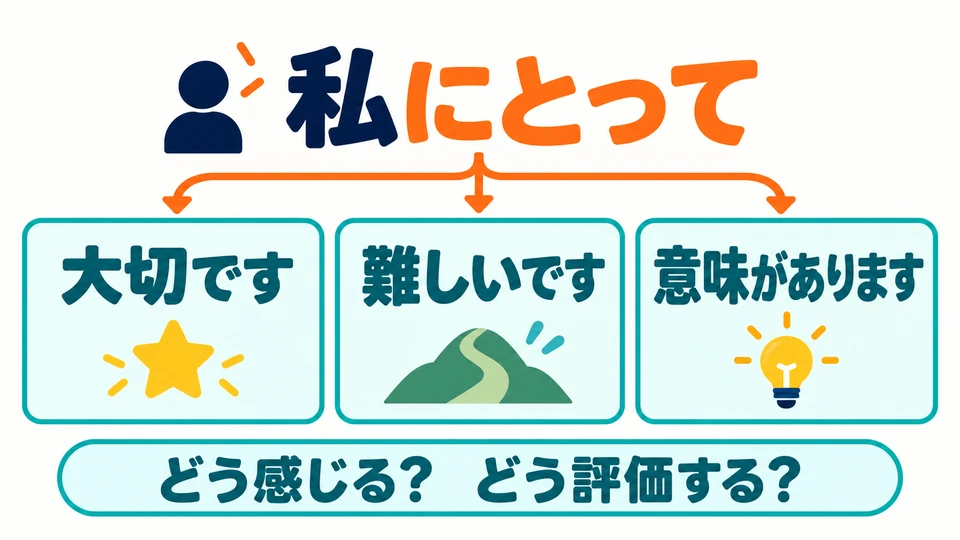
It is often followed by an evaluation such as important, difficult, or meaningful, showing what something means to that person.
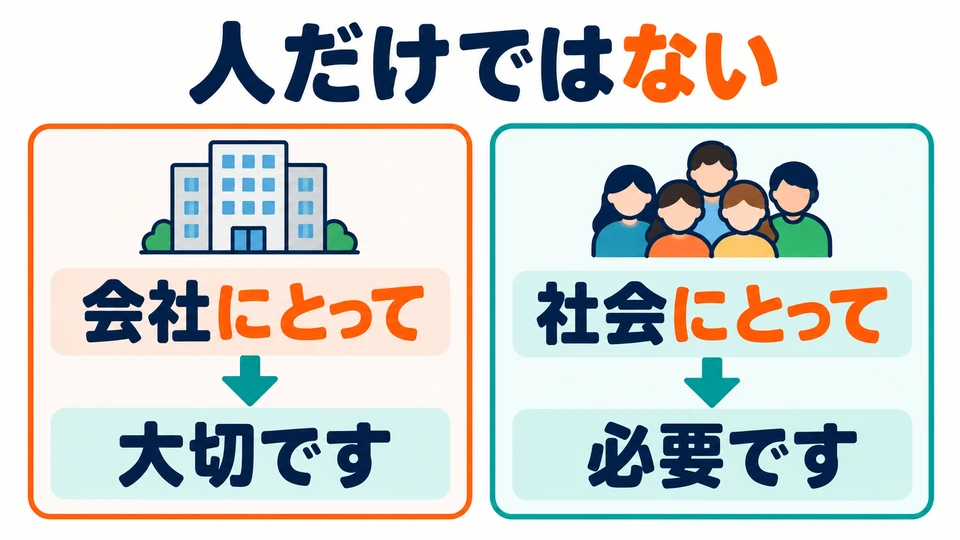
The noun can also refer to a company, society, or another entity. The judgment is made from that entity’s standpoint.
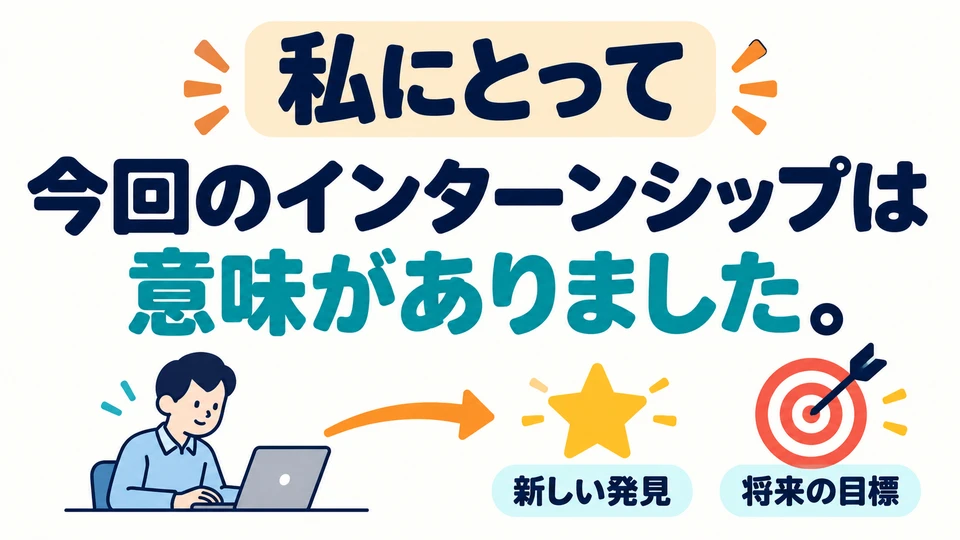
After an internship, saying it was meaningful to you evaluates the value that experience had for you.
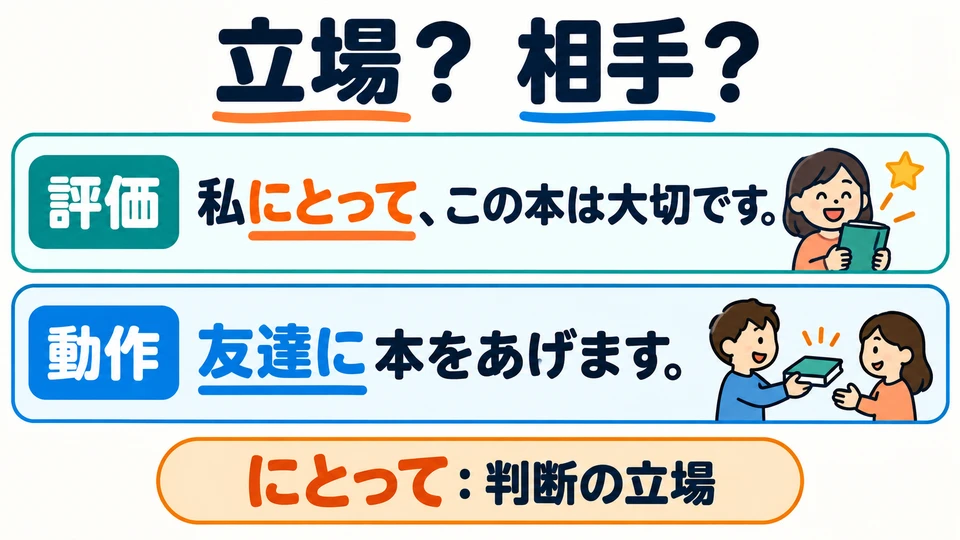
It marks the standpoint of a judgment, not the recipient of an action. Do not use it to say whom you give something to or speak to.
Example sentences
- 私watashiにniとっtotて、te、日本nihon語goのno勉強benkyouはwa将来shouraiのno
In a conversation

Check yourself
Level 1 · Recognise
Which sentence is correct?
Level 1 · Recognise
Listen and choose the meaning
Level 2 · Build
Put the words in order
For me, studying Japanese is valuable time that will lead to my future work.
Level 3 · Use
What goes in the blank?
学生____、長い休みは新しいことに挑戦するいい機会です。
For students, a long vacation is a good opportunity to try new things.
More grammar in this theme
- 〜にとってfrom someone’s perspective