
Japanese grammar · ≈ JLPT N2 · Intermediate 2
〜ものだ・〜ものではない~mono da / ~mono dewa nai
what one should or should not do
Use 〜ものだ for expected conduct and 〜ものではない to warn against conduct, with an instructive tone.
How it works
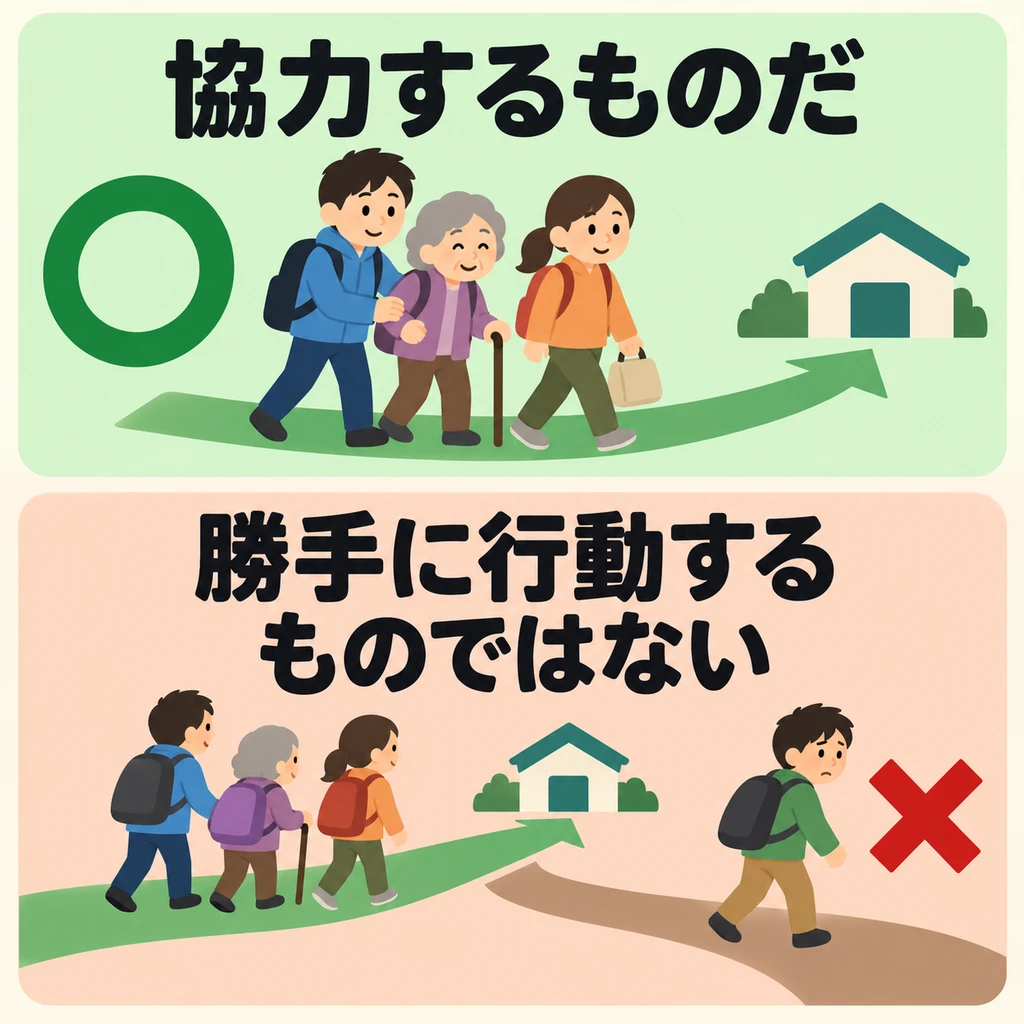
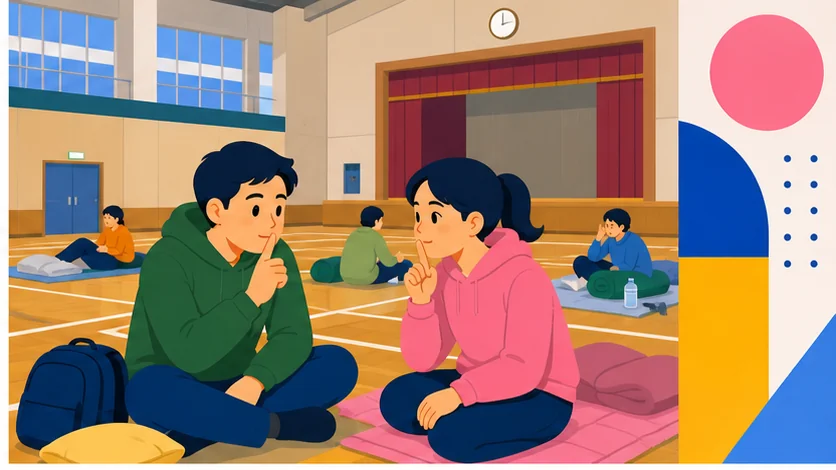
Which action is appropriate during an evacuation? Look at the picture and judge by the common rules everyone should follow.
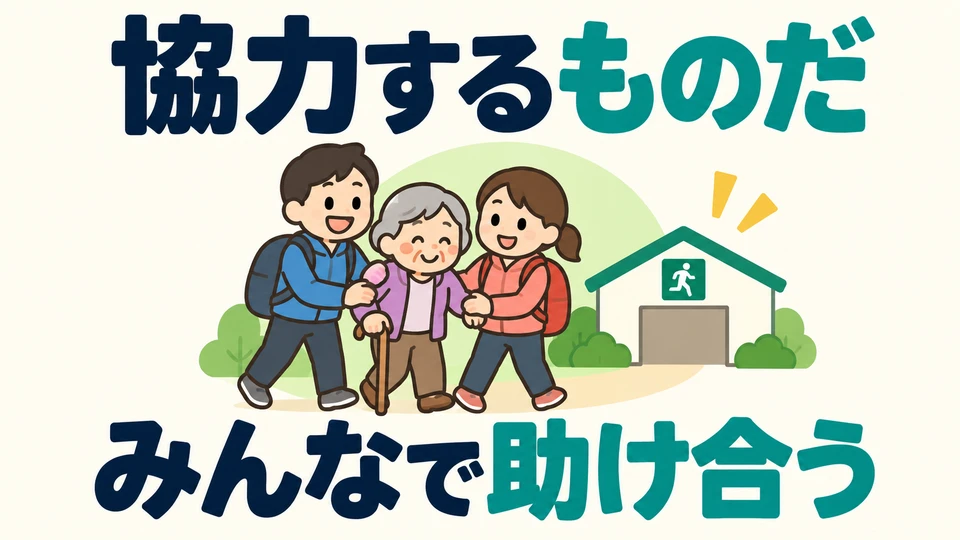
「協力するものだ」 says that people ought to help one another. It presents what we should do as common sense.
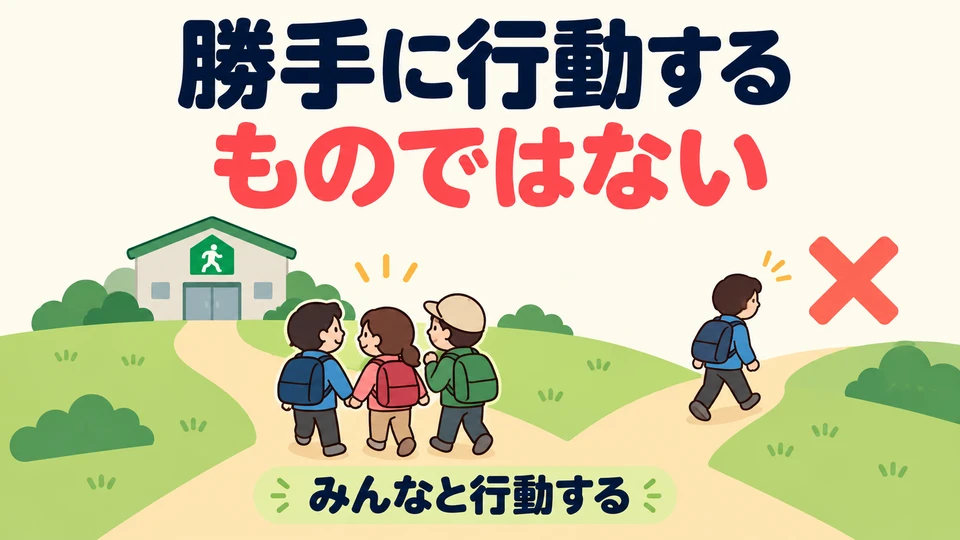
「勝手に行動するものではない」 warns someone that they should not act on their own without regard for others.
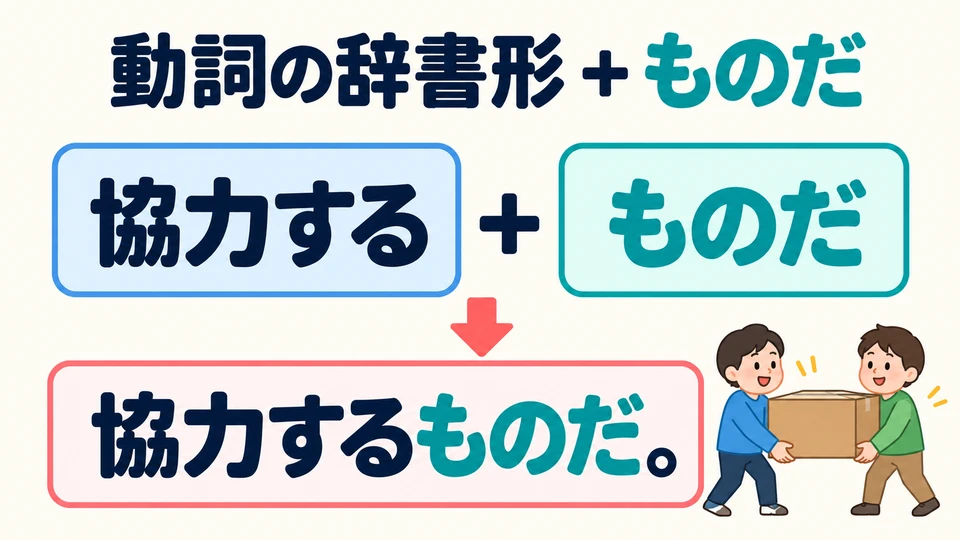
For the affirmative, use the verb’s dictionary form + 「ものだ」, as in 「協力する+ものだ」.
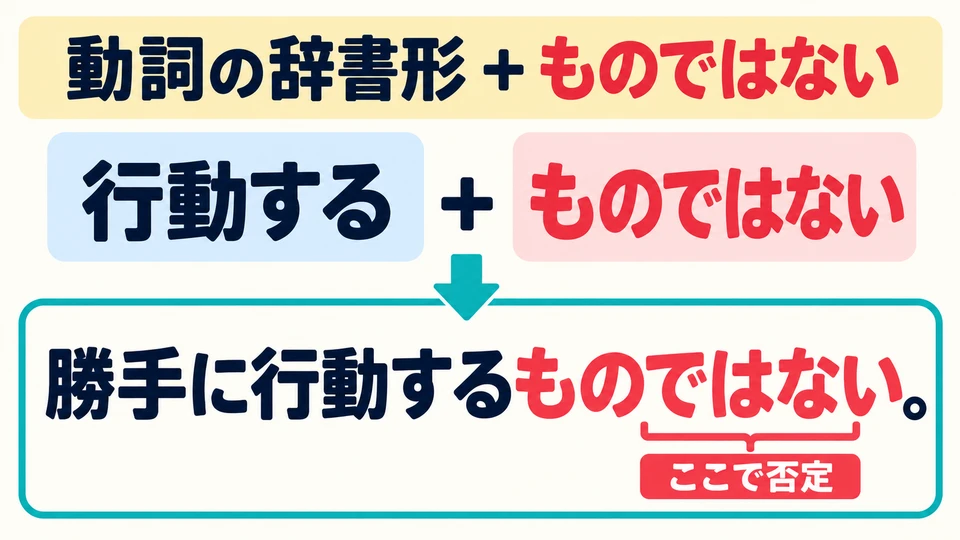
The negative also follows the verb’s dictionary form: 「行動する+ものではない」. The negation comes at the end.
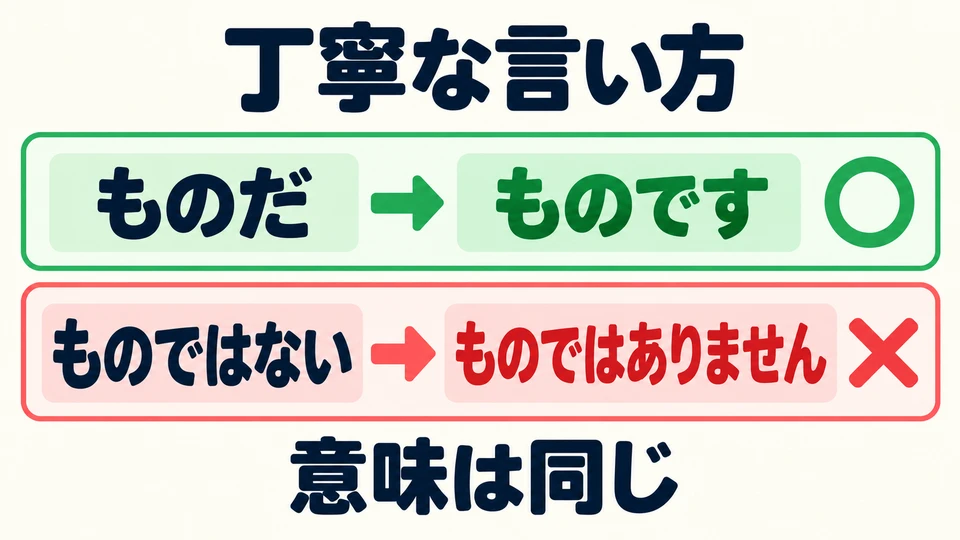
The polite forms are 「ものです/ものではありません」. The meaning of “should” or “should not” stays the same.
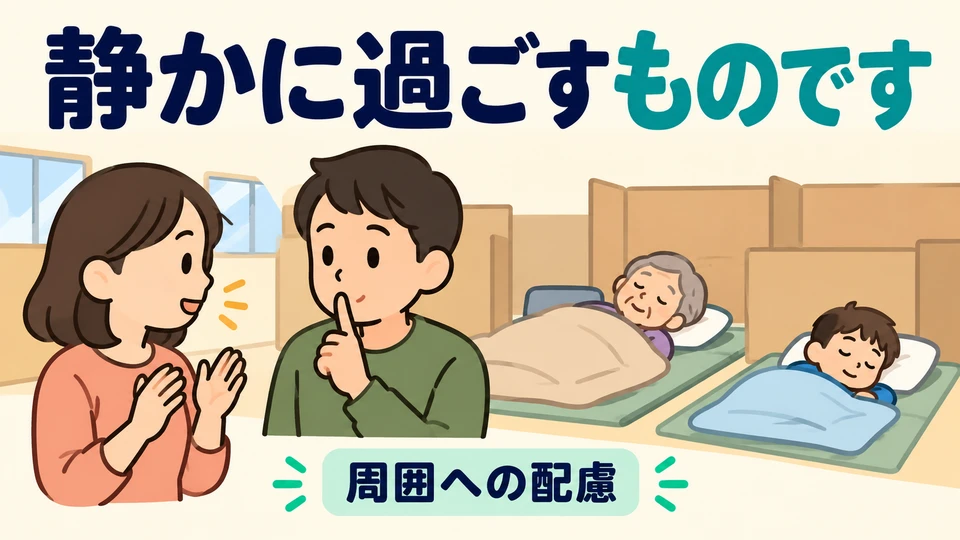
Everyone at the shelter is having a hard time. 「静かに過ごすものです」 reminds people to stay quiet out of consideration for others.
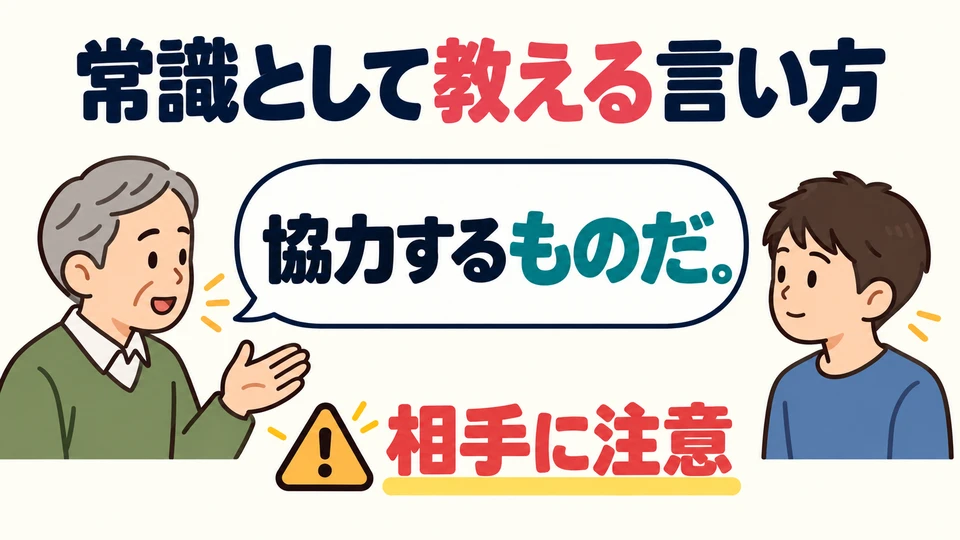
Here, 「ものだ」 emphasizes what people are naturally expected to do. It has an instructive tone, so consider whom you are speaking to.
Example sentences
- 避難hinanするsuru時tokiは、wa、周りmawariのno人hitoとto協力kyouryokuするsuruものmono
In a conversation
Check yourself
Level 1 · Recognise
Which sentence is correct?
Level 1 · Recognise
Listen and choose the meaning
Level 2 · Build
Put the words in order
When a disaster occurs, we should give priority to helping people who need special consideration, such as the elderly and infants.
Level 3 · Use
What goes in the blank?
避難する時は、周りの人と協力する____。
When evacuating, you should cooperate with those around you.
More grammar in this theme
- 〜ものだ・〜ものではないwhat one should or should not do